What a patient call bell handset is and how it works at the bedside
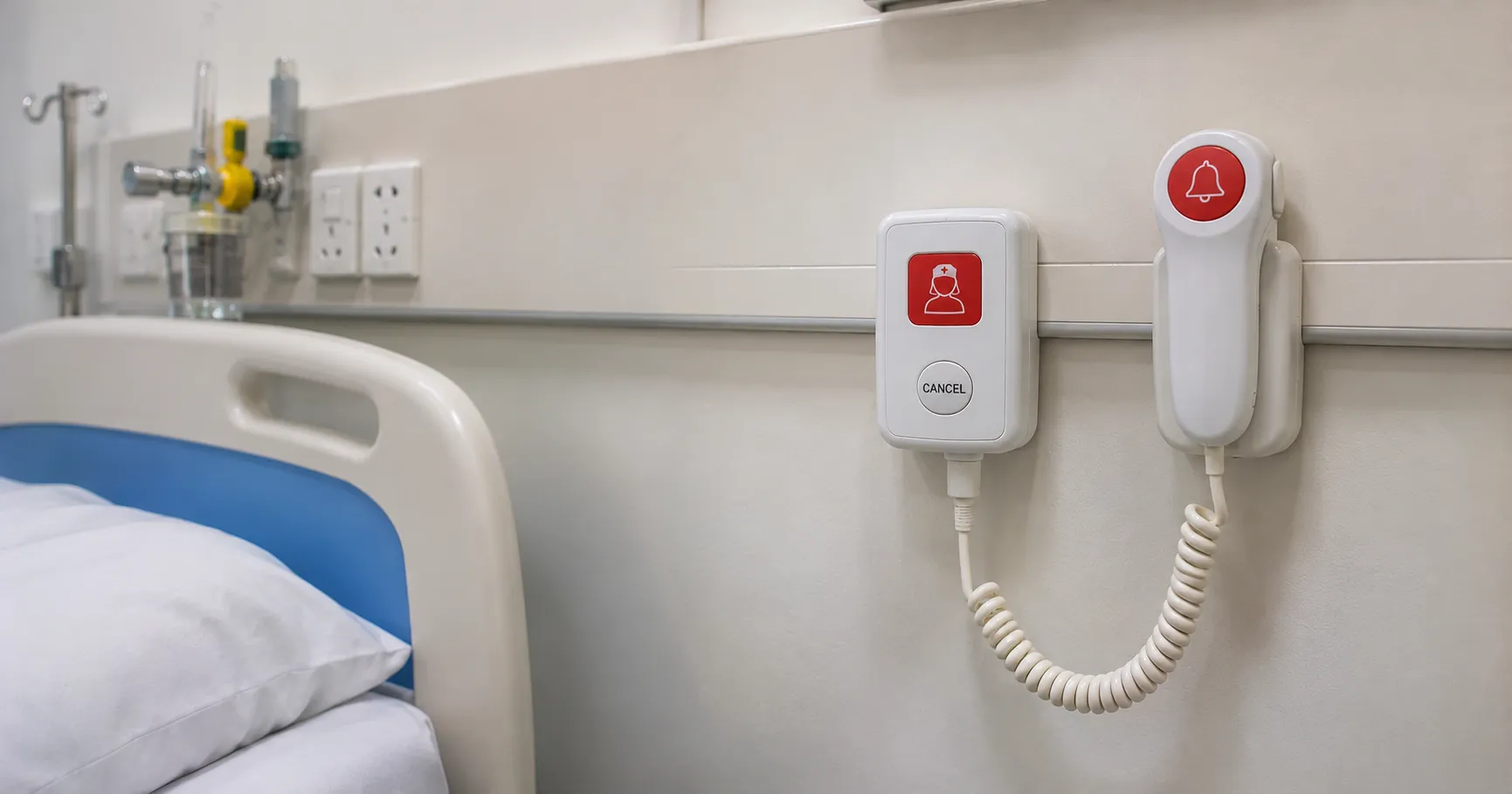
Patient call bell handsets are the handheld devices a patient presses at the bedside to summon a nurse — the part of the nurse-call system the patient actually holds. A typical handset is a pear-shaped push or a slim pendant on a lead, with a large call button, a reassurance light that confirms the call has registered, and often a cancel or nurse-present function; many also carry bed-light and entertainment controls. Press it and a signal reaches the bed-head unit, lights a corridor lamp and alerts staff at the panel or on their mobile handsets, so help can be directed to the right bay.
This piece concentrates on the handset itself — the bedside peripheral — rather than the whole nurse-call infrastructure or ward intercoms. The focus is what the handset does, how it connects, the hygiene and accessibility choices, and what to check before buying replacements or fitting out new beds.
Inside the handset: what the patient holds
The handset is deliberately simple because a frightened or frail patient must be able to use it without thinking. The large, easily found call button is the heart of it; a bright reassurance lamp tells the patient the call has been received, which matters as much as the call itself. Better handsets separate the call button clearly from any secondary controls so it cannot be pressed by accident when adjusting the bed light or television. The body should be smooth and comfortable to hold, the lead long enough to reach from pillow to grip rail, and the whole unit light enough for a weak hand.
How the handset connects to the bed-head unit
A call bell handset plugs into a socket on the bed-head unit or a wall-mounted call point, typically via a standardised locking connector and a flexible lead. Because handsets are the most handled, most replaced part of the system, that connector matters: it should mate securely so it is not pulled out in normal use, yet unplug without damage for cleaning or replacement. Lead length and durability are practical buying points — too short and the patient cannot reach it, too flimsy and it fails at the strain point. Confirm the connector type matches your installed nurse-call system before ordering replacements, as fittings are not universal between manufacturers.
The nurse-call system behind the handset
The handset is one component of a larger nurse-call installation: bed-head units, room and corridor lights, staff display panels, and increasingly links to mobile devices carried by nurses. In UK healthcare premises, bedhead services including nurse call are addressed in Health Technical Memorandum HTM 08-03, which sets out how these systems are designed and installed, and reassurance and call functions are expected to be reliable and clearly indicated. When buying handsets you are buying into that system, so compatibility with your existing infrastructure is the first question, not an afterthought.
Patient call bell handsets for limited dexterity
Not every patient can press a standard button. A good nurse-call range offers alternatives: soft-touch or feather-touch buttons for weak hands, large-format or pillow pads that respond to a light press anywhere on the surface, pneumatic squeeze bulbs for patients who can grip but not push, and pressure mats or specialist switches for those with very limited movement. Matching the call trigger to the patient is a clinical decision, but a buyer should ensure the system accepts these peripherals so the ward can meet individual needs. The ability to plug in an accessible trigger is a real differentiator between nurse-call ranges.
Keeping call bell handsets clean and safe
A handset is touched by every patient in a bed and by staff with every response, making it a genuine infection-control item. Specify a sealed, wipeable body with no seams or crevices to trap contamination, tolerant of the detergent and disinfectant wipes used on the ward, and consider an antimicrobial surface finish. A sensible ingress-protection (IP) rating helps it survive spills and cleaning. UK infection-prevention practice, informed by the relevant Health Technical Memorandum guidance and NHS infection-control guidance, expects frequently handled bedside items to be cleanable to protocol between patients, so the finish and the connector must both stand up to repeated decontamination.
Reusable handsets and disposable options
Most handsets are reusable and cleaned between patients, but single-use or disposable handsets and wipe-clean protective covers exist for high-risk or isolation situations where cleaning a reusable unit reliably is harder. Disposables reduce cross-infection risk but add consumable cost and waste; reusables cost less to run but depend on the cleaning being done properly. The right mix depends on your patient population and infection-control policy, and it is worth agreeing that policy before you standardise on a handset type.
Reliability and the common points of failure
Because a call bell is a safety-critical link, reliability is the point. The usual failure is not the electronics but the lead and the strain relief where it meets the handset, which flex thousands of times; a torn lead or a cracked button is a call that never arrives. Look for robust strain relief, replaceable leads, and clear evidence that pressing the button always registers and always lights the reassurance lamp. Routine checks that handsets call correctly should be part of ward and estates maintenance.
Whether handsets are regulated as medical devices
Whether a nurse-call system and its handsets are regulated as a medical device depends on the manufacturer's stated intended purpose; many are supplied as bedhead or communication equipment rather than devices with a medical purpose. Where a system is placed on the market for a medical purpose, the MHRA sets out how that is assessed. Ask the supplier to state the classification and the standards the equipment is built to, so your assurance records are accurate.
Linking handsets to mobile nurse-call
Modern nurse-call systems increasingly send calls not just to a corridor light and a central panel but to devices carried by nurses, so a press at the bedside reaches the named nurse wherever they are on the ward. That changes what a handset call can carry: a simple call, a priority or emergency call from a pull-cord in a bathroom, or a staff-assist call. When specifying handsets it is worth understanding how their calls are categorised and escalated by the wider system, because the reassurance the patient feels depends on the call reaching someone quickly and being seen to be answered. The handset is the trigger; the escalation logic behind it decides how well the bedside call actually performs.
Routine testing that keeps calls reliable
Because a call bell is safety-critical, it should be tested, not assumed. A simple routine — pressing each handset to confirm it registers a call and lights the reassurance lamp, and checking leads for wear — catches failures before a patient finds them. Estates and ward teams should agree how often handsets are checked and how a faulty unit is reported and swapped, so a broken call bell is replaced in hours, not left in service.
What handsets cost over their life
Handsets are the consumable end of a nurse-call system: they are dropped, pulled and cleaned constantly, so a replacement budget is realistic rather than pessimistic. Cost the handsets, spare leads, any disposable covers, and the labour to swap them, alongside the reassurance of buying units built to last. Weigh that whole-life figure, and use MediGear to compare verified suppliers on durability and compatibility, not just unit price.
Before you buy patient call bell handsets
-
Confirm the connector and signalling are compatible with your installed nurse-call system and bed-head units.
-
Check the call button is large, obvious and separated from bed-light and entertainment controls.
-
Ensure a clear reassurance lamp confirms to the patient that the call has registered.
-
Specify a sealed, wipeable, ideally antimicrobial body with a sensible IP rating for cleaning and spills.
-
Check accessible alternatives — soft-touch, pad, pneumatic or specialist switches — are available for the range.
-
Look for robust strain relief and replaceable leads, the usual point of failure.
-
Agree cleaning policy, disposable-versus-reusable use, spares and the handset replacement budget.
This guide is compiled from manufacturer documentation and UK guidance on bedhead services and infection prevention, including HTM 08-03, and written for ward and procurement teams. MediGear is a UK medical-equipment distributor that helps facilities compare verified suppliers rather than a manufacturer promoting its own handset.
Getting the bedside call right
Patient call bell handsets are small, cheap and utterly critical: they are the link a patient reaches for when they need help, so they must be easy to press, clearly reassuring, compatible with your system, cleanable and reliable. Buy them as part of your nurse-call installation, match the trigger to the patients you care for, and budget for the replacement they will need. When you are ready to compare options, MediGear can help you find suppliers who support the wider system, not just the handset.
Disclaimer
This article is for informational purposes only. It is published by MediGear (medigear.uk) for general information and procurement guidance, and is not clinical, diagnostic, treatment, technical, engineering, legal or regulatory advice, nor a product endorsement, guarantee or substitute for professional assessment. MediGear does not provide medical consultations. Buyers should consult their clinical, biomedical, estates and regulatory contacts, and the manufacturer's documentation, and independently verify all specifications, certifications, compatibility and suitability before purchase. Specifications, certifications and availability are correct at the time of publication and may change without notice. MediGear is a medical-equipment distributor and does not sell medicines or pharmaceutical products.