What happens to a nurse call system's alert when the first nurse does not answer? That escalation logic, far more than the bedside call bell, should lead your evaluation, alongside whether the platform is wired or IP-based and how cleanly it integrates with the handsets, pagers and reporting your staff already rely on. A nurse call system is the safety-critical spine that links a patient in a bed to the nurse who can help, so its reliability, its escalation logic and its audit trail matter more than the look of the bedside unit. Approach it as infrastructure with a ten-year life, because that is what you are buying.
This guide is aimed at estates, IT and clinical buyers specifying a nurse call system for a ward, wing or whole hospital, and it keeps the focus on choosing the system rather than describing a call button.
Wired or IP: the platform decision that shapes everything
The architecture you choose sets the ceiling on what the nurse call system can do. Traditional hardwired systems run dedicated cabling from each bed point to a ward controller; they are simple, resilient and well understood, but expansion and reconfiguration mean new cable runs. IP-based nurse call systems run over structured network cabling and can share the hospital's data infrastructure, which makes them far easier to extend, reconfigure and integrate with other clinical systems, at the cost of depending on network resilience and IT governance. New builds and major refurbishments increasingly favour IP for its flexibility and reporting, while smaller or standalone units may still be served well by a wired system. Decide early, because it governs cabling, cost and every later capability.
Call types and escalation logic
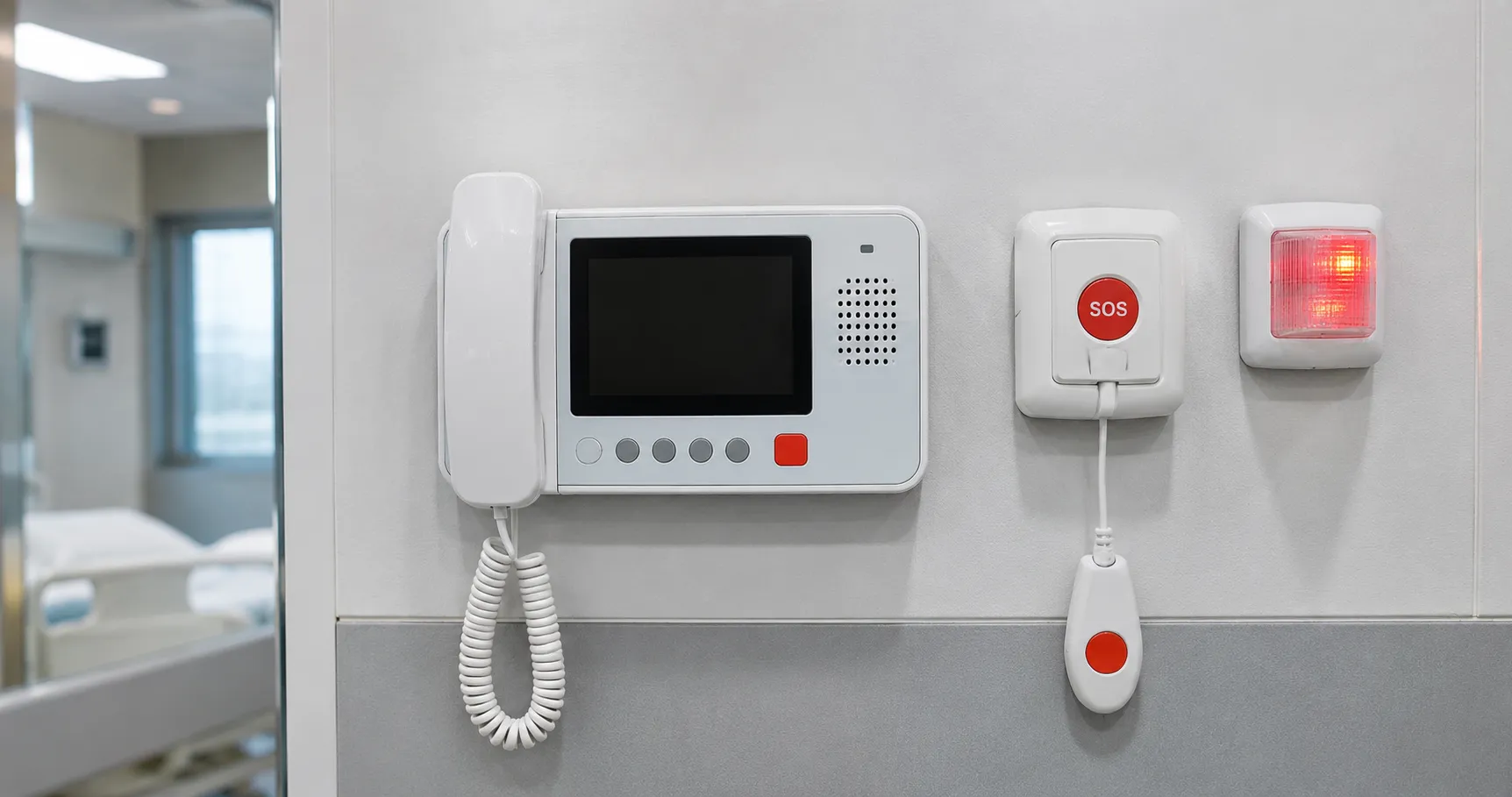
A modern nurse call system distinguishes between call types, and this is where patient safety is won or lost. A routine patient call, an assistance call from a colleague, an emergency call and a cardiac or crash call must be visually and audibly distinct, and each needs its own escalation path. Escalation is the rule set that decides what happens when a call is not answered within a set time: it might re-alert, sound at a second location, or cascade to a senior nurse or a wider team. When you compare systems, ask exactly how escalation is configured, how granular the timers are, and whether staff presence, logged by pulling a presence cord or badging in, cancels or reroutes calls automatically. A system that simply repeats the same alert is weaker than one that climbs a defined chain.
Integration with handsets, pagers and mobile devices
The value of a nurse call system multiplies when the call reaches the right person wherever they are. Look at how the platform pushes calls to DECT handsets, pagers, smartphones or wearable badges, so a nurse away from the corridor display still receives the alert. Integration with electronic patient records, bed-management systems and vital-signs monitors is increasingly expected on IP platforms, and it turns the nurse call system into a hub rather than an island. Confirm the integration is genuine and supported, using recognised interfaces, rather than a fragile custom link that breaks at the next software update. The right integrations cut response times; the wrong ones create alarm fatigue, so weigh which alerts truly need to reach a mobile device.
Reporting, audit and response-time data
One of the strongest reasons to choose a capable nurse call system is the data it produces. Good platforms log every call, its type, the time to answer and the time to resolve, giving ward managers evidence on staffing, response performance and busy periods. That audit trail supports safety investigations and Care Quality Commission assurance, and it is difficult to reconstruct after the fact if the system does not capture it. Ask to see sample reports, confirm how long data is retained, and check the reporting is usable by ward managers rather than locked behind an engineer's console.
Standards and design guidance for nurse call
In the UK, nurse call installations are designed to HTM 08-03, the Health Technical Memorandum covering bedhead services and nurse call systems, which sets out call types, indicator conventions, accessibility and the integration of the system into the bedhead. Accessibility standards such as BS 8300 also bear on reach and usability for patients with limited dexterity, and the system as installed must meet the relevant electrical safety requirements. This guide is compiled from that published HTM guidance and from manufacturer documentation, with regulatory context available from UK government guidance; MediGear is a UK distributor that helps facilities compare verified suppliers rather than promote one platform. Ask suppliers to confirm their design and installation comply with HTM 08-03 and to document it for your estates records.
Resilience and power backup
A nurse call system is safety-critical, so how it behaves during a fault or power interruption deserves scrutiny. Ask how the controllers are powered, whether there is battery or uninterruptible-supply backup, and what proportion of the system stays live if mains power drops. On an IP platform, the network switches and servers the call traffic depends on must sit on protected power too, or a power event silences the whole ward. Fault reporting matters just as much as day-to-day operation: the system should flag a failed call point, a broken cable or a lost controller so estates can act before staff notice a dead bedside unit. A system that fails silently is worse than one that fails loudly, so confirm how faults surface and to whom.
Accessibility and usability at the bedside
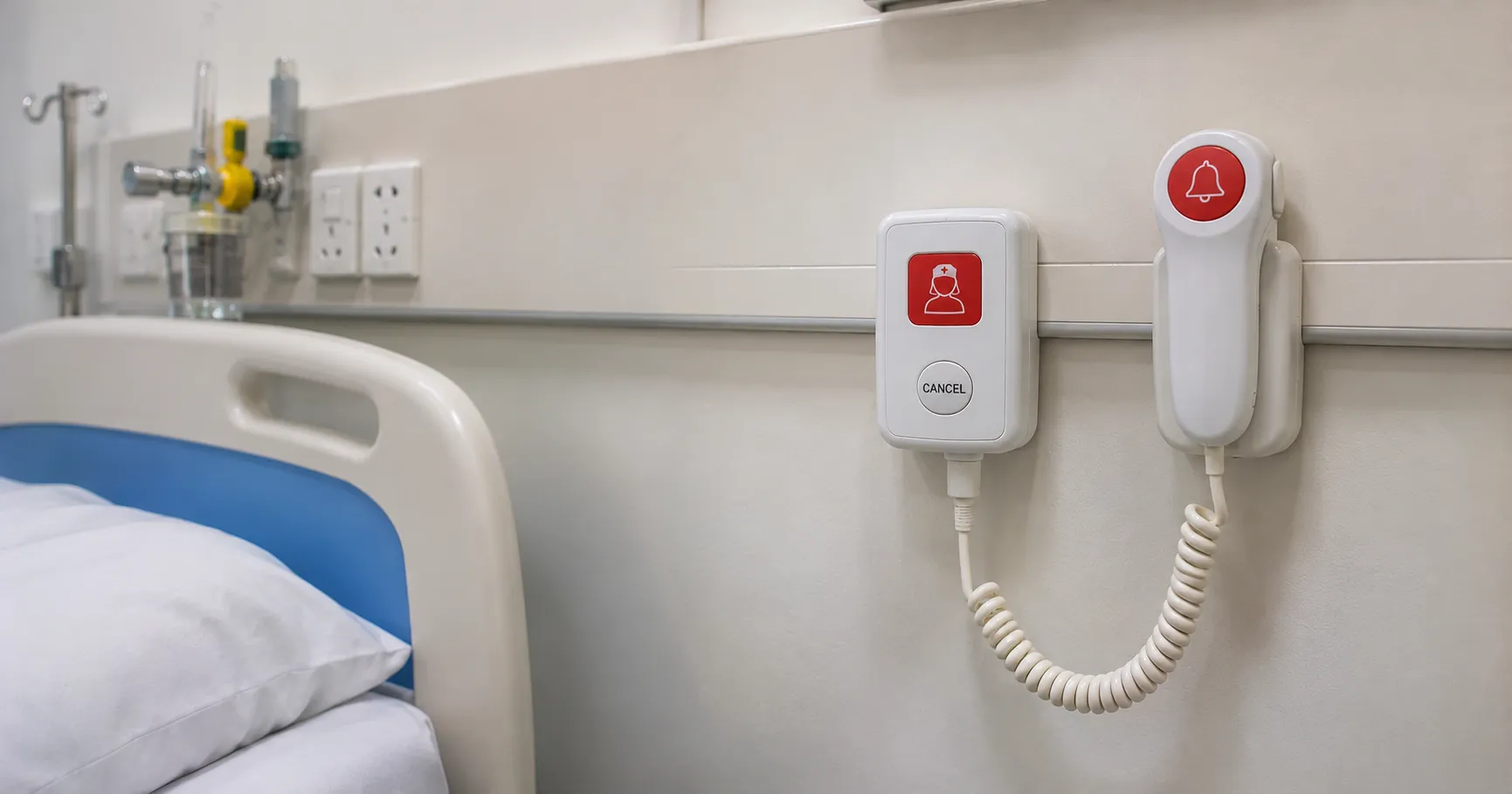
The call device a patient actually uses has to work for people with limited strength, dexterity or sight. Pear-push leads, pneumatic call buttons and pull cords each suit different needs, and the reach and force required should follow accessibility guidance so a weak or confused patient can still summon help. Clear tactile and illuminated controls, a reassurance light that confirms the call was registered, and simple reset actions all reduce missed and repeated calls. When you compare systems, try the bedside devices as a patient would, not just as an engineer, because a call point that is hard to press or unclear in its feedback undermines the whole platform however sophisticated the escalation behind it.
Comparing system tiers
Systems span a spectrum. An entry-level wired system handles basic call and reset with corridor lights and a buzzer, suitable for a small unit with simple needs. A mid-tier system adds call-type differentiation, presence logging and paging. A full IP platform brings mobile alerting, deep integration, and rich reporting across a whole hospital. Buying above your needs wastes capital and complicates support; buying below them leaves you unable to escalate calls or evidence response times. Place your service by the size of the estate, the acuity of the patients and the reporting your governance requires.
Questions to put to a nurse call supplier
Before you commit, press each supplier on the points that determine day-to-day performance:
-
Is the system wired or IP, and how does expansion and reconfiguration work over its life?
-
How are call types differentiated, and how is escalation configured when a call goes unanswered?
-
Does staff presence logging reroute or cancel calls automatically, and how is it recorded?
-
Which handsets, pagers and mobile devices does it alert, and are the integrations supported long-term?
-
What reporting is available on response times, and how long is call data retained?
-
Does the design comply with HTM 08-03, and can that be documented for estates?
-
What resilience exists if the network or a controller fails, and how are faults flagged?
-
What are the UK service response times, spares availability and software-update arrangements?
Pitfalls when buying a nurse call system
Buyers most often specify the bedside hardware and neglect the escalation logic, ending up with a system that alerts but never climbs to a senior nurse when a call is missed. Another trap is bolting a mobile-alerting app onto too many alert types, which floods staff phones and breeds alarm fatigue. Under-scoping the network for an IP system, or overlooking its dependence on IT resilience, causes outages that a wired system would not. And skipping the reporting requirement means discovering, during an incident review, that the data you needed was never captured. Specifying escalation, integration and reporting up front avoids each of these.
Making the right call for your wards
A nurse call system earns its place through reliable escalation, sensible integration and an audit trail your managers can use, all designed to HTM 08-03. Choose the platform architecture to fit your estate, configure escalation around real staffing, and confirm the reporting before you sign. To discuss options or compare suppliers for a ward or whole-site project, reach the MediGear team via the contact page.
Disclaimer
This article is for informational purposes only. It is published by MediGear (medigear.uk) for general information and procurement guidance, and is not clinical, diagnostic, treatment, technical, engineering, legal or regulatory advice, nor a product endorsement, guarantee or substitute for professional assessment. MediGear does not provide medical consultations. Buyers should consult their clinical, biomedical, estates and regulatory contacts, and the manufacturer's documentation, and independently verify all specifications, certifications, compatibility and suitability before purchase. Specifications, certifications and availability are correct at the time of publication and may change without notice. MediGear is a medical-equipment distributor and does not sell medicines or pharmaceutical products.