
Introduction
Buying a robotic surgical system is the easy part. Turning a team into one that can use it safely and independently is the real work, and it does not happen by accident. It happens through a structured training programme — a planned pathway that takes surgeons and staff from first exposure to confident, independent practice.
This article explains robotic surgery training programmes for hospital teams: what a good programme looks like, the stages it moves through, and why the structure matters. It is written for surgical, education and governance teams across the UK, Europe, the US, the Gulf and South Africa who want a clear account of how competence is built.
A programme, not a course
It is tempting to think of robotic training as a course you attend and then you are qualified. In reality, becoming safely independent on a robotic system is a journey through several stages, each building on the last, with practice and assessment along the way. A training programme is the structure that carries a team through that journey deliberately.
The difference matters. A one-off course teaches the basics; a programme takes a trainee all the way to independent practice through a planned sequence, checking competence at each step. Robotic surgery is demanding enough that it needs the second, not the first — a pathway, not a certificate.
The commitment involved is easy to underestimate. Building real competence on a robotic system takes sustained practice over time, not a few intensive days, and a programme has to make room for that. A hospital that understands this from the outset plans for a genuine journey; one that expects a quick certification is setting itself up to fall short. The journey is the point, and planning for it honestly from the start is half the battle won.
The stages of a good pathway
A well-designed programme usually moves through recognisable stages, each with its own purpose:
-
Foundations — understanding the system, the console and the principles.
-
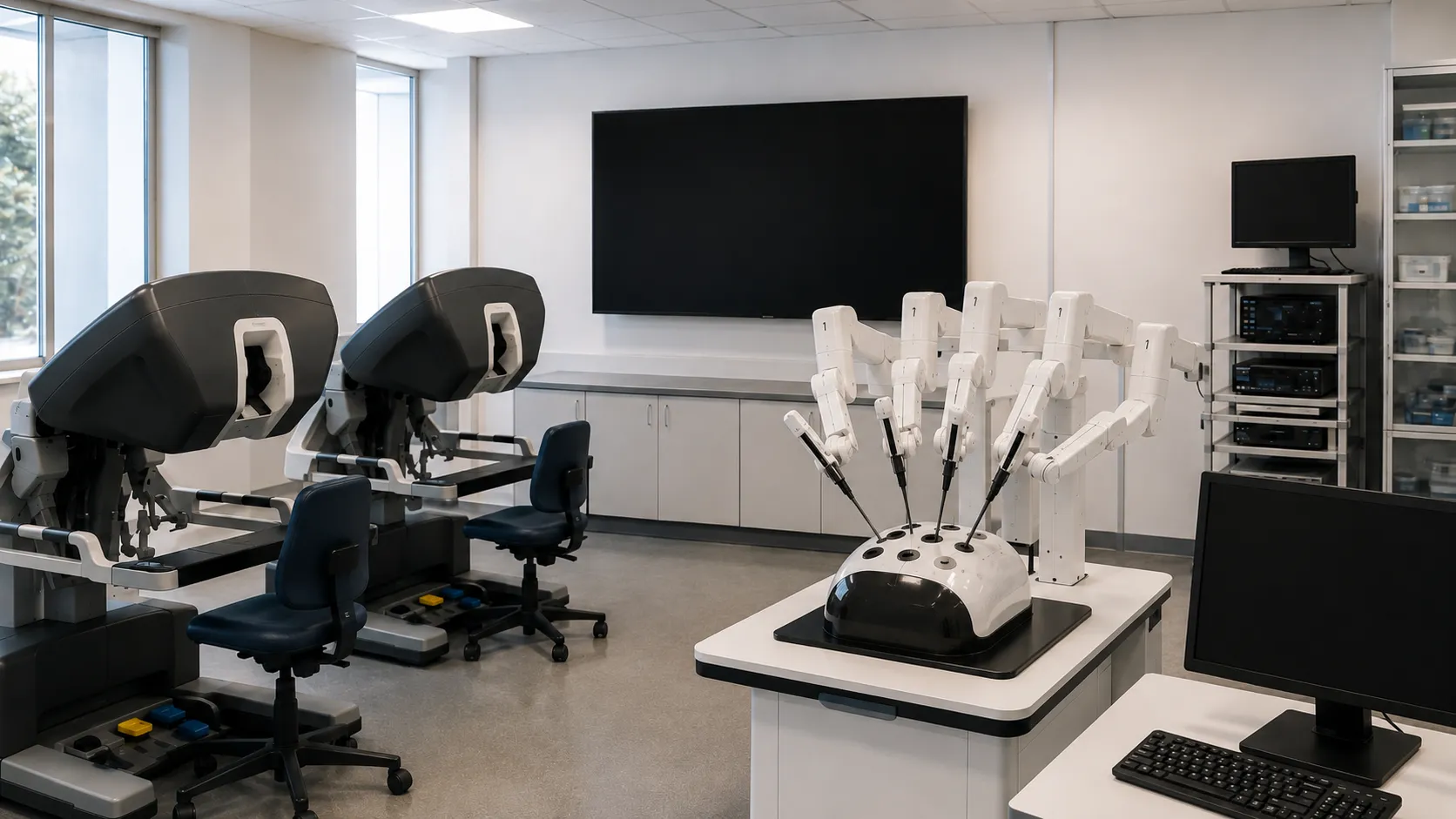
Simulation — building skills and dexterity in a safe, practised setting.
-
Supervised practice — working on real cases under an expert's guidance.
-
Independence — operating alone once competence has been demonstrated.
The logic is progression at a safe pace. A trainee masters each stage before moving on, so that by the time they operate independently they have already proven, repeatedly, that they can. Nothing about the sequence is rushed, because the whole point is that competence precedes independence.
Proctoring: learning from an expert in the room
A distinctive feature of robotic training is proctoring — an experienced robotic surgeon supervising a trainee's early independent cases. Having an expert present during those first real operations means guidance is available at exactly the moment it is needed, and the transition to independence is supported rather than abrupt.
This mentored bridge is one of the most valuable parts of a good programme. The gap between practising in a simulator and operating alone on a patient is real, and proctoring spans it safely. It lets a trainee take on real responsibility while an expert stands ready, which is exactly how a high-stakes skill should be handed over.
The whole team, not just the surgeon
Because robotic surgery is a team activity, a training programme has to reach beyond the surgeon at the console. The scrubbed staff who set up and dock the system, exchange instruments and support the operation all need their own preparation, and the best programmes train the team to work together, not just the individuals within it.
This shared preparation is what makes a robotic list run smoothly. A team that has learned its choreography together moves with a calm efficiency that a collection of separately trained individuals cannot match. Training the team as a team is not an optional refinement; it is how robotic surgery is actually delivered well.
Paced by safety, not by speed
A good programme resists the temptation to rush. There is always pressure to get a costly system into full use quickly, but a training pathway is deliberately paced by competence rather than convenience. A trainee moves on when they are ready, not when a timetable says they should be.
That patience is a feature, not a flaw. Cutting a pathway short to save time risks exactly the harm the whole structure exists to prevent. The steady, safety-first pace of a proper programme is what makes the eventual independence trustworthy, and a hospital does well to protect it from the pressure to hurry. The reward for that patience is a team a hospital can genuinely trust with its patients.
Assessment and sign-off
A training programme is only as trustworthy as the way it decides someone is ready. Good programmes assess competence objectively at each stage and keep a record of it, so that progression to independent practice rests on demonstrated ability rather than time served. That evidence is what lets a hospital sign off a surgeon with confidence.
This documented, staged assessment is central to safe adoption. The Royal College of Surgeons of England good-practice guidance on robotic-assisted surgery sets out expectations for training and governance, including how competence should be built and confirmed. A programme aligned with that thinking gives a hospital a defensible, evidence-based basis for letting a team operate independently.
Why the structure protects patients
All this structure exists for one reason: patient safety. Every stage, every assessment, every proctored case is there to ensure that no one operates independently before they are genuinely ready. The disciplines of safe surgery that the World Health Organisation places at the centre of good care assume a competent, practised team, and a training programme is how that competence is guaranteed.
Seen that way, a robotic training programme is not bureaucracy around the technology; it is part of the technology being used safely at all. The system in the theatre is inert without a team trained to use it well, and the programme is what turns an expensive machine into a safe, capable service.
What a hospital should take from this
A robotic surgery training programme takes a team from first exposure to safe, independent practice through a planned, staged pathway — foundations, simulation, supervised and proctored practice, and assessed sign-off. It is the structure that makes adoption safe, and it applies to the whole team, not just the surgeon.
For a hospital, investing in a proper programme is inseparable from investing in the robotic system itself. The machine is bought once; the capability is built through training, and sustained through it. A hospital that treats the programme as seriously as the purchase gets a safe, confident service; one that skimps on it is gambling with the very thing the technology was meant to improve.
More from Business
-
Buyers — source approved, well-documented equipment.
-
Suppliers — list your equipment and reach buyers worldwide.
-
Advertise — promote your products and services to a clinical audience.
-
Business overview — explore everything MediGear offers healthcare organisations.
Disclaimer
This article is for general information only and is not clinical, educational or governance advice. Safe adoption of robotic surgery depends on structured training, supervised practice and governance appropriate to each team and setting. Confirm current guidance with the relevant authorities and professional bodies. medigear.uk accepts no liability for actions taken on the basis of this content.
Skilled teams, dependable kit
Genuine, approved, fully documented theatre and surgical equipment — the dependable foundation a well-trained team builds its service on.Frequently Asked Questions
It is a structured pathway that takes a hospital team from first exposure to a robotic system all the way to confident, independent practice. Rather than a one-off course, it moves through stages — foundations, simulation, supervised practice, and independence — each building on the last, with practice and assessment along the way. It is the structure that makes adoption safe.
Usually four: foundations (understanding the system and its principles), simulation (building skills in a safe setting), supervised practice (real cases under an expert's guidance), and independence (operating alone once competence is demonstrated). The logic is progression at a safe pace — a trainee masters each stage before moving on, so competence always precedes independence.
Proctoring is an experienced robotic surgeon supervising a trainee's early independent cases. Having an expert present during those first real operations means guidance is available exactly when needed, and the transition to independence is supported rather than abrupt. It spans the real gap between practising in a simulator and operating alone — exactly how a high-stakes skill should be handed over.
Yes. Because robotic surgery is a team activity, a good programme reaches beyond the surgeon at the console. The scrubbed staff who set up and dock the system, exchange instruments and support the operation all need their own preparation, and the best programmes train the team to work together. That shared choreography is what makes a robotic list run smoothly.
By assessing competence objectively at each stage and keeping a record of it, so progression to independent practice rests on demonstrated ability rather than time served. That documented, staged assessment is central to safe adoption and gives a hospital a defensible, evidence-based basis for signing off a surgeon to operate independently, in line with professional good-practice guidance.
For patient safety. Every stage, assessment and proctored case exists to ensure no one operates independently before they are genuinely ready. Safe surgery assumes a competent, practised team, and a programme is how that competence is guaranteed. It is not bureaucracy around the technology — it is part of the technology being used safely at all, turning an expensive machine into a capable service.