
Introduction
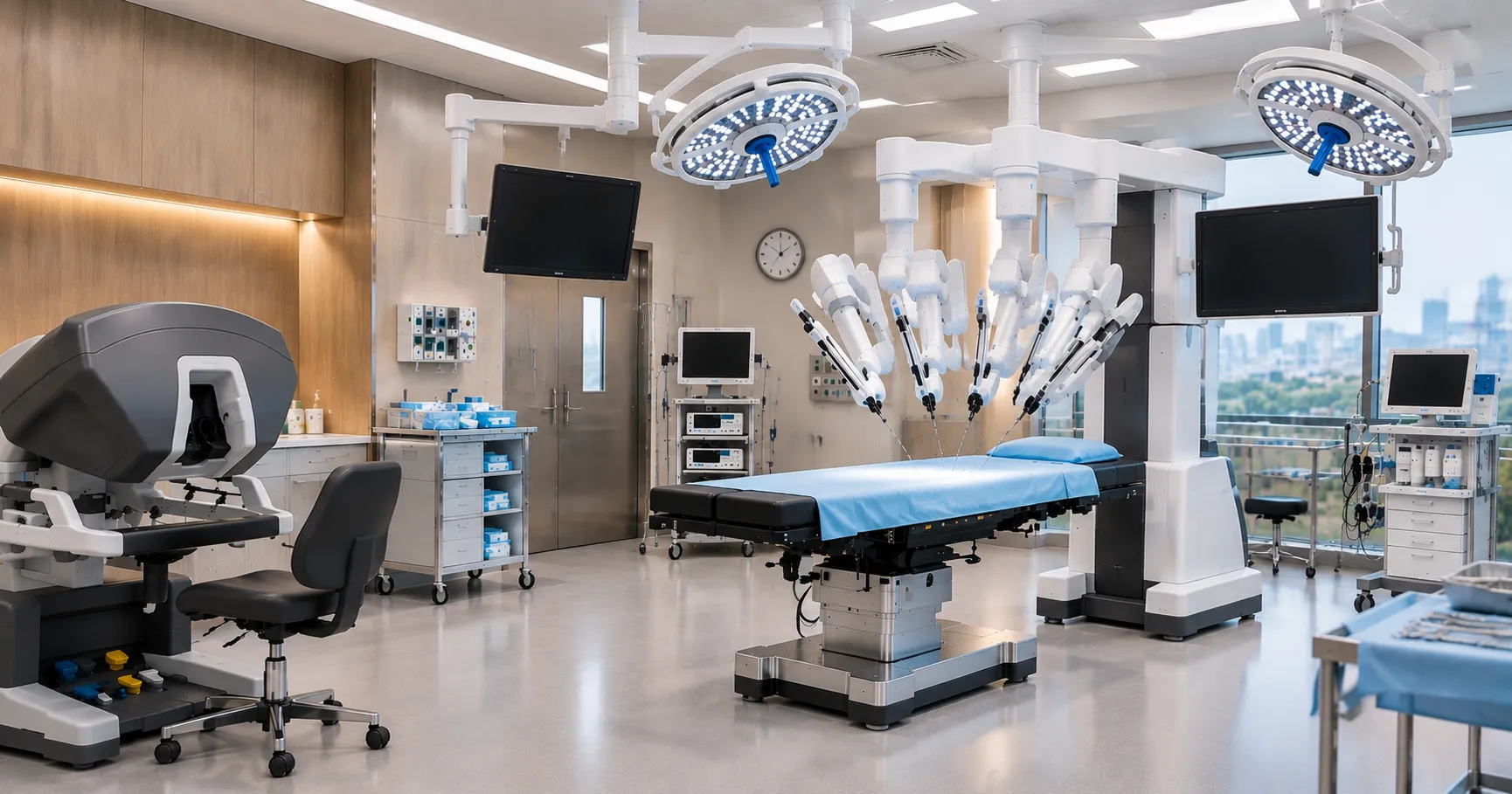
Robotics is quietly rewriting what happens in the operating theatre. Instruments that filter out a surgeon's natural tremor, wrists that bend further than a human hand can, and a magnified, three-dimensional view are enabling teams to work through smaller incisions with greater control. Yet a surgical robot is not an autonomous operator — it is a precise tool in the hands of a skilled surgeon, and its value rises or falls on training, integration and support.
These guides explain what surgical robotics actually changes, where it is being used, and what a team should weigh before adopting it. The theme throughout is simple: the technology extends the surgeon's skill; it never substitutes for it.
The short version — what surgical robotics changes
Look past the machinery and the benefits gather around three ideas — finer control, less invasive access, and a surgeon firmly in command of both.
-
Precision and control — steadier instruments, tremor filtering and a magnified view support finer, more accurate movements.
-
Less invasive access — smaller incisions can mean less trauma and, for some procedures, a smoother recovery.
-
Surgeon-led throughout — the robot follows the surgeon's hands; every decision and action remains theirs.
Where robotics is used in surgery
-
Minimally invasive and laparoscopic surgery — working through small ports with enhanced dexterity and vision.
-
Urology and gynaecology — among the earliest and most established fields for robotic assistance.
-
General and colorectal surgery — complex procedures where precision in tight spaces matters.
-
Orthopaedic surgery — robotic guidance for accurate alignment and placement.
-
ENT and neurosurgery — delicate work where fine control and stability count.
-
Cardiothoracic surgery — access to the chest through smaller openings.
-
Image-guided and navigated surgery — combining imaging and robotics to plan and guide the operation.
-
Training and simulation — building and maintaining the skills a robotic programme depends on.
Surgical robotics at a glance
|
Capability |
What it offers |
What to weigh |
|
Precision |
Steady, fine instrument control |
Suits the procedures you do |
|
Visualisation |
Magnified three-dimensional view |
Surgeon comfort and training |
|
Access |
Smaller incisions, minimally invasive |
Case mix that benefits |
|
Ergonomics |
Seated, supported operating position |
Fatigue over long lists |
|
Consistency |
Repeatable, controlled movements |
Team experience and volume |
|
Integration |
Fit with theatre and imaging |
Space, workflow and utilities |
|
Training |
Skills built and maintained |
Credentialing and case numbers |
|
Support |
Servicing, instruments and spares |
Uptime and consumable supply |
A useful rule of thumb: a surgical robot pays off where it matches your case mix, and your team can build real volume on it — the technology only helps when the training and support around it keep pace.
"Considering surgical robotics?"
We'll help you weigh it up. Tell us your specialty and case mix — we'll help you understand what a robotic programme needs, check that systems are compliant, and source verified equipment and instruments from vetted suppliers.
No pressure, no obligation. → Talk to the team
What else does adopting surgical robotics involve
-
Training and credentialing. Surgeons and theatre teams need structured training and sign-off before and throughout a programme.
-
Theatre integration and workflow. Space, imaging, utilities and team roles all have to accommodate the system.
-
Instruments and consumables. Robotic systems rely on specific instruments and accessories, which must stay in supply.
-
Servicing and support. Uptime depends on responsive maintenance, spares and technical backing.
-
Governance and evidence. Case selection, outcome monitoring and clinical governance underpin a safe programme.
How to adopt surgical robotics, step by step
-
Start with the procedures and case mix a robotic system would actually serve.
-
Confirm the system is approved for your market and intended surgical use.
-
Plan theatre integration, training and credentialing before the first case.
-
Secure instruments, consumables and a servicing arrangement for uptime.
-
Set up case selection, outcome monitoring and clinical governance.
Build the programme around the team, not just the machine — sustained volume, training, and support are what turn a robotic system into a better surgical tool.
Budget and procurement
A robotic programme is a long-term commitment, so sourcing should look well beyond the system itself. Choose equipment that matches your case mix, carries the certification valid for your market, and comes with the instruments, servicing and training to keep it running safely. Where you have the option, weigh new against certified refurbished on support, instrument supply and lifespan rather than on first impressions. Getting the surrounding support right early keeps a promising programme from stalling once it is under way.
Approval and standards by region
|
Region |
Regulator |
Requirement |
|
United Kingdom |
UKCA marking (CE accepted to 2028–2030) |
|
|
European Union |
CE marking under EU MDR 2017/745 |
|
|
United States |
510(k) clearance or PMA approval |
|
|
Gulf (GCC) |
SFDA & GCC bodies |
National registration / GCC conformity |
|
South Africa |
Medical device licensing |
For clinical evidence and technology assessments on robotic surgery, bodies such as NICE and the World Health Organisation publish valuable guidance. If you are building a programme, our buyer hub shows how to source compliant systems and instruments with confidence.
More from Business
-
Buyers — source and import compliant surgical systems and instruments for your theatre.
-
Suppliers — bring your surgical technology and instruments to healthcare buyers worldwide.
-
Advertise — put your surgical innovation in front of a focused clinical audience.
-
Business overview — see everything MediGear offers healthcare organisations.
Disclaimer
This article is for general information only and does not constitute clinical, surgical, medical or regulatory advice. Surgical robotics, its applications, evidence, and the rules that govern it vary by system, procedure, speciality, and country, and change over time. Robotic systems support, and never replace, the judgement and skill of a qualified surgical team. These guides are a general overview, not a specification — always follow the manufacturer's instructions, work with qualified surgical, clinical, and biomedical engineering professionals, and confirm that any system is approved for your market (for example, UKCA, CE under the EU MDR, FDA, SFDA/GCC, or SAHPRA). medigear.uk accepts no liability for actions taken based on this content.
Building a robotic surgery programme?
From precision systems and instruments to theatre integration and training, we help surgical teams and buyers adopt robotics with confidence. Our team supports healthcare providers across the UK, Europe, the US, the Gulf and South Africa — verified, compliant and fully backed at every step.
Frequently Asked Questions (FAQ)
Surgical robotics uses robotic systems to help surgeons operate with greater precision and control, often through small incisions. The surgeon directs the instruments from a console, aided by a magnified view and steady, tremor-filtered movement. The robot follows the surgeon's hands; it does not act on its own.
For suitable procedures, robotic assistance can provide finer control, better visualisation and smaller incisions, which may lead to less trauma and a smoother recovery. The benefit depends heavily on the procedure, the system, and the team's experience, so it is best judged on a case-by-case basis rather than assumed.
No. A surgical robot is a tool controlled by a qualified surgeon, who makes all decisions and carries out all actions through it. The technology extends the surgeon's skill and reach; it never replaces their judgement or takes over the operation.
Beyond the system itself, a programme needs trained and credentialed surgeons and theatre teams, integration with the theatre and imaging, a reliable supply of instruments and consumables, responsive servicing, and clinical governance covering case selection and outcomes. Sustained case volume is what makes it work.
No. Robotic assistance suits some procedures and specialities far more than others, and the right choice depends on the case mix, the evidence and the team. A robotic system is worth adopting where it genuinely matches the work you do, not as an end in itself.
Yes. MediGear is a medical equipment distributor and marketplace with a broad, verified catalogue, and our team can help you source compliant surgical systems, instruments and consumables from vetted suppliers. The clinical and surgical decisions, of course, rest with your own qualified professionals.