
Introduction
Recovering the use of a limb after a stroke or serious injury is, in large part, a numbers game. The brain and body relearn movement through repetition — many hundreds of careful, correct movements, repeated with enough intensity to make a difference. Delivering that by hand is exhausting for therapists and hard to sustain, and this is the gap robotic rehabilitation equipment is designed to fill.
This article explains robotic rehabilitation equipment for hospitals: what it does, why repetition is the point, and how it works alongside therapists rather than in place of them. It is written for rehabilitation, therapy and procurement teams across the UK, Europe, the US, the Gulf and South Africa considering the technology.
Why repetition is the whole idea
Rehabilitation after neurological or physical injury depends on intensive, repeated practice of movement. The World Health Organisation describes rehabilitation as helping people regain function and independence, and doing so reliably takes a great deal of correct, repeated effort. The more high-quality repetitions a patient can complete, the better their chances of regaining movement.
The trouble is that delivering that volume of hands-on practice is physically demanding for therapists and difficult to sustain across a full caseload. A person can only guide so many repetitions in a session before both they and the patient tire. Robotic equipment steps into precisely this gap: it can support a limb through many more correct movements than a therapist could manage by hand alone.
What rehabilitation robots do
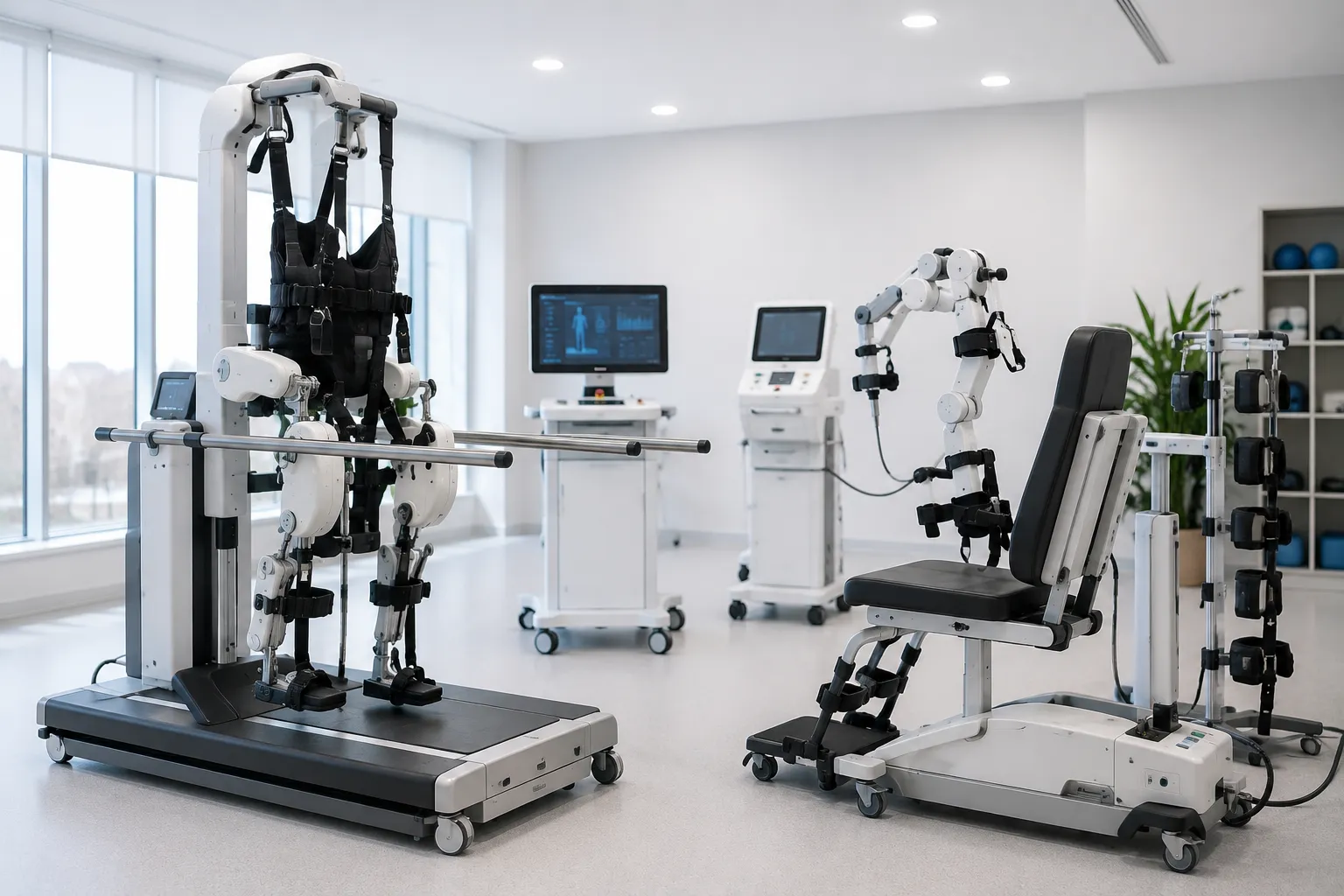
Robotic rehabilitation equipment covers several forms, but they share a common purpose: supporting and guiding movement so a patient can practise it intensively and correctly. Some devices support walking, moving the legs through a natural gait pattern. Others assist the arm and hand, guiding reaching and grasping. What they have in common is enabling repetition at a volume and consistency that is hard to achieve otherwise.
-
Gait and walking trainers — supporting repeated, correct stepping.
-
Upper-limb devices — guiding reaching, grasping and arm movement.
-
Assisted repetition — many more correct movements per session.
-
Measurement — recording effort and progress objectively.
That last point is easy to overlook but valuable. Because the equipment can measure movement, it gives therapists objective data on how a patient is progressing, which helps tailor therapy and track recovery more precisely than observation alone.
Where it is used
Robotic rehabilitation is used most in recovery from conditions that affect movement: after a stroke, after spinal or other neurological injury, and in recovery from some orthopaedic conditions. In each case the aim is the same — to help a patient regain as much function and independence as possible through intensive, repeated, correctly-performed practice.
The setting matters too. This equipment lives in rehabilitation units and therapy departments rather than operating theatres, and it is used over weeks and months rather than in a single procedure. It is a tool of the long, patient work of recovery, which is a very different rhythm from surgery but no less important to how well someone does in the end.
Motivation and the value of feedback
One less obvious benefit of rehabilitation robots is what they do for motivation. Recovery is long and often disheartening, and progress can be hard for a patient to feel from day to day. Equipment that measures movement can show progress clearly, and many systems pair therapy with engaging, game-like tasks that make repetitive practice more bearable.
That matters because a patient who stays engaged completes more practice, and more practice is the whole point. Objective feedback also helps a therapist adjust the difficulty to keep a patient challenged but not defeated. Keeping someone motivated through the grind of recovery is a real contribution, even if it is not the headline one.
The therapist stays at the centre
It would be a mistake to imagine these machines replacing therapists. Rehabilitation is deeply human work — it depends on assessment, encouragement, judgement about what a particular patient needs on a particular day, and the motivation that a person provides and a machine cannot. Robotic equipment handles the tireless delivery of repetition; the therapist directs the therapy.
Seen that way, the technology amplifies a therapist rather than substituting for one. It lets them deliver more intensive practice than their hands alone would allow, frees them from the purely physical effort of guiding every movement, and gives them better information to work with. The human relationship at the heart of rehabilitation remains exactly where it should be.
Evidence, limits and running the equipment
A measured view of the evidence is right here, as elsewhere. Robotic rehabilitation can help deliver the intensity that recovery needs, but it is one part of a therapy programme, not a cure in itself, and the benefit varies with the condition and the patient. It supports good rehabilitation; it does not replace the need for a well-designed programme around it.
As equipment on which patients depend, these systems also need proper management — validation, maintenance and safe operation. The MHRA guidance on managing medical devices sets out the disciplines that keep such equipment safe and reliable throughout its life. Trained staff, sound maintenance and sensible governance are as much part of a rehabilitation robotics programme as the machines themselves.
A tool for units, not every ward
Rehabilitation robots are substantial pieces of equipment that suit dedicated therapy settings rather than general use everywhere. They need space, trained staff and a steady stream of suitable patients to be worth having, which tends to make them a fit for specialist rehabilitation units rather than every ward.
That concentration is sensible. Where the caseload and expertise come together, the equipment can be used well and often, and its benefits justify the investment. Spread too thinly, it risks sitting idle. As with so much of this technology, the value depends on matching it to a setting that can genuinely make use of it.
What a hospital should take from this
Robotic rehabilitation equipment earns its place by solving a real problem: delivering the high volume of intensive, correct repetition that recovery needs, more than tired hands alone can sustain, while measuring progress along the way. For the right patients, as part of a good therapy programme, that can meaningfully support their recovery.
The technology works best understood as an amplifier of skilled therapy, not a replacement for it. Matched to the right patients, run and governed properly, and kept firmly under the direction of the therapists who know their patients, robotic rehabilitation equipment is a genuinely useful addition to what a hospital can offer people rebuilding their lives after injury. Kept in that supporting role, it does real good; asked to replace the therapist, it would miss the point entirely.
More from Business
-
Buyers — source approved, well-documented equipment.
-
Suppliers — list your equipment and reach buyers worldwide.
-
Advertise — promote your products and services to a clinical audience.
-
Business overview — explore everything MediGear offers healthcare organisations.
Disclaimer
This article is for general information only and is not clinical or procurement advice. The benefits of robotic rehabilitation depend on the condition, the patient and the wider therapy programme, and the equipment supports rather than replaces skilled therapy. Confirm current guidance with the relevant authorities and professional bodies. medigear.uk accepts no liability for actions taken on the basis of this content.
Recovery, dependable equipment
Genuine, approved, fully documented rehabilitation and hospital equipment — the dependable foundation good therapy is built on.Frequently Asked Questions
It is equipment that supports and guides a patient's movement so they can practise it intensively and correctly during recovery. Some devices support walking by moving the legs through a natural gait; others assist the arm and hand with reaching and grasping. What they share is enabling many more correct repetitions than a therapist could guide by hand alone, and measuring progress along the way.
Because the brain and body relearn movement through repeated, correct practice, delivered with enough intensity to make a difference. The more high-quality repetitions a patient completes, the better their chances of regaining movement. Delivering that volume by hand is exhausting for therapists and hard to sustain, which is the gap robotic equipment is designed to fill.
Most in recovery from conditions affecting movement: after a stroke, after spinal or other neurological injury, and in recovery from some orthopaedic conditions. It lives in rehabilitation units and therapy departments rather than theatres, and is used over weeks and months. The aim is to help a patient regain as much function and independence as possible through intensive, repeated practice.
No. Rehabilitation is deeply human work — it depends on assessment, encouragement, judgement about what a patient needs, and motivation a machine cannot provide. Robotic equipment handles the tireless delivery of repetition; the therapist directs the therapy. The technology amplifies a therapist rather than substituting for one, and the human relationship stays where it should be.
It can help deliver the intensity that recovery needs and measure progress objectively, but it is one part of a therapy programme, not a cure in itself, and the benefit varies with the condition and the patient. A measured view is right: it supports good rehabilitation rather than replacing the need for a well-designed programme around it, and works best as part of one.
As equipment patients depend on, these systems need proper management — validation, maintenance and safe operation — along with trained staff and sensible governance. Guidance on managing medical devices sets out the disciplines that keep such equipment safe and reliable throughout its life. Those disciplines are as much part of a rehabilitation robotics programme as the machines themselves.