
Introduction
Much of spinal surgery comes down to putting hardware exactly where it belongs. Screws placed in the vertebrae to hold a construct together have to sit within millimetres of the right spot, close to the spinal cord and nerves but not too close. Get it right and the repair is sound; get it wrong and the consequences can be serious. This is the problem robotics is built to help with.
This article looks at how robotics is improving spinal surgery outcomes — not through cleverness for its own sake, but by making the placement of instrumentation more accurate and more predictable. It is written for surgical and procurement teams across the UK, Europe, the US, the Gulf and South Africa weighing what the technology delivers.
The placement problem
Placing a pedicle screw well is a matter of trajectory: the right entry point, the right angle, the right depth, in a bone that varies from patient to patient and is surrounded by structures you must not damage. Surgeons have long done this by anatomical landmarks, feel and imaging, and skilled hands achieve good results — but the task is unforgiving, and even small deviations matter.
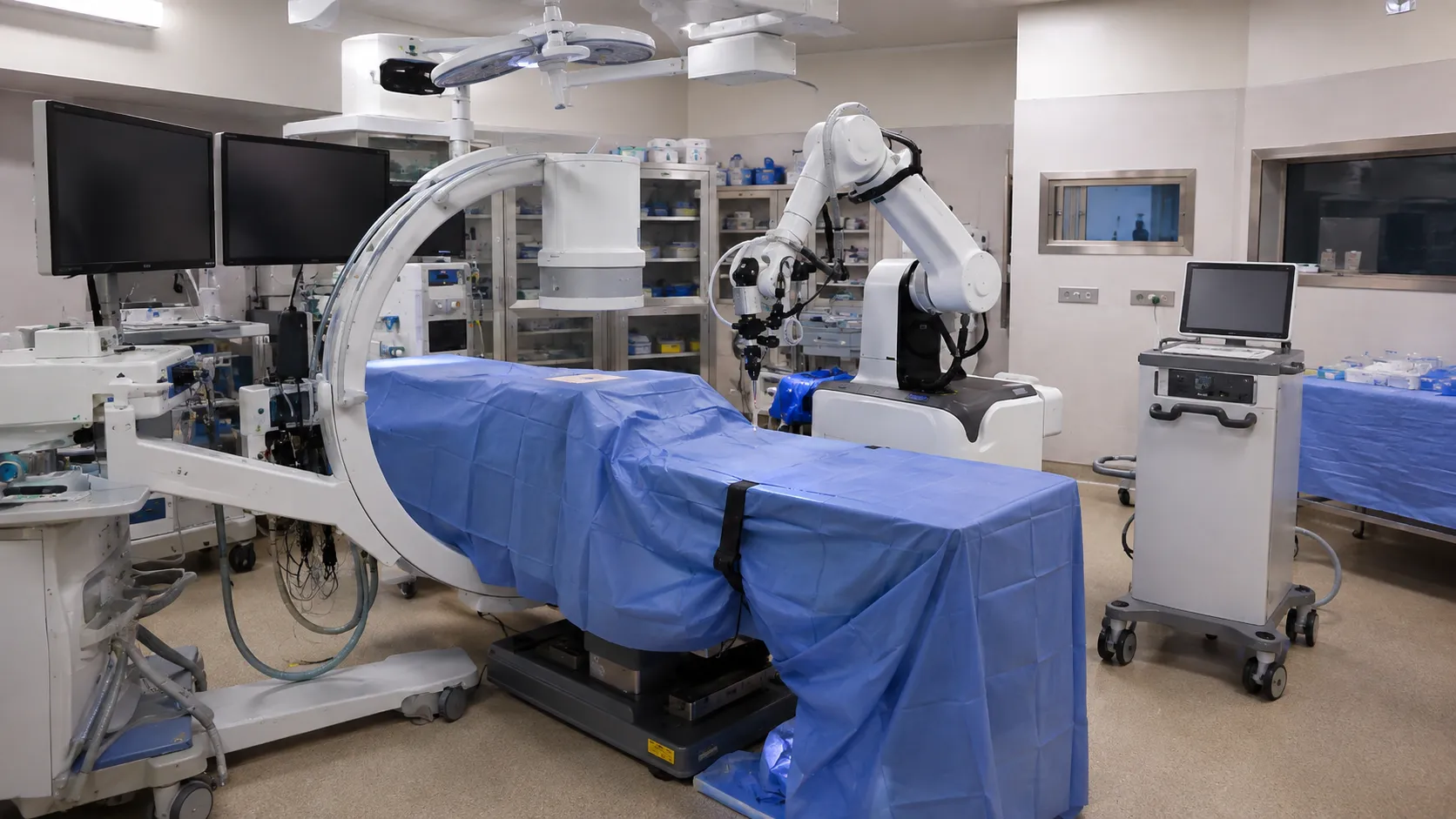
Robotic guidance addresses exactly this. Rather than operating instruments from a console, most spinal robotic systems plan the screw trajectories from the patient's imaging and then guide the surgeon's instruments precisely along those planned paths. The robot enforces the plan; the surgeon carries out the work. It is guidance for accuracy, not automation of the operation.
From plan to precise placement
The workflow is where the improvement comes from. Imaging of the spine feeds a three-dimensional plan of where each screw should go. During surgery, the plan is registered to the patient on the table, and a robotic arm holds the instrument steady along the planned trajectory so the screw goes exactly where intended. The aim is to remove the guesswork and the drift that creep into freehand placement.
-
Plan — screw trajectories are designed from the patient's imaging.
-
Register — the plan is matched to the spine in theatre.
-
Guide — the arm holds the instrument to the planned path.
-
Place — the screw goes where the plan says, more reliably.
Accuracy along a trajectory is something a robot does very well and a tiring hand does less consistently. That is the mechanism behind the outcomes robotics is meant to improve.
The outcomes that actually matter
Better placement is only worthwhile if it improves things patients and surgeons care about. The outcomes usually pointed to are accuracy of screw position, fewer poorly placed screws needing revision, and less exposure to radiation, because reliable navigation can reduce the repeated imaging that freehand placement sometimes needs. Accurate guidance also supports minimally invasive approaches, which can mean less disruption to muscle and tissue.
Each of these is a plausible, meaningful benefit. Fewer misplaced screws means fewer return trips to theatre; less radiation is better for patients and staff alike; a smaller, more precise approach can ease recovery. Together they describe why accurate placement is not a technical nicety but something that can genuinely shape how a patient does.
Beyond screws: the wider picture
Although screw placement is the headline use, robotic guidance in the spine fits into a broader shift towards planned, navigated surgery. Once a system knows the anatomy and the plan, it can help a surgeon work more confidently through smaller openings, with the position of instruments tracked against the imaging rather than judged by eye.
That wider picture is part of why interest in spinal robotics keeps growing. It is not only about getting a screw in the right place, but about bringing a measured, image-guided discipline to operations that were once done largely by feel. The screws are where the benefit is easiest to see; the underlying change is broader than that.
Keeping the evidence honest
A note of caution belongs here. The logic of robotic spinal surgery is strong and the accuracy is real, but whether it translates into clearly better long-term outcomes for a given procedure is still being studied. Precise screw placement is a means to an end, and the size of the benefit varies with the operation and the patient.
So the sensible position is to value the accuracy while following the evidence on outcomes rather than assuming them. As with robotic surgery generally, the FDA authorises these computer-assisted surgical systems for specific uses, and the benefit is best judged procedure by procedure. The technology earns its place where the evidence and the case mix support it, not simply because it is precise.
Equipment, radiation and the team
A spinal robotic system is bought and run as part of a chain: imaging, navigation, the robotic arm and the trained team that ties them together. The accuracy that justifies the investment depends on all of it working properly, and on staff who understand how registration and navigation can go wrong and how to check them.
The World Health Organisation and its safe-surgery disciplines apply here as ever: accurate hardware placement sits alongside, not instead of, sound checks and teamwork. A hospital adopting spinal robotics is investing in a capability, and the outcomes it hopes for depend on the whole capability being in place.
A word on radiation and the team
Radiation deserves a closer look, because it affects staff as well as patients. Spine teams can be exposed to imaging repeatedly across many operations over a career, so anything that reduces the need for it is a benefit to the people in the room, not only the person on the table. Reliable navigation that cuts repeated imaging is valuable on both counts.
It is a reminder that the gains from accurate guidance are not all about the single operation in front of you. Some accrue quietly over time and across a whole team, which is easy to overlook when weighing a system but worth counting properly when the case is being made.
The bottom line for a hospital
Robotics improves spinal surgery outcomes chiefly by making the placement of instrumentation more accurate and more predictable, with knock-on benefits for revision rates, radiation exposure and minimally invasive access. For the trajectory-based work at the heart of much spinal surgery, that accuracy is a genuine advantage over freehand technique.
The decision, as always, is about fit and evidence: which procedures, in what numbers, with which team, and supported by what the studies actually show. Judged that way, and run as a full capability rather than a standalone arm, spinal robotics is a sound way to make precise, high-stakes placement more reliable — which, in the spine, is worth a great deal. That, in the end, is the honest case for the technology: not novelty, but dependable accuracy where accuracy counts most.
More from Business
-
Buyers — source approved, well-documented equipment.
-
Suppliers — list your equipment and reach buyers worldwide.
-
Advertise — promote your products and services to a clinical audience.
-
Business overview — explore everything MediGear offers healthcare organisations.
Disclaimer
This article is for general information only and is not clinical or procurement advice. The benefits of robotic spinal surgery depend on the procedure, the patient, imaging accuracy, training and case selection, and the long-term evidence is still developing. Confirm current guidance with the relevant authorities and professional bodies. medigear.uk accepts no liability for actions taken on the basis of this content.
Precise placement, dependable kit
Genuine, approved, fully documented theatre and surgical equipment — the dependable foundation accurate, image-guided spinal work relies on.Frequently Asked Questions
Chiefly by making the placement of instrumentation more accurate. Most spinal robotic systems plan screw trajectories from the patient's imaging, then guide the surgeon's instruments precisely along those planned paths, so a screw goes exactly where intended. The robot enforces the plan and the surgeon carries out the work — it is guidance for accuracy, not automation of the operation.
Because pedicle screws must sit within millimetres of the right spot, close to the spinal cord and nerves but not too close. Good placement makes the repair sound; poor placement can have serious consequences and may need revision surgery. The task is unforgiving and even small deviations matter, which is why accurate, consistent placement is so valuable in the spine.
The outcomes usually pointed to are more accurate screw position, fewer poorly placed screws needing revision, and less radiation exposure, because reliable navigation can reduce repeated imaging. Accurate guidance also supports minimally invasive approaches, which can mean less disruption to muscle and tissue. Together these can genuinely shape how a patient recovers.
The accuracy is real and the logic is strong, but whether it translates into clearly better long-term outcomes for a given procedure is still being studied. Precise placement is a means to an end, and the size of the benefit varies with the operation and the patient. The sensible position is to value the accuracy while following the evidence rather than assuming the outcome.
Freehand screw placement sometimes relies on repeated imaging during surgery to check position. Reliable robotic navigation, built on a plan registered to the patient, can reduce the need for that repeated imaging, lowering radiation exposure for patients and theatre staff. It is one of the practical benefits that accurate, planned guidance can bring alongside placement accuracy itself.
It is a capability, not just an arm: imaging, navigation, the robotic system and a trained team that ties them together, plus staff who understand how registration and navigation can go wrong and how to check them. The accuracy that justifies the investment depends on the whole chain, and the outcomes hoped for depend on the whole capability being in place and used well.