
Introduction
Weight-loss surgery presents a challenge that most other operations do not: the body being operated on can itself make the surgery harder. Working through a thick abdominal wall, reaching deep structures with instruments that must span a greater distance, and doing so precisely, is genuinely demanding — and it is exactly the kind of difficulty robotics can help with.
This article explains how robotics is changing bariatric surgery equipment: the particular challenges of operating in this setting, how a robotic approach helps, and the honest limits. It is written for bariatric and procurement teams across the UK, Europe, the US, the Gulf and South Africa who want a clear account.
A demanding operating environment
Bariatric, or weight-loss, surgery is technically demanding for reasons that have to do with the operating environment itself. A thicker abdominal wall and deeper working space mean instruments have to reach further, with less leverage and more effort to control precisely. What is straightforward in a slimmer patient can become physically hard work here.
These operations are also often intricate, involving careful work on the stomach and digestive tract to reshape how the body handles food. Doing that precise work at depth, through a challenging abdominal wall, is the core of what makes bariatric surgery demanding — and the core of where better instruments can help.
Understanding this environment is the key to understanding why robotics has found a growing place in bariatric surgery. The difficulties are not incidental but built into the operation, and a tool designed to steady reach and precision speaks directly to them.
How robotics eases the difficulty
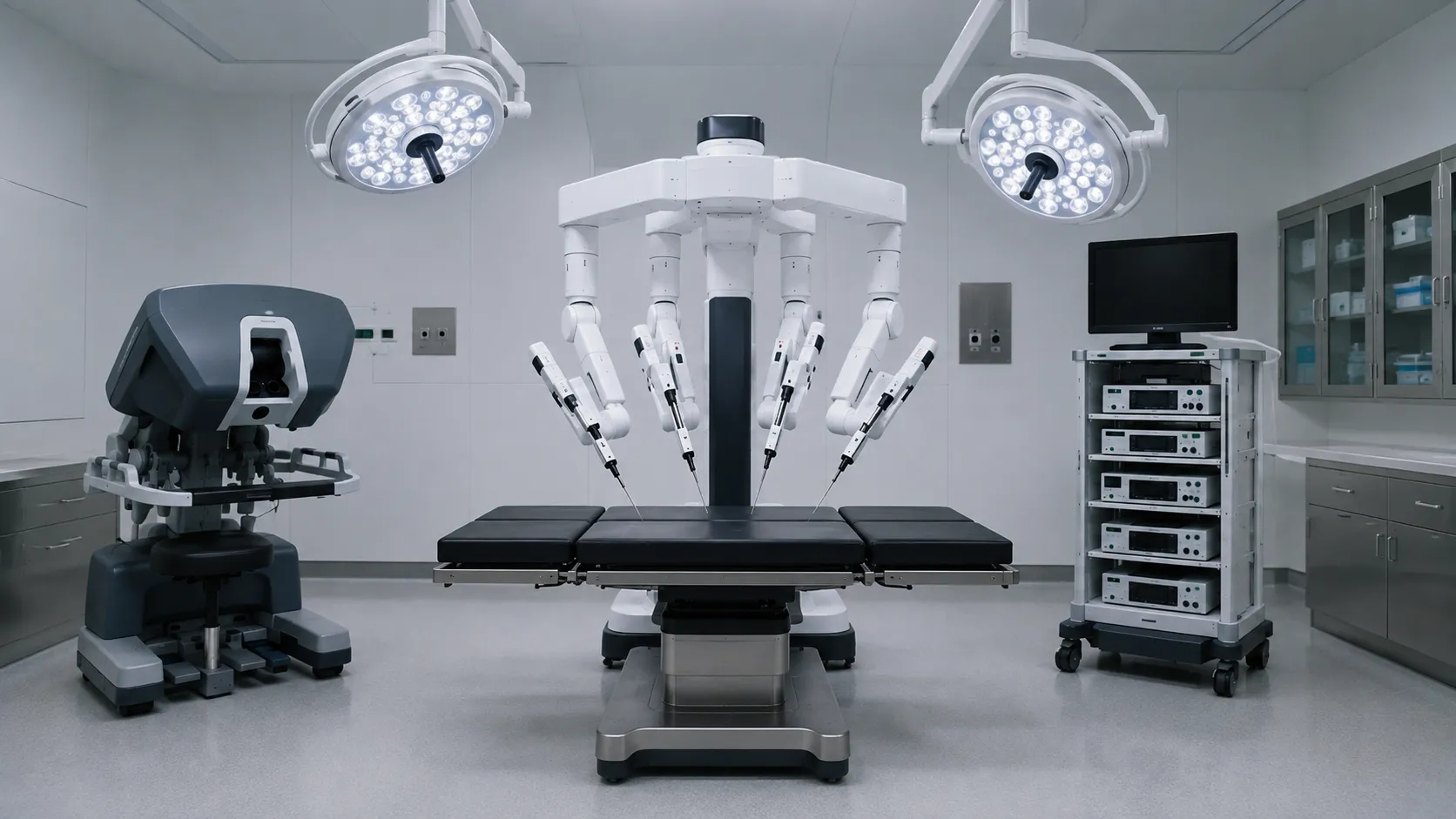
A robotic system is well suited to these particular challenges. Its instruments provide steady, precise control regardless of how far they must reach, so the greater working distance and reduced leverage of bariatric surgery are less of an obstacle. The system holds and moves the instruments steadily where a surgeon's hands would tire.
-
Reach — steady control even across a greater working distance.
-
Leverage — precise movement where hand leverage is reduced.
-
Articulation — wristed instruments for intricate work at depth.
-
Ergonomics — less physical strain on the surgeon over a hard case.
A magnified, three-dimensional view and wristed instruments also help with the intricate work on the stomach and digestive tract, at a depth and angle that can be awkward with straight instruments. Together, these features address precisely the difficulties that make bariatric surgery hard.
Easing strain on the surgeon
A benefit worth drawing out is what robotics does for the surgeon's own experience of the operation. Bariatric surgery done conventionally can be physically tiring, wrestling instruments at depth against reduced leverage. A robotic system, with the surgeon seated at a console and the instruments doing the steady work, can ease that strain considerably.
This is not mere comfort. A surgeon working against fatigue late in a hard case is working against their own body, and anything that reduces that strain helps sustain careful, precise work throughout. In an operation where the environment is inherently demanding, easing the physical burden on the surgeon has real value for the quality of the surgery.
Precision where it counts
The intricate parts of bariatric surgery — the careful reshaping of the stomach and digestive tract — are where precision matters most, and where a robotic approach can help most. Doing that fine work steadily and under a clear, magnified view, at a depth that would otherwise be awkward, supports getting the details right.
As with all minimally invasive surgery, completing these operations through small openings rather than a large one brings the usual benefits for the patient — less disruption and often a quicker recovery. In a bariatric setting, where a large open operation would be a particularly significant undertaking, being able to work minimally invasively is especially valuable.
A rising role in weight-loss surgery
Bariatric surgery has become one of the areas where robotic approaches are increasingly used, and the reason is the good fit between the technology's strengths and the operation's difficulties. Where an operating environment is inherently demanding, a tool that steadies reach and eases strain has an obvious appeal.
That growing use should still be guided by evidence rather than momentum. The right question remains which patients and which procedures genuinely benefit, rather than assuming a robotic approach for every case. Judged that way, its rising role in bariatric surgery reflects a real match between problem and tool, not merely a trend.
A measured, honest view
It would be wrong to overstate the case. A robotic approach is not automatically better than a skilled conventional keyhole one for every bariatric operation, and the benefit depends on the patient, the procedure and the surgeon's experience. The technology addresses real difficulties, but it does not remove the need for skill and judgement.
As throughout robotic surgery, the system assists rather than acts: the bariatric surgeon controls every movement, and the FDA treats these as computer-assisted surgical systems under the surgeon's control. The Royal College of Surgeons of England emphasis on adopting robotic-assisted surgery safely, with proper training and governance, applies here as everywhere. The technology is a valuable tool for a demanding setting, used well by experienced teams.
Consistency across a range of patients
A quieter benefit of a robotic approach in bariatric surgery is consistency. Because the system steadies reach and control regardless of how demanding the working environment is, it can help a surgeon perform more consistently across patients who present very different physical challenges.
That consistency matters in a field where the difficulty of the operation varies so much from one patient to the next. A tool that helps hold the quality of the surgery steady, even as the environment grows more demanding, is doing something genuinely useful — supporting reliable work where reliability is hard to maintain by hand alone. For a field defined by variable, demanding anatomy, that steadying influence is one of the technology's quieter but real contributions to safer, more consistent bariatric surgery across a demanding and highly variable range of patients, which is no small thing in this field.
What a hospital should take from this
Robotics is changing bariatric surgery equipment by directly addressing the difficulties that make these operations hard: the reach across a greater working distance, the reduced leverage, and the intricate precision needed at depth. It also eases the physical strain on the surgeon in an inherently demanding operation.
The measured view is of a well-matched, valuable tool whose benefit still depends on the patient, the procedure and an experienced team, rather than an automatic upgrade. A hospital that adopts it for the demanding work it genuinely helps with — and governs it properly — gets the real value it offers to bariatric surgery.
More from Business
-
Buyers — source approved, well-documented equipment.
-
Suppliers — list your equipment and reach buyers worldwide.
-
Advertise — promote your products and services to a clinical audience.
-
Business overview — explore everything MediGear offers healthcare organisations.
Disclaimer
This article is for general information only and is not clinical or procurement advice. The suitability and benefits of robotic bariatric surgery depend on the procedure, the patient and the surgeon's experience, and approvals are procedure-specific. Confirm current guidance with the relevant authorities and professional bodies. medigear.uk accepts no liability for actions taken on the basis of this content.
Bariatric surgery, dependable kit
Genuine, approved, fully documented theatre and surgical equipment — the dependable foundation precise, demanding surgery relies on.Frequently Asked Questions
Because the operating environment itself makes it harder. A thicker abdominal wall and deeper working space mean instruments must reach further, with less leverage and more effort to control precisely. What is straightforward in a slimmer patient can become physically hard work. The operations are also intricate, involving careful work on the stomach and digestive tract at depth.
Its instruments provide steady, precise control regardless of how far they must reach, so the greater working distance and reduced leverage are less of an obstacle. A magnified, three-dimensional view and wristed instruments also help with intricate work on the stomach and digestive tract at awkward depths and angles — addressing precisely the difficulties that make bariatric surgery hard.
Yes, meaningfully. Bariatric surgery done conventionally can be physically tiring, wrestling instruments at depth against reduced leverage. With the surgeon seated at a console and the instruments doing the steady work, a robotic system can ease that considerably. That is not mere comfort — a surgeon working against fatigue is working against their own body, and easing it helps sustain precise work.
Chiefly those of minimally invasive surgery: completing the operation through small openings rather than a large one, with less disruption and often a quicker recovery. In a bariatric setting, where a large open operation would be a particularly significant undertaking, being able to work minimally invasively is especially valuable — as is the precision that supports getting intricate details right.
No. A robotic approach is not automatically better than a skilled conventional keyhole one for every operation, and the benefit depends on the patient, the procedure and the surgeon's experience. The technology addresses real difficulties but does not remove the need for skill and judgement — it is a valuable tool for a demanding setting, used well by experienced teams.
No. The bariatric surgeon controls every movement, and regulators treat these as computer-assisted systems under the surgeon's control. Adoption should follow the same careful path as elsewhere, with proper training and governance. The technology extends what a skilled team can do in a demanding setting; it does not do the surgery by itself.