
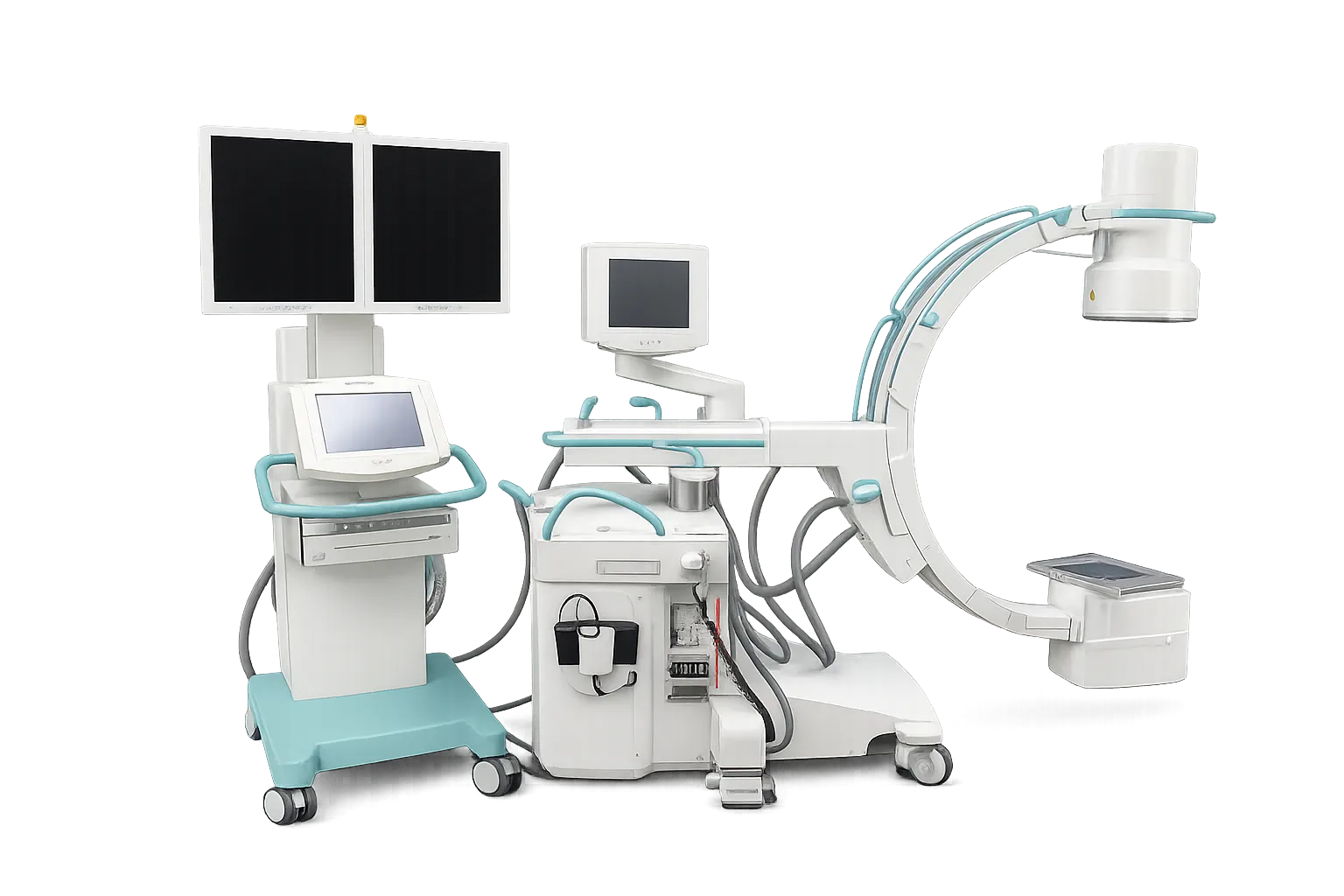
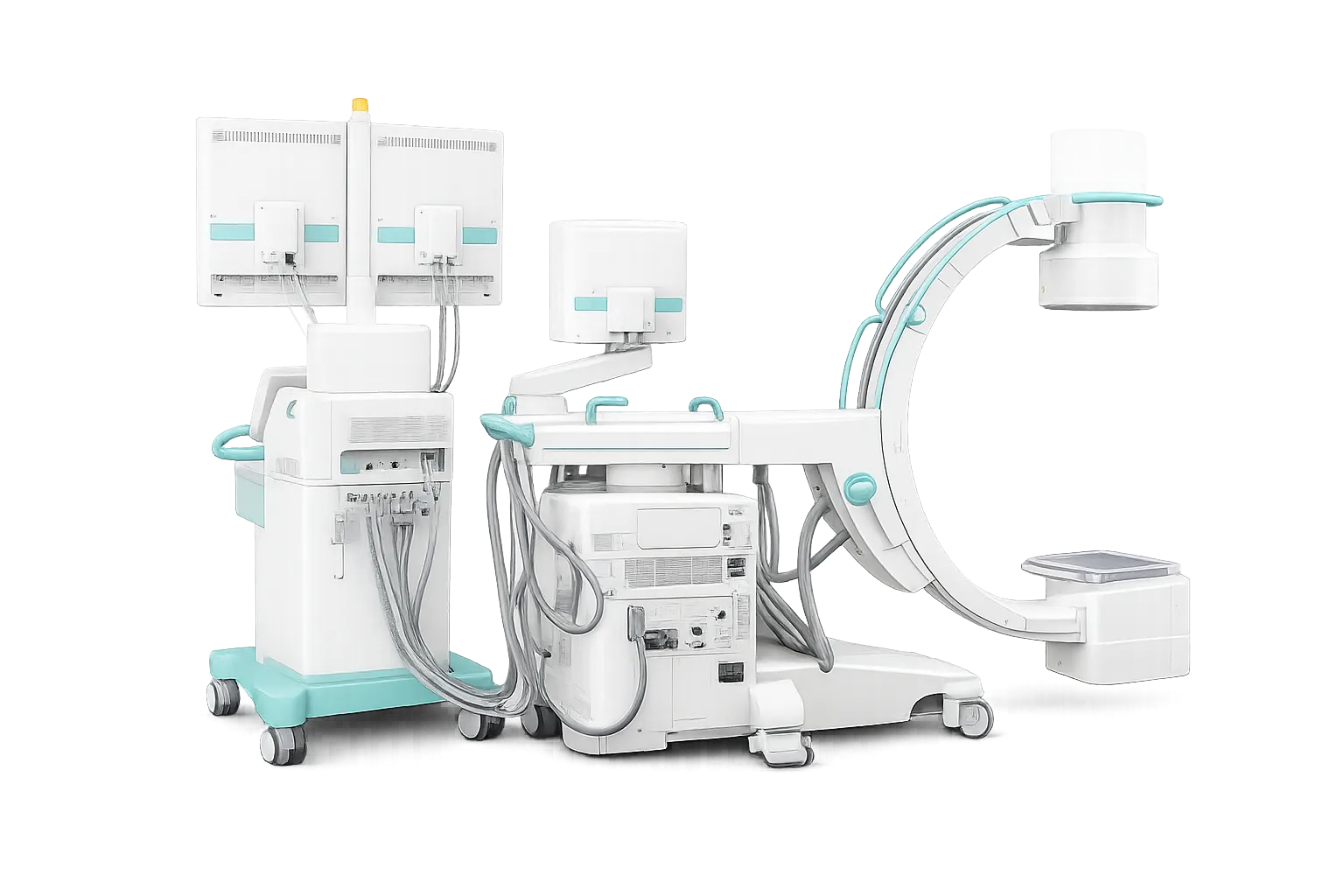
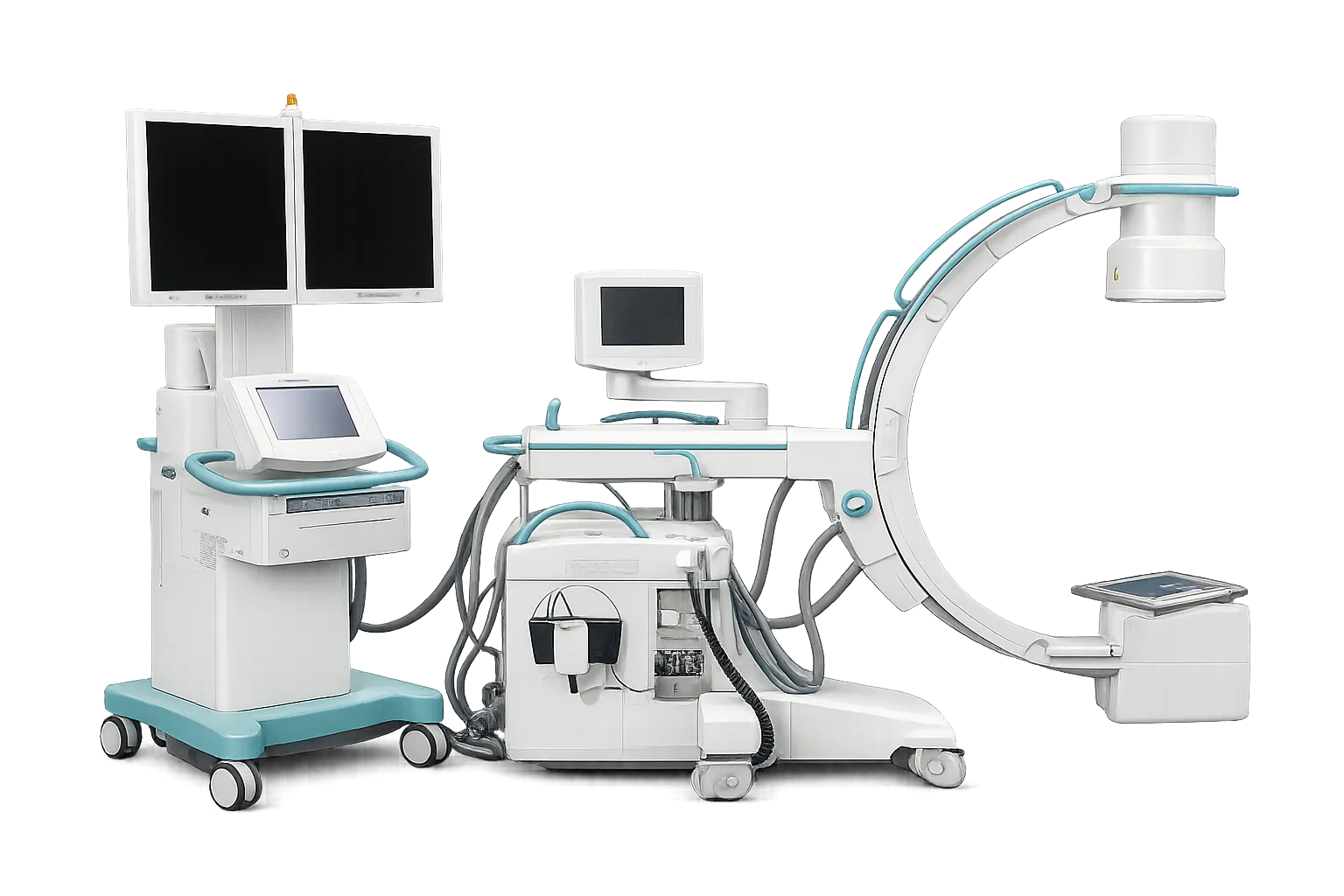
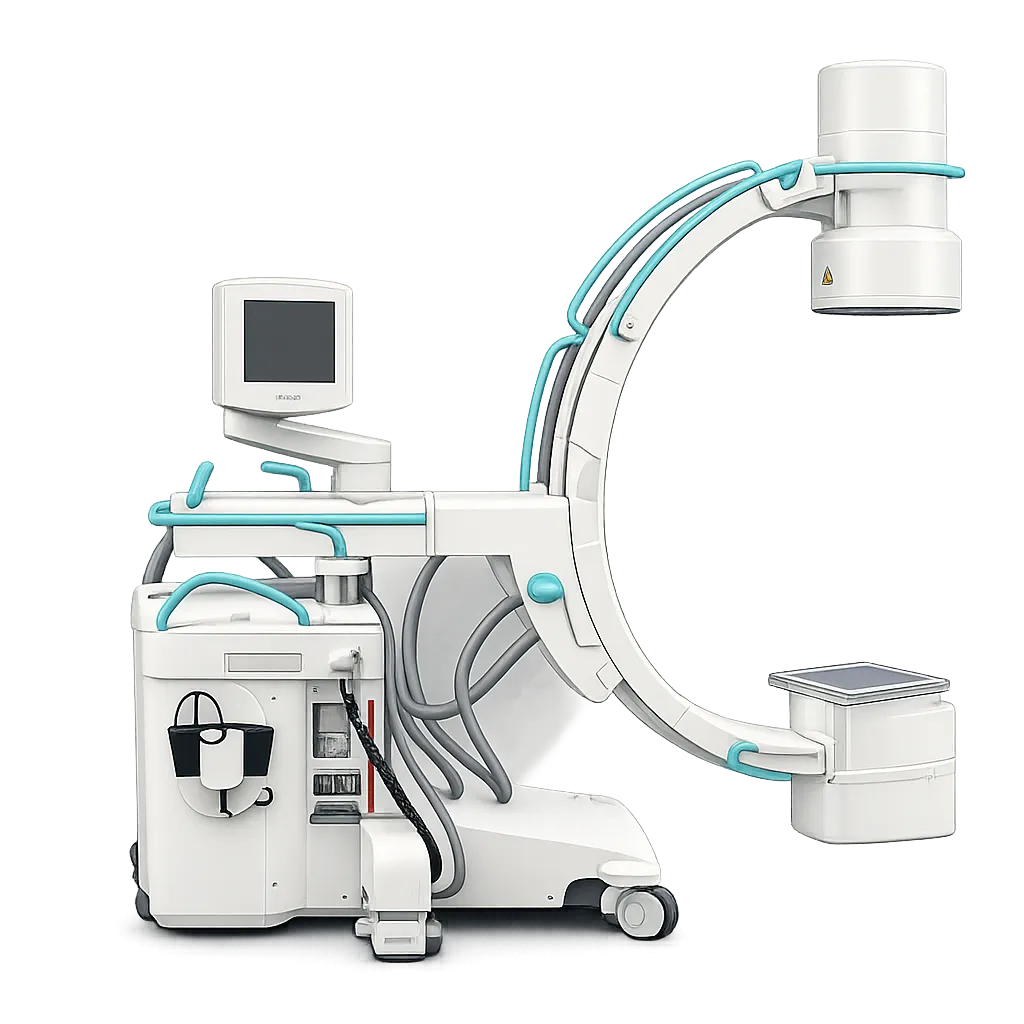
Pain management clinics are the clearest fit, and the reason is floor space rather than imaging. Injection guidance requires repeated short screening runs rather than sustained output, so a modest imaging chain is adequate, while the room is typically small and already holds a table, a trolley and staff. Removing the monitor cart takes a whole footprint out of that room. Ziehm lists pain management first among the applications, and all clinical judgement, including whether an exposure is justified, remains with the practitioner. Medigear.uk supplies configuration and condition detail rather than clinical guidance.
Day surgery units and procedure rooms benefit for the same reason, with the added point that a single unit is quicker to position and turn around between cases than a stand and a cart requiring a cable run. On a list where turnaround rather than operating time limits how many cases fit the session, that saving repeats at every changeover.
Orthopaedic work sits within the imaging chain's capability for extremity and general screening. Where a list involves lateral spine on larger patients, the power class should be weighed against the caseload, and Medigear.uk works through that before quoting.
Lithotripsy appears among the stated applications, which is worth noting because it is not listed for most mobile C-arms and suggests the platform has been specified for that setting. Whether a given unit carries the relevant configuration is confirmed at enquiry rather than assumed from the application list. Medigear.uk establishes that alongside the imaging chain and monitor arrangement, since an application list describes the platform rather than the particular machine being quoted.