
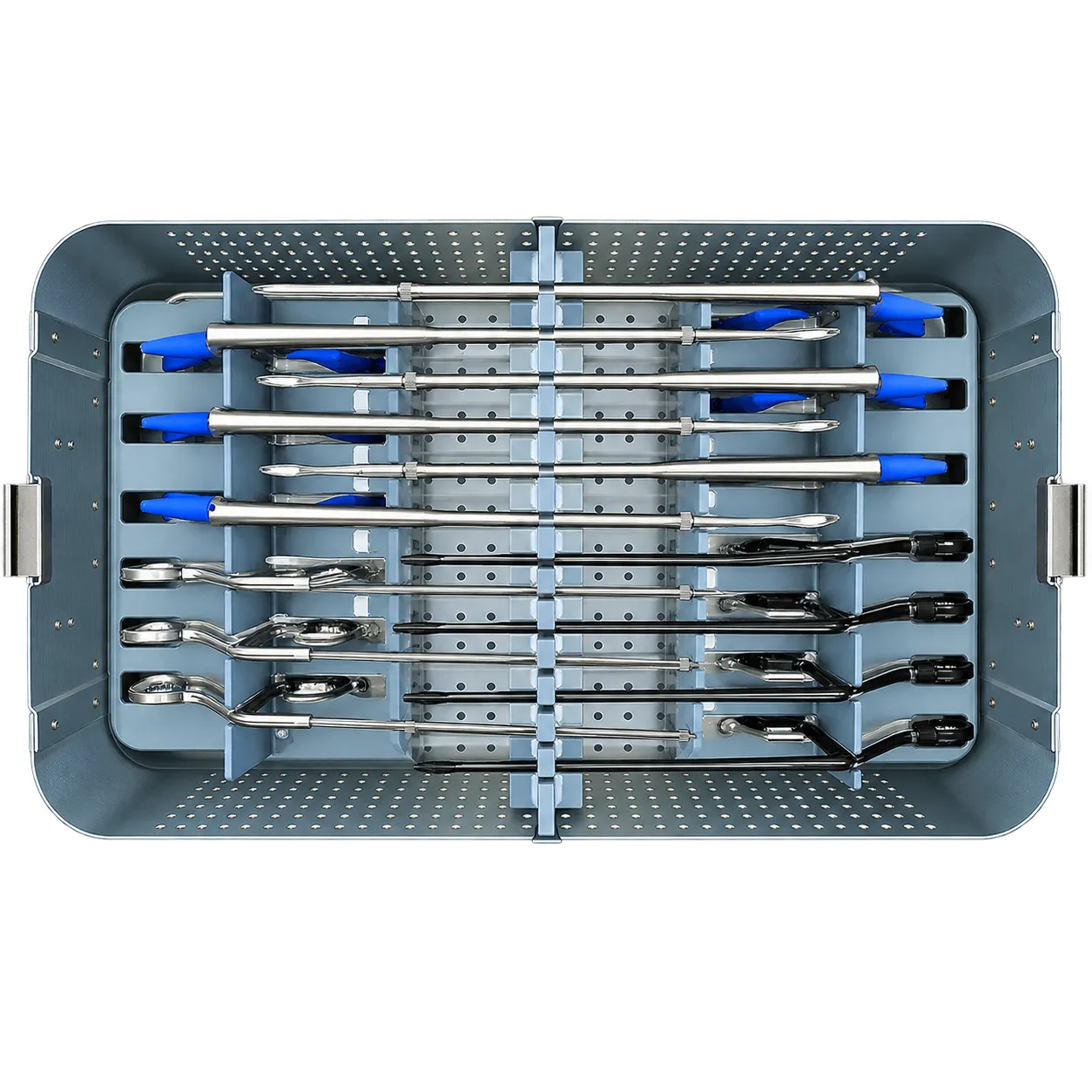
Lumbar disc herniation is a primary clinical setting for instrument sets like this, used during a UBE discectomy where a surgeon works through two small separate portals to remove herniated disc material and decompress the affected nerve root. Procurement governance matters as much as clinical fit: NHS spine units evaluating UBE technique need a confirmed, complete instrument set specification before committing to tender, which is why obtaining the full contents list from Medigear.uk matters before any purchasing decision.
Lumbar spinal stenosis forms a second clinical setting, where laminectomy rongeurs support bone removal during decompression of the spinal canal, performed through the same biportal endoscopic approach. The rotating jaw design confirmed on the three items shown here is generally suited to the confined visual field this technique provides. However, the full instrument range needed for complete decompression has not been confirmed.
Recurrent disc herniation and revision surgery represent a third clinical setting, where UBE technique may be selected for its reduced tissue disruption compared with open revision approaches. Medigear.uk should confirm the complete instrument set contents before planning this technique around this specific reference.
Training and technique adoption make up a fourth setting, as UBE is a comparatively newer minimally invasive approach and units introducing it need confidence in complete, accurate instrument specifications before committing theatre time and procurement budget to a new set. Medigear.uk can support this by supplying the full numbered contents list and relevant documentation ahead of any order.