
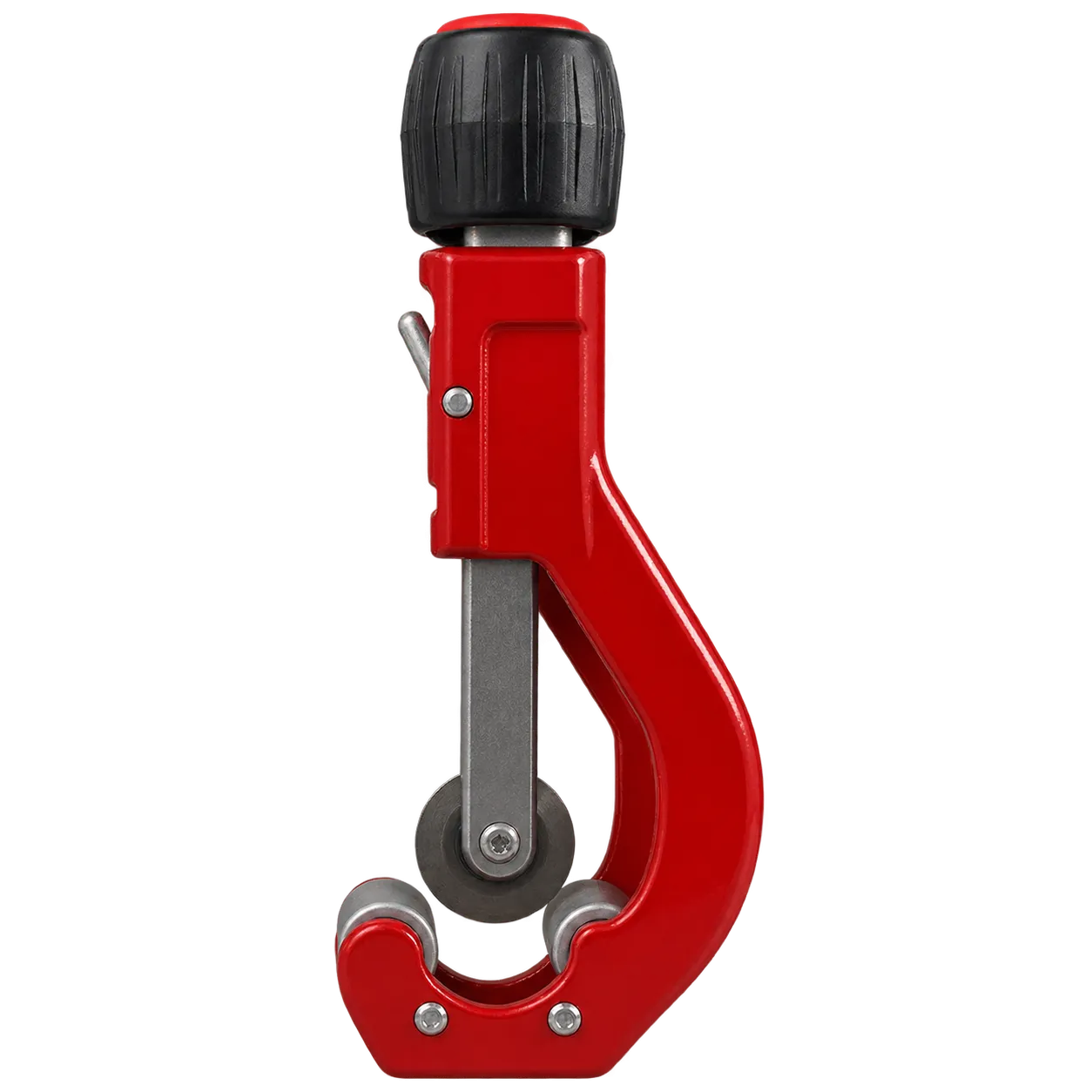
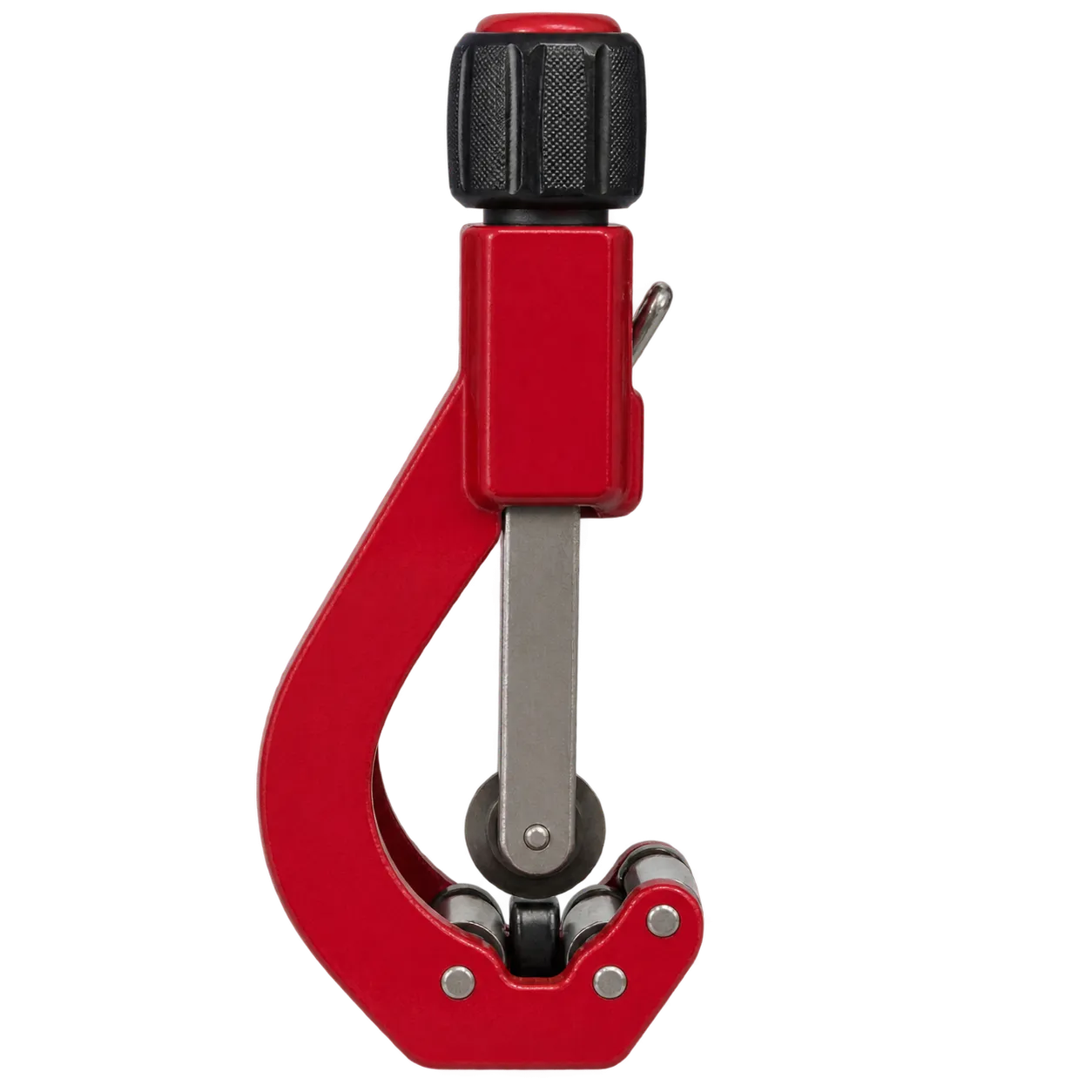
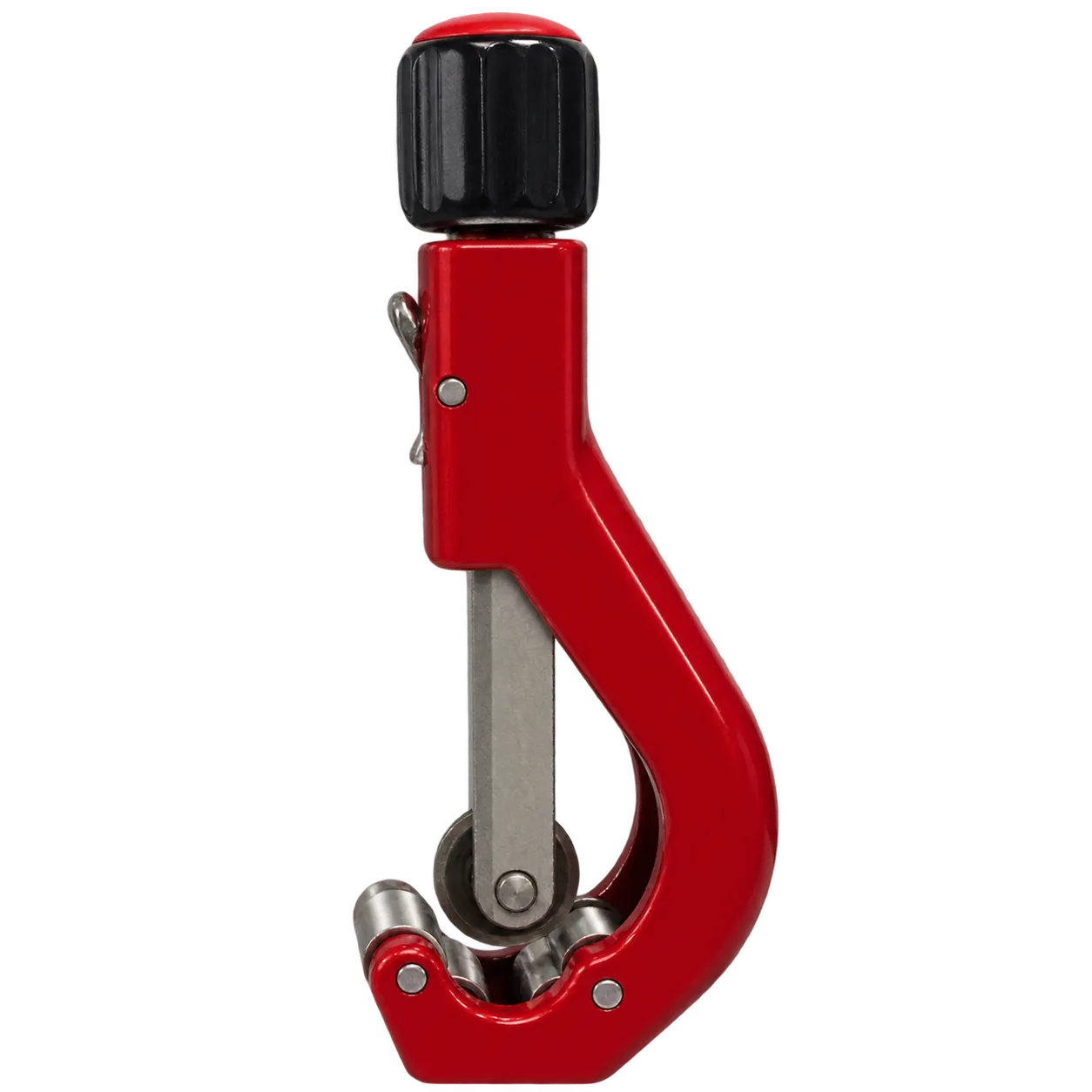
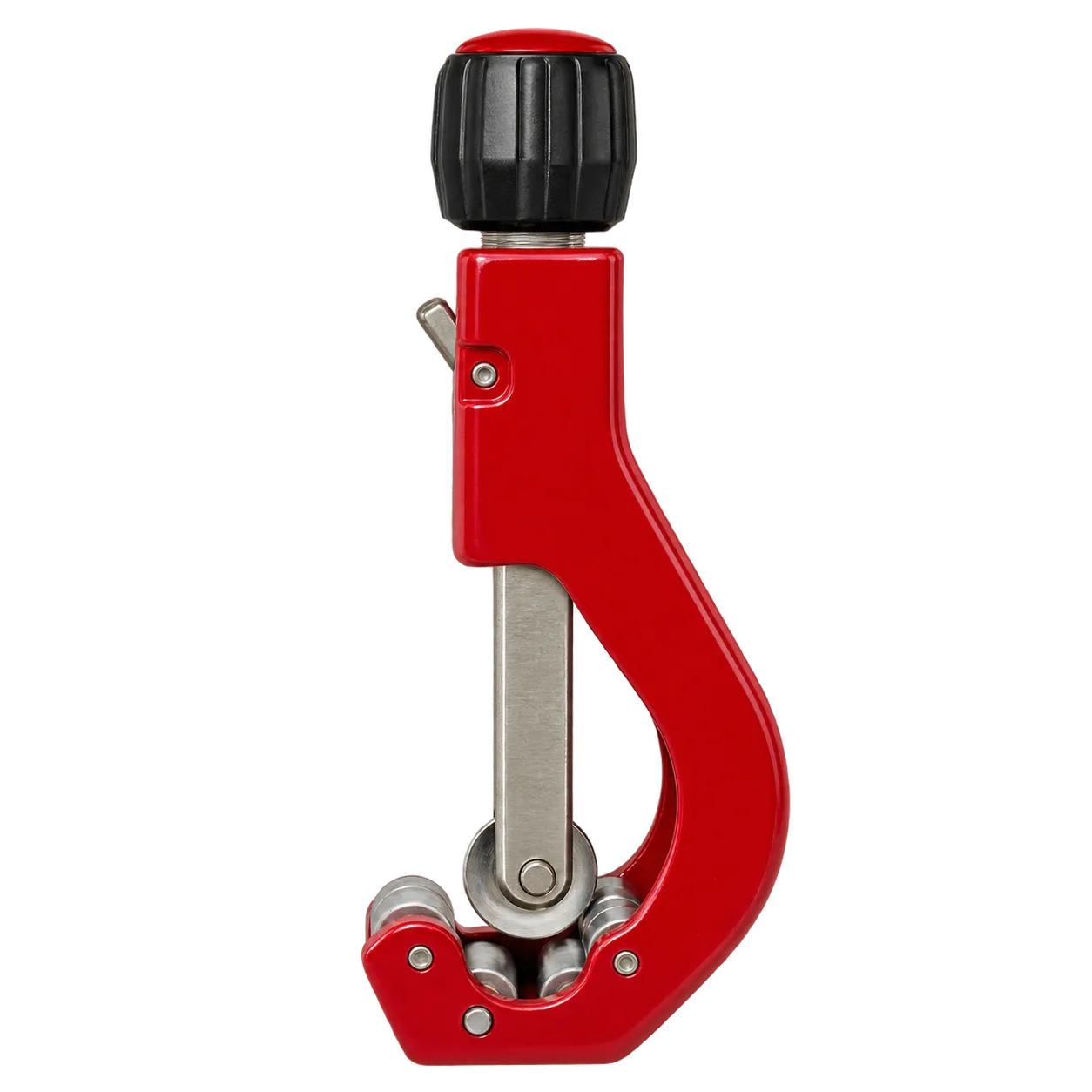
The FPC belongs in prosthetic and orthotic workshops and in rehabilitation centres that make devices on site. Prosthetists decide what length a tube should be, technicians carry out the cutting, and managers keep the tool in service, so every role can refer to one item code.
Tube and pipe are part of many devices. A length of stock is cut to size, joined to a fitting and finished, so the cut at the start decides how well the rest of the work goes. A pipe cutter makes that first cut square, and an even end sits flat against the part it meets.
Hand operation suits the pace of a workshop. The technician turns the cutter around the pipe and tightens it a little after each turn, so a cut can be made slowly for a delicate piece or briskly for a repeat order. Because the operator supplies the force, the tool needs only a bench and a length of stock.
Planning is straightforward. A workshop decides where the cutter will hang, keeps its stock on a labelled rack beside it and checks the item code on its stock record. The tool is counted as one unit, so a short note covers it for the month.
New staff learn the routine quickly: mark the length, close the cutter, turn it and check the end. That routine suits a small workshop as well as a large rehabilitation centre, since only the item code and the material need to be remembered. A short note on the stock record keeps the history of the tool.