
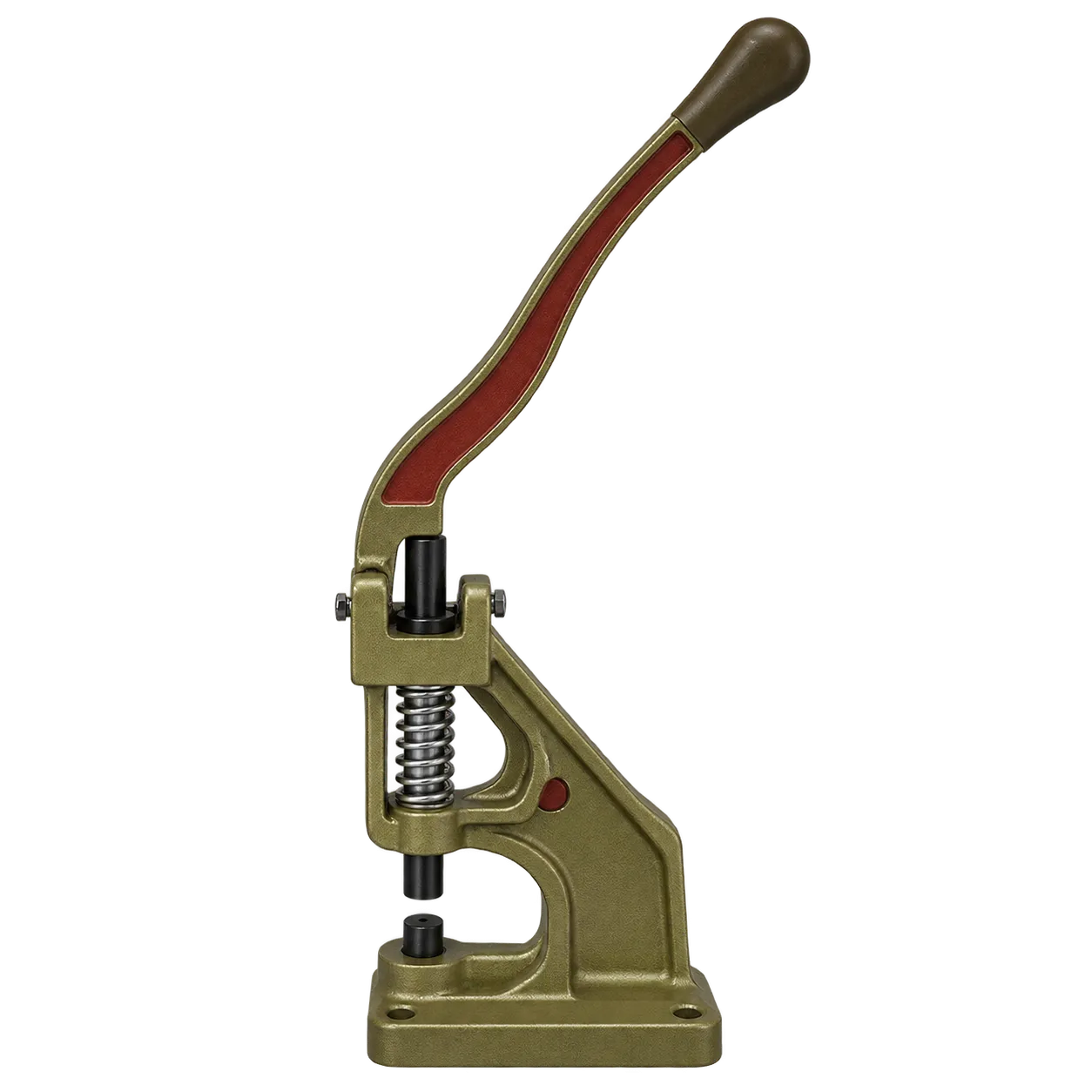
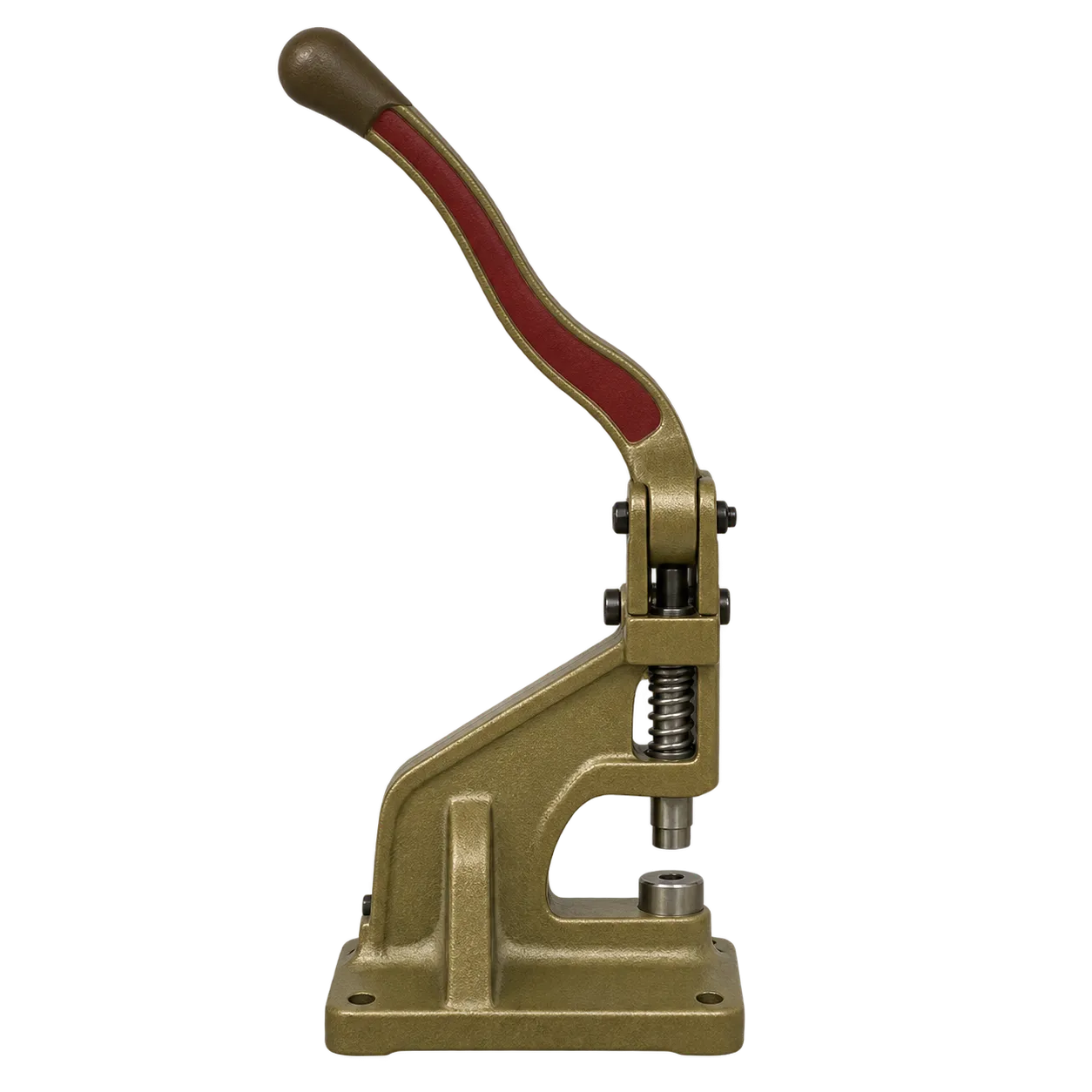
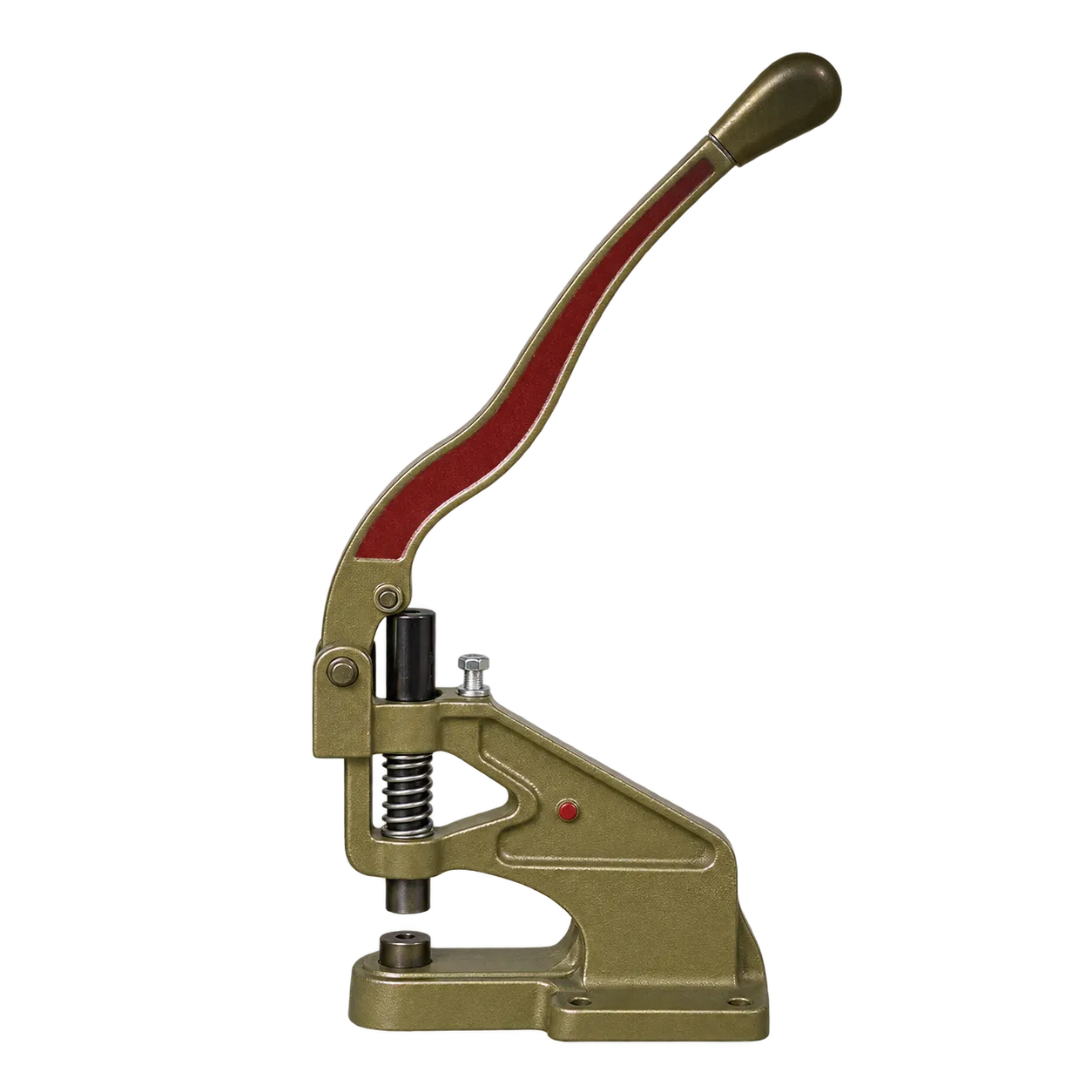
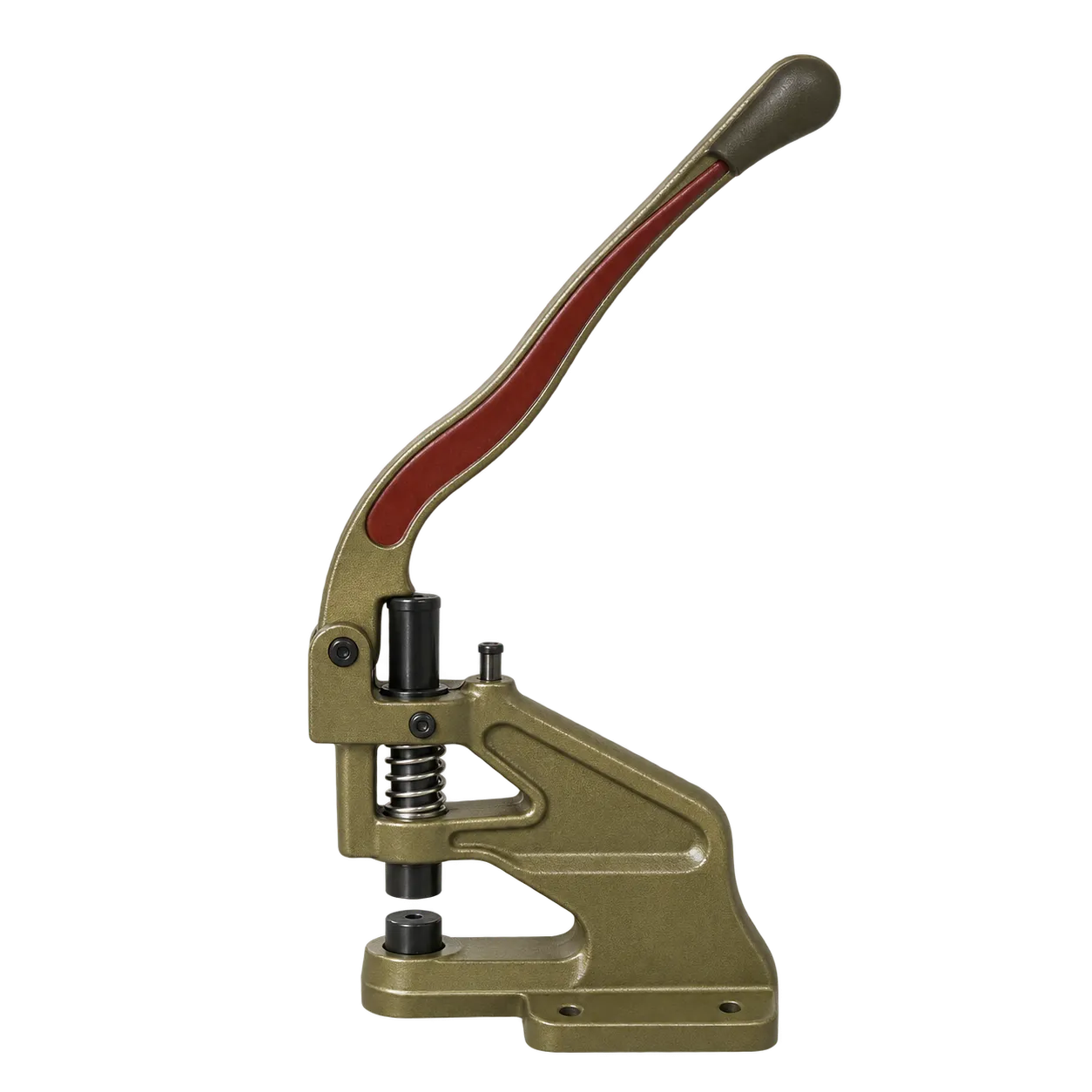
The FHPBM-2 belongs in the workshop where orthotic and prosthetic devices are finished. Many of those devices use straps, and a strap is only as dependable as the buckle fixed to its end. A hand press gives the technician a controlled way to put that buckle on the band.
The working advantage is repeatability. A press brings the same movement to every fitting, so the first strap of the day and the last are finished alike. The technician places the parts, applies the press, and moves to the next strap without a change of tool. Repeated across a batch, the same movement also makes the finished straps easy to check by eye, since any buckle set differently from the rest stands out at once.
Limb-fitting centres, rehabilitation hospitals and private laboratories all make or adjust straps, braces and supports for single wearers. A machine kept at the bench saves the time of sending a strap elsewhere, and a repaired strap returns to the patient sooner. Benches differ from site to site, so the position and mounting of the machine are for each workshop to settle with the supplier.
Ordering is direct. A buyer quotes the item number FHPBM-2, and the material is already given. The dimensions, the press capacity and the buckle and band sizes are not stated, so those details are worth confirming with the supplier first.
For the patient, the benefit is a strap that holds its buckle through daily wear. A workshop that fits buckles with a steady, repeatable press makes that result routine from one device to the next.