
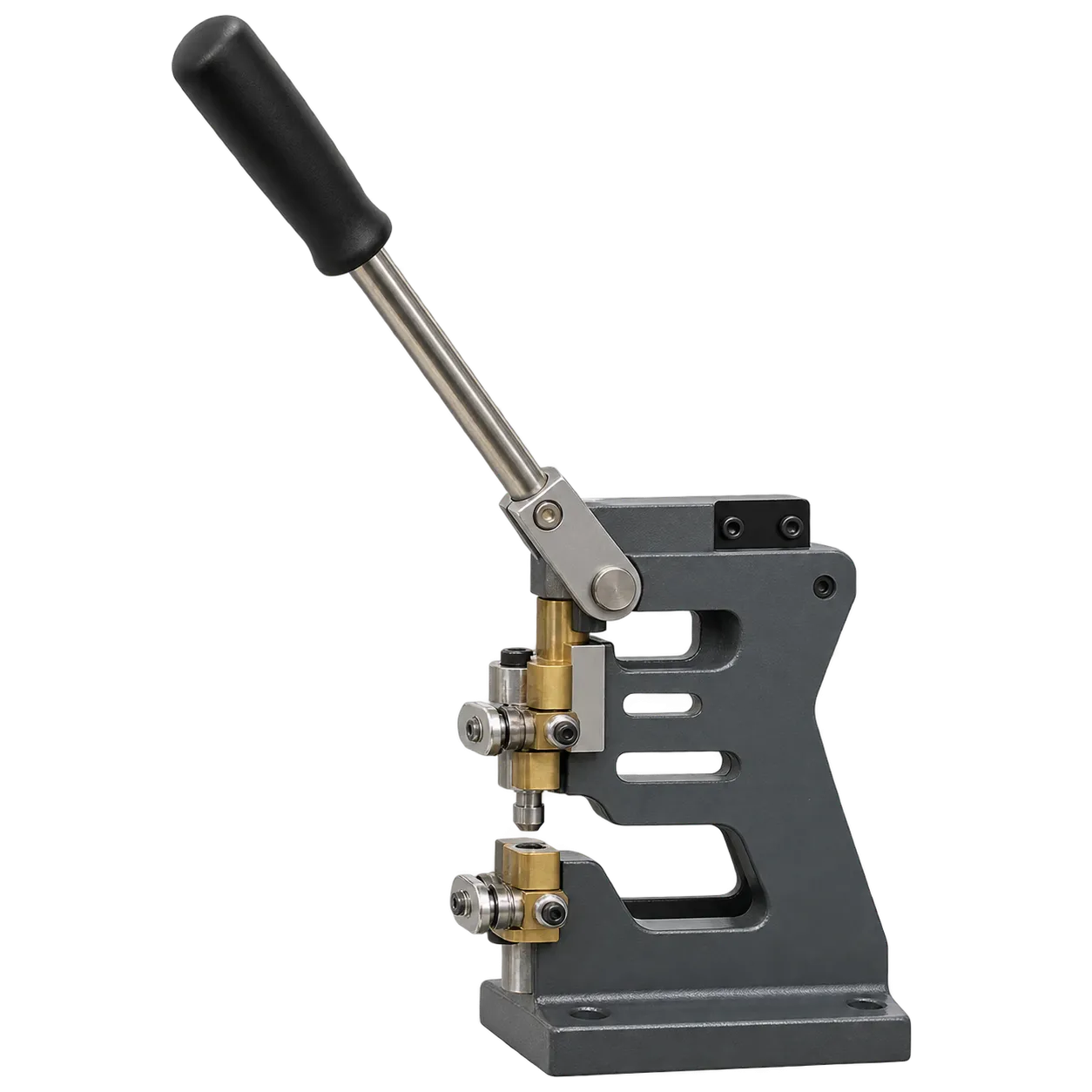
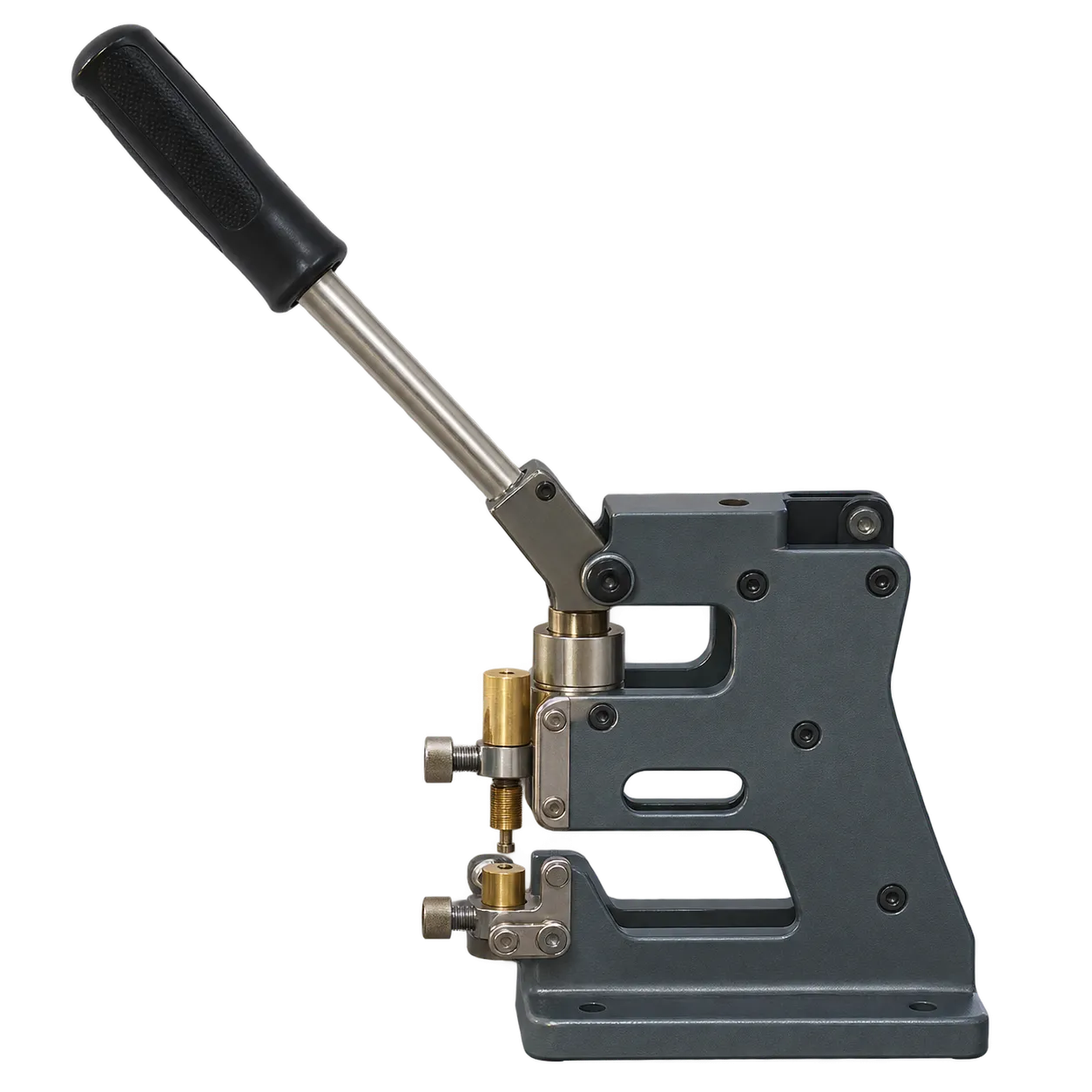
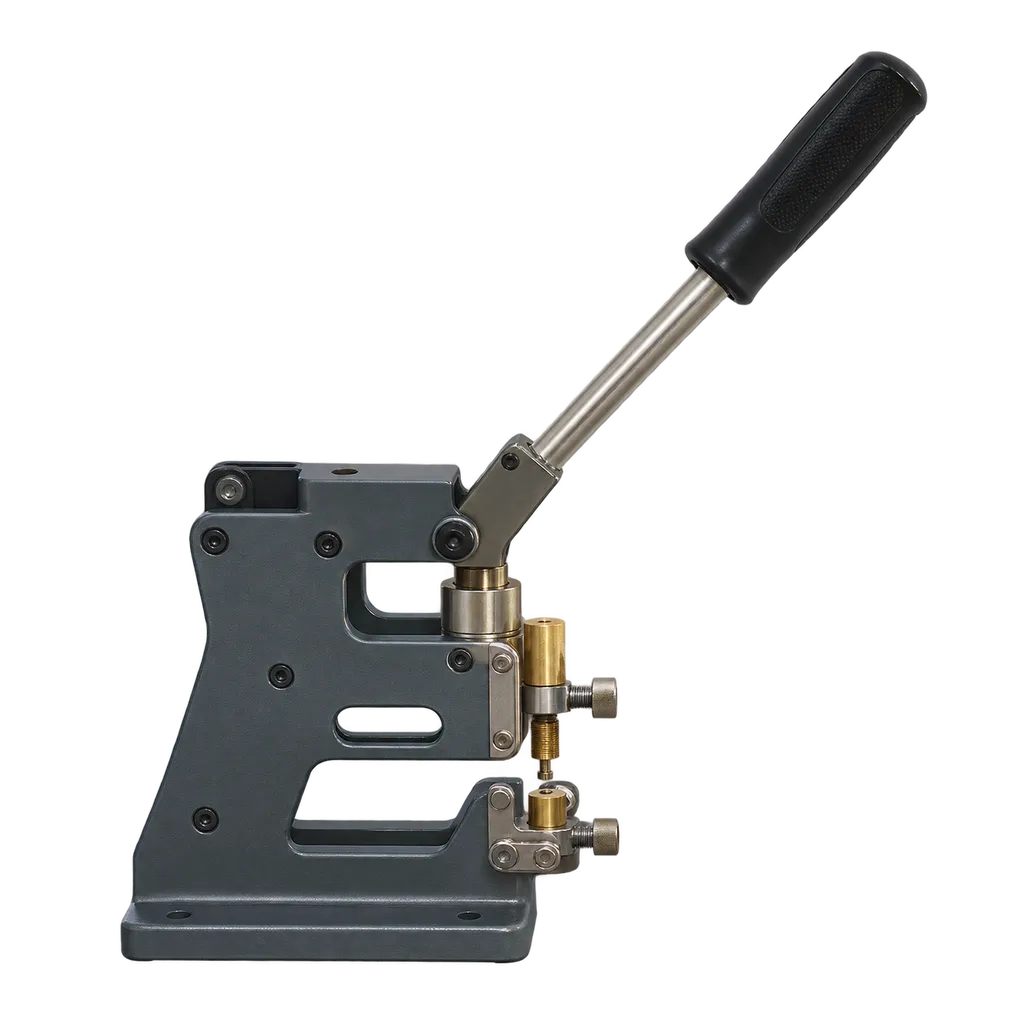
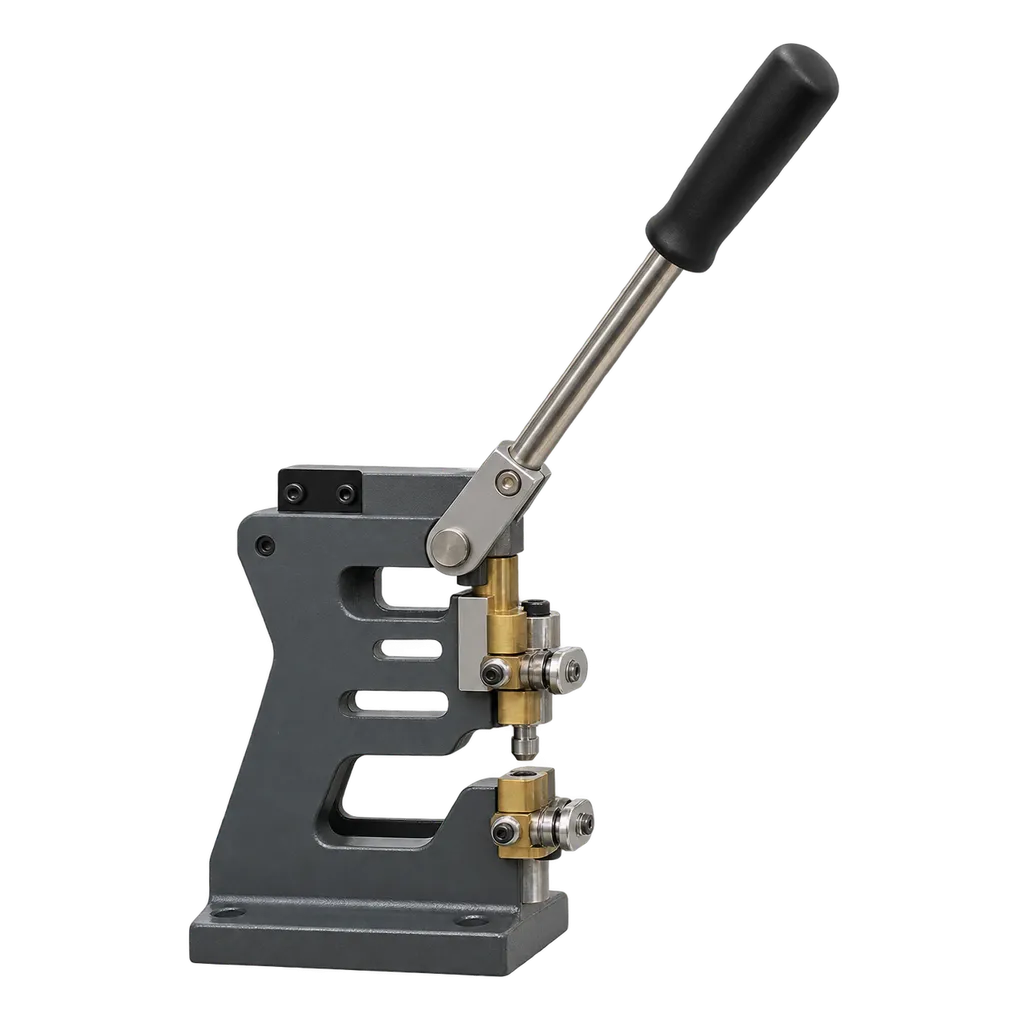
The FHPBM-1 belongs in orthotic and prosthetic workshops and in rehabilitation centres that make devices on site. Orthotists decide how a strap should fasten, technicians carry out the pressing, and managers keep the machine in service, so every role can refer to one item code.
Straps are part of nearly every brace and support. A buckle gives the wearer a way to open and close the device, and the fitting must hold firmly each time the strap is used. A press brings buckle and band together under steady force, so the fitting is made in one movement and the technician moves on.
Hand operation suits the pace of a workshop. The technician feels the parts seat themselves as the handle comes down, so a fitting can be made slowly for a delicate job or briskly for a repeat order. Because the operator supplies the force, the machine needs only a bench and a supply of parts.
Planning is straightforward. A workshop decides where the press will stand, keeps buckles and bands in labelled trays beside it and checks the item code on its stock record. The machine is counted as one unit, so a short note covers it for the month.
New staff learn the routine quickly: set the buckle, place the band, bring the handle down and check the fitting. The routine works in a small workshop and in a large rehabilitation centre, because the item code and the material are all that a technician has to remember. A short note on the stock record keeps the history of the machine.