
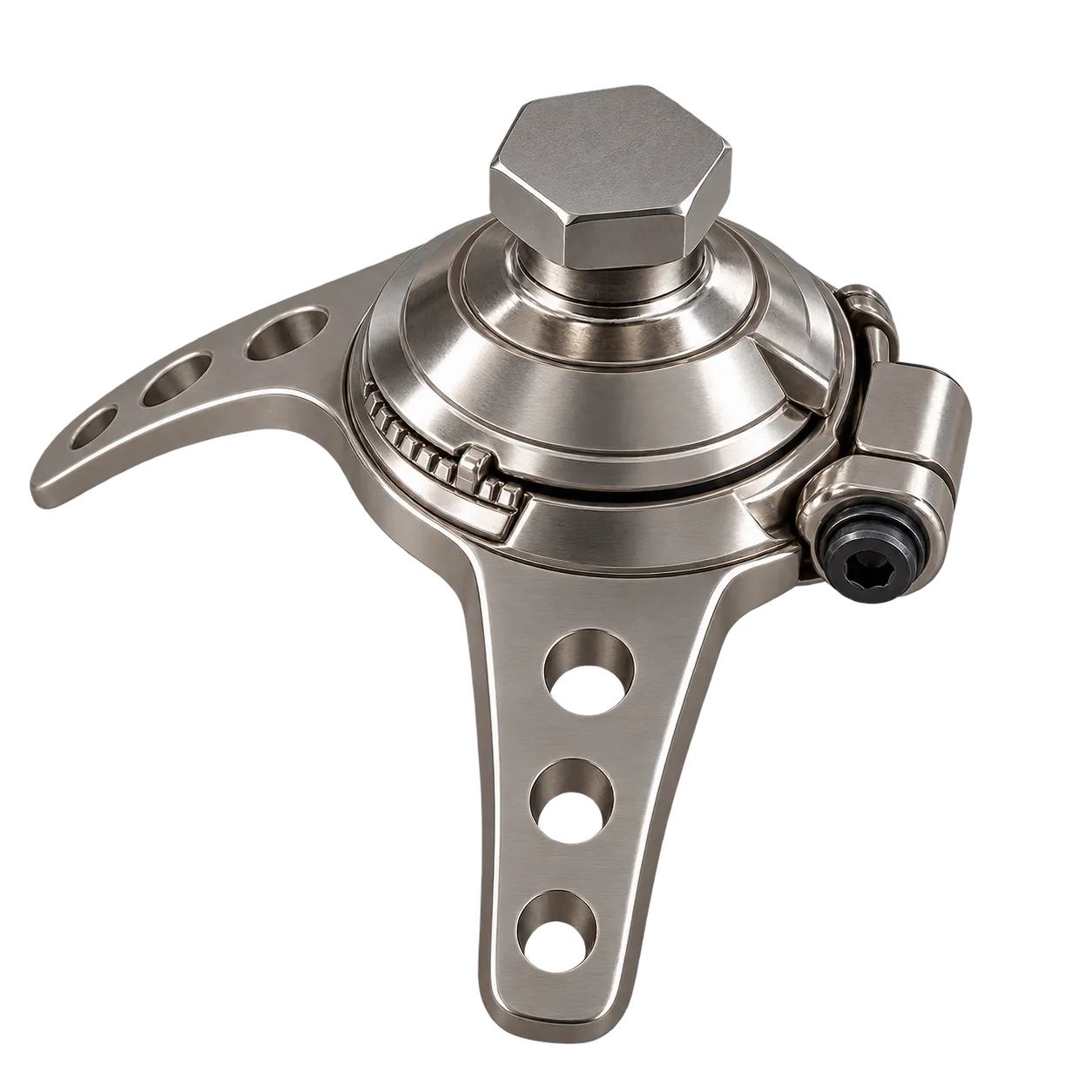

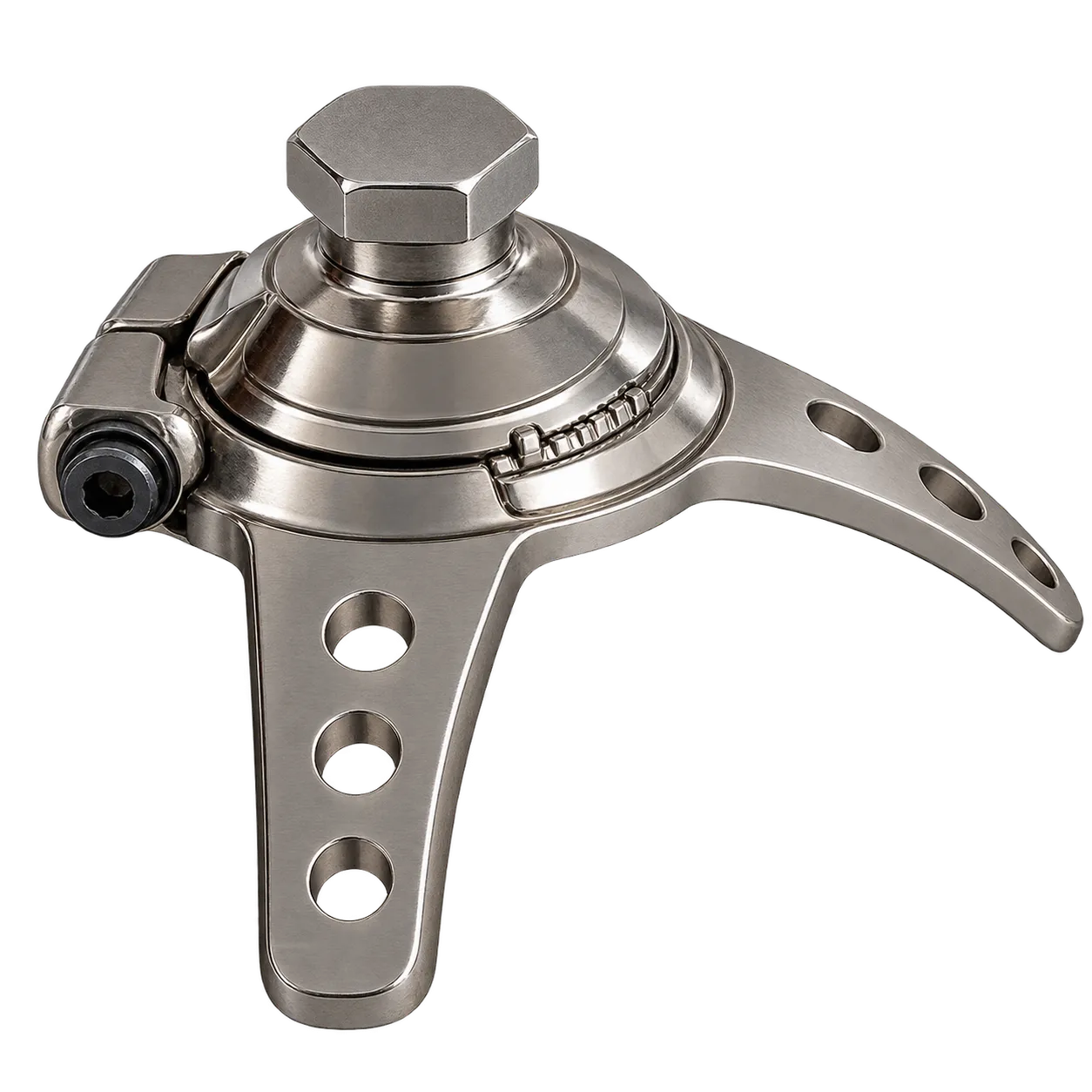
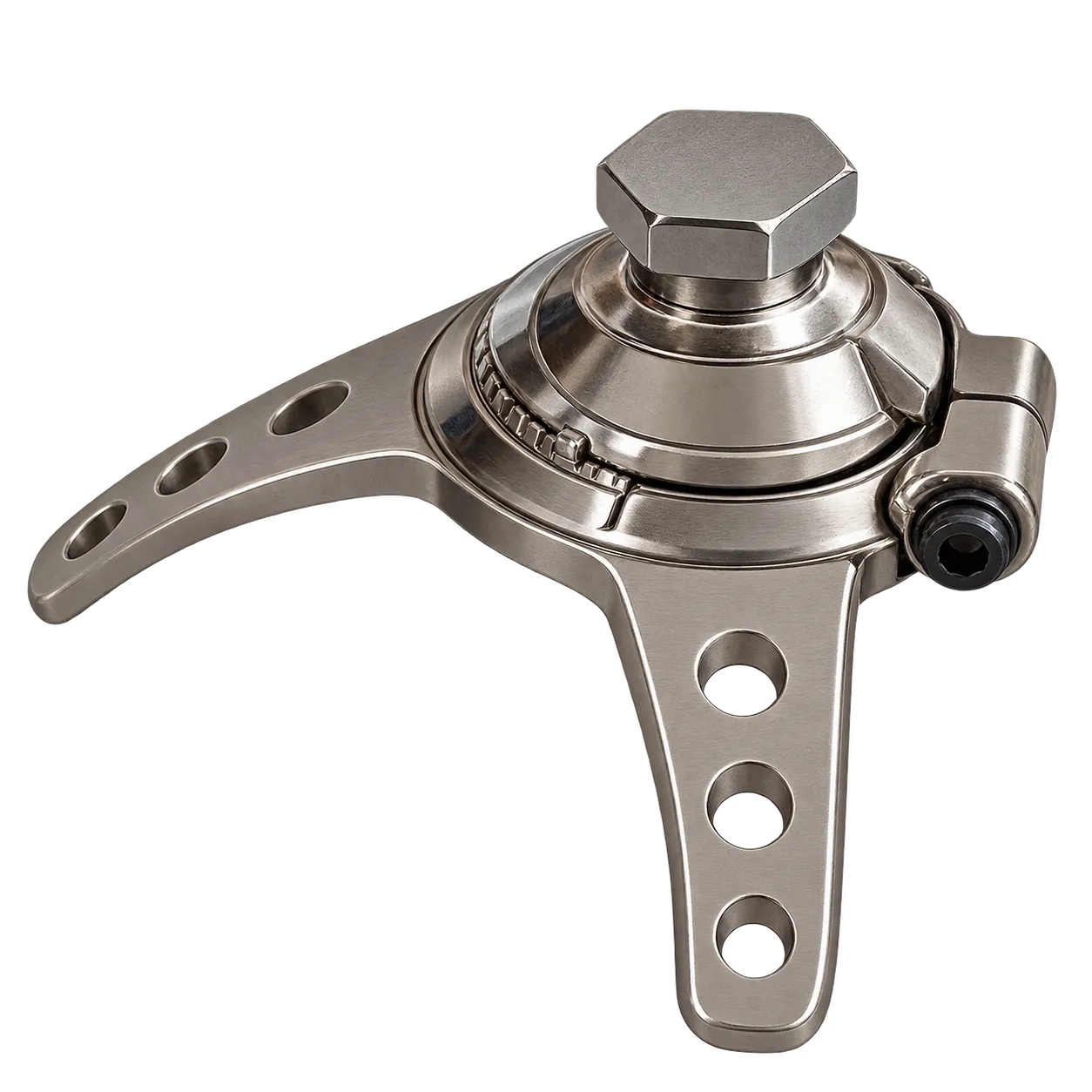
Prosthetic workshops and limb-fitting services that laminate their own sockets are the main users. The anchor is built into the socket and leaves a male pyramid, so the service needs lamination equipment and trained technicians. The intended amputation levels are not stated, so confirm them before adding the part to a build protocol.
Services that want as few failure points as possible in the load path will value a one-piece design. Fewer joints inside the anchor means fewer places to inspect and fewer ways for the part to loosen.
Because the anchor has no fixings of its own, alignment happens in the receiver of the part below. Recording the anchor's orientation and the receiver settings on the build sheet keeps later adjustments straightforward.
Charitable limb programmes and export buyers can stock the anchor with their lamination materials. Confirm the test report, pyramid dimensions, and lamination instructions before placing an order, since the part cannot be tested once embedded.
Services that fit active users, whose limbs see many loading cycles each day, may value a part with no internal joints to loosen over time. Inspection at each review should still cover the pyramid, the arms and the laminate around them.
Record the anchor's material and batch on the build sheet.
The anchor is not suitable for users above 125 kg, for limbs whose receivers do not match its pyramid, or for workshops without lamination capability. The conformity documentation required for those procurement routes is issued by the manufacturer and provided by the seller.