
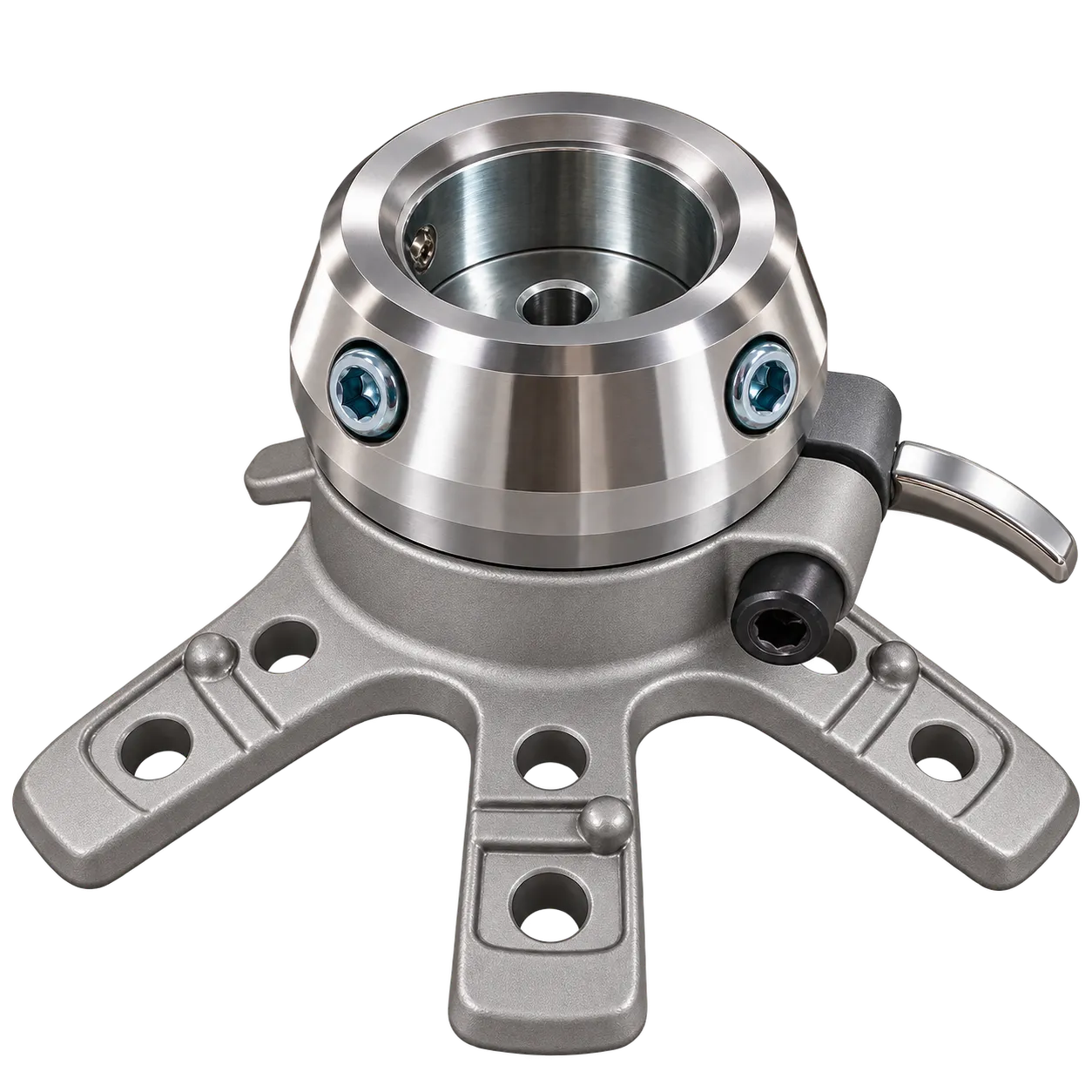

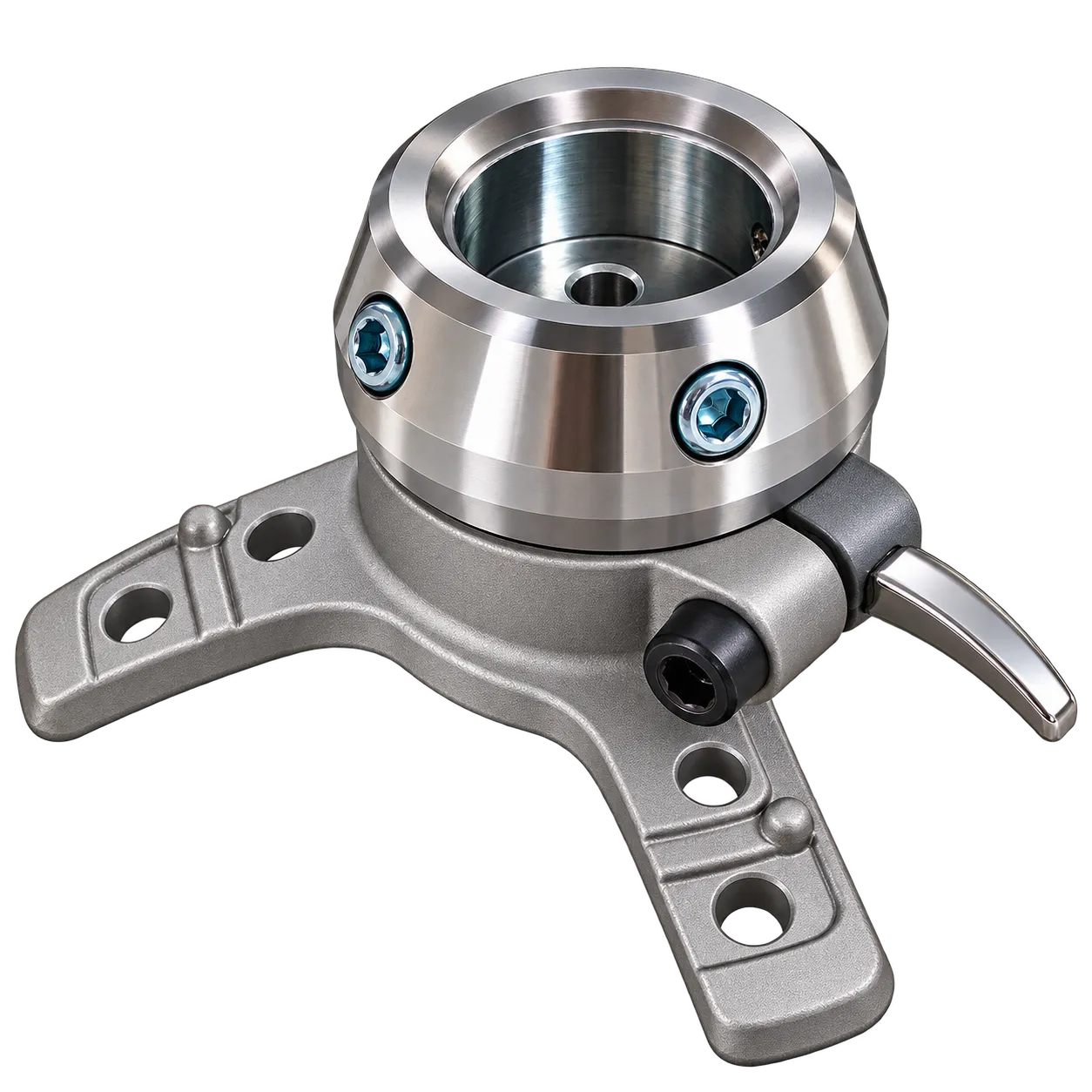
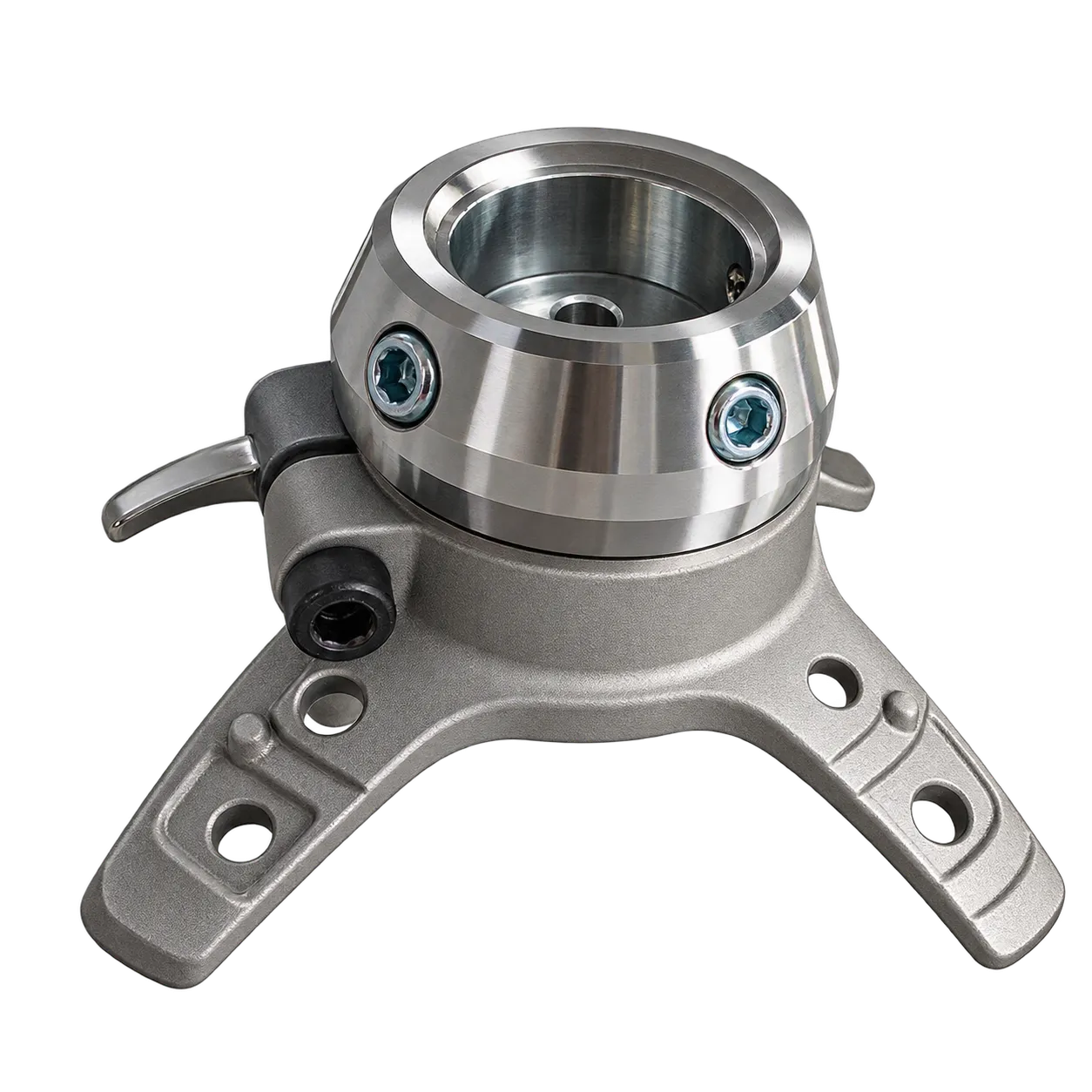
Prosthetic workshops and limb-fitting services that laminate their own sockets are the main users. The anchor is built into the socket during lamination and leaves a female pyramid receiver, so the service needs lamination equipment, resins, reinforcement materials and trained technicians. The intended amputation levels are not stated, so confirm them before adding the part to a build protocol.
Workshops that build sockets with a broad, rounded distal end may find four curved arms fit the shape well. Checking the arm length and curvature against typical socket moulds before ordering in quantity avoids surprises at the lamination stage. A trial lamination on a practice mould, followed by a visual check of how the laminate wraps each arm, is a sensible first step before the anchor goes into a patient's socket.
Services that standardise on one anchor pattern can reorder with confidence and train technicians on a single lamination method. Recording the material, batch and orientation on each build sheet also supports traceability if a field safety notice is issued.
Charitable limb programmes and export buyers building sockets locally can stock the anchor with their lamination materials. Confirm receiver dimensions, torque values, lamination instructions and material-specific ratings before placing an order, since the part cannot be tested once it is embedded.
The anchor is not suited to users above 125 kg, to limbs whose connecting components do not match its receiver, or to workshops without lamination capability. The conformity documentation those procurement routes require is issued by the manufacturer and provided by the seller.