

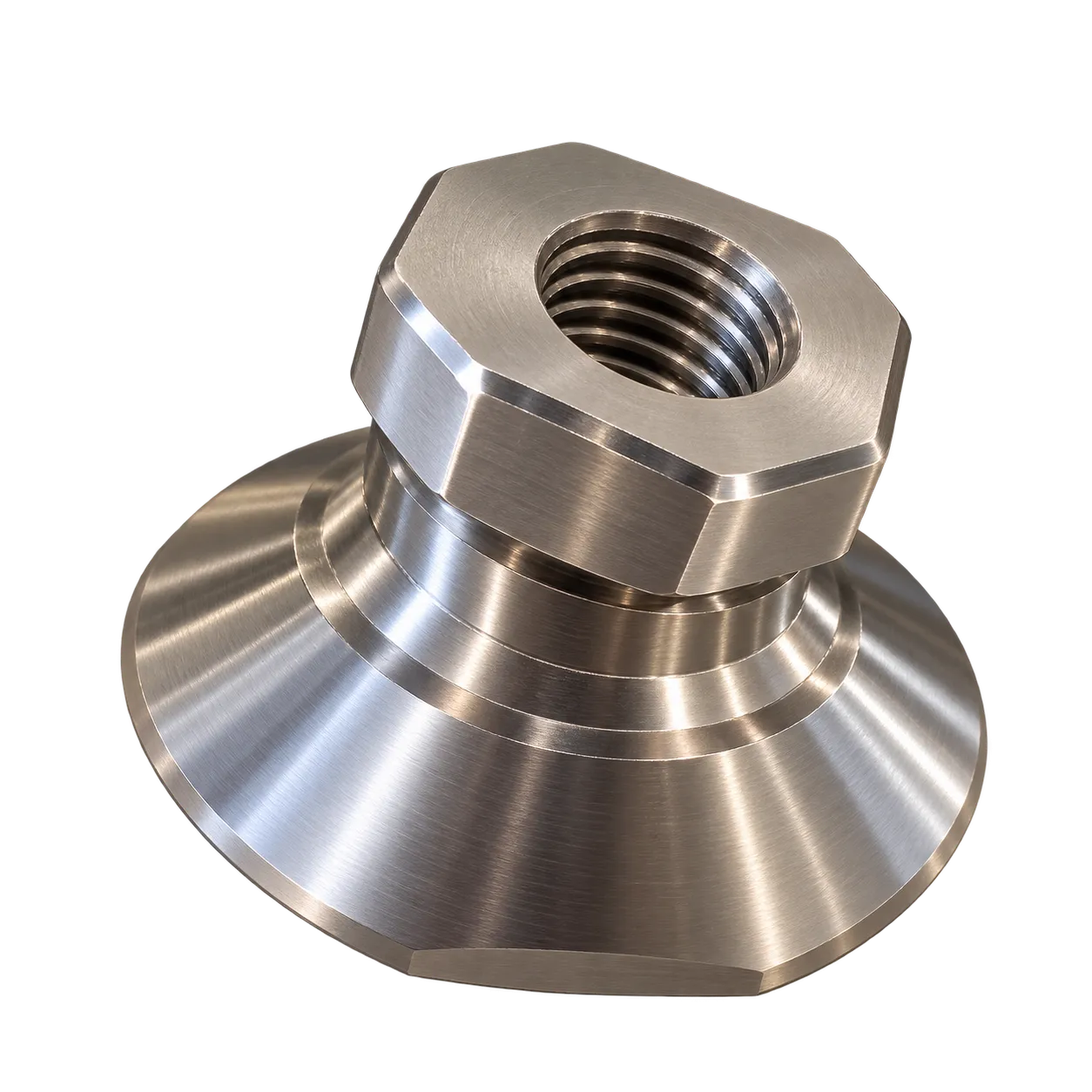
A joint head belongs wherever a modular limb needs a male pyramid on the lower side of a joint. The 4F34-JH fits that role in transtibial and transfemoral builds for users up to 125 kg, with the host component and receiver matched to the manufacturer's drawing.
Its value shows over the working life of the limb. Alignment is rarely set once and left. Bench alignment comes first, dynamic alignment follows while the patient walks, and later reviews correct changes as the residual limb shrinks, footwear changes or activity rises. Each adjustment runs the receiver's screws against the pyramid faces again. When those faces score, a service that holds the joint head as a separate spare can renew it quickly, with the rest of the limb left untouched.
Engineering evidence explains why the pyramid deserves attention. ISO 10328 asks structural components to survive 3 million loading cycles at their rated test level. A 2019 study of a male pyramid adapter found premature fatigue cracks starting at the transition from pyramid to dome. Reshaping that transition lowered peak stress from 774 MPa to 578 MPa and extended test life nearly threefold. The finding concerns geometry in general, so the fatigue report for this model is the document that matters for this model.
Outpatient limb services, independent prosthetic practices, charity workshops and export programmes all hold pyramid components as routine spares. NHS services in England buy through a mandated framework, and equivalent public procurement elsewhere asks for the same traceable supply. The conformity documentation those procurement routes require is issued by the manufacturer and shared by the enquiry team.