

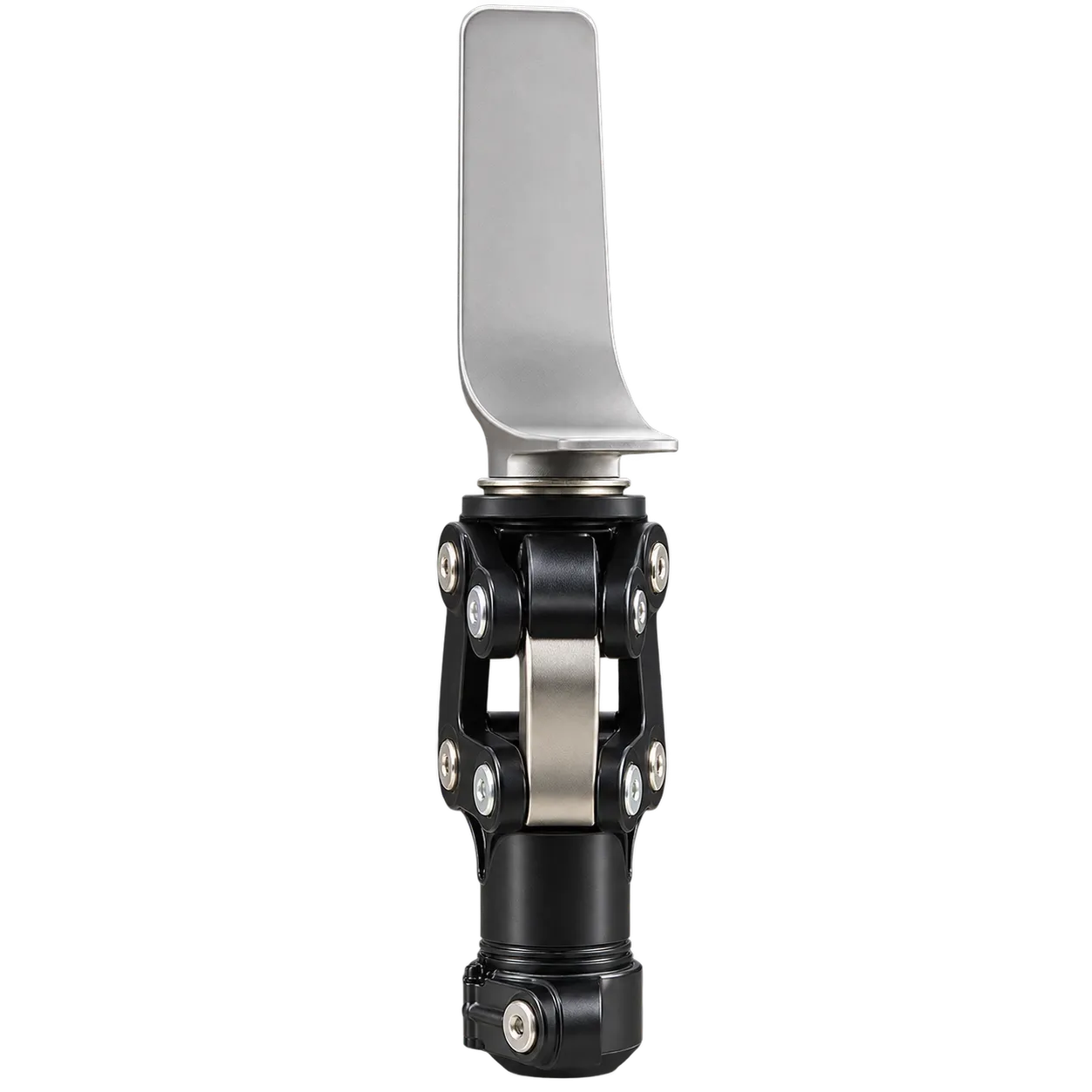
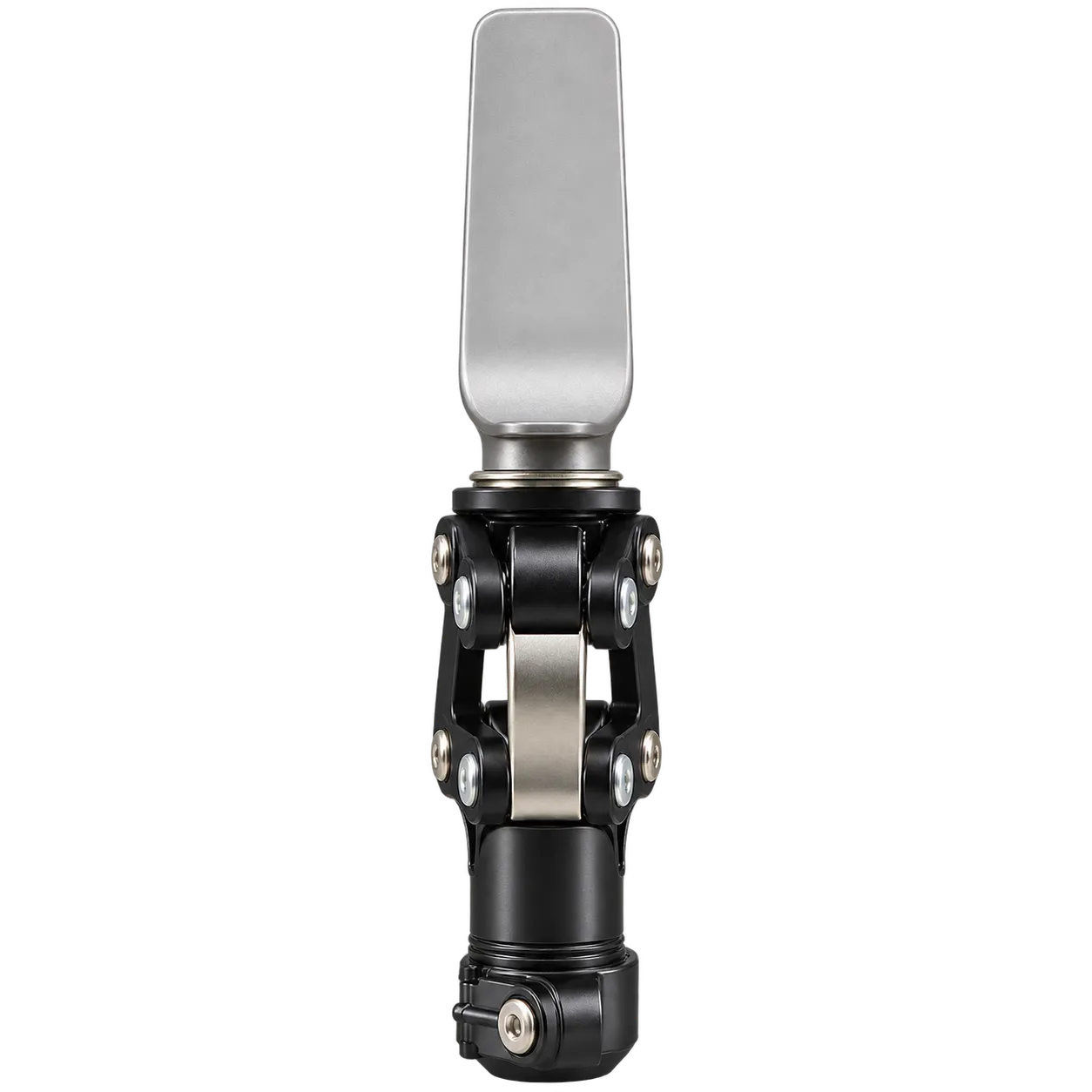
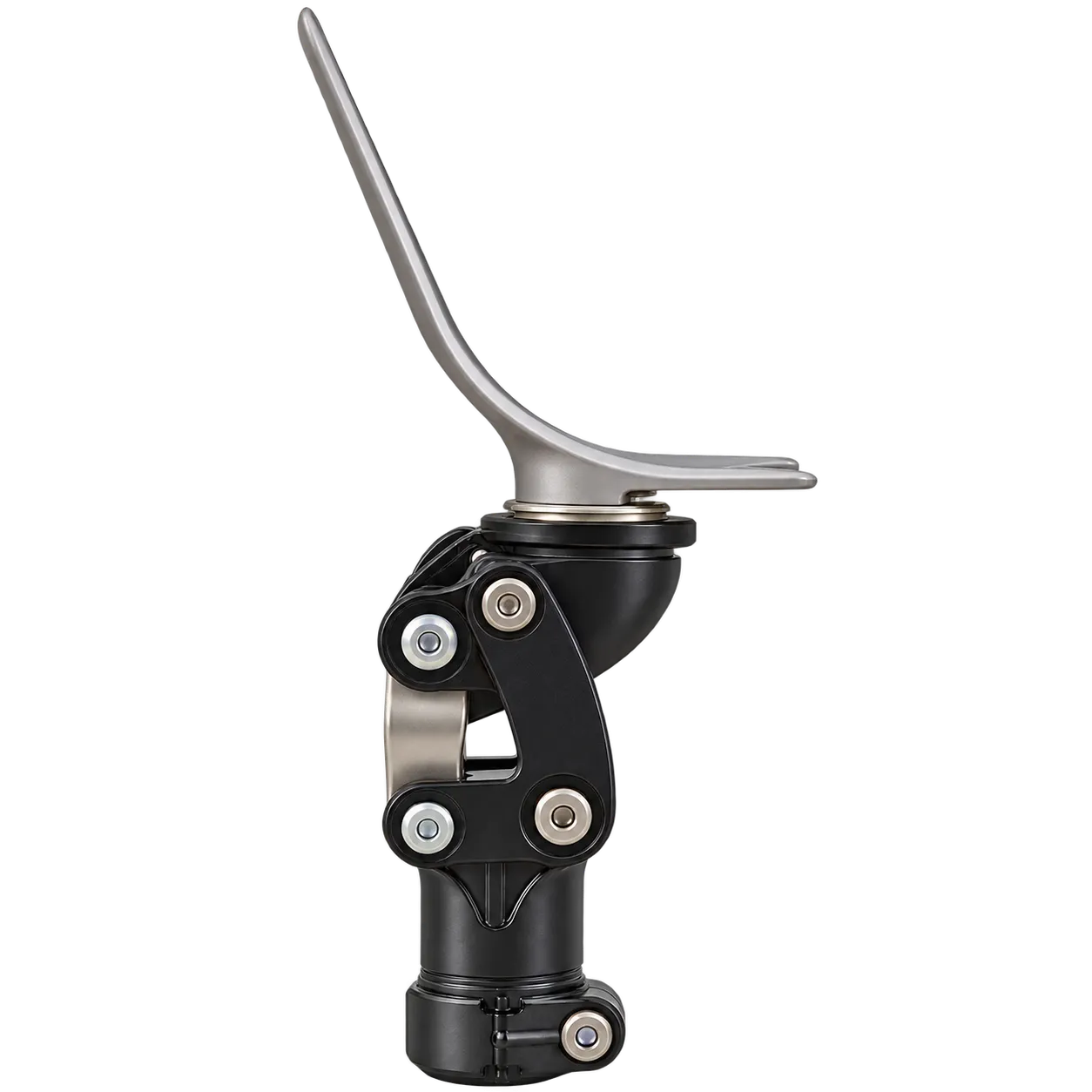
The 3FM12A is a candidate for knee-disarticulation limbs made in a workshop that laminates its own sockets. Through-knee amputation leaves the whole femur, so the socket is long and the space beneath it is short. A joint anchored into the socket wall uses that space without a separate adapter stack, which is why the build order matters so much for this component.
A typical build runs in a fixed order. The limb is cast, the plaster positive is rectified and the trimline is drawn. The anchor arm is then offered up to the positive against the alignment reference lines. Fibre goes on next, with roving bound across the arm, and the resin is drawn through and left to cure, in an oven where the resin system asks for one. After the cast is broken out, the brim is cut to the trimline and sanded, and the shin and foot are assembled at the bench. Bench alignment comes first, followed by static and dynamic alignment with the wearer. Every one of those stages has settings specific to this joint, and they are found in the instructions for use.
Published testing shows why the layup schedule deserves that care. In a 2023 study in Medical Engineering and Physics, 23 laminated transtibial sockets were loaded to failure under ISO 10328 conditions. Six reached level P6 at under 600 g and seven fell short of P5, with fibre layup, distal adapter and resin all contributing. Those were below-knee sockets, so the figures describe laminating practice and carry no verdict on this joint.
NHS services in England buy prosthetic components through a mandated NHS Supply Chain framework, and equivalent public procurement elsewhere sets its own route. The conformity documentation those procurement routes require is issued by the manufacturer and shared by the enquiry team.