

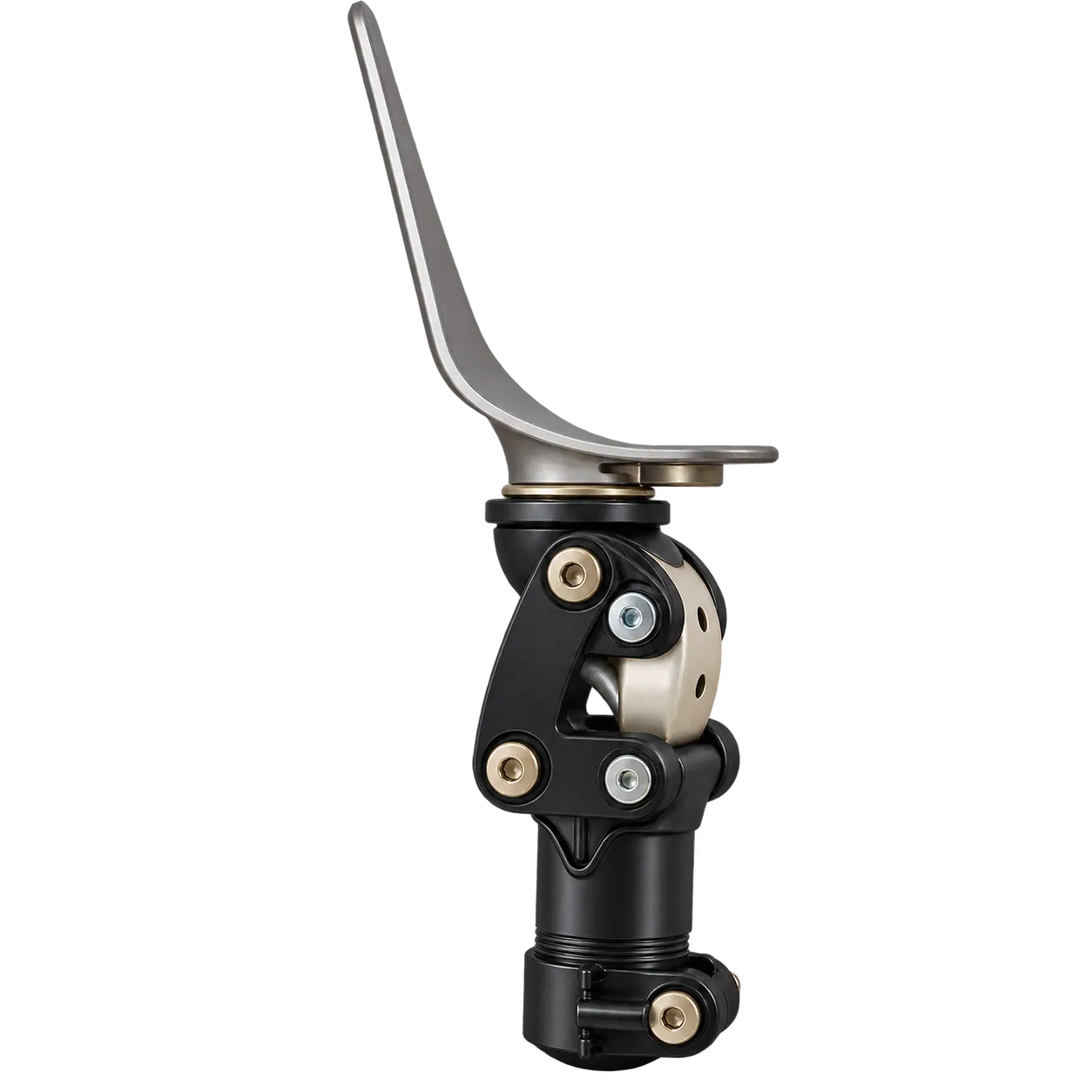
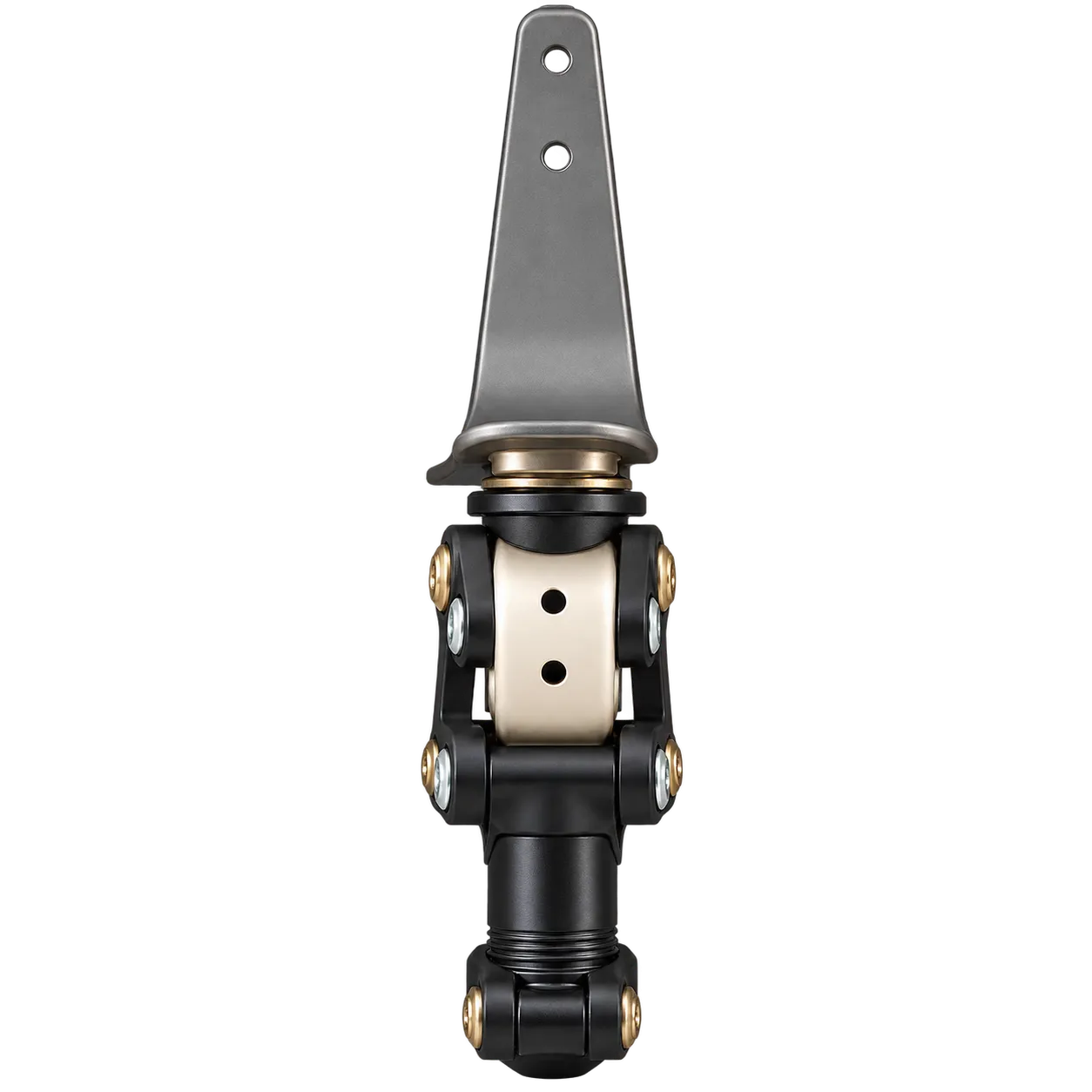
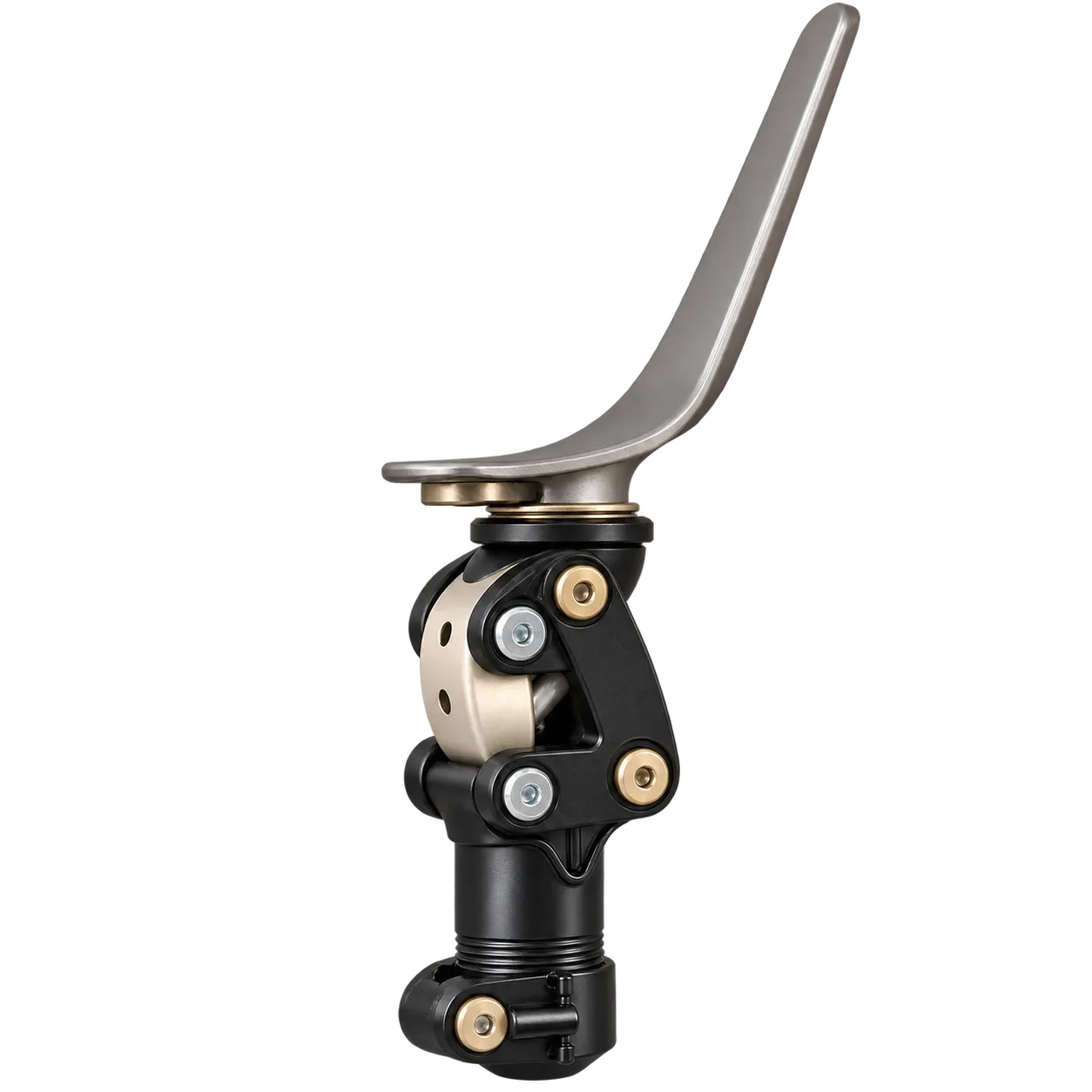
The 3F36B belongs in through-knee limbs that a service expects to maintain for years. Its clinical job is narrow: hold the leg straight for standing and short walks, then free it for sitting. The buying case is about what that job costs to sustain.
Knee disarticulation is uncommon. A 2016 systematic review of 17 articles noted that it made up 1.7% of dysvascular lower-limb amputations in Scotland. The same review found favourable healing and better maintenance of independent living among knee disarticulation patients, while prosthetic walking rates were inconsistent, and it graded its recommendations at level C. Small numbers mean a service fits few of these joints, so each one must stay serviceable without a deep shelf of spares.
Stainless steel suits that long view where the air is damp or salty. Limb-fitting centres in tropical and coastal regions, charity workshops and export programmes often work a long way from a parts supplier, and a rust-resistant frame gives them one fewer reason to pull a limb from use. Salt still needs managing, because chlorides can pit stainless steel in crevices, and the grade appears on the material certificate.
Locked walking suits people who need security above speed: older through-knee amputees, those with weak hip muscles or poor balance, and new wearers in early gait training. For them, the whole-life plan covers scheduled lock checks, a stock of release parts and a decision on how the joint is recovered at each socket remake.
Typical settings are prosthetic workshops, rehabilitation centres and community limb clinics. NHS trusts in England order through the mandated prosthetics framework, and public buyers elsewhere follow their own documented routes. The conformity documentation those procurement routes require is issued by the manufacturer and shared by the enquiry team.