
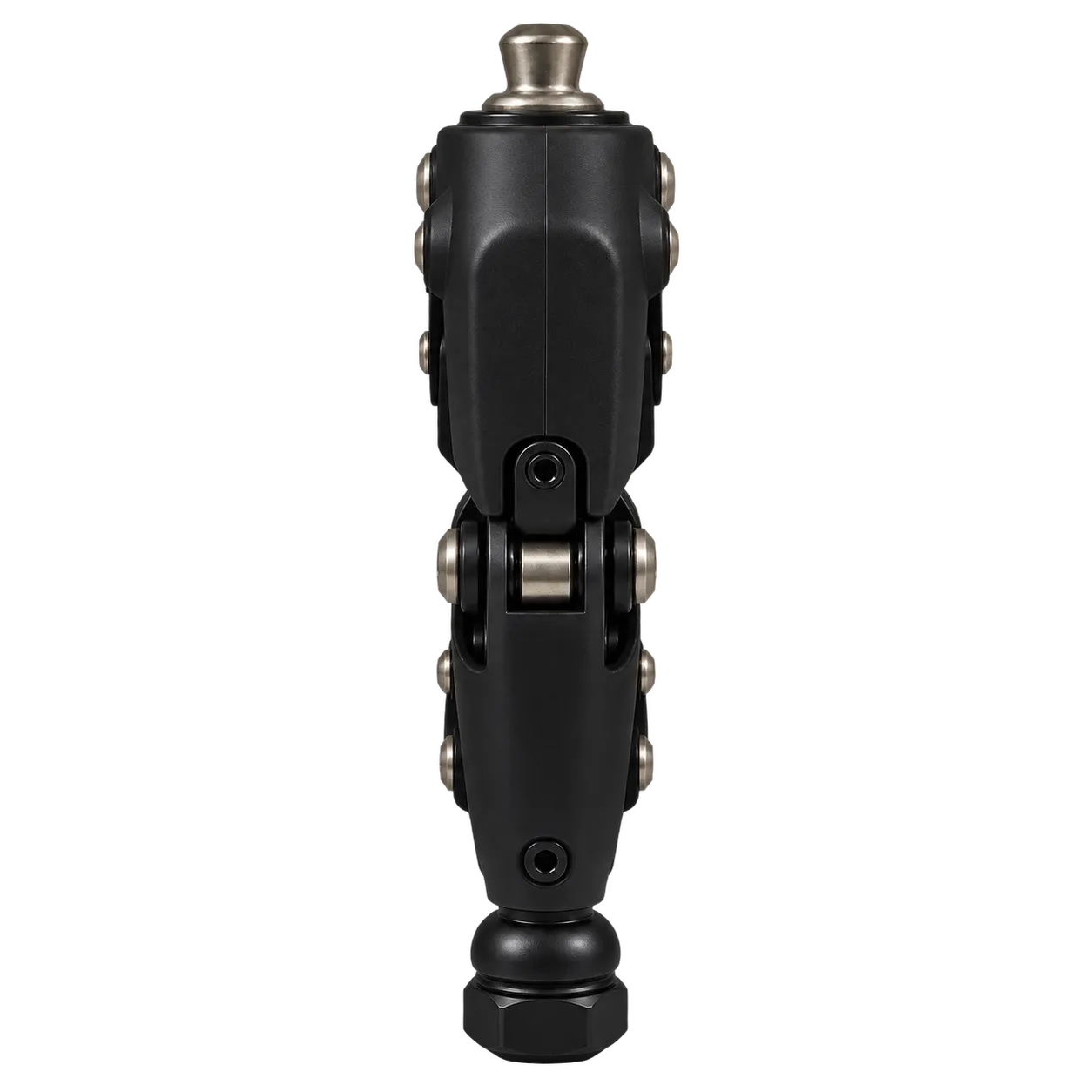


The 3F34 belongs with one kind of transfemoral wearer, and the selection work is in telling that person apart from the rest of a caseload. Start with build. The sheet's 150 kg load weight reaches tall, heavy-set adults and people whose work means carrying. Then look at the walking day. Someone who varies speed, takes stairs as a matter of course and walks for an hour at a stretch gives a hydraulic cylinder something to do, because its resistance tracks how fast the shin moves.
Published guidance supports the category. A 2019 clinical practice guideline states that knees with hydraulic or pneumatic swing resistance are indicated for active walkers, permitting greater walking comfort, speed and symmetry. Other findings temper that. A 2005 trial of eight unilateral amputees recorded metabolic rate 5% lower on one computer-controlled knee than on a passive hydraulic knee, and a 2022 inpatient study reported 2.81 falls per 1,000 patient-days with fluid-controlled knees. These results describe knee types, not this model.
Three exclusions keep the fitting honest. Limited walkers carry 1078 g without using what it offers. Wearers who need a lock for standing or transfers need a joint that has one. Nobody above the finished limb's rating should be fitted, and that rating is the lowest among the knee, adapters, tube and foot.
Hikers and rural walkers raise the stairs and slope question, and the instructions for use state how the cylinder behaves under load.
Settings include limb-fitting centres, private prosthetic clinics, rehabilitation hospitals and export programmes serving active adults. NHS trusts in England buy through the mandated prosthetics framework, and public buyers elsewhere use their own routes. The conformity documentation those procurement routes require is issued by the manufacturer and shared by the enquiry team.