
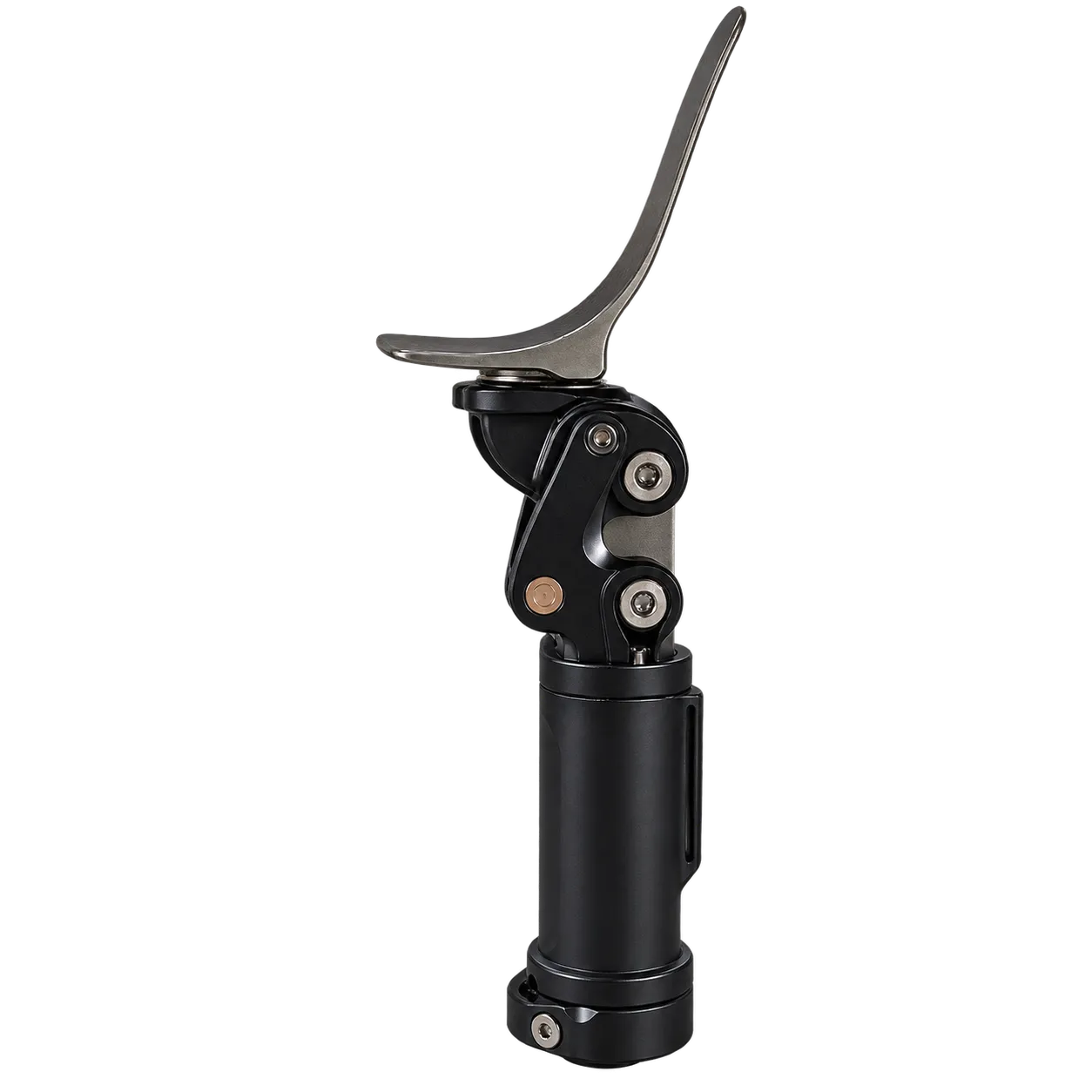
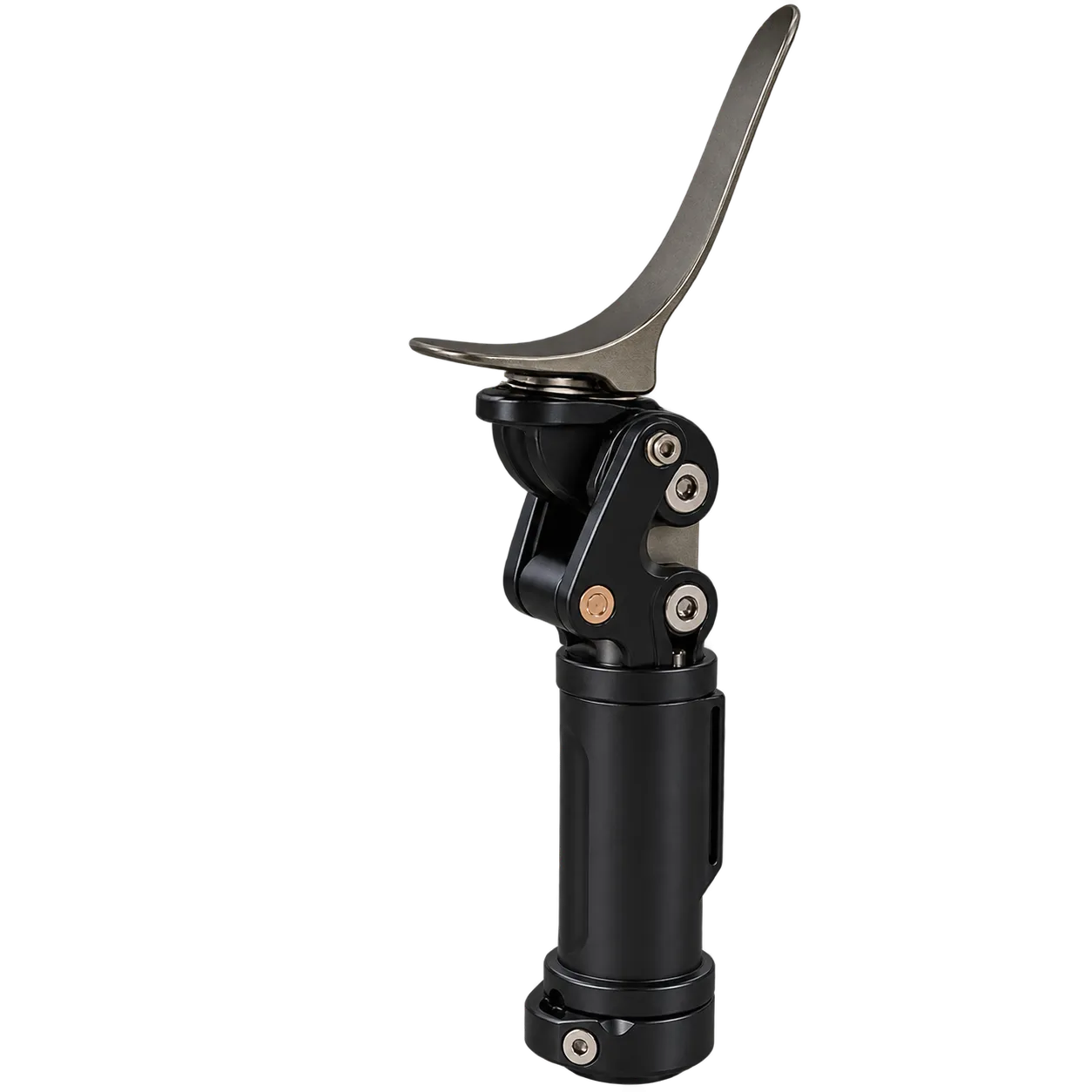
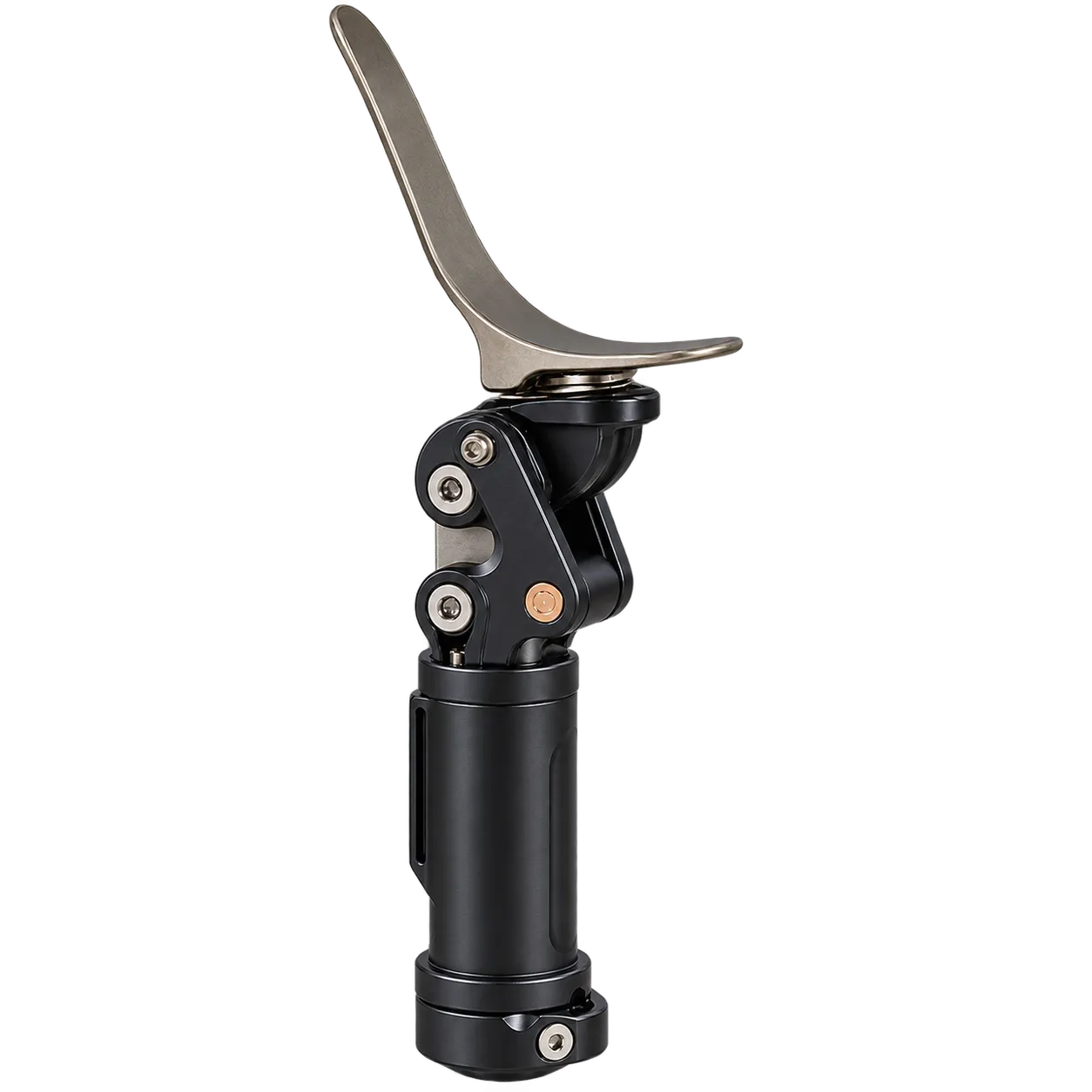
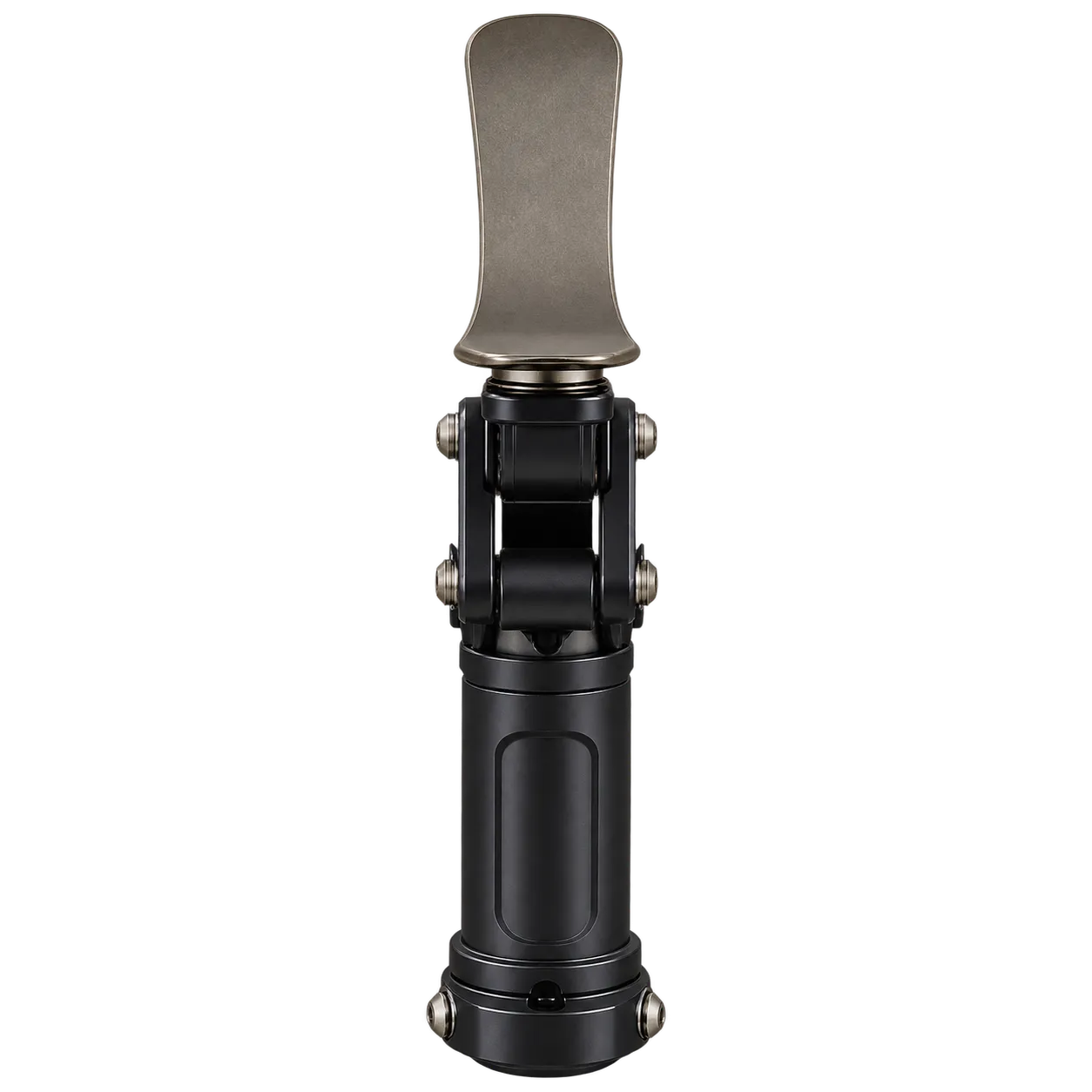
Knee disarticulation keeps the whole femur, so most users can bear weight through the end of the residual limb and control the socket with a long lever. The 3F26P is aimed at the active members of that group: people who walk outdoors, change pace often and want the prosthetic shin to follow them. It fits users within the 100 kg planning figure who have the hip strength to manage a knee whose stability comes from linkage geometry.
Pace is where the air cylinder earns its place. A clinical practice guideline on knee selection for unilateral transfemoral users, published in 2019, recommends pneumatic or hydraulic swing resistance for active walkers, citing gains in comfort, speed and symmetry that come largely from shorter prosthetic stride time. The evidence also has a limit. In a 1998 survey of 22 established users of mechanically set pneumatic swing control who trialled a microprocessor-controlled version, 21 found walking at different speeds easier on the electronic setting, and 21 of 22 did not want to go back. A pneumatic setting therefore covers a band of speeds, and users whose pace swings widely may need it retuned.
Outcomes at the amputation level vary. A 2016 systematic review of 17 studies and 709 knee disarticulations reported prosthetic walking rates from 13% to 75%, mostly in dysvascular patients. Fitting texts note that four-bar knees built for this level fold back under the thigh in sitting, which reduces knee projection and helps cosmesis.
Buyers are typically limb centres, independent prosthetic practices and overseas fitting programmes. In England, NHS limb services order pneumatic knees through a framework that NHS England mandates, and equivalent public procurement elsewhere expects traceable, documented supply. The conformity documentation those procurement routes require is issued by the manufacturer and shared by the enquiry team.