
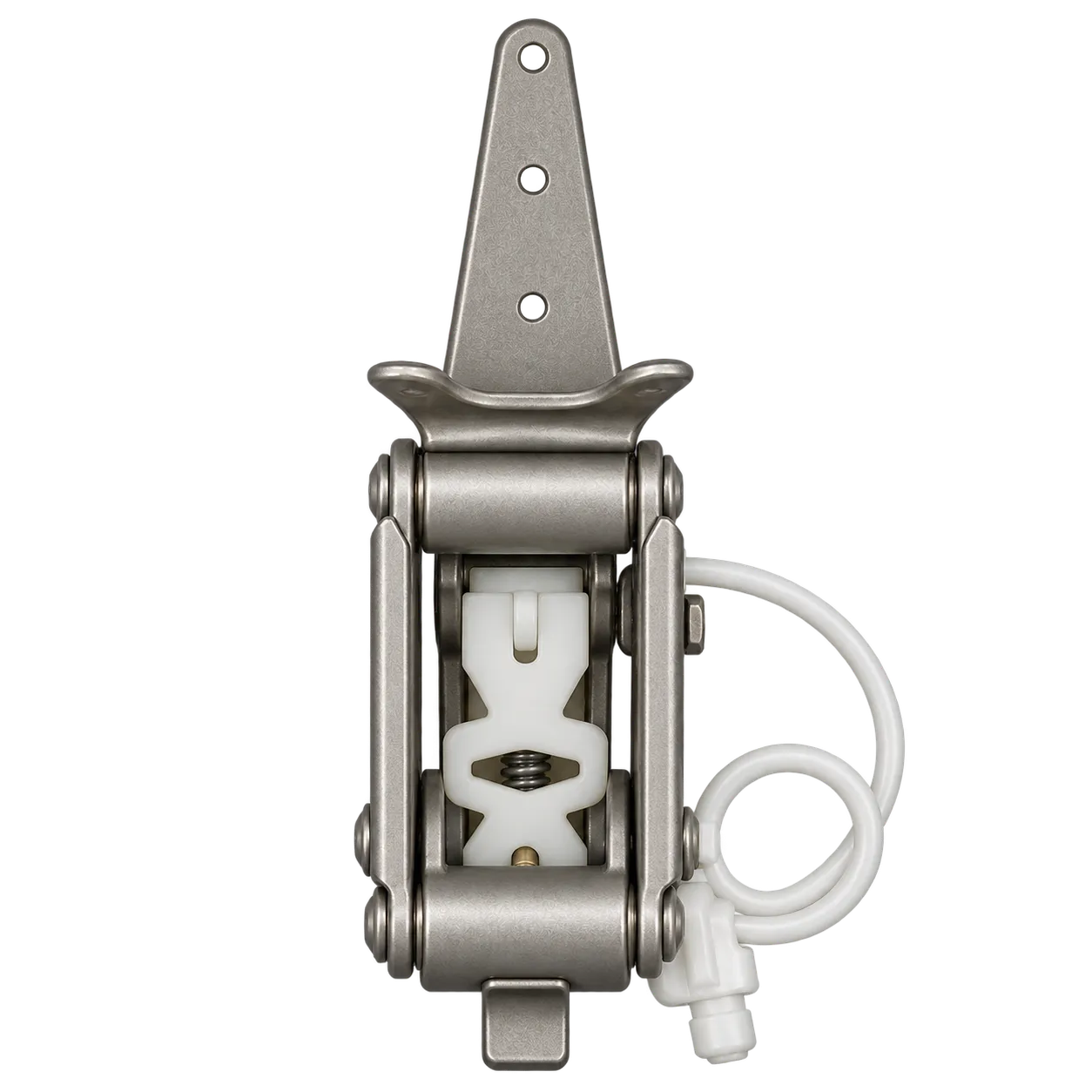
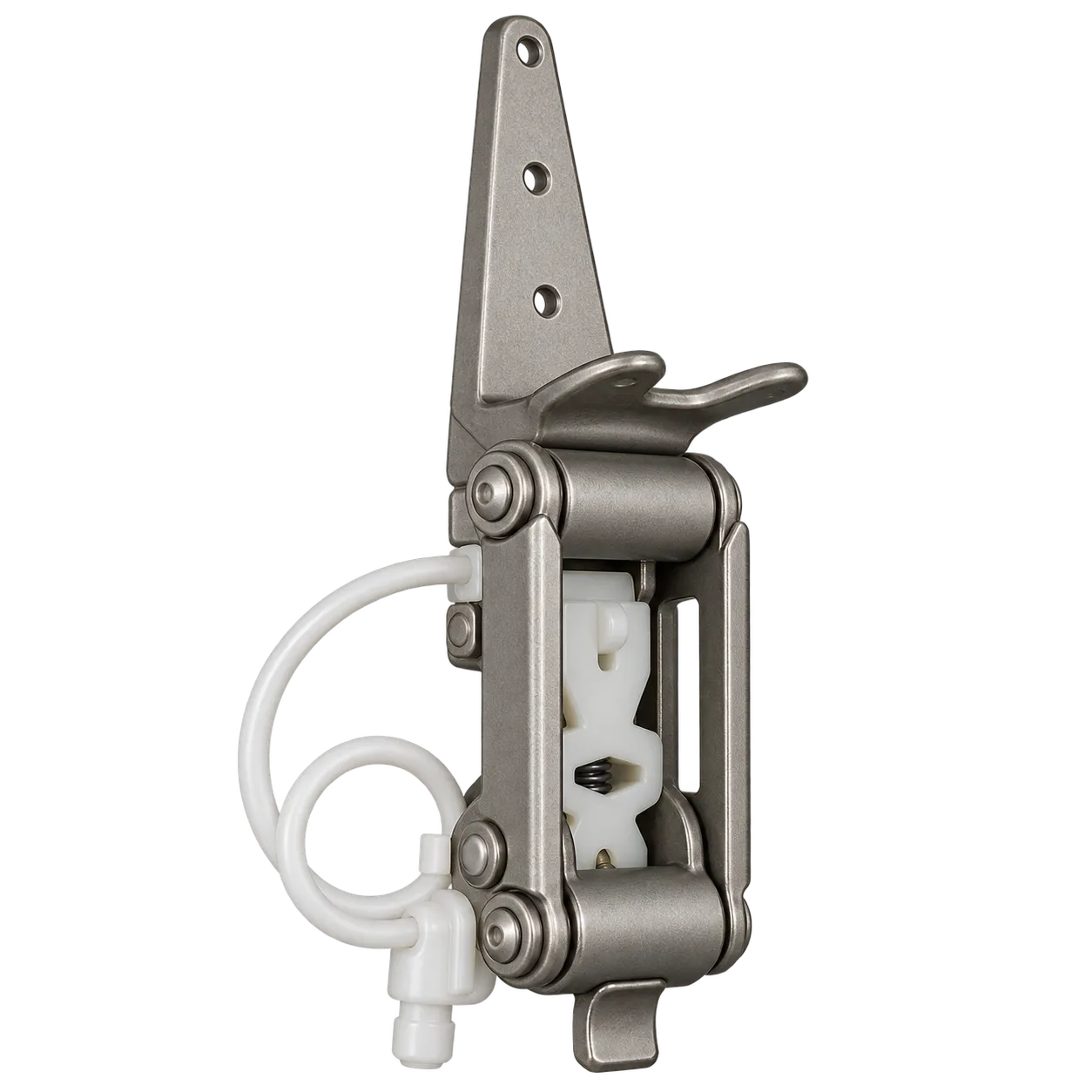
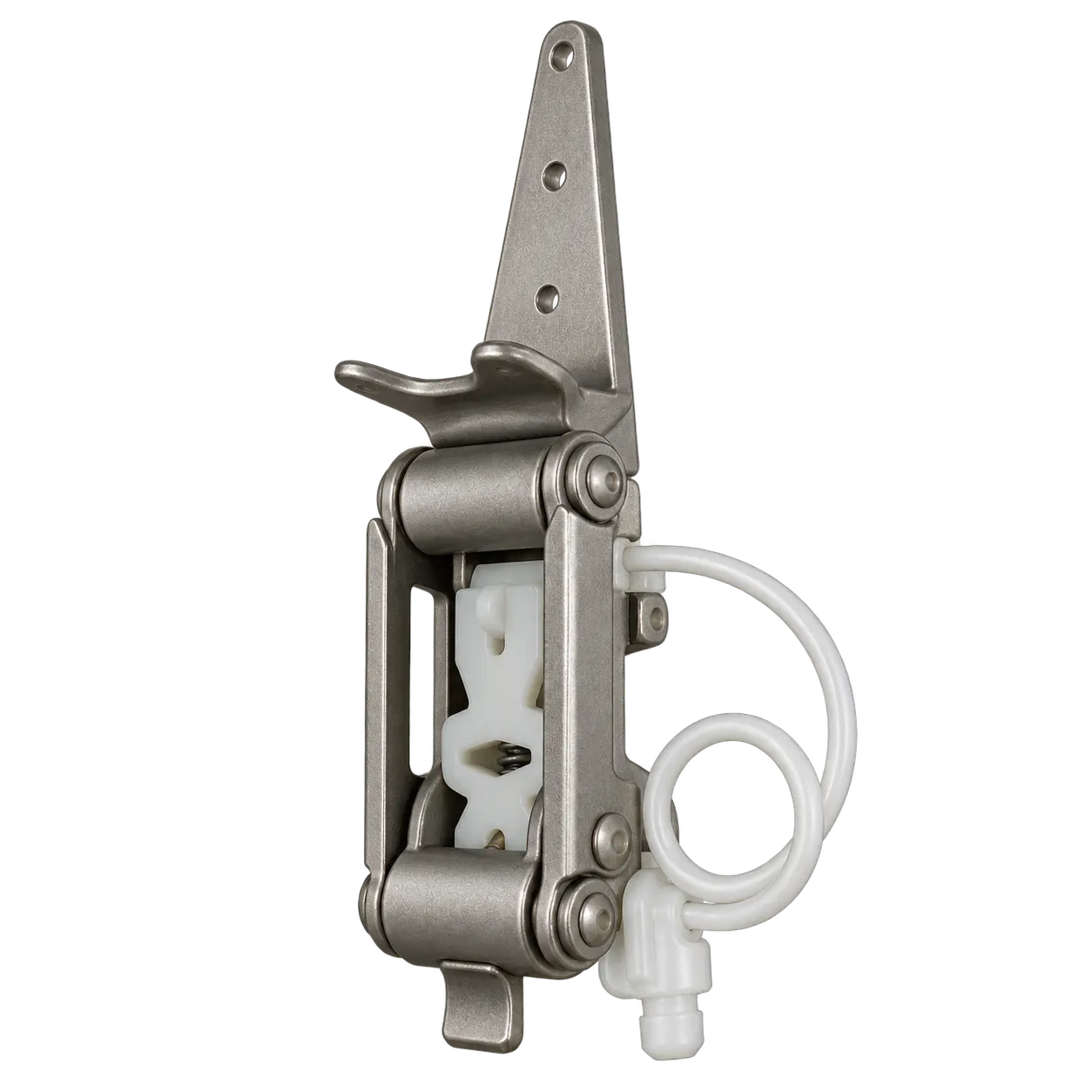
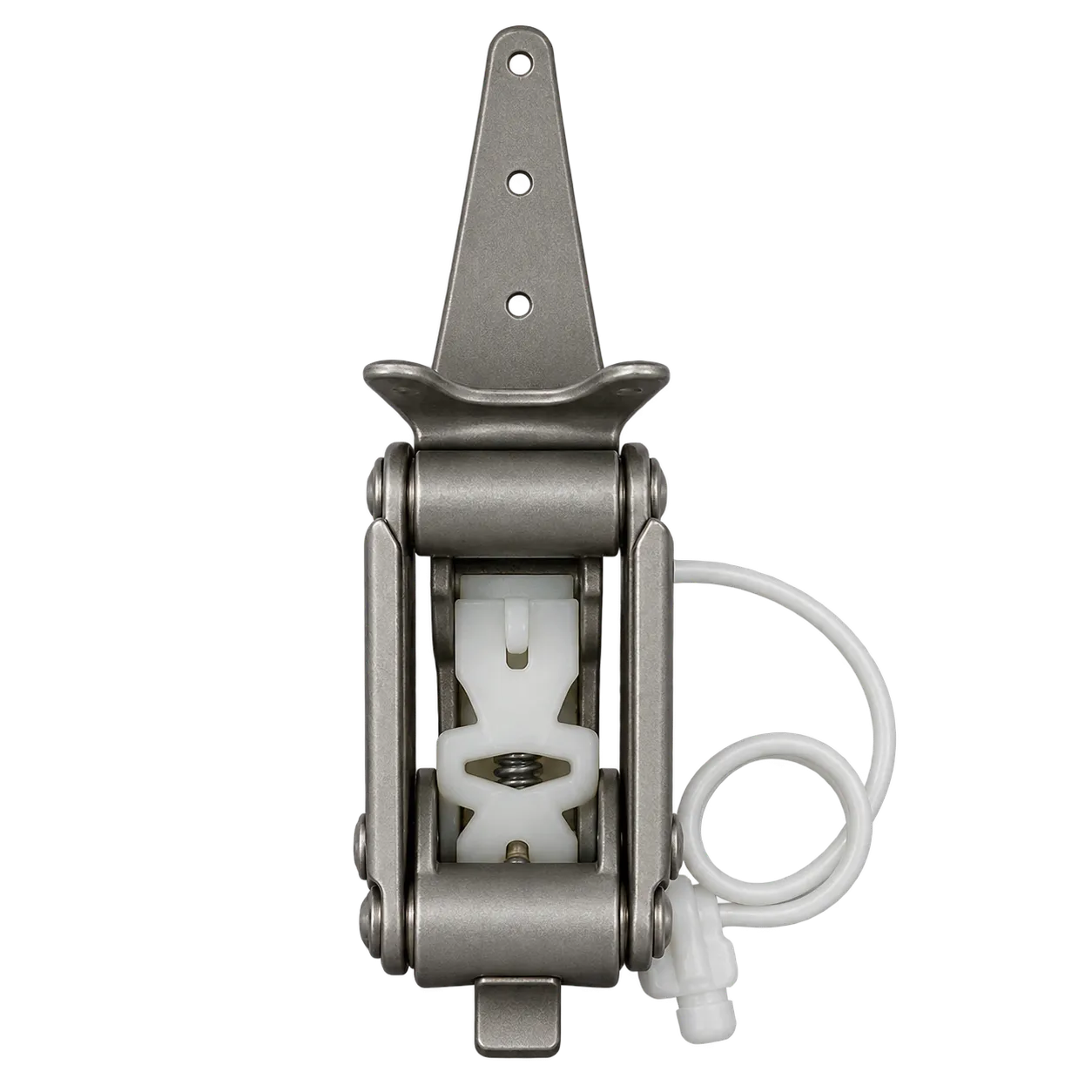
Through-knee users who need a locked knee are the people this joint is built for. That often means older adults, people with weak hip muscles or uncertain balance, and anyone early in rehabilitation who needs the limb to stay straight before trusting it. The 3F22 serves them up to 150 kg, with the socket, plate and distal parts matched on the manufacturer's drawing.
Much of what matters to these users happens away from the walking track. Greeting a visitor or washing up goes better when the knee will not buckle. Sitting matters as much: at a dinner table, in a passenger seat or by the bed, the knee bends on the user's own command, and the side release in the photograph puts that in their hand. Seated appearance is the other half, since a long residual limb pushes the knee axis lower and can make the thigh look longer under clothing.
Published evidence here is mostly descriptive. A prosthetics reference text reports protrusion of up to 2 in. beyond the anatomical knee centre with units designed for higher levels, and says polycentric through-knee units rarely need manual locking. In a 2022 survey of 102 prosthetists, 53% favoured knee disarticulation as an amputation level, yet 54% believed patients preferred transfemoral amputation, with poor cosmesis, an asymmetrical knee axis and difficulty sitting and standing among the drawbacks cited. A 2022 meta-synthesis of 14 qualitative studies with 375 participants listed concealment under clothing and regained independence among the factors users raise.
Limb centres, rehabilitation units, independent clinics and export programmes all fit through-knee users. NHS services in England buy through a mandated national framework, and equivalent public procurement elsewhere asks the same of its suppliers. The conformity documentation those procurement routes require is issued by the manufacturer and shared by the enquiry team.