
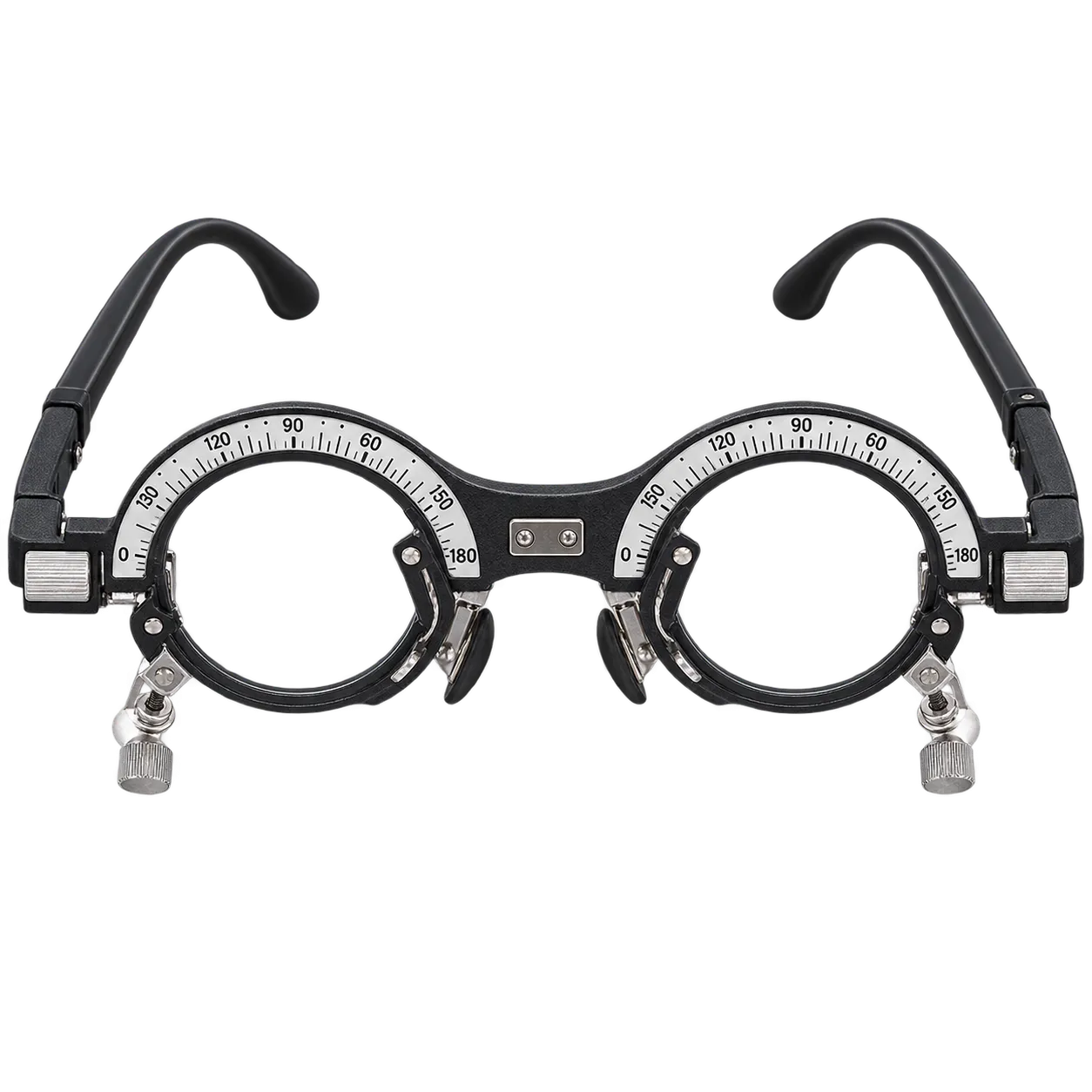
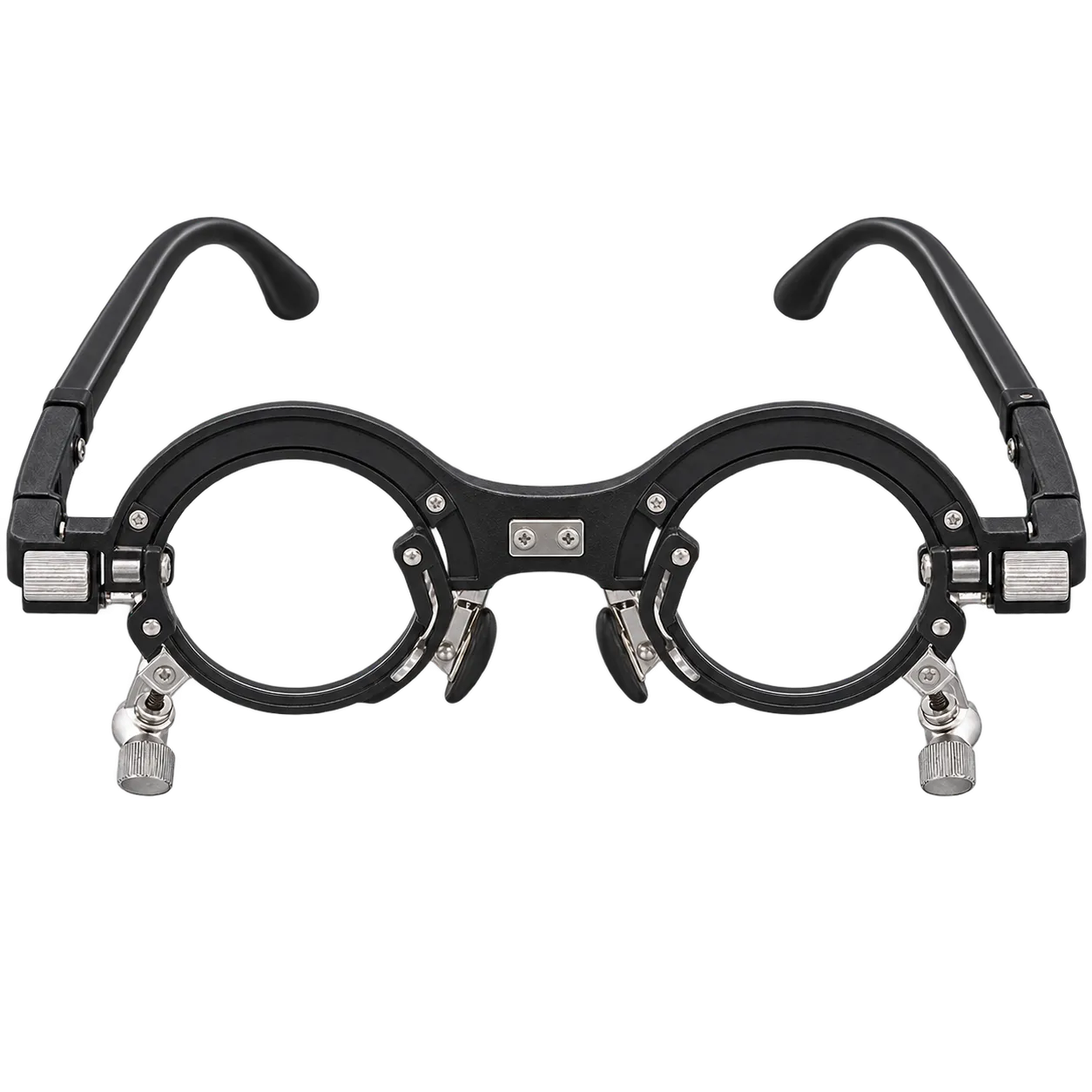
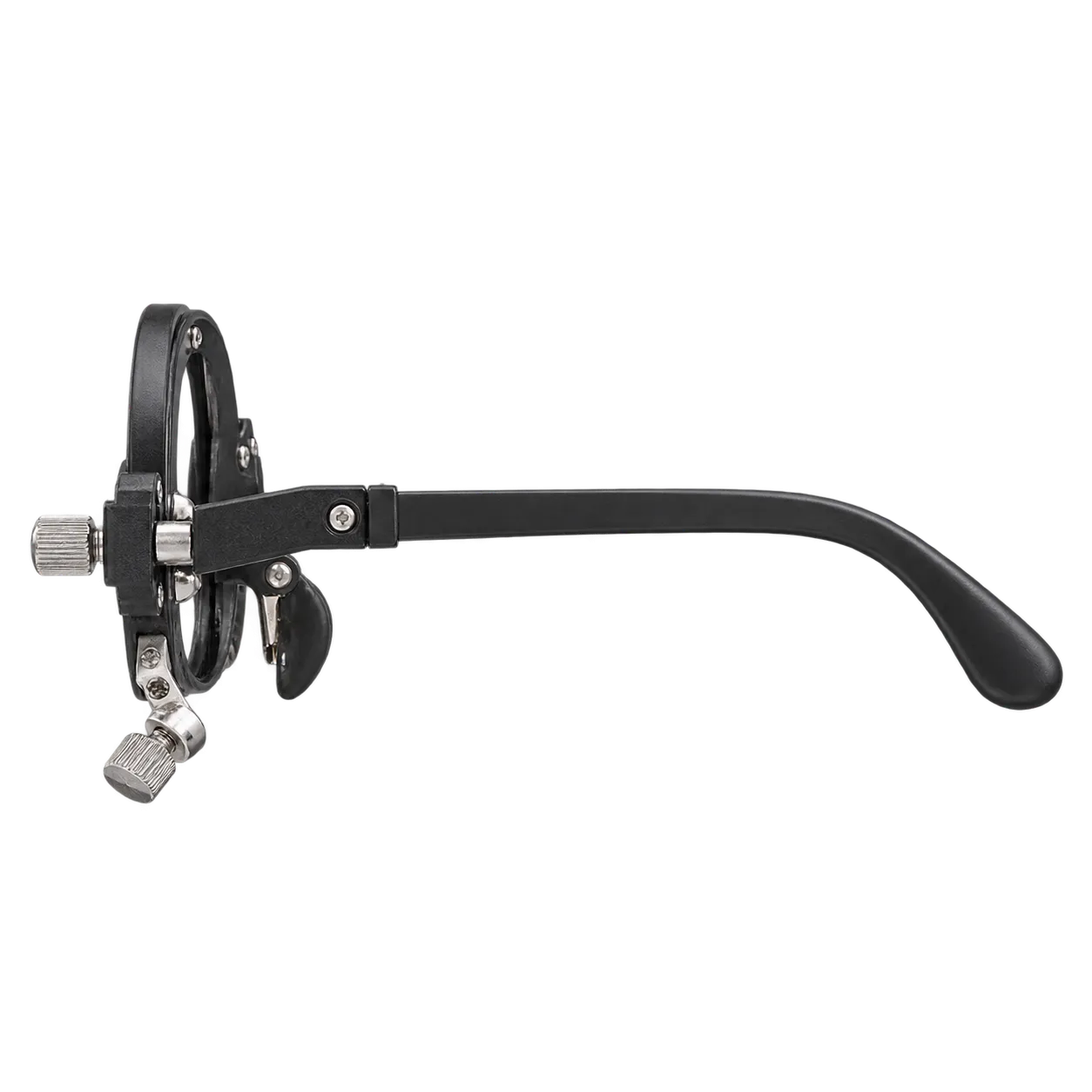
Near and reading assessment is where lens security matters most. A patient who looks down to read, then up to a distance chart, moves the frame with every change, and a lens that shifts in the cell alters the result.
Complex prescriptions with several lenses stacked in one cell benefit most from clips, since a stack held only by friction is more likely to move than a single lens.
High-volume adult refraction suits a standard fixed-PD frame that is quick to select and holds its lenses reliably across a busy list.
Domiciliary work involves patients who move more freely than in a consulting room chair, which makes secure lens retention more valuable away from the clinic.
Practices choosing a single model from this family may find the TF-A a sensible default, subject to confirming how it differs from the TF-AT.
Training clinics can use a clip-retained frame to teach correct lens handling without lenses falling out during practice.
Children below 52 mm fall outside the range and need a paediatric frame.
Complex prescriptions still depend on the lens capacity, which we confirm before recommending the frame for that work.