
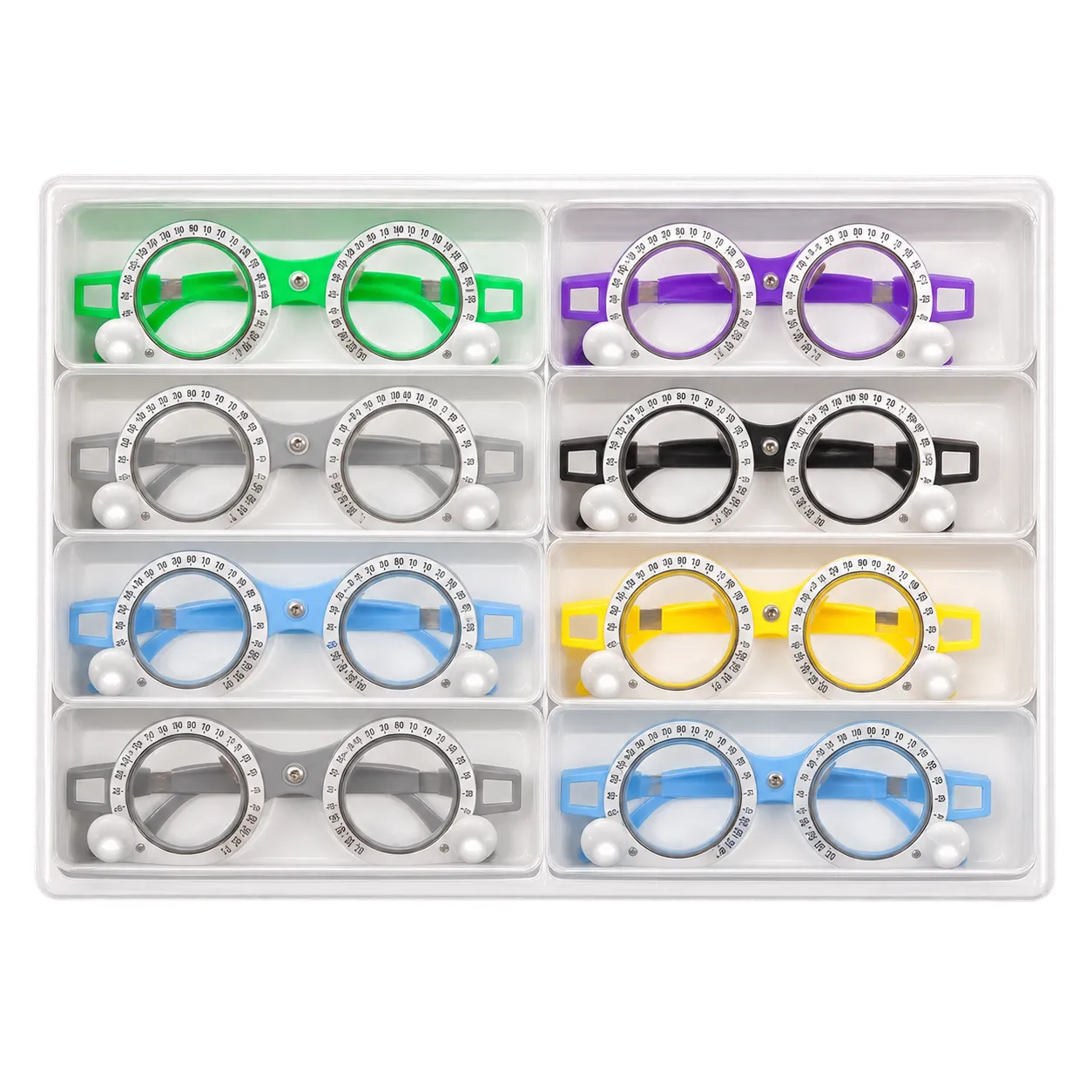
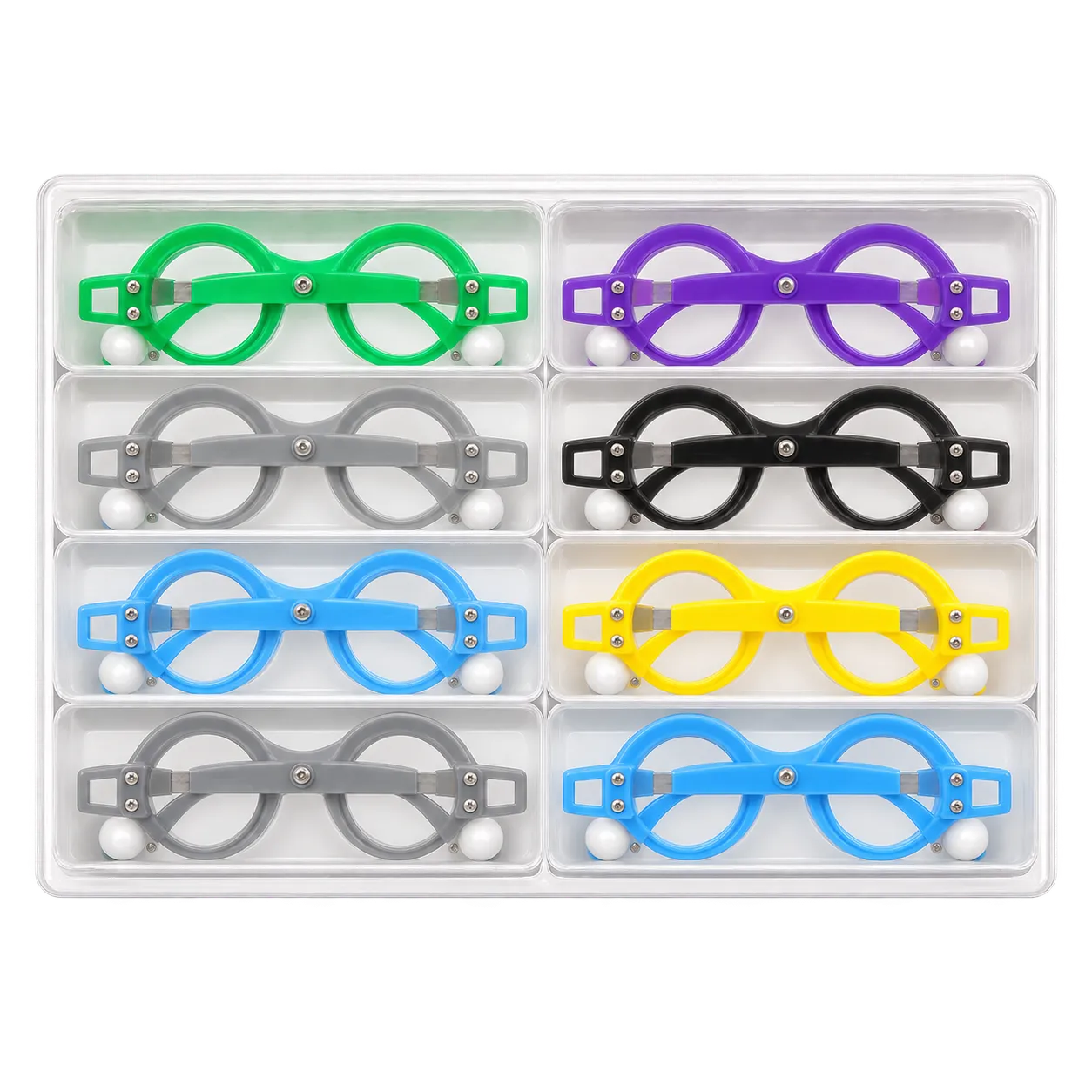
Broad patient populations are the clearest fit. A practice seeing a wide mix of adults will meet interpupillary distances at both extremes, and the outer frames stop those patients being the ones fitted least accurately.
Vision screening benefits from the same speed as any fixed-pupil set, with fewer patients falling outside the range.
Occupational health assessments cover working-age adults of every build, which is exactly the population where the outer sizes get used.
High-volume clinics gain from the removal of per-patient setup, and from the reduced chance of reaching for a frame that does not fit.
Teaching clinics can demonstrate the effect of decentration across a full range of sizes, including the extremes students rarely see.
Second sets suit practices that already hold an adjustable frame, covering routine cases quickly while the adjustable frame handles complex ones.
Paediatric refraction remains outside this set, since 56 mm reaches only some older children.
High prescriptions still belong in an adjustable frame, where centration is set exactly rather than approximated to the nearer 2 mm.