
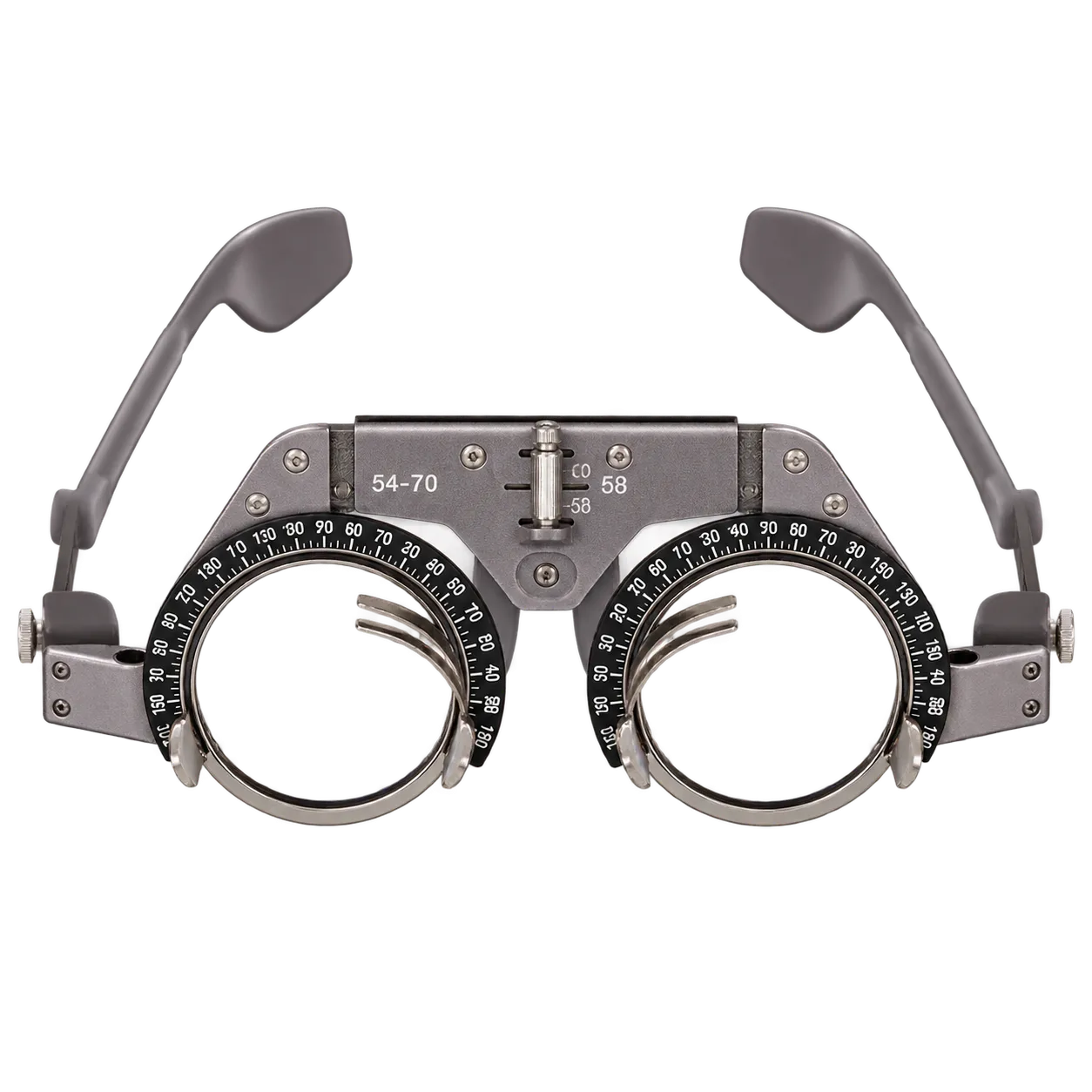
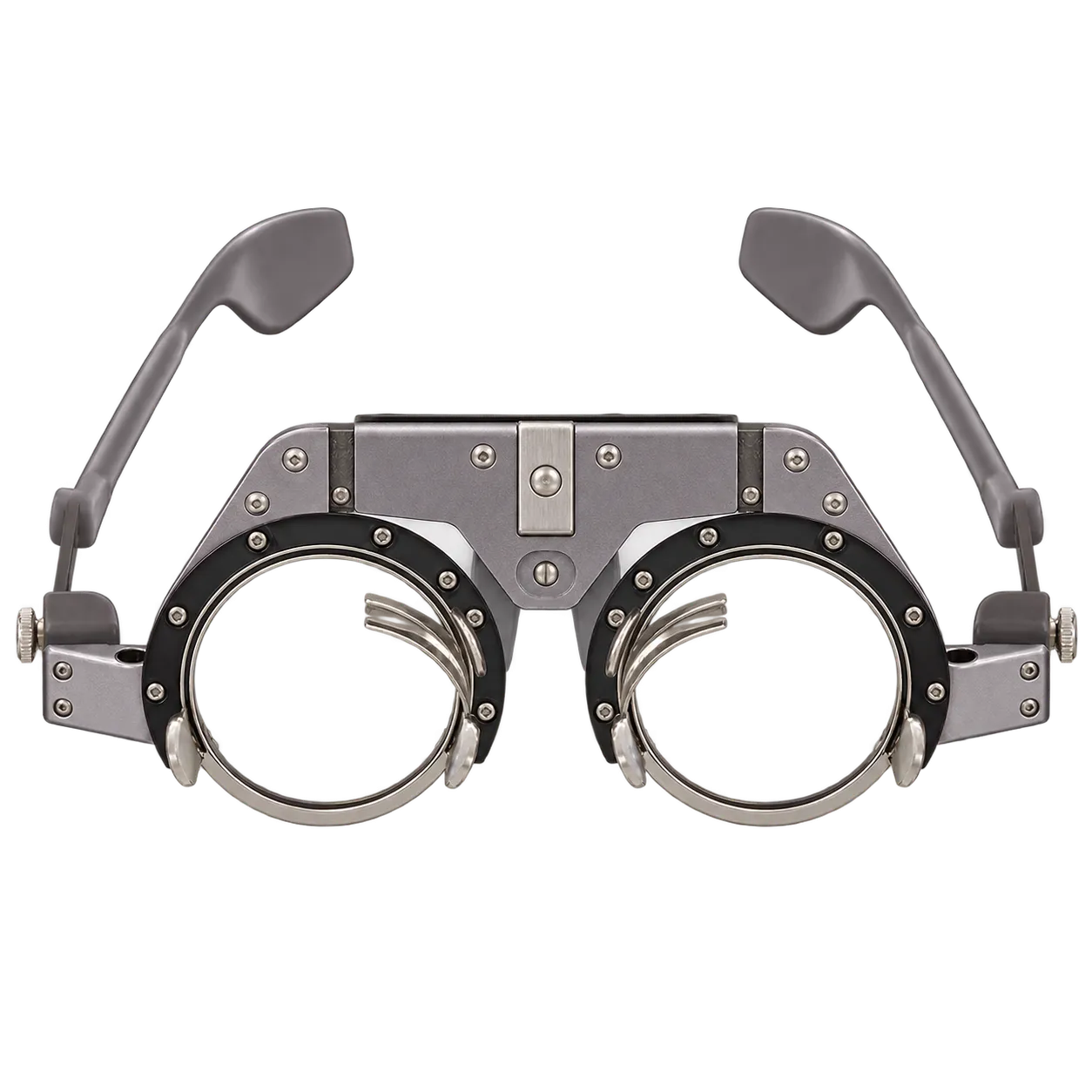
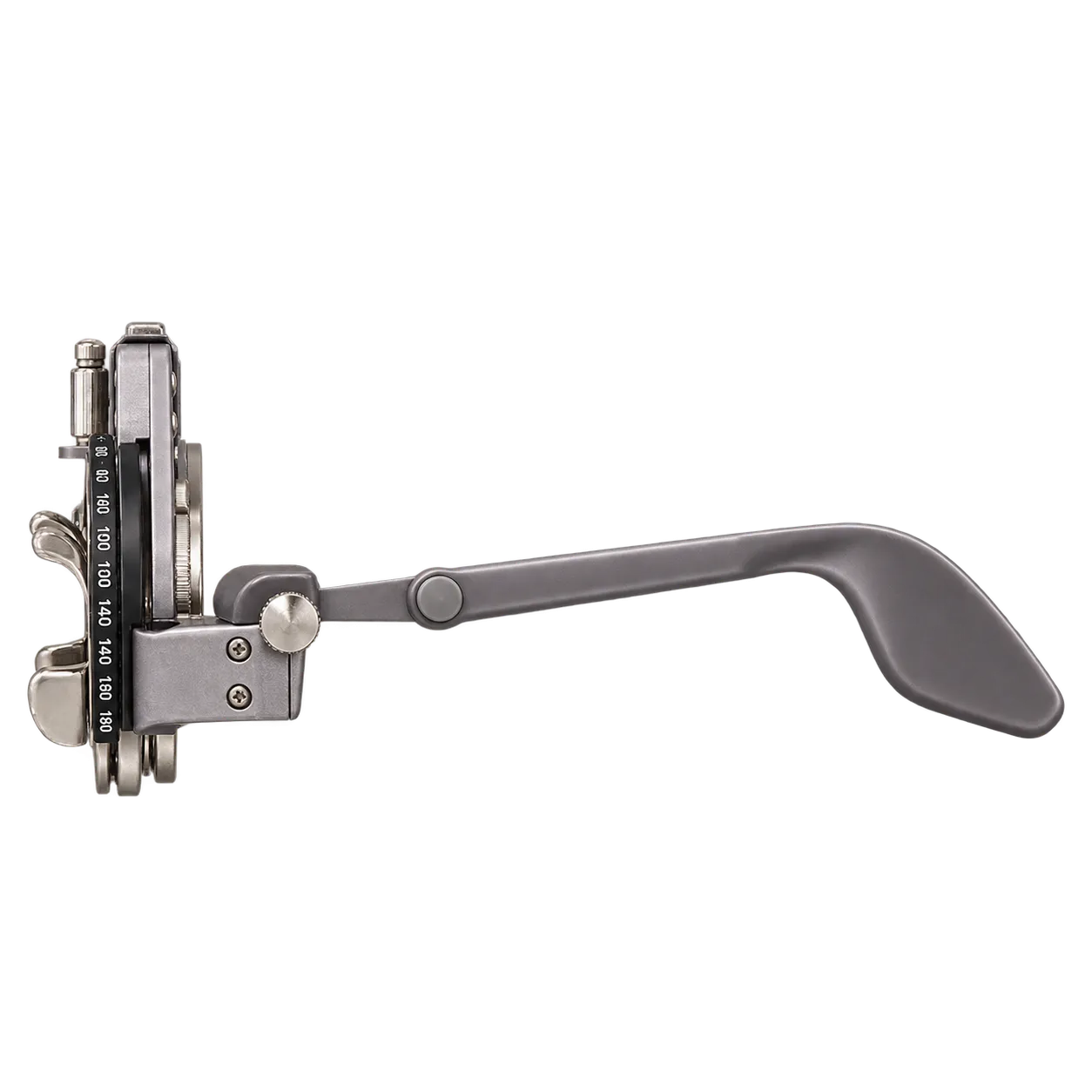
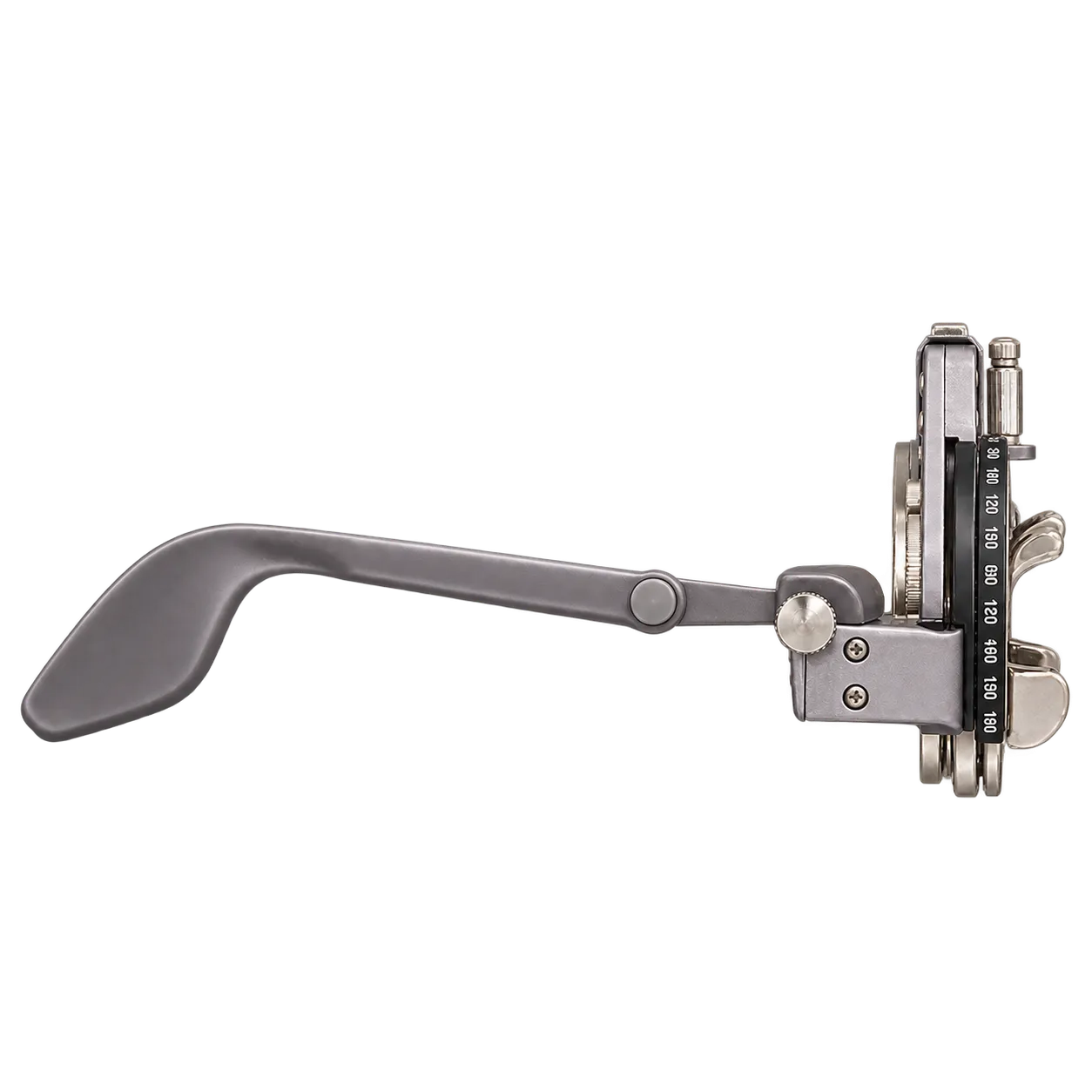
Long refractions are the clearest use. Complex prescriptions, cycloplegic refraction and cases needing repeated checks all keep a frame on the face well beyond a routine test, and weight is felt across that time rather than at the start.
Elderly and frail patients benefit directly, since a lighter frame presses less on thin skin at the nose and temples and is less likely to slip.
Low vision assessment keeps the correction in place while the patient reads, moves and looks around, which is exactly the situation where a heavy frame becomes intrusive.
Domiciliary visits suit a light frame that is carried in a bag alongside everything else, and titanium's corrosion resistance suits equipment that travels in variable conditions.
High-volume clinics gain from a frame that patients tolerate without comment, since time lost to repositioning adds up across a list.
Patients with skin sensitivities are often better served by titanium, subject to confirming the alloy and any plating.
Paediatric refraction is poorly served by the 54 mm lower limit, and practices seeing children need a frame that narrows further.
Occasional use may not justify the cost over a steel frame, since the advantage shows most where the frame is worn often and for long periods.