
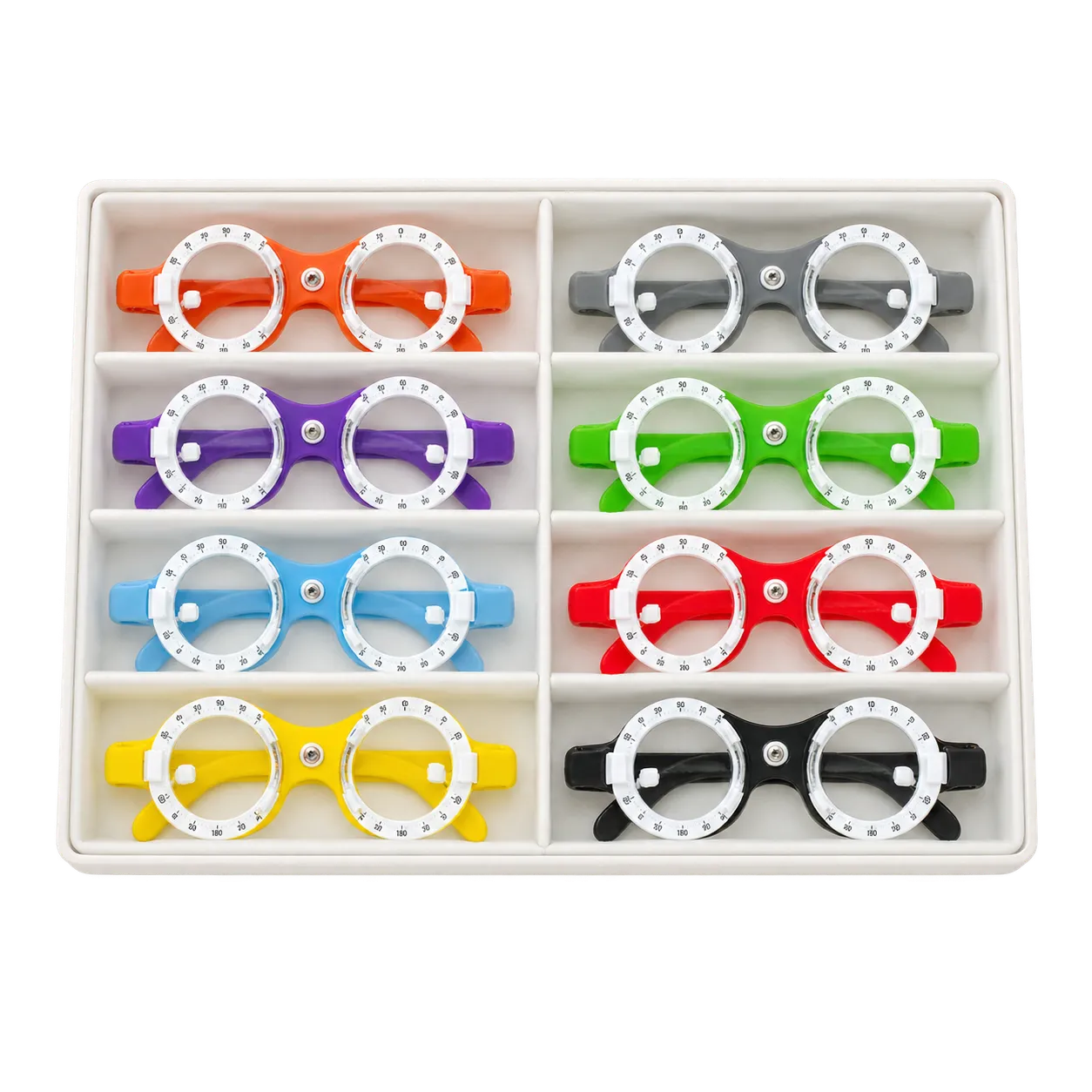
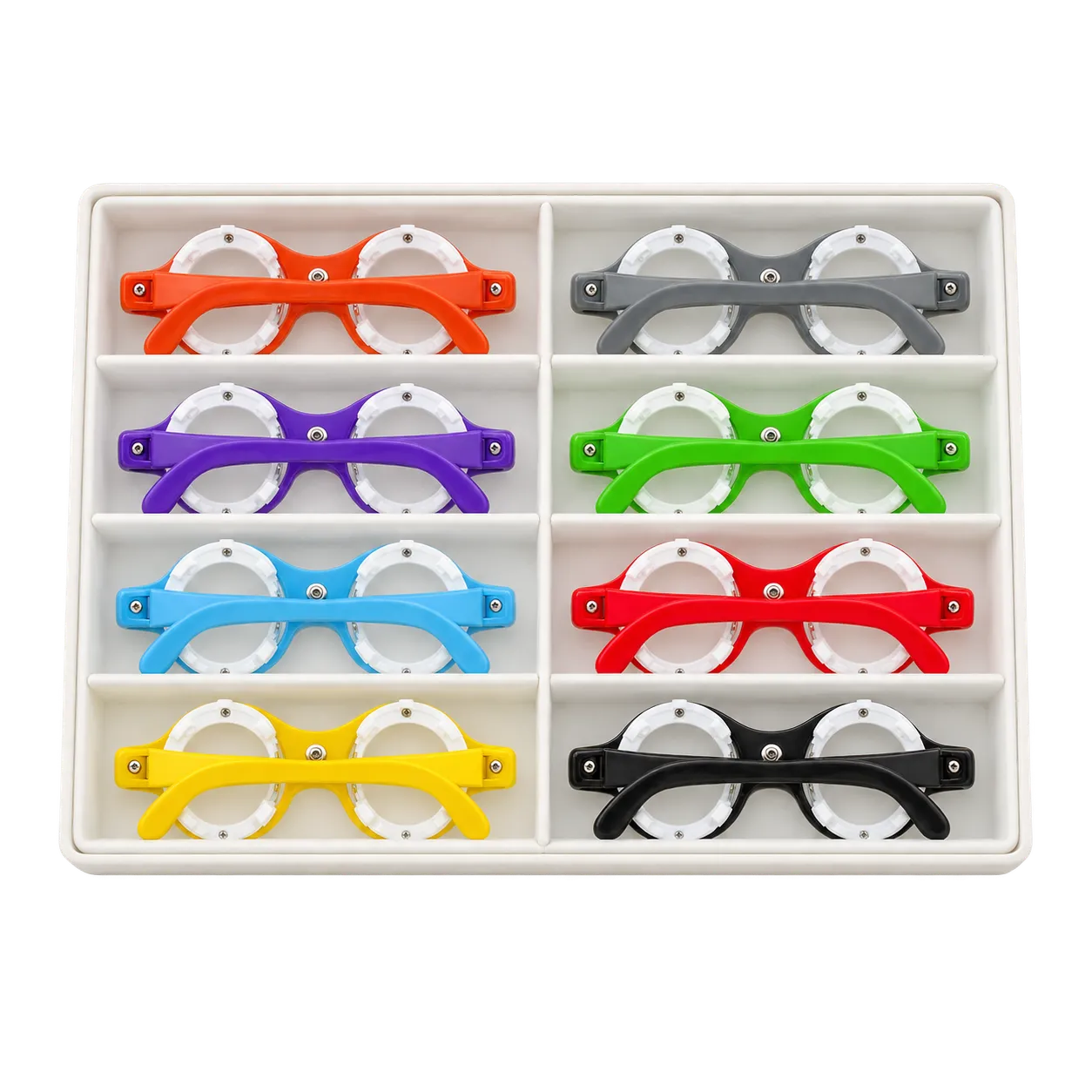
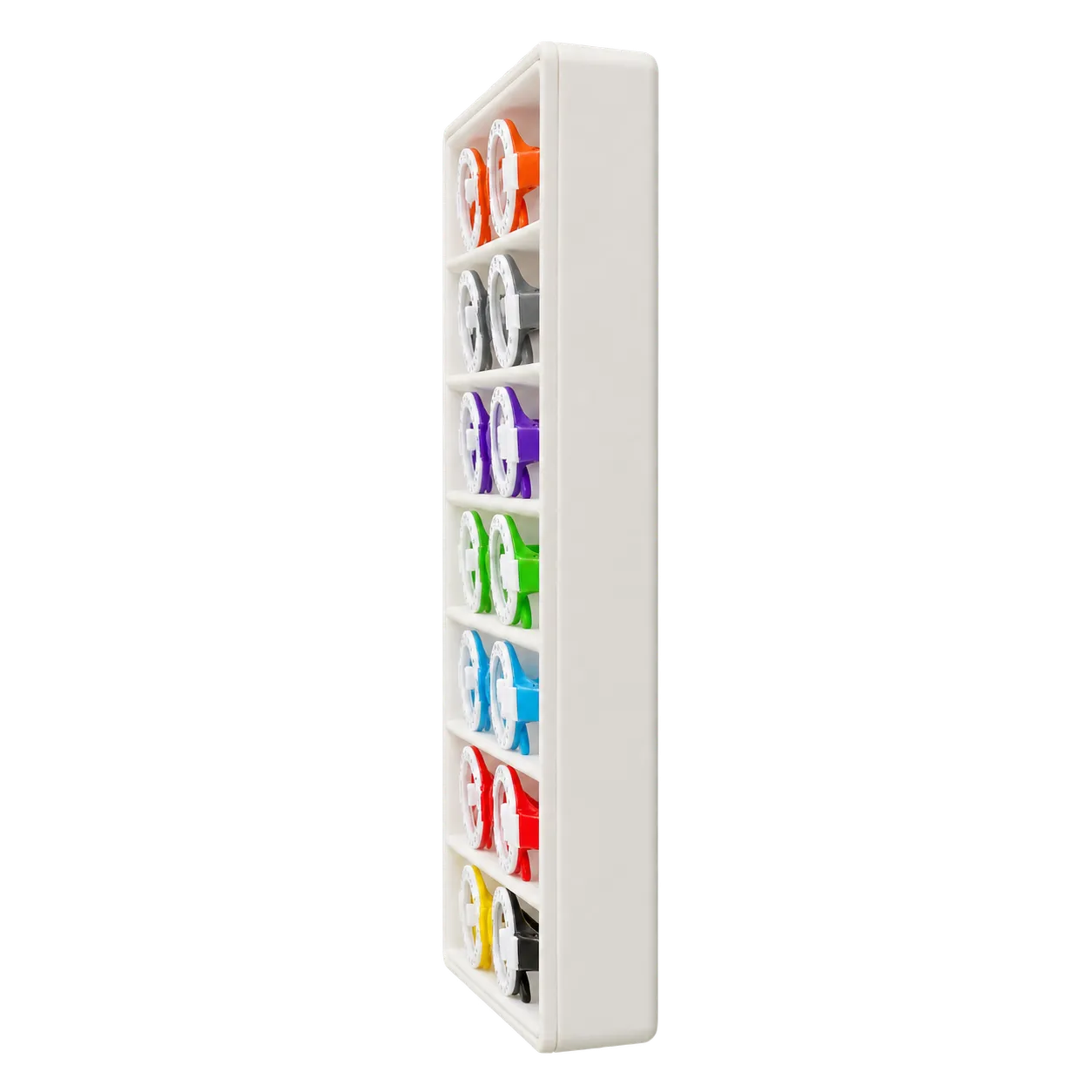
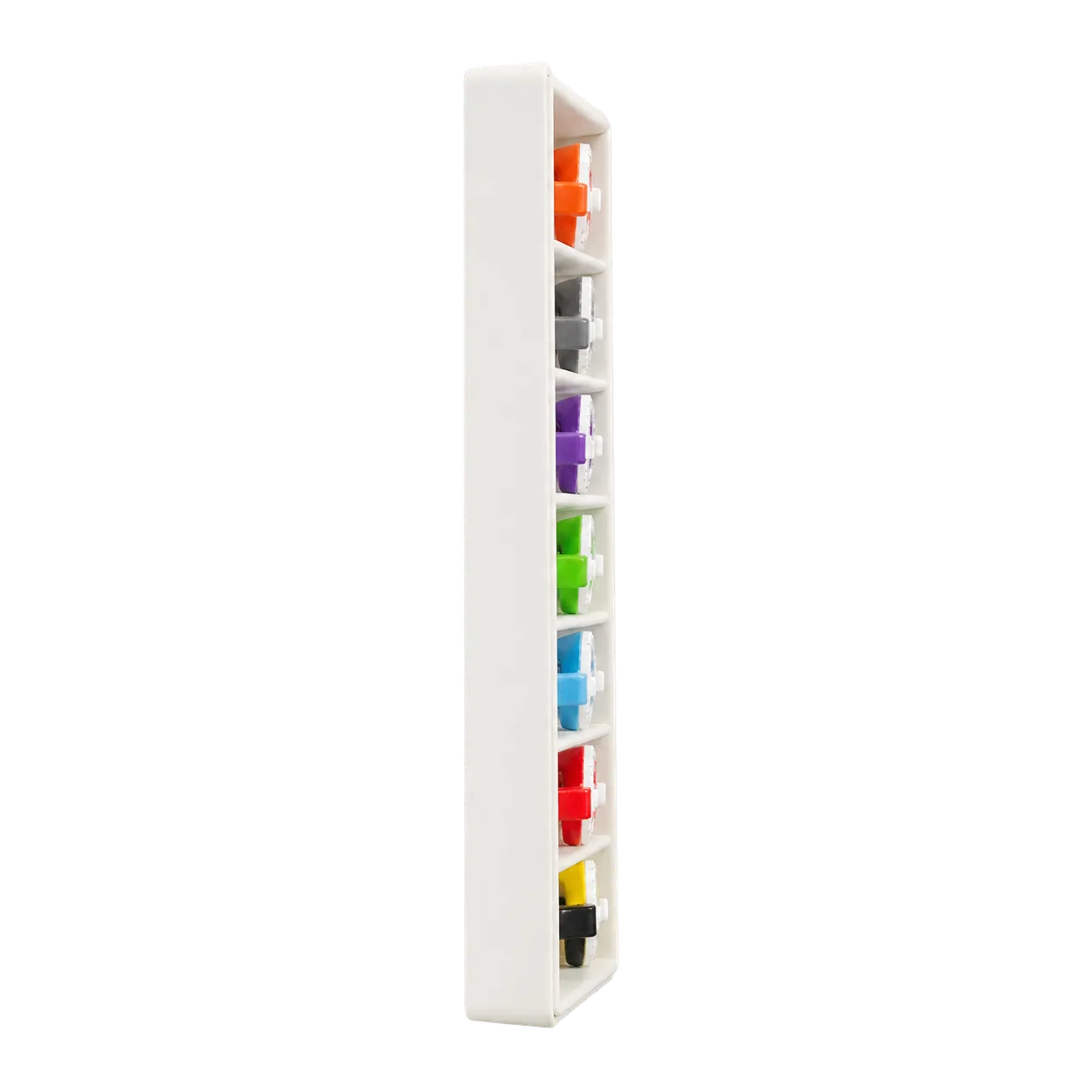
High-volume adult refraction is the natural home. A set of eight colour-identified frames removes per-patient setup and the risk of inheriting the previous patient's spacing, and four cells mean the full prescription can be built without swapping lenses.
Occupational health assessments refract working-age adults in number, which is exactly the population the 54 to 68 mm range covers.
Teaching clinics can use a colour-identified set to show students how estimating a patient's spacing narrows the choice before measurement confirms it.
Quick-access sets alongside an adjustable frame suit practices that want routine cases handled fast and complex cases handled precisely.
Higher prescriptions benefit from the adjustable temples, since a frame sitting square and at the right distance matters more as power increases.
Domiciliary work can carry a subset of sizes, chosen once the colour mapping is known, rather than the full box.
Young children below 54 mm fall outside the set, and a paediatric frame or adjustable frame is needed for them.
Wider-set adults above 68 mm also fall outside it, so a practice seeing many should check its caseload against the range.