
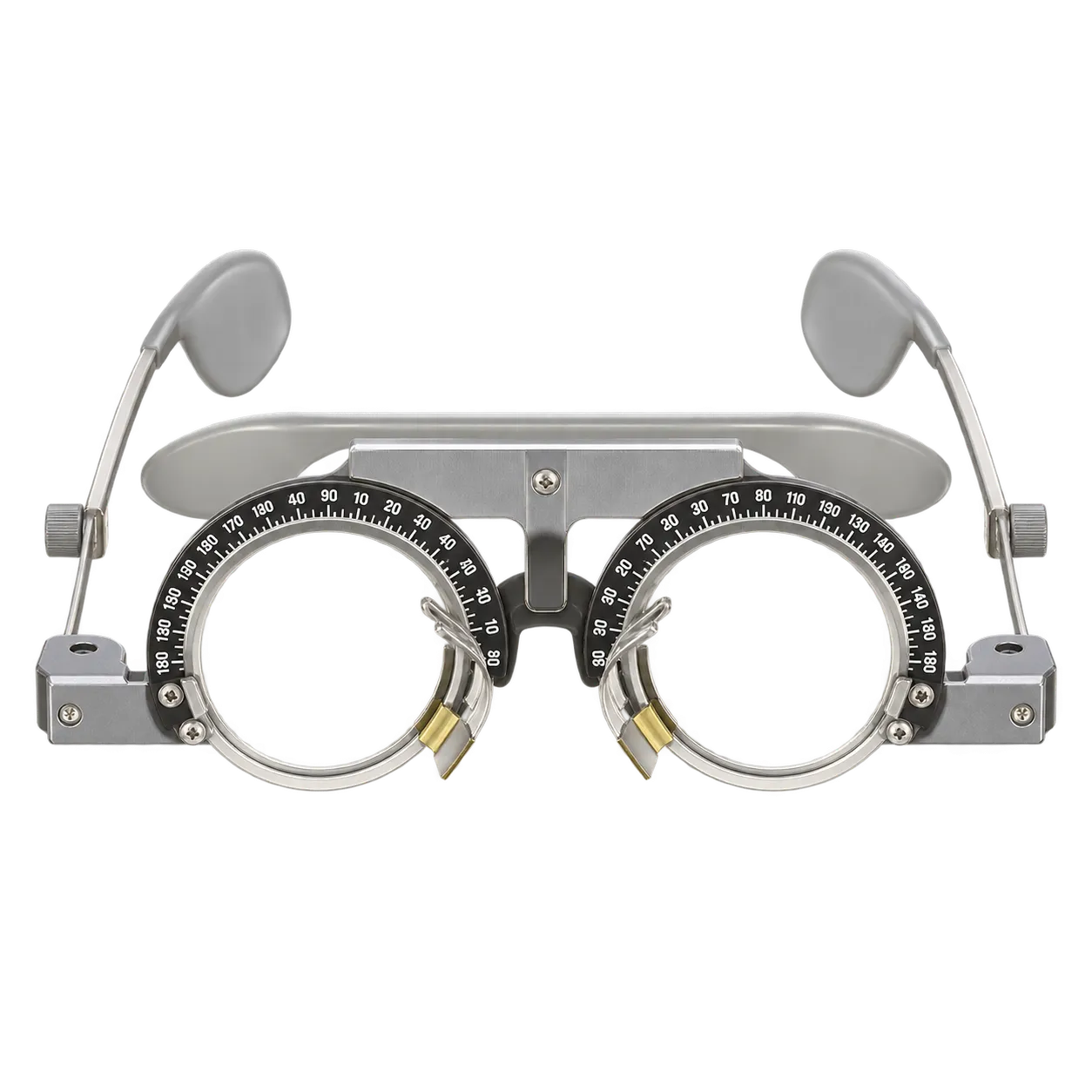
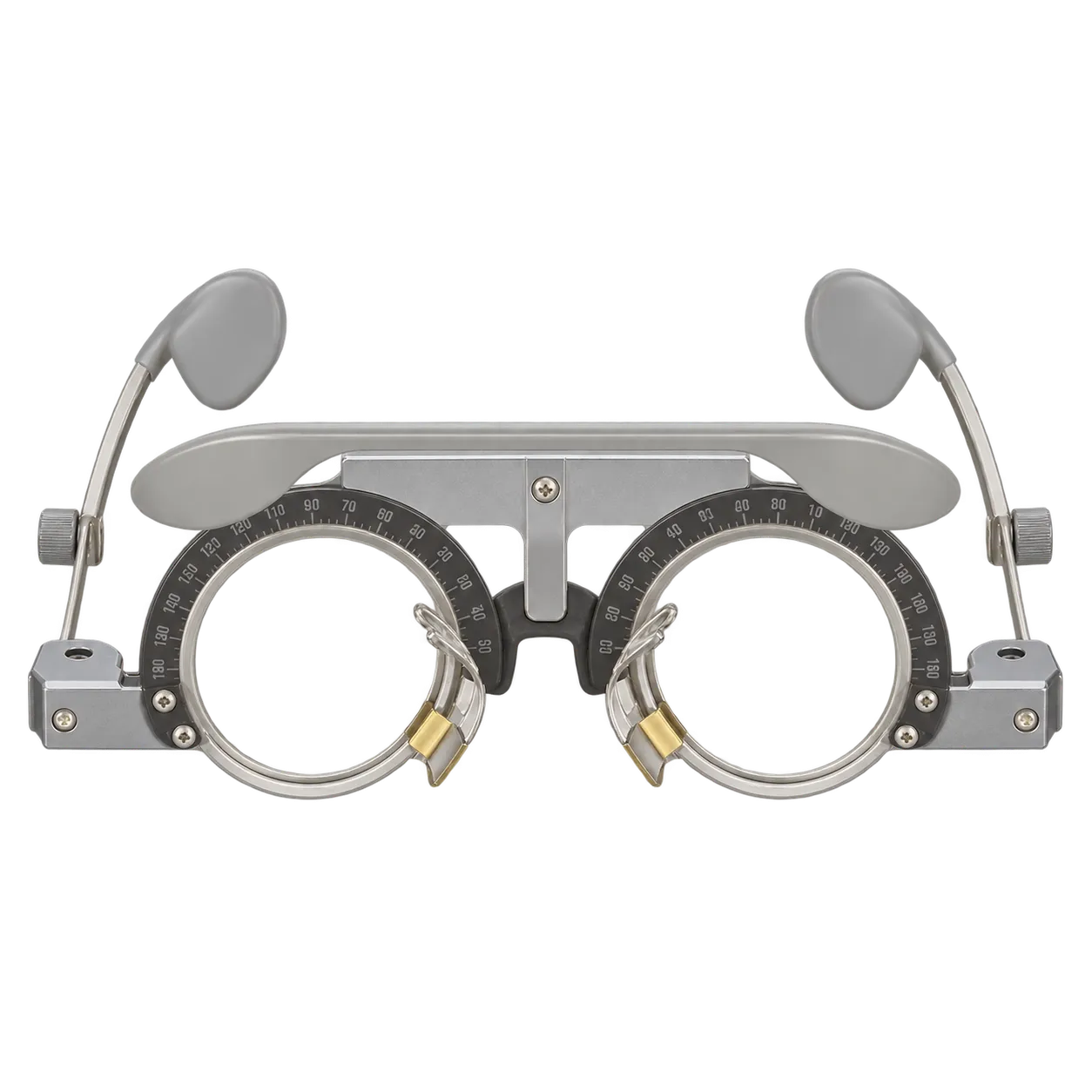
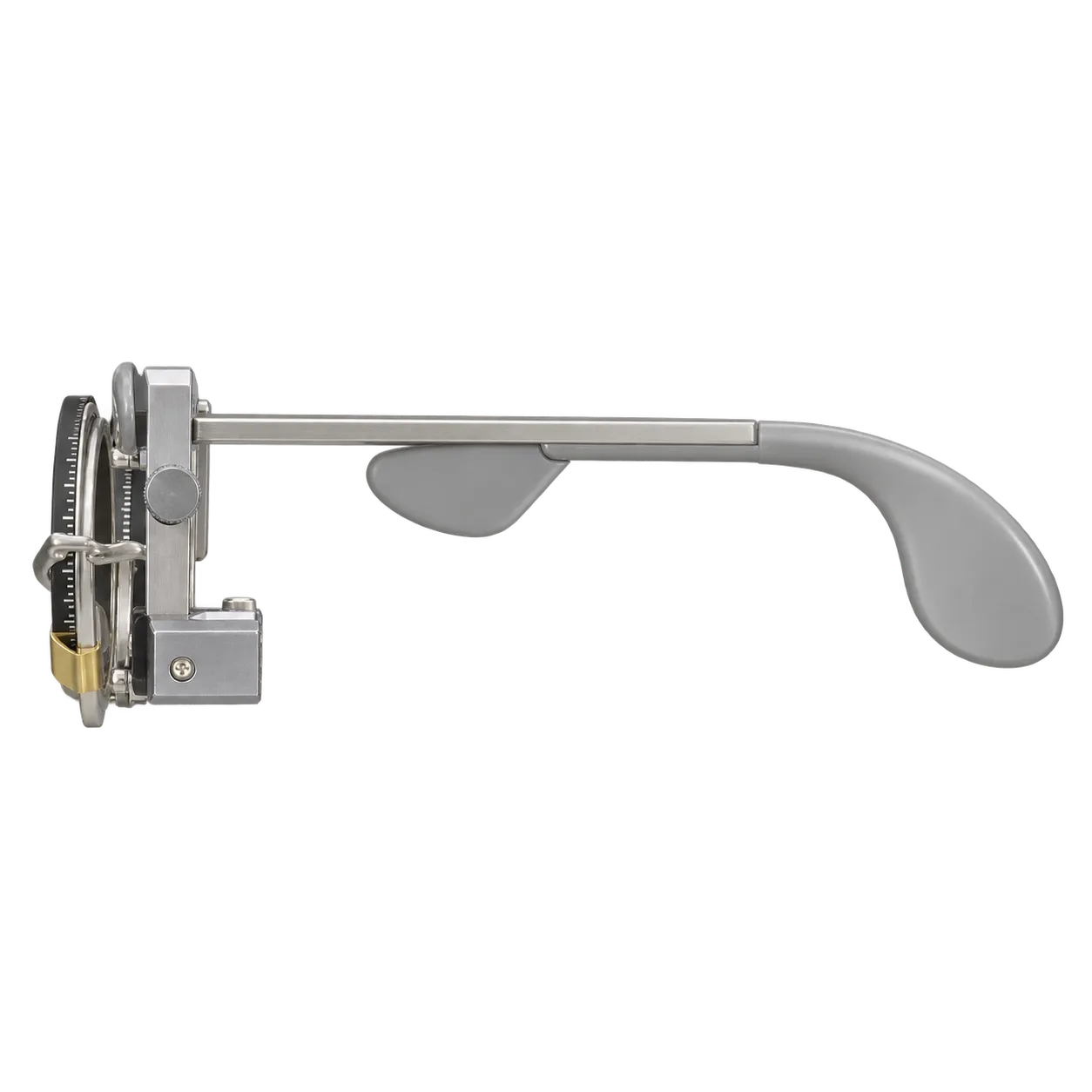
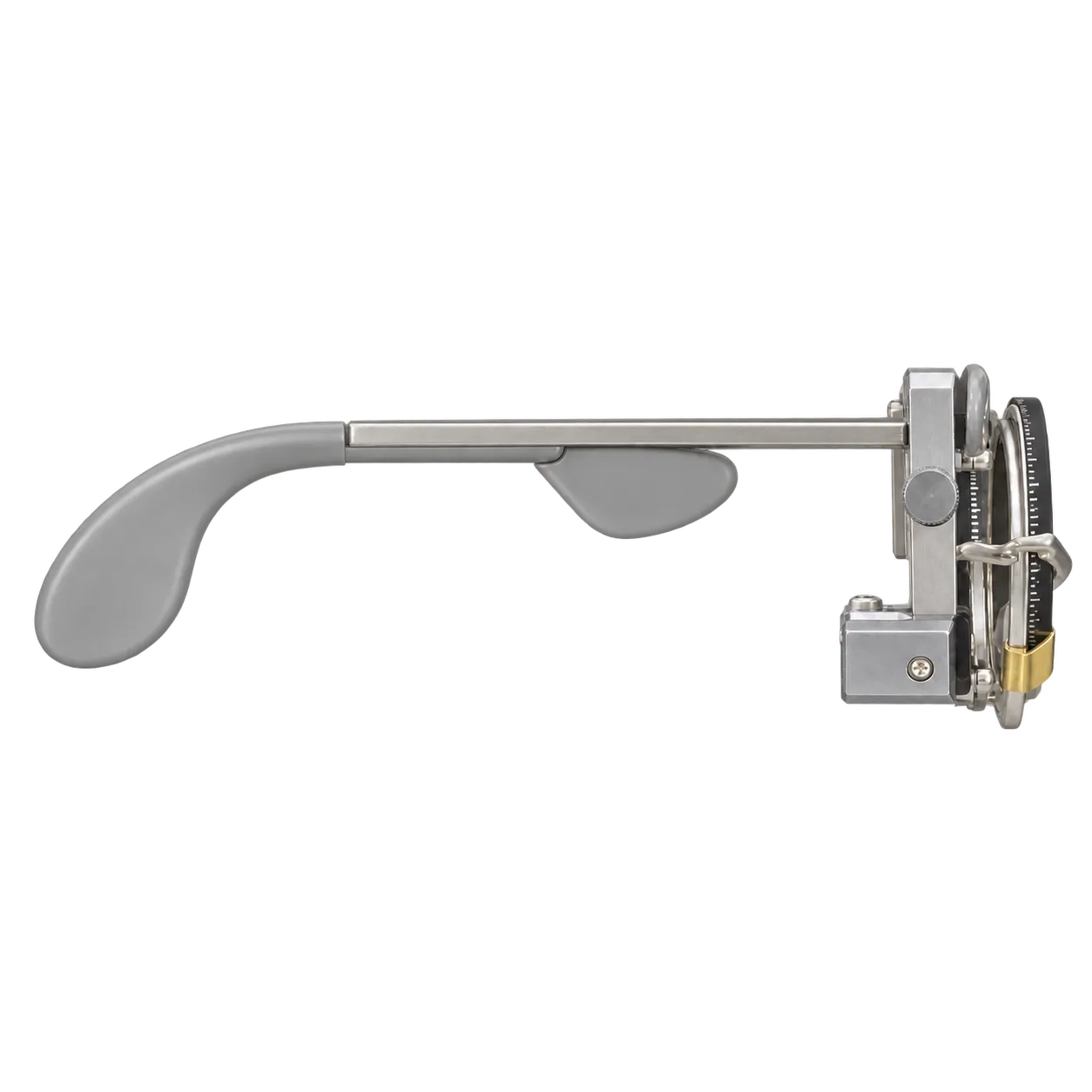
High-volume adult refraction suits a durable fixed-PD set, and metal construction means the frames hold true across years of daily handling rather than gradually drifting.
Patients with unusually high or low nose bridges benefit directly from the pad height adjustment, since a fixed frame would otherwise sit their optical centres noticeably above or below the pupils.
Higher prescriptions are where vertical centration matters most, because induced vertical prism grows with lens power, and this set addresses that where most fixed-PD frames cannot.
Binocular vision assessment depends on accurate centration in both directions, so vertical error that would pass unnoticed in a routine test can confuse a clinician looking for vertical phorias.
Occupational health and screening programmes refracting adults at volume gain from a set that combines quick selection with a proper fit.
Teaching clinics can use the pad adjustment to demonstrate vertical decentration and its prismatic effect directly.
Young children below 52 mm fall outside the scale and need a paediatric frame.
Long refractions on frail patients may favour a lighter frame, since metal is typically heavier than plastic and the weight is not yet published.