
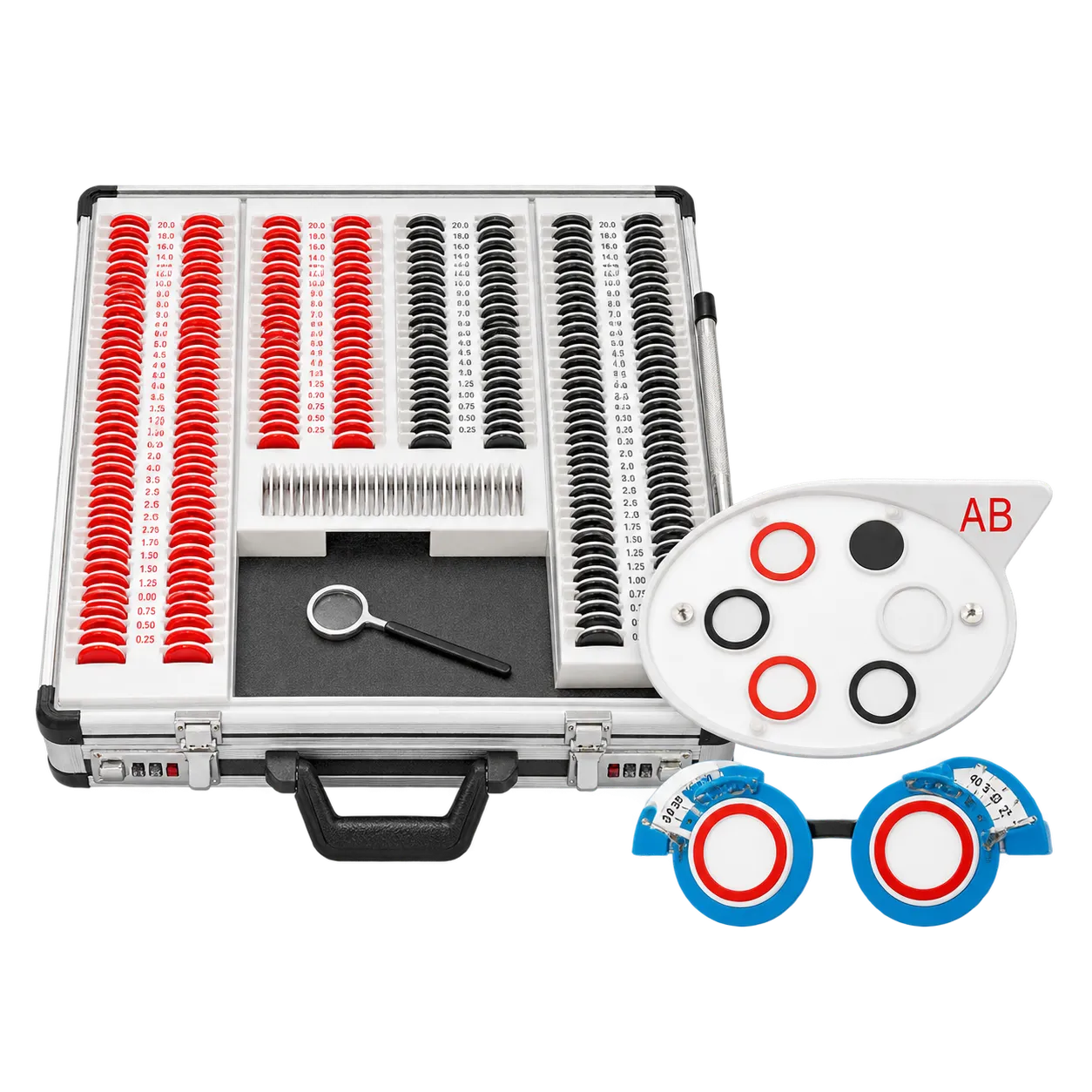
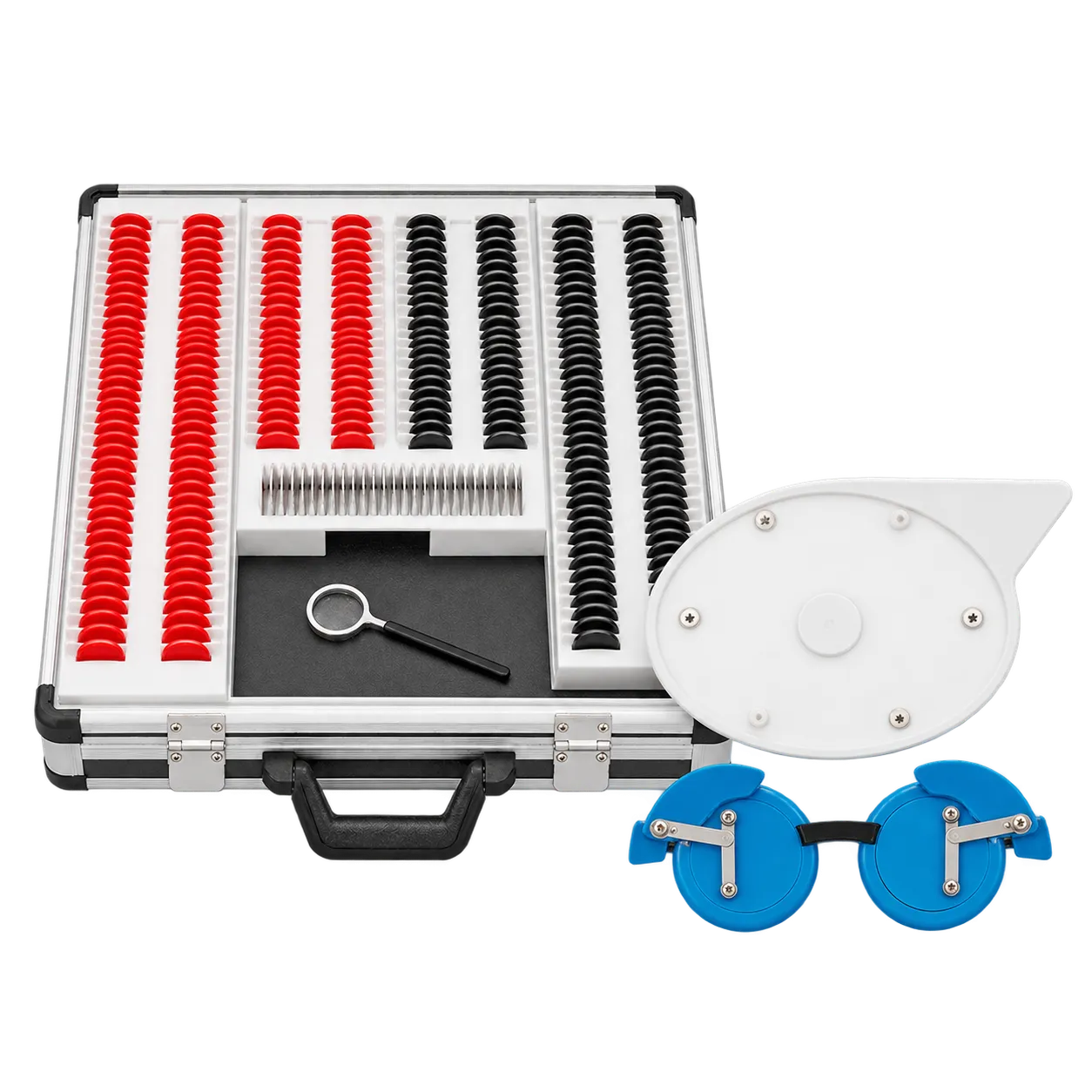
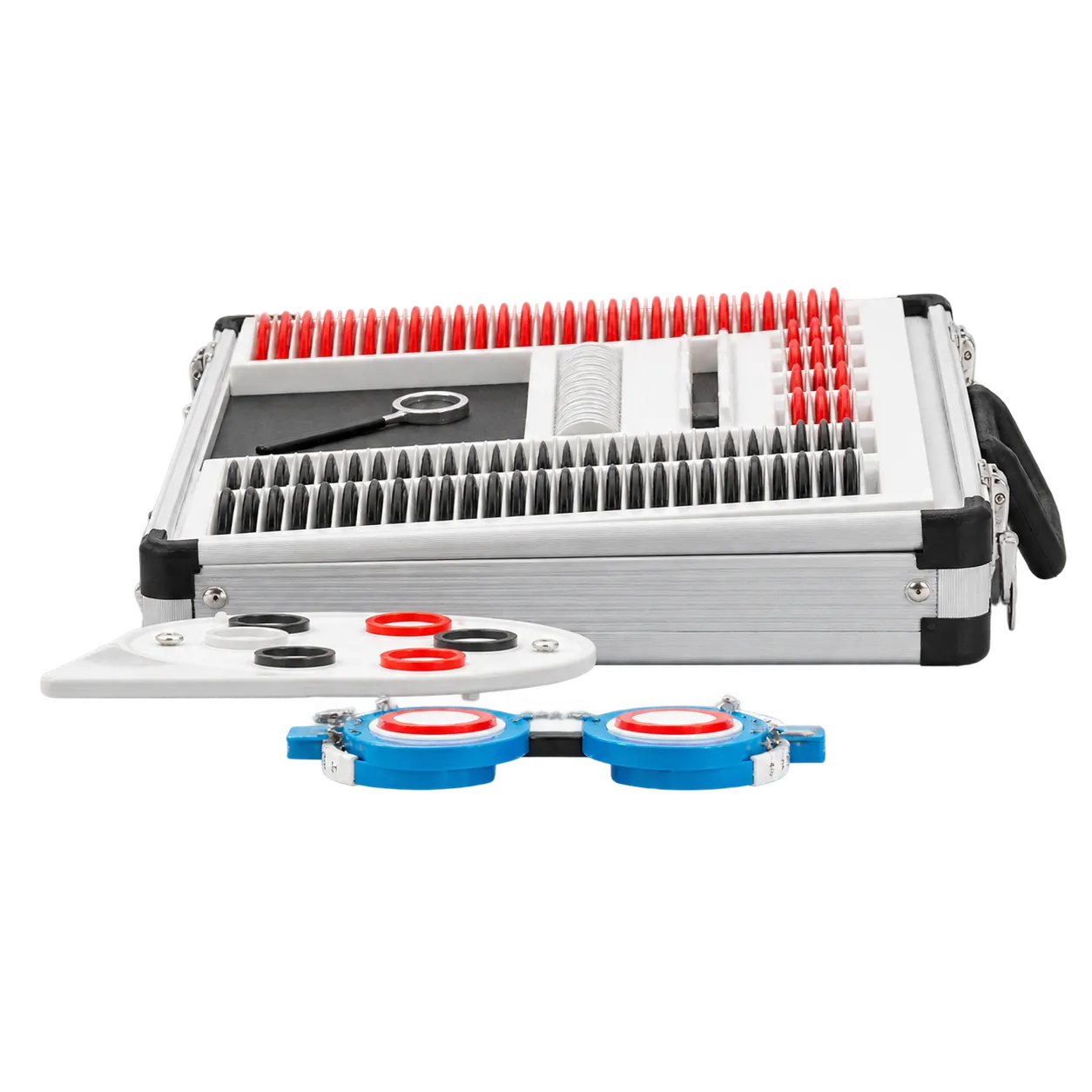
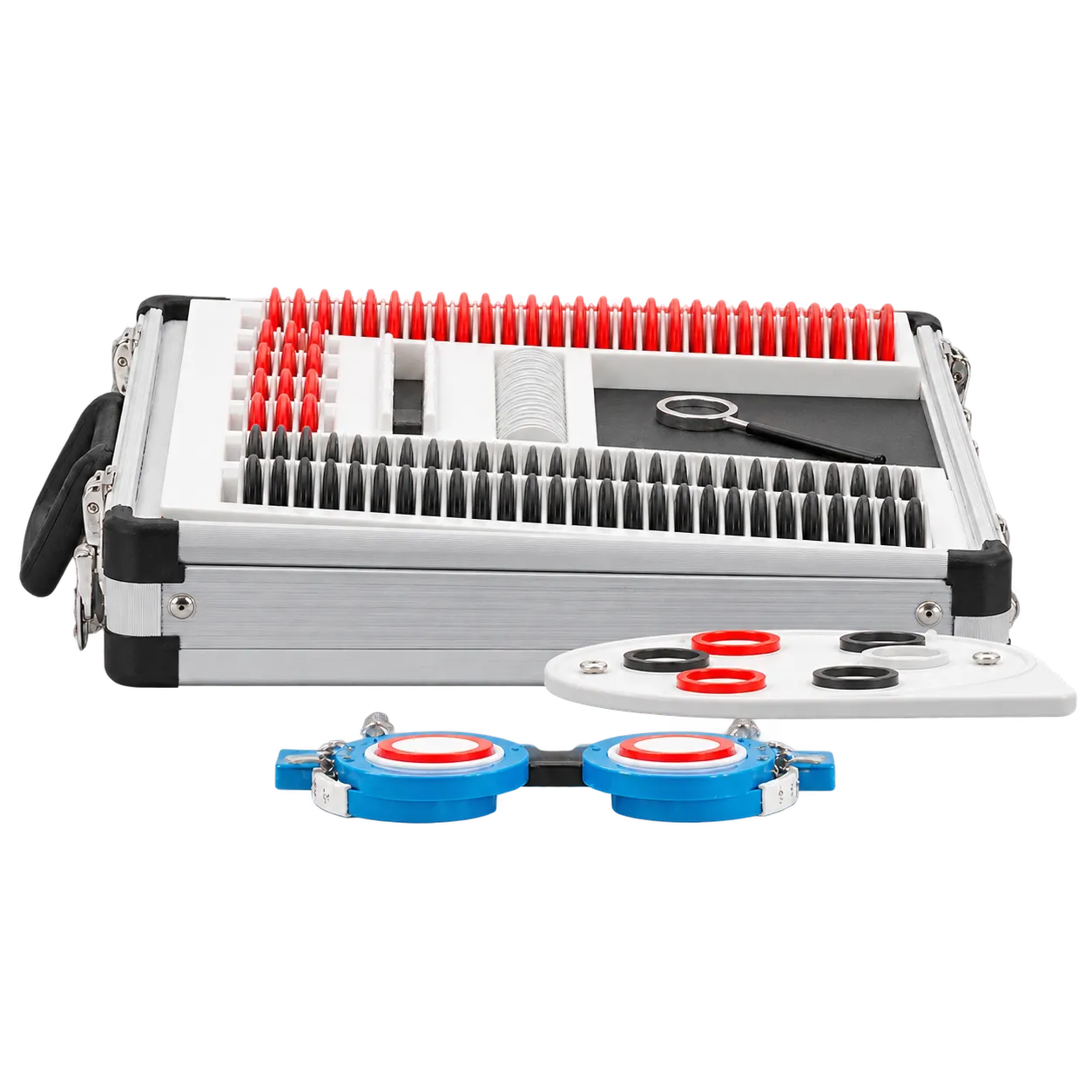
Community optometry practices are the core setting. A trial lens set is the tool for the final check of a subjective result in a trial frame, for refracting patients who cannot sit at a phoropter, and for letting a patient walk around the room in the new prescription before it is issued. The paired sphere and cylinder powers allow both eyes to hold the same lens during binocular balancing.
Hospital eye services and ophthalmology outpatient clinics use trial lenses for refraction in orthoptic, paediatric and post-operative assessment, where a child or a recovering adult is better examined in free space. Refraction after cataract surgery often lands on a small cylinder, and the 0.12 D and 0.25 D steps give the fine end of the range.
Domiciliary eye care is where the carry case earns its place. A 4.5 kg set that travels with a trial frame lets a registered optometrist refract a care home resident or a housebound patient in their own chair.
Binocular vision clinics draw on the accessory row. The white Maddox rod, red and green filters and the twelve prisms support heterophoria measurement and prism assessment in the trial frame, and the published evidence on trial frame repeatability for horizontal heterophoria makes that route worth using.
Teaching clinics for optometry and ophthalmology trainees benefit from a set where every lens reads from one printed face, so a student learns a single routine. Outreach and screening programmes carry a complete range in one case.
The 25 mm aperture is less suited to low vision work built around eccentric viewing, and services running that pathway should weigh it first. Public and institutional buyers commonly ask for evidence of conformity before purchase. The conformity documentation those procurement routes require is issued by the manufacturer and provided by the seller.