
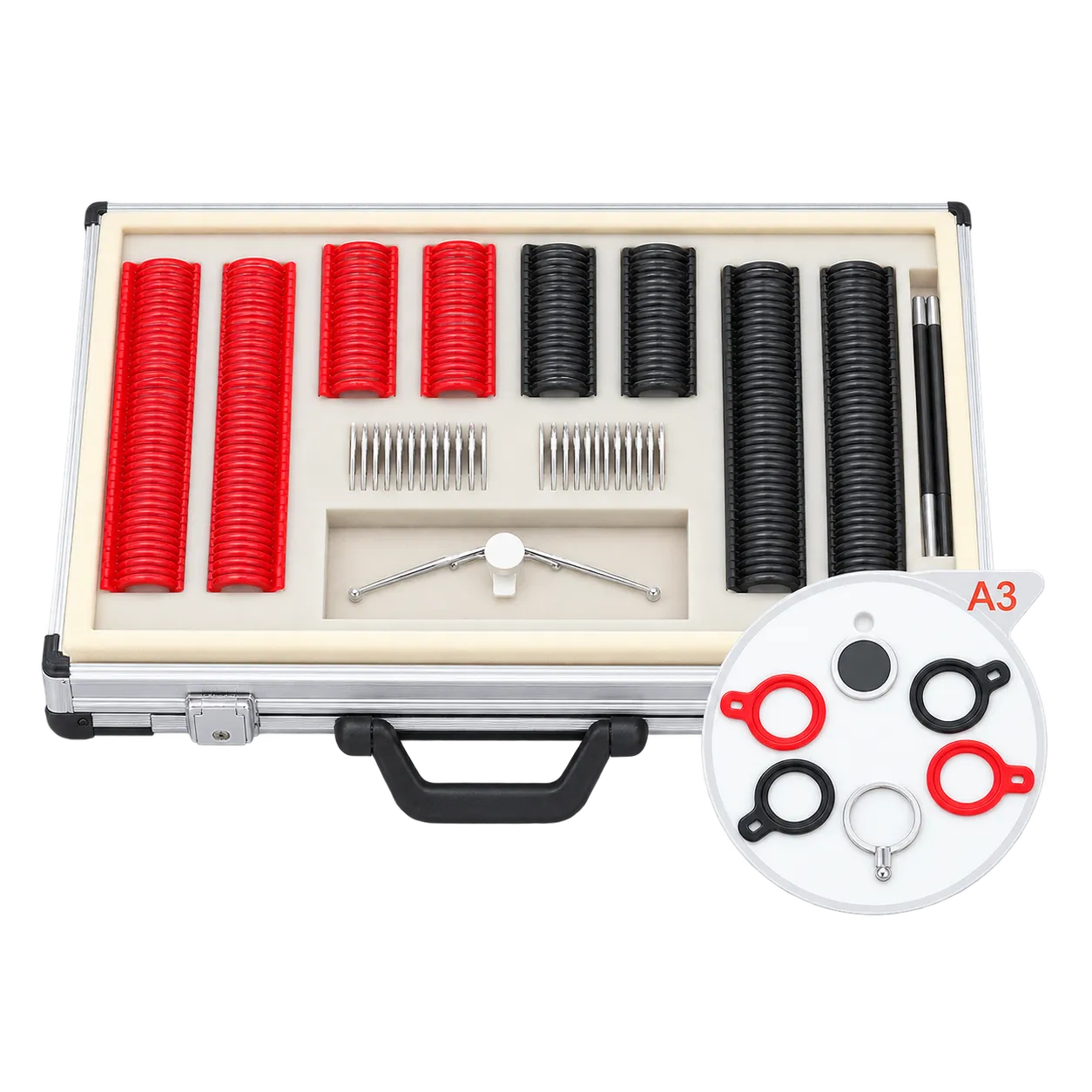
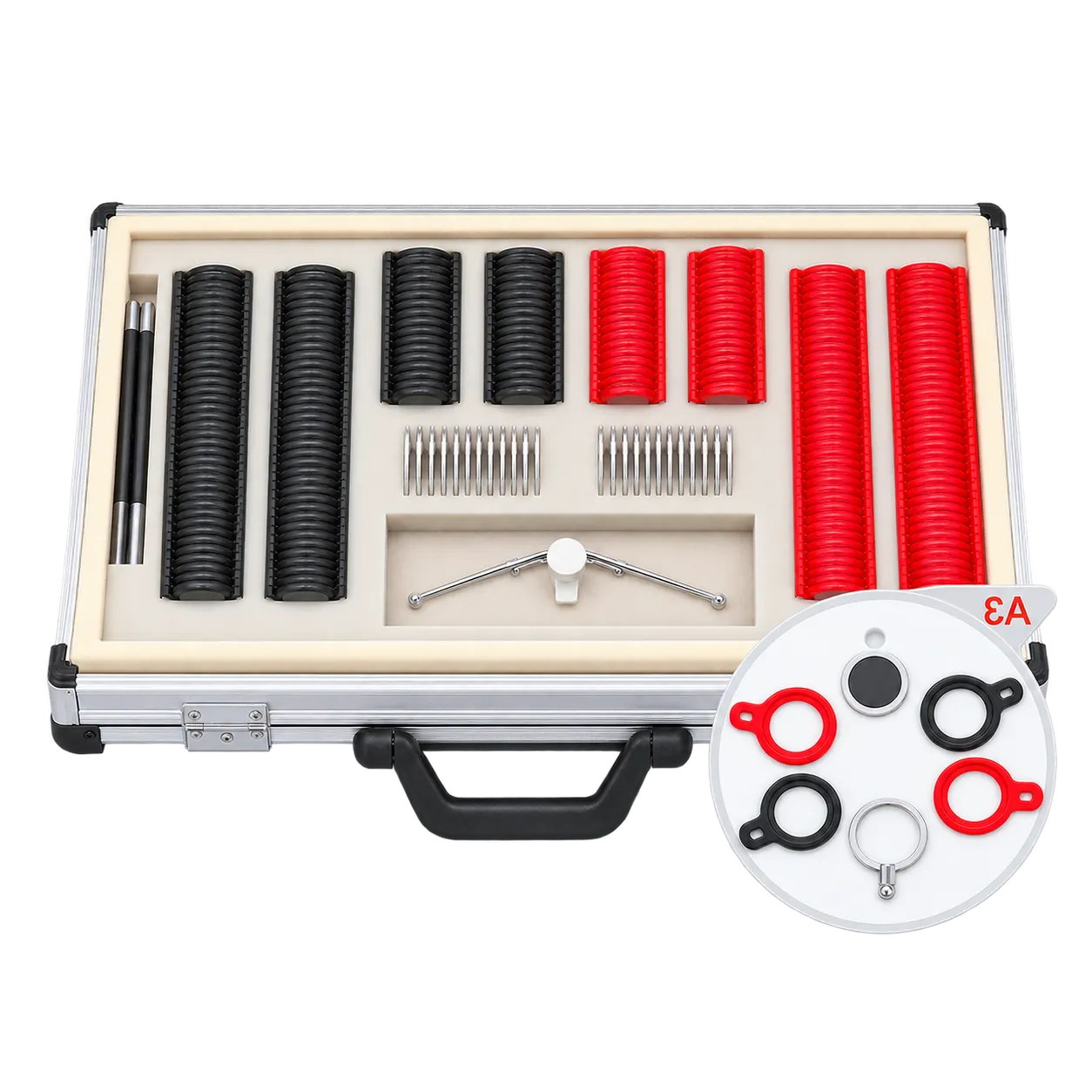
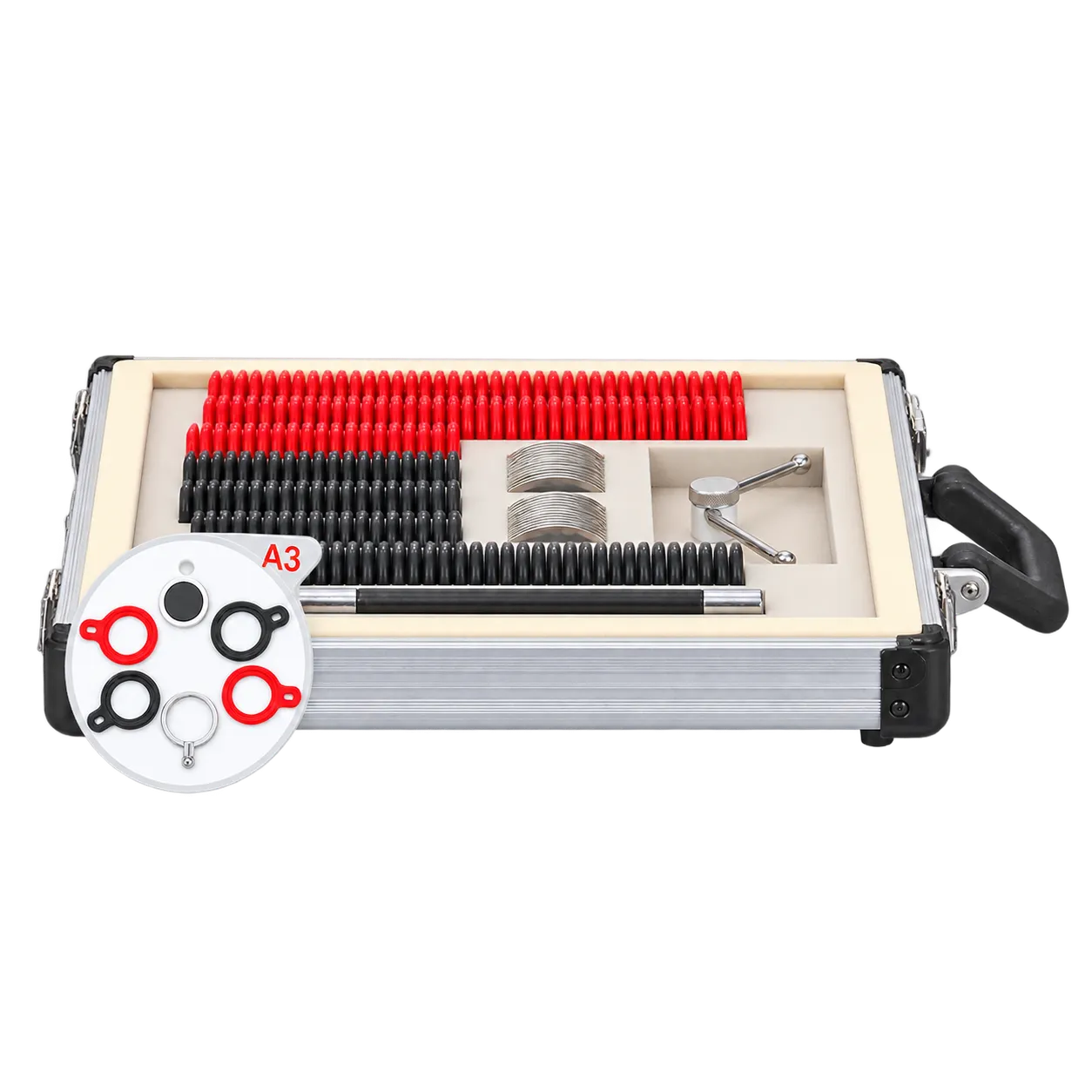
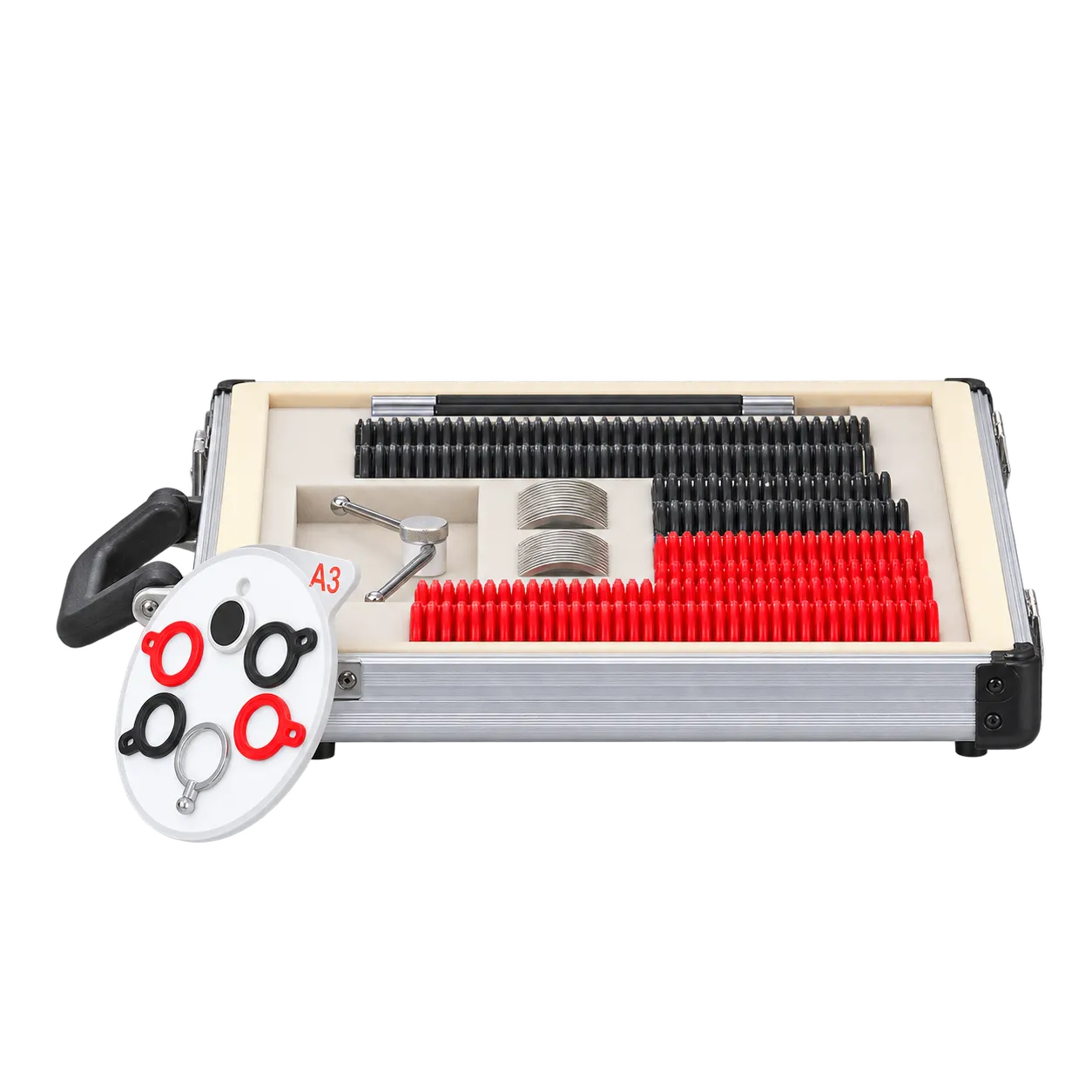
Hospital eye services are the natural home for a set with this range. Outpatient refraction after cataract surgery, corneal grafting or trauma often lands on higher or unusual cylinder powers, and a continuous quarter-step cylinder range to 4.00 D, extending to 6.00 D, lets the refractionist refine without stacking. Concave spheres to 20.00 D cover the high myopes that ophthalmology clinics see in numbers.
Optometry practices with a mixed list use the set for subjective refraction in a trial frame, for confirming a phoropter result before prescribing, and for letting a patient look around the room in a new correction. Every power is supplied as a pair, so both eyes can hold identical lenses during binocular balancing.
High myopia and myopia management clinics benefit from the depth of the concave range. Recording vertex distance with the trial frame result keeps high-power prescriptions accurate when they are transferred to spectacles or contact lenses.
Orthoptic and binocular vision clinics draw on the white Maddox rod, the red and green filters and the twelve prisms for heterophoria measurement and prism trials in free space.
University and college eye clinics use trial lens sets to teach refraction, and a range this complete lets students work through high and irregular prescriptions without improvising combinations.
Domiciliary services can use it, though the 5.0 kg weight and 560 mm case suit a clinic room better. Services built around eccentric viewing in low vision should weigh the 25 mm aperture first. Public and institutional buyers commonly require evidence of conformity. The conformity documentation those procurement routes require is issued by the manufacturer and provided by the seller.