
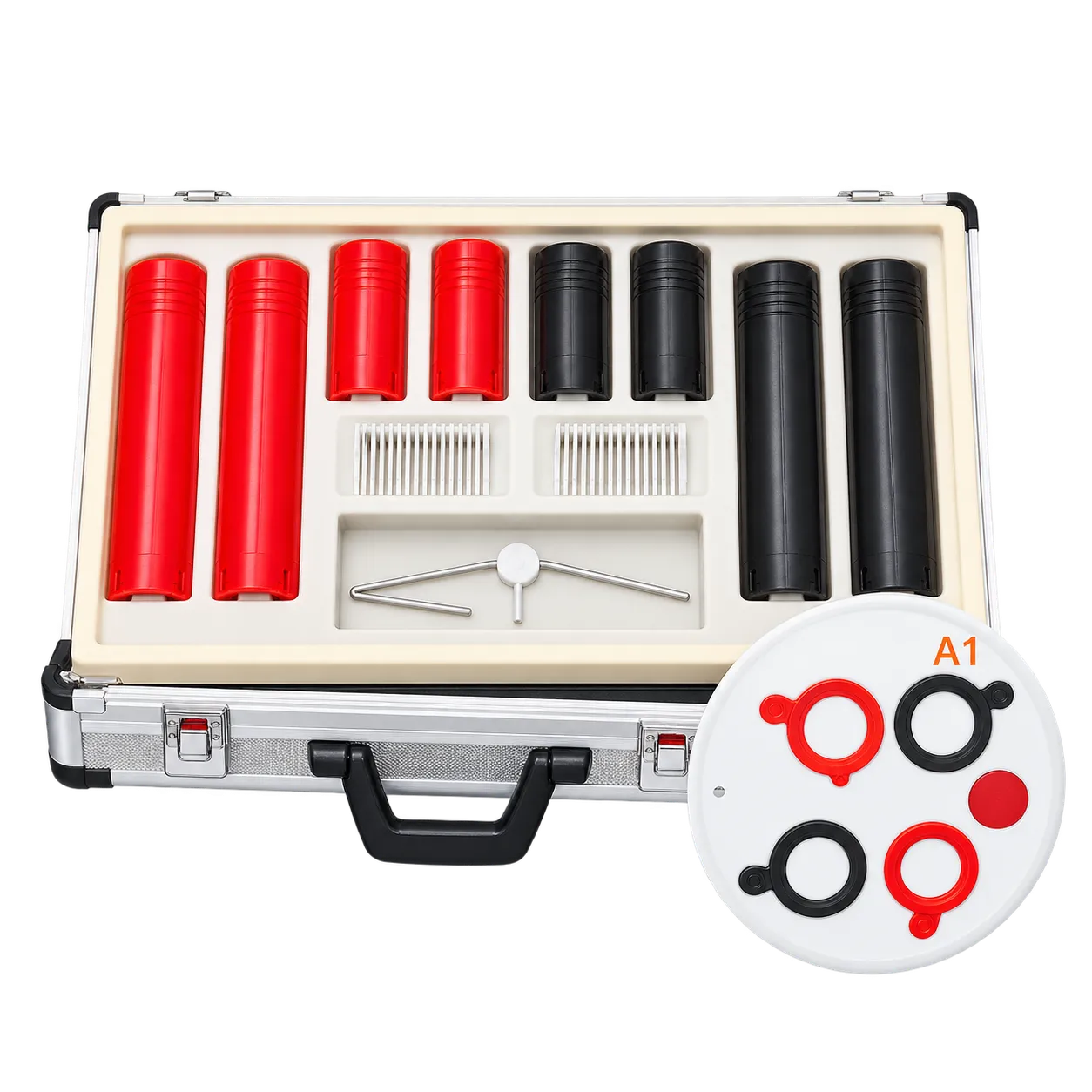
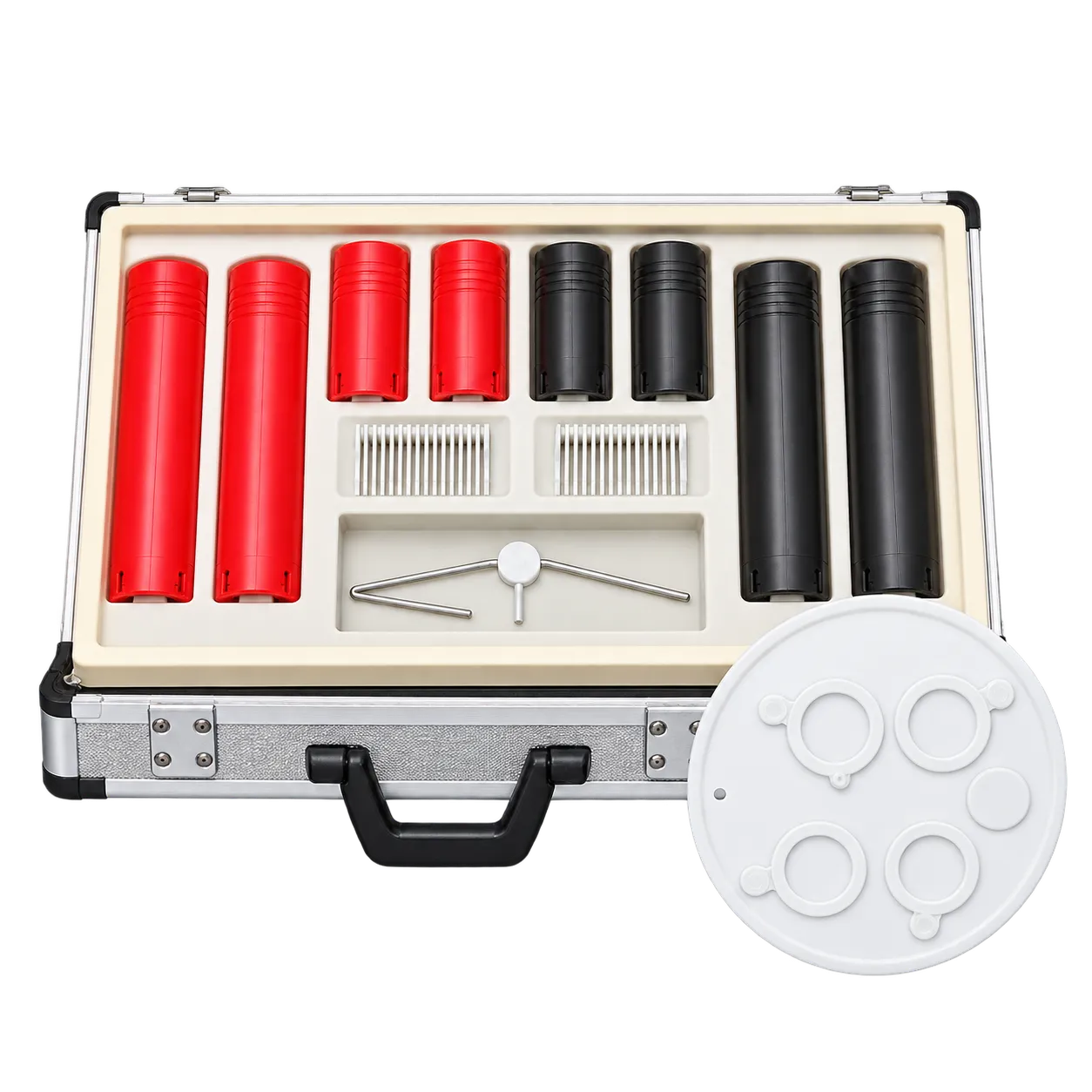
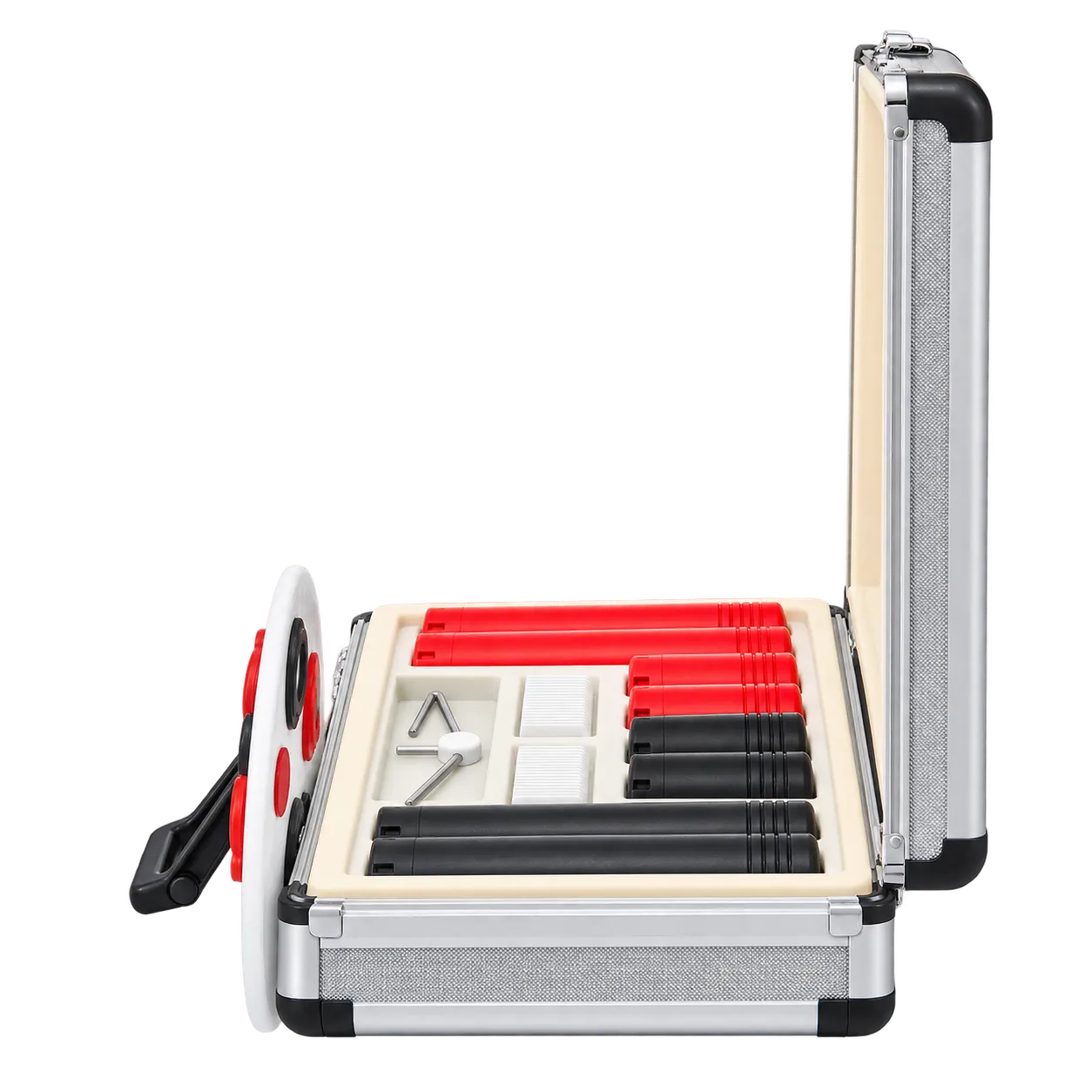
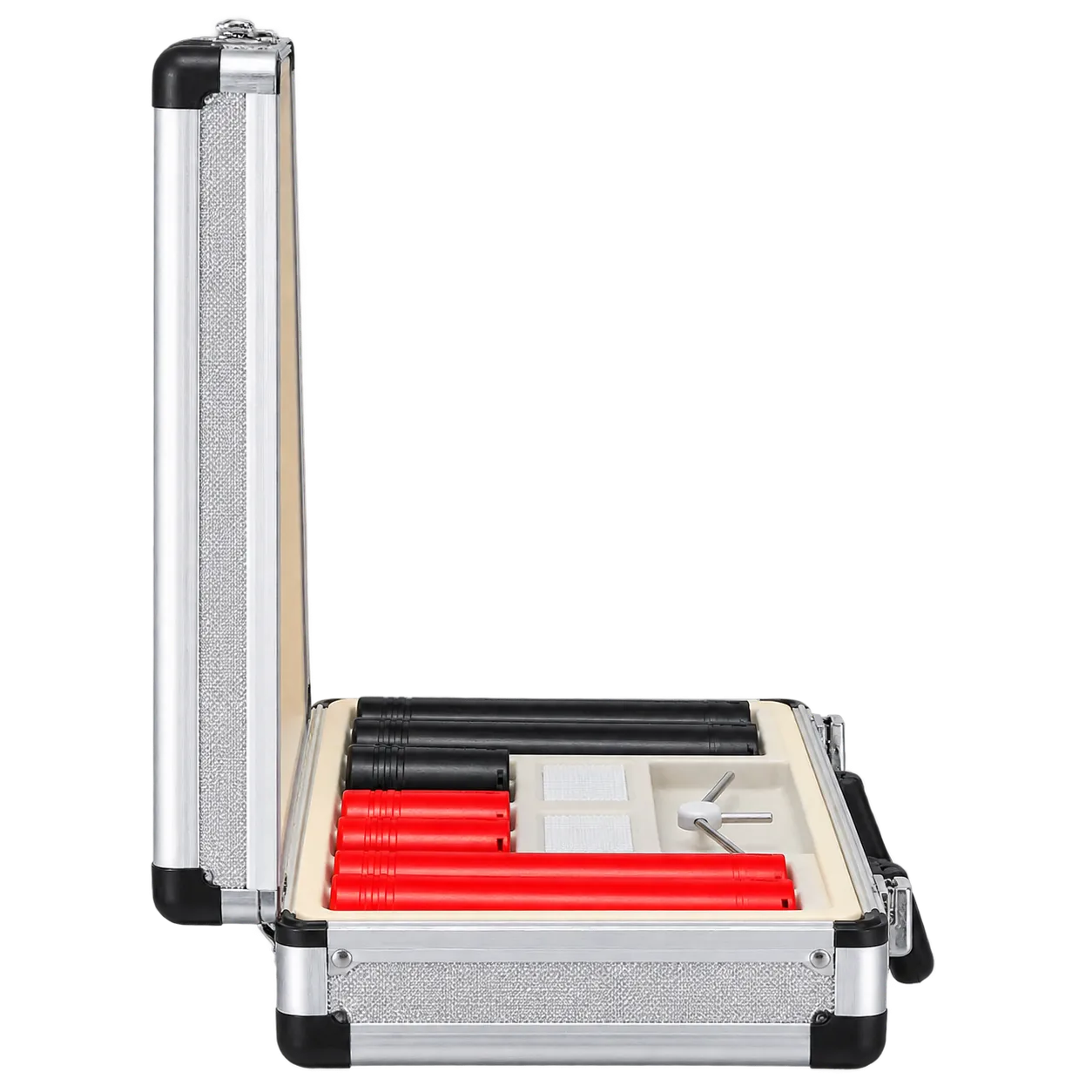
Optometry and orthoptic teaching clinics are the clearest fit. A set used by a rotating group of students loses small pieces faster than any other, and paired Maddox rods, pinholes, slits, cross-line pieces, plane lenses and cross cylinders keep a teaching session running when one goes missing. Student optometrists in the UK refract under supervision, and a set that covers refraction and binocular vision in one tray suits the full examination sequence they are learning.
Busy community practices see the same pressure in a different form. When several practitioners share one trial case between rooms, a second pinhole or slit in the tray means a lost piece does not delay an appointment. Paired sphere and cylinder powers let both eyes hold identical lenses during binocular balancing.
Hospital eye services and orthoptic clinics draw on the prism ladder, with every whole value from 1 to 10, together with the paired white Maddox rods for heterophoria and torsion measurement. Prism trials in free space show whether a patient will tolerate a prescribed prism before it is glazed.
Screening and outreach programmes use pinhole acuity as a quick indicator of uncorrected refractive error in adults, where population data support it, and the second pinhole lets two eyes or two examiners work without swapping pieces.
Two settings fit less well. Practitioners who rely on ±0.12 D lenses for fine end-points will find the finest step is 0.25 D, and services measuring large deviations will need methods beyond a prism range ending at 10. Institutional and teaching buyers commonly ask for evidence of conformity. The conformity documentation those procurement routes require is issued by the manufacturer and provided by the seller.