
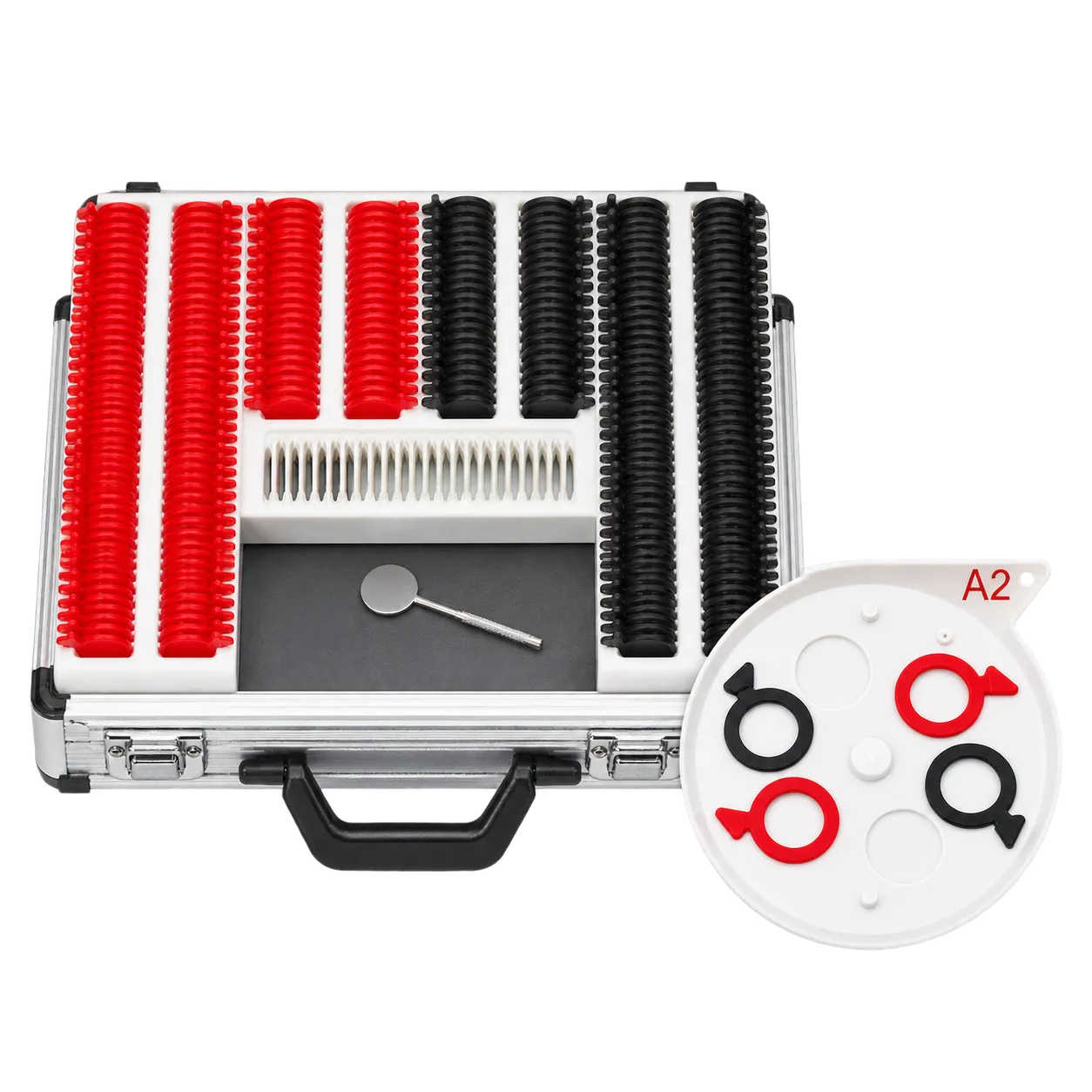
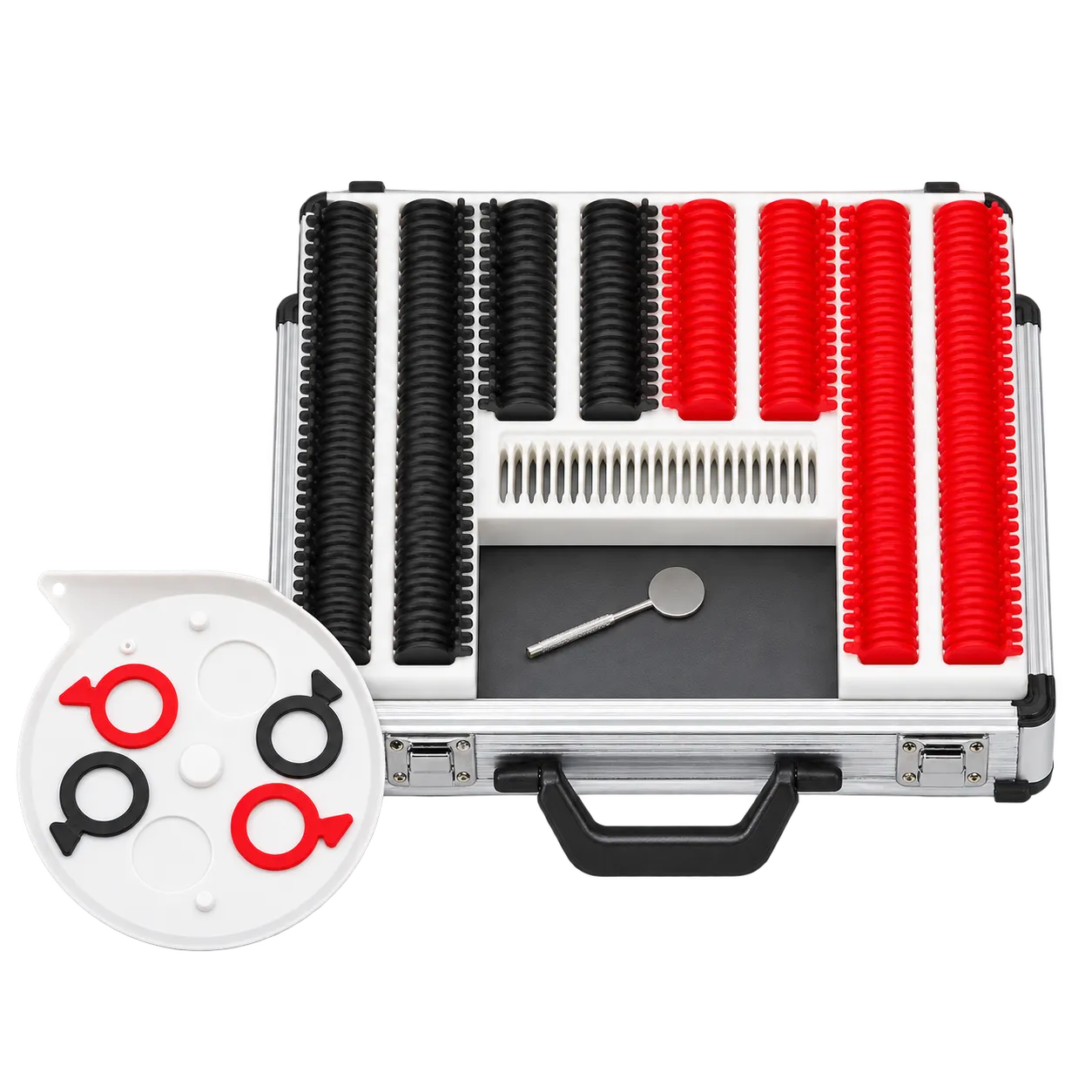
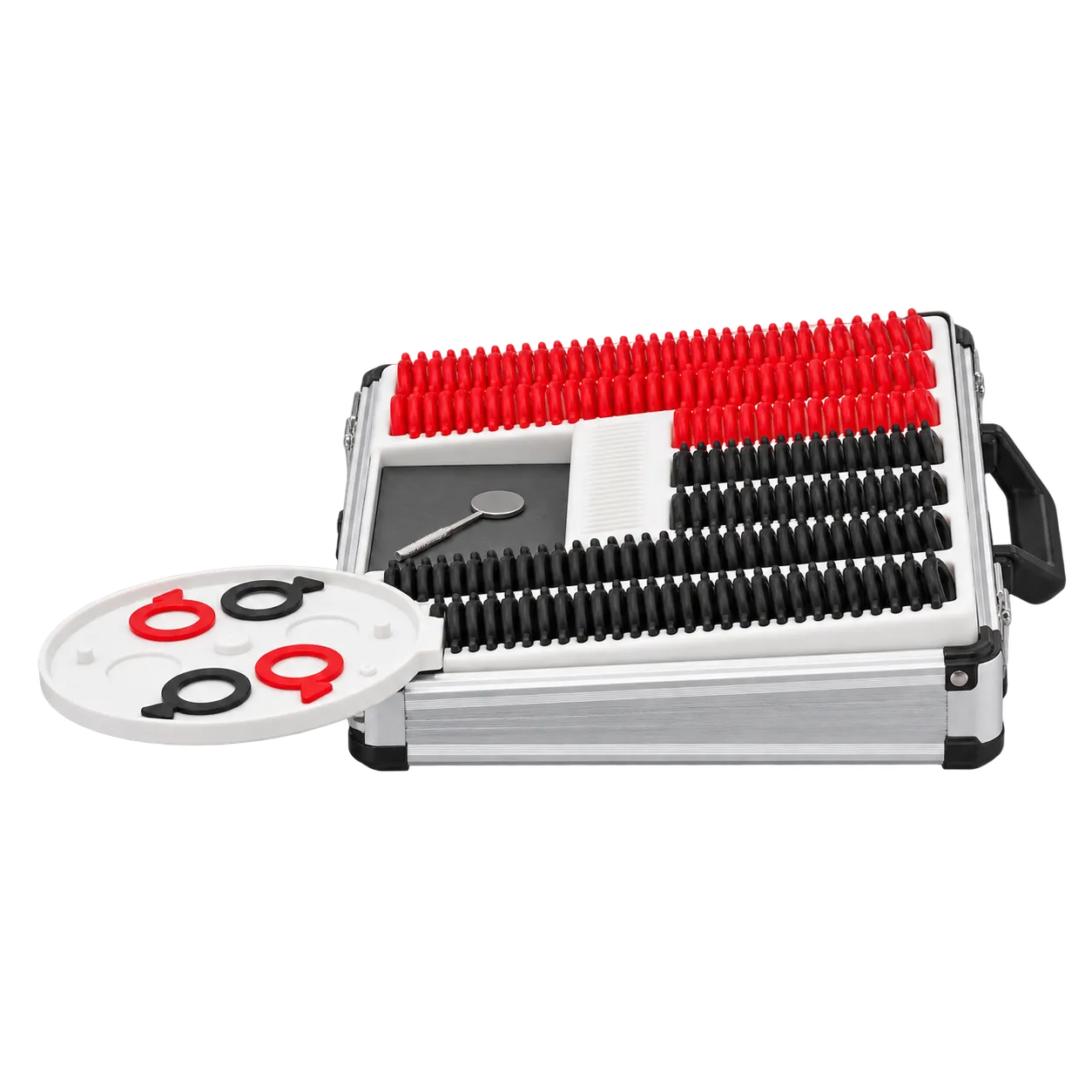
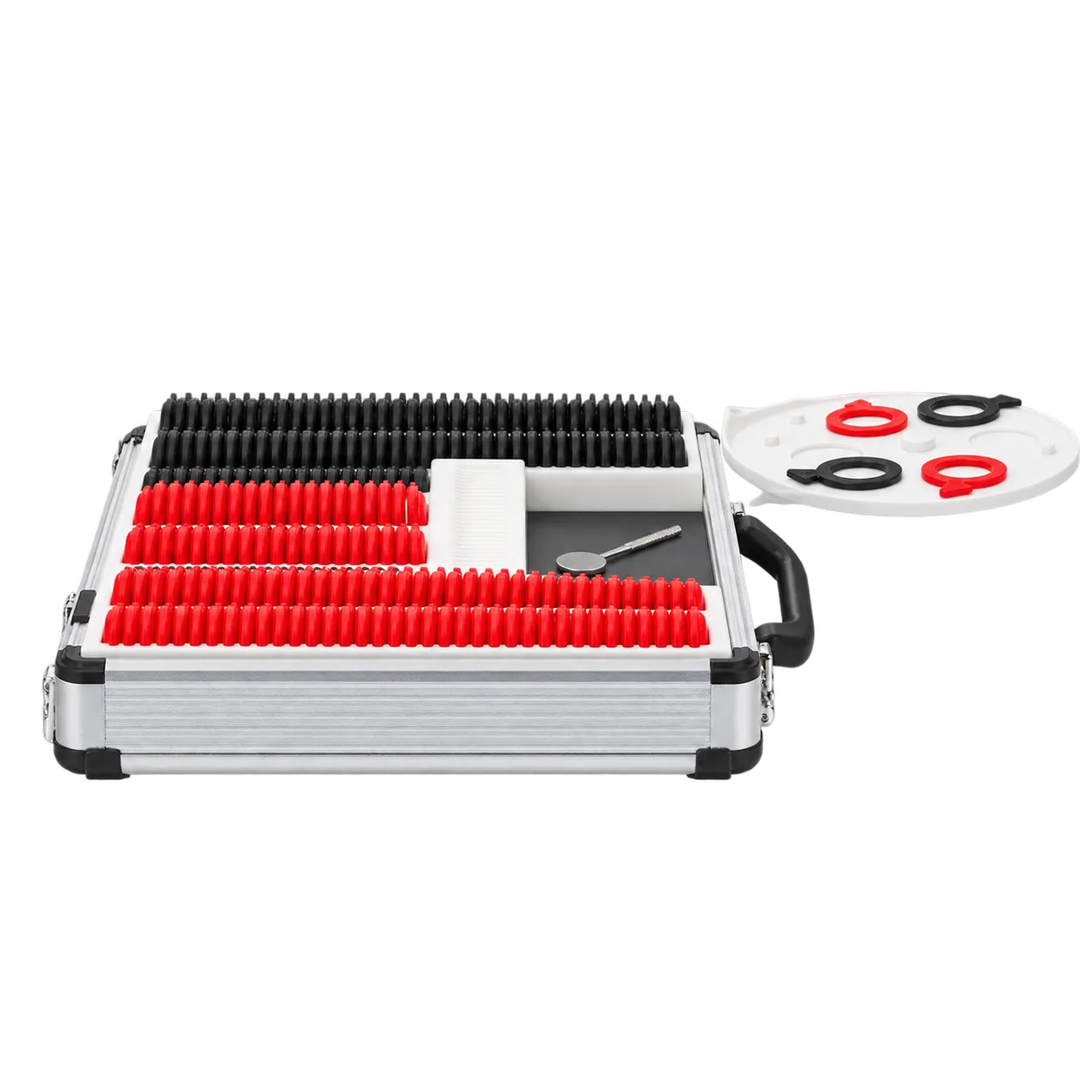
Orthoptic clinics are the most natural home for this set. Heterophoria measurement with a Maddox rod and prisms, double Maddox rod assessment of torsion, and prism trials for patients with diplopia all run from the accessory row, with the refraction lenses in the same tray when a prescription needs checking.
Hospital eye services and neuro-ophthalmology clinics see acquired diplopia after fourth nerve palsy, trauma or stroke. Measuring cyclodeviation with same-colour Maddox rods supports assessment of superior oblique involvement, and a prism trial in free space shows whether a patient will tolerate a prescribed prism before it is glazed into spectacles.
Community optometry practices with an interest in binocular vision can move from subjective refraction to heterophoria measurement on the same visit. Every sphere and cylinder power is paired, so both eyes hold identical lenses during balancing, and the two pinholes allow each eye's pinhole acuity to be checked in turn without swapping pieces.
Paediatric and squint clinics use trial lenses for retinoscopy working lenses and for checking a result in a trial frame. Younger children are usually refracted objectively, often with cycloplegia, so the trial set supports that process rather than replacing it.
Teaching clinics gain a set that covers refraction and binocular vision in one tray, which suits students learning the full examination sequence.
Two cases fit less well. Services measuring large deviations will need methods beyond a prism range ending at 10.00, and clinics wanting a red and white Maddox pair will find two white rods. Institutional buyers commonly ask for evidence of conformity before purchase. The conformity documentation those procurement routes require is issued by the manufacturer and provided by the seller.