
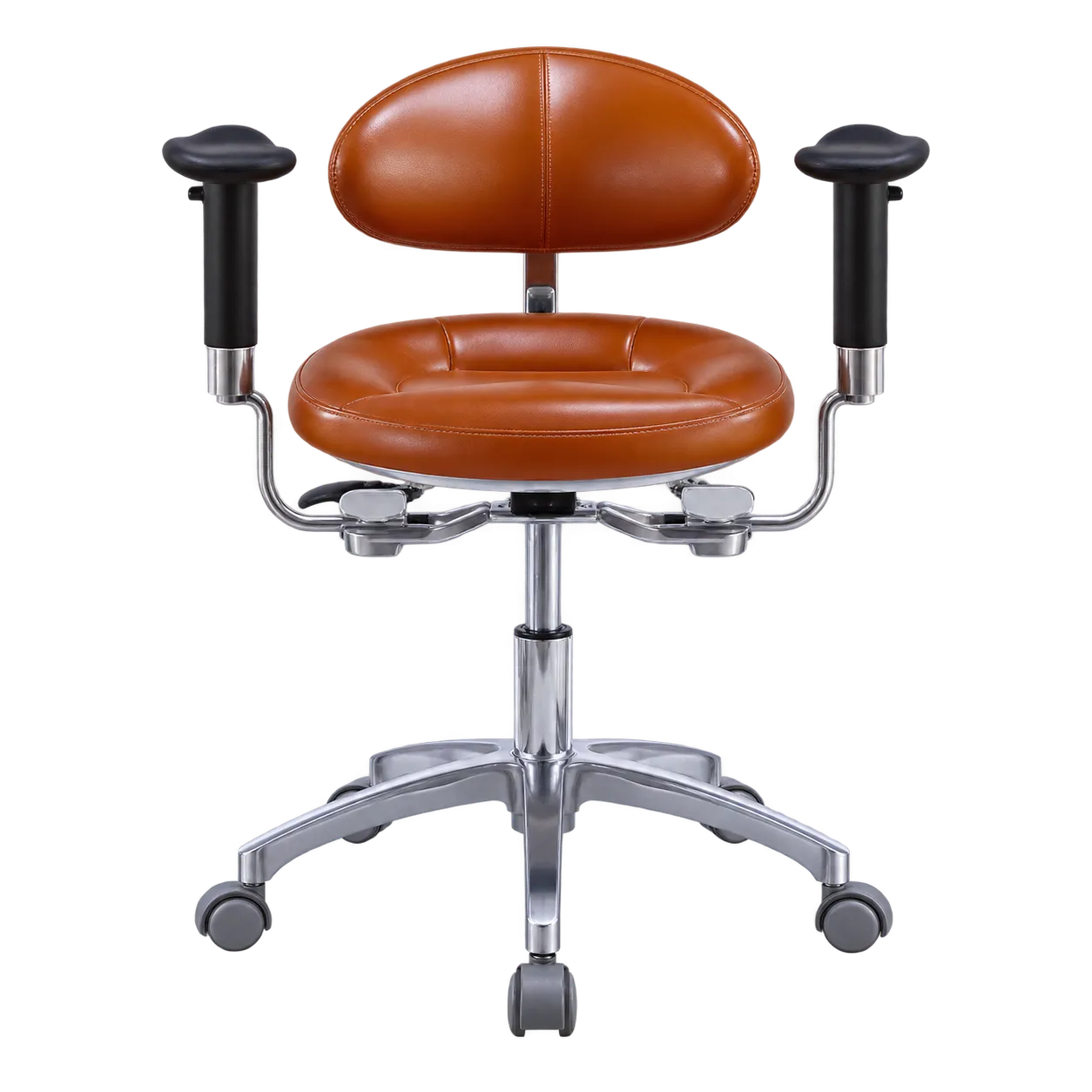
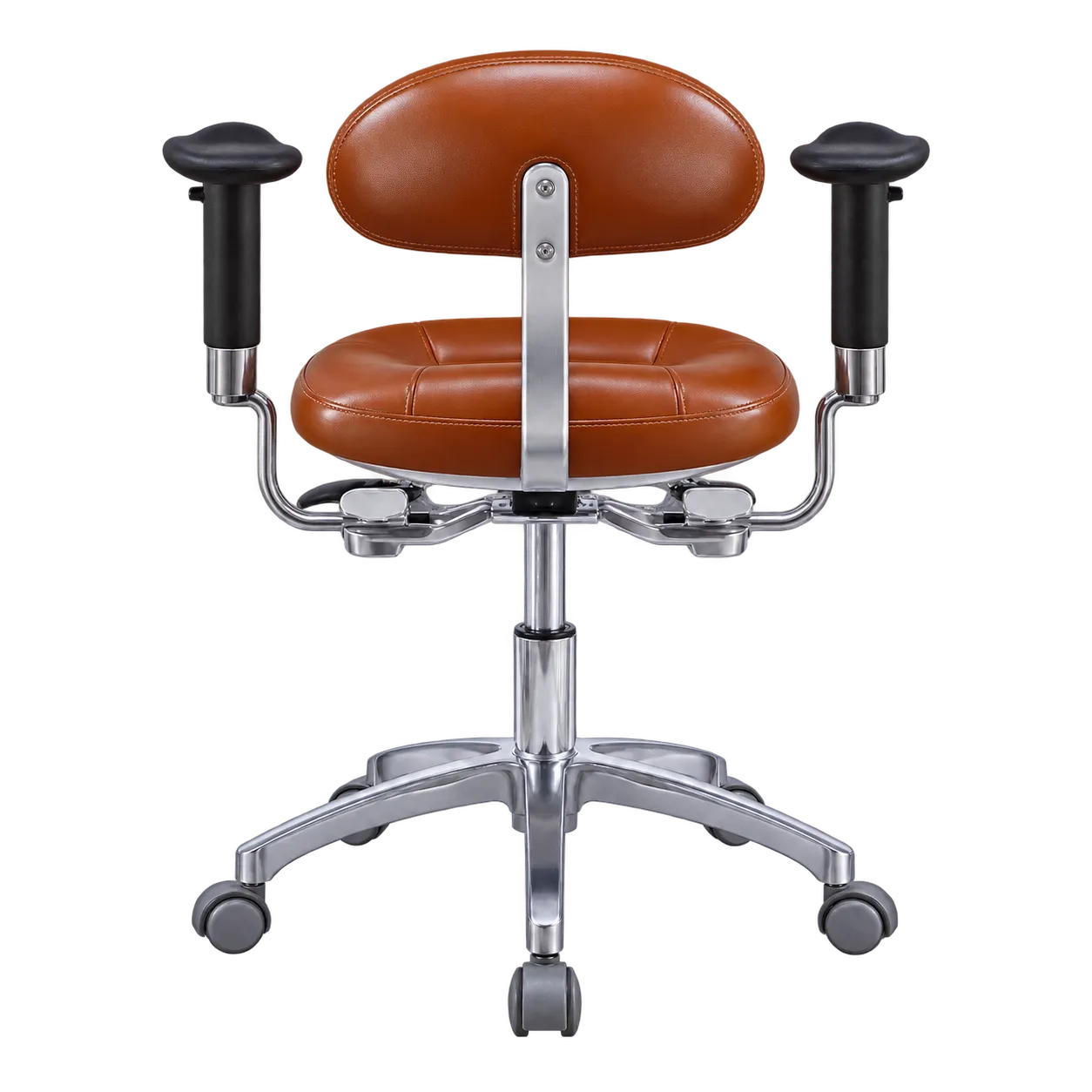
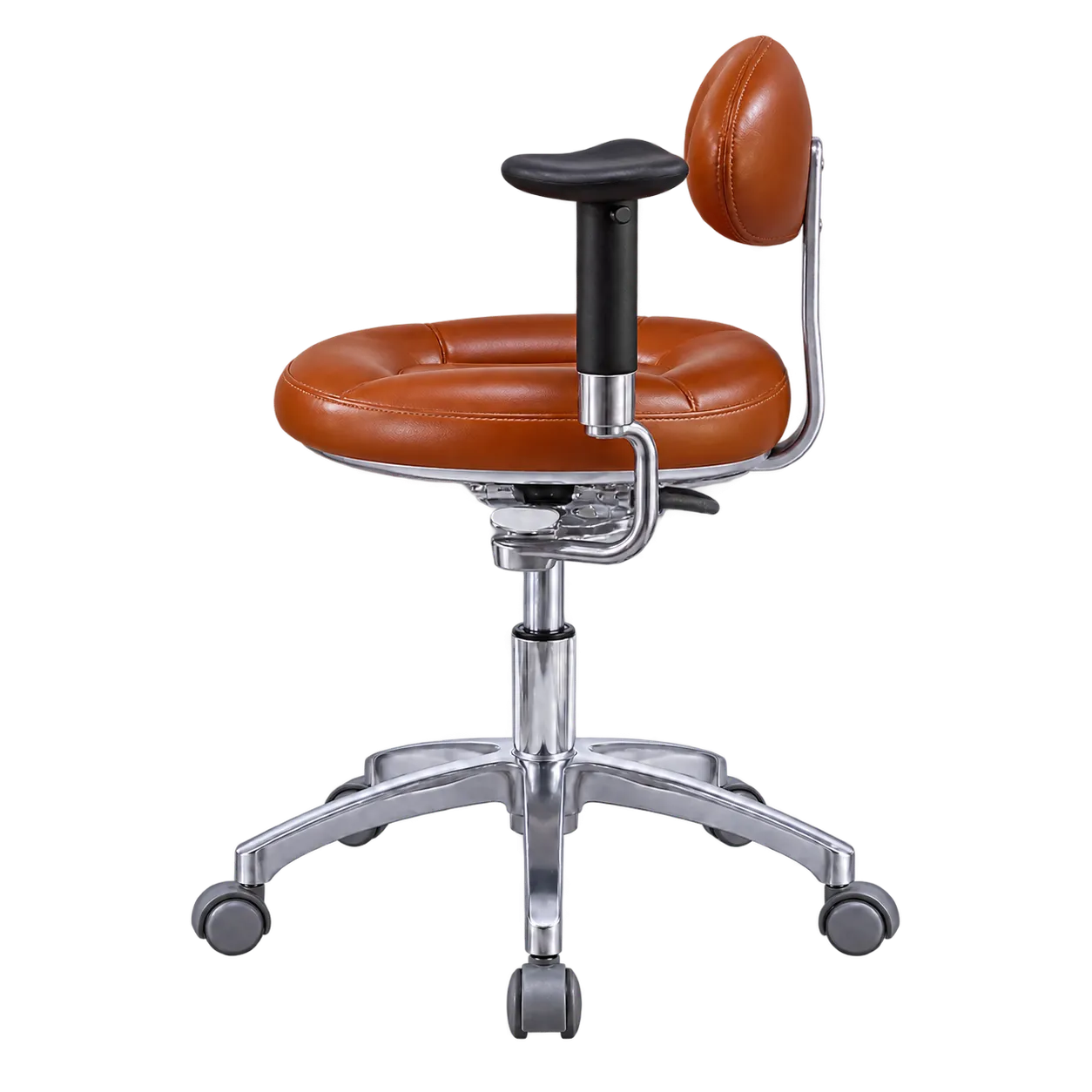
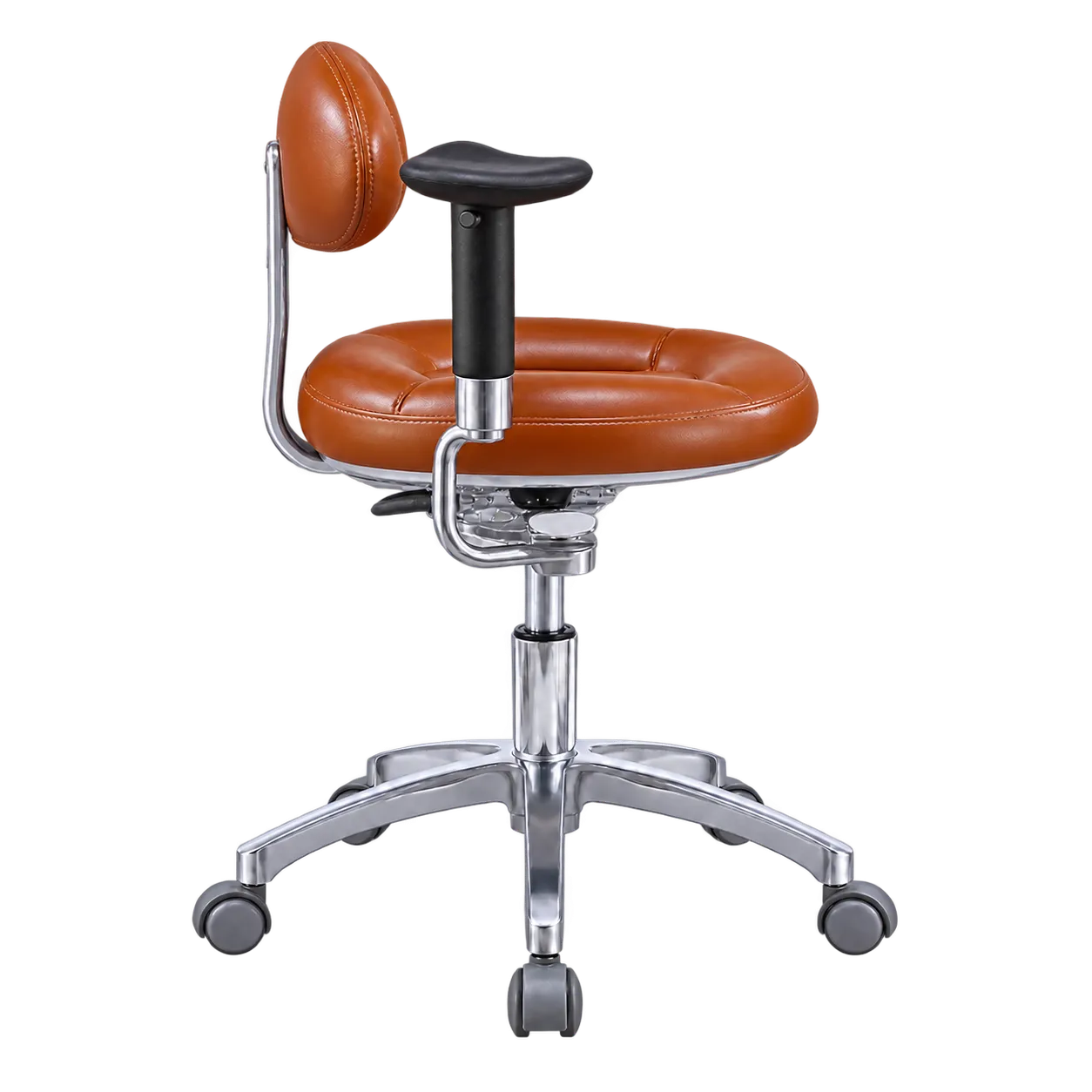
Seated examination with both hands occupied is the clearest fit. A clinician upright at an instrument, holding a lens in one hand and a light or joystick in the other, has a back and two arms all needing support at once, and this is the only arrangement in the range that provides all three.
Long lists compound the benefit, since fatigue from an unsupported arm or an unsupported back accumulates across appointments rather than appearing in one.
Contact lens fitting and teaching keeps practitioners seated close to a patient for extended periods with frequent small changes of posture.
Clinicians alternating hands gain from a matched pair, as neither side becomes the unsupported one.
Shared rooms benefit if the arms slide and lock, since each clinician can set width and position to themselves.
Practices addressing staff discomfort have the most complete option here, subject to confirming that the backrest meets the lower back at the right height.
Clinicians standing between every patient will find it slower to use than a plain stool, since an arm has to be cleared each time.
Tight rooms should check the surround diameter, as this arrangement needs more clearance around a patient chair than any other stool in the range.