
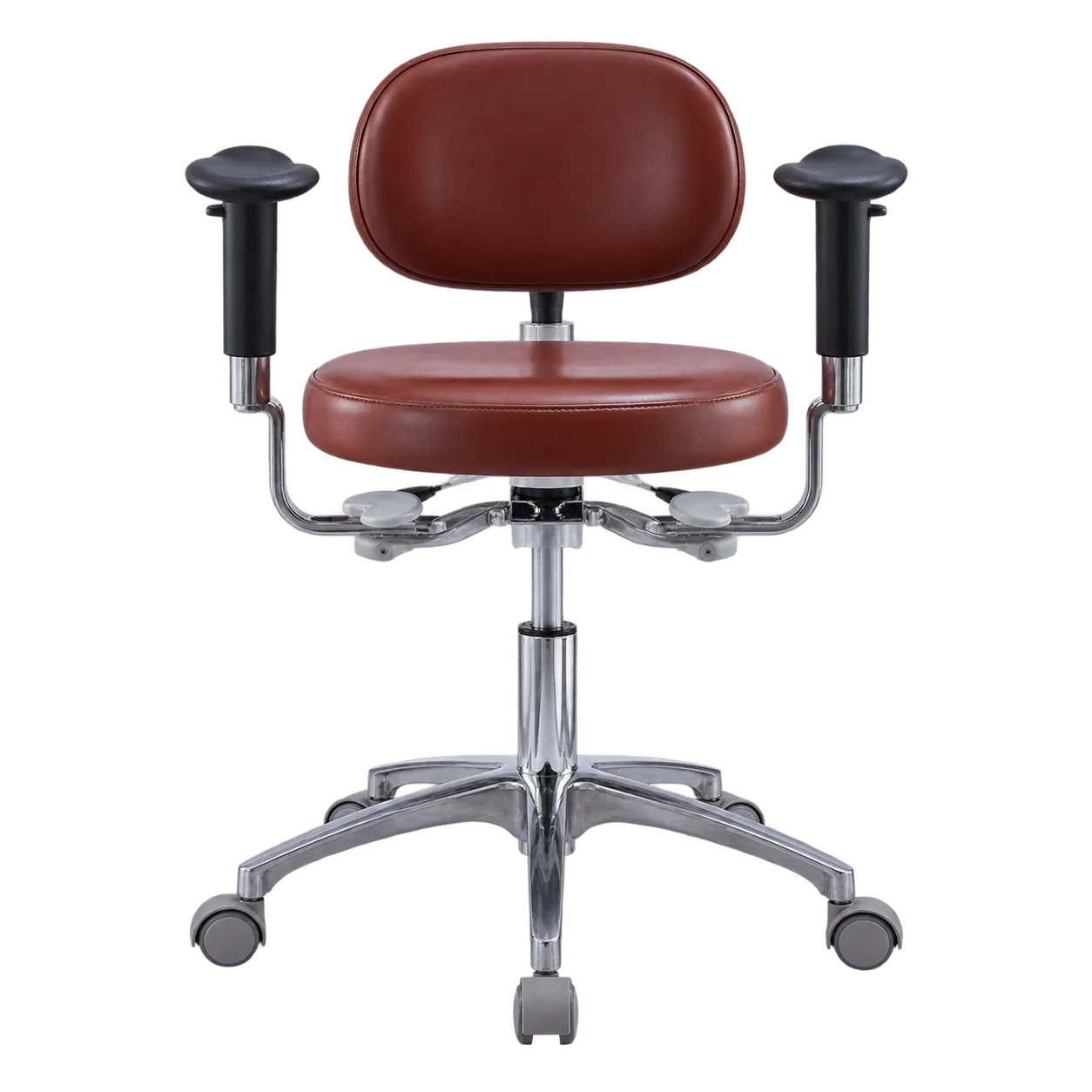
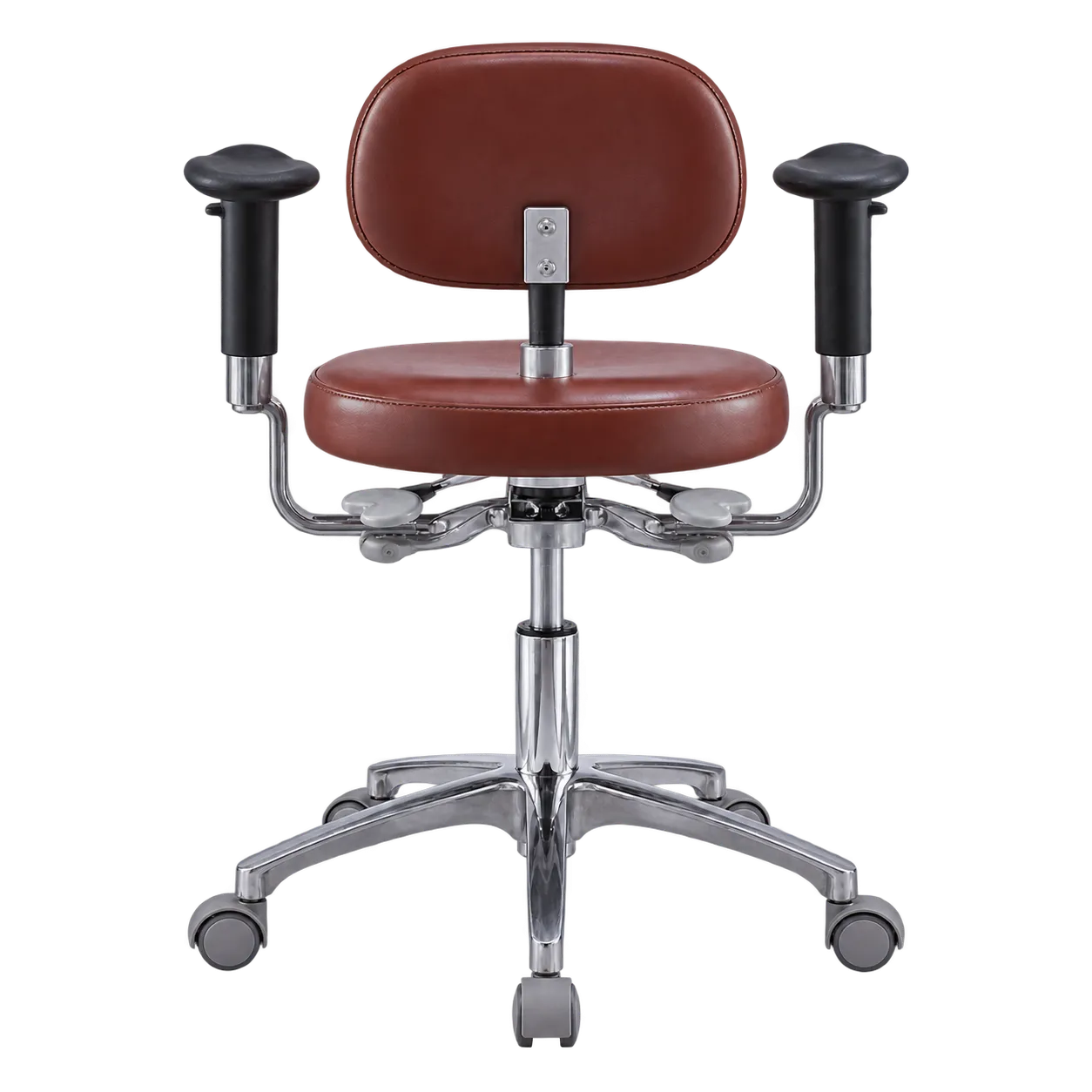
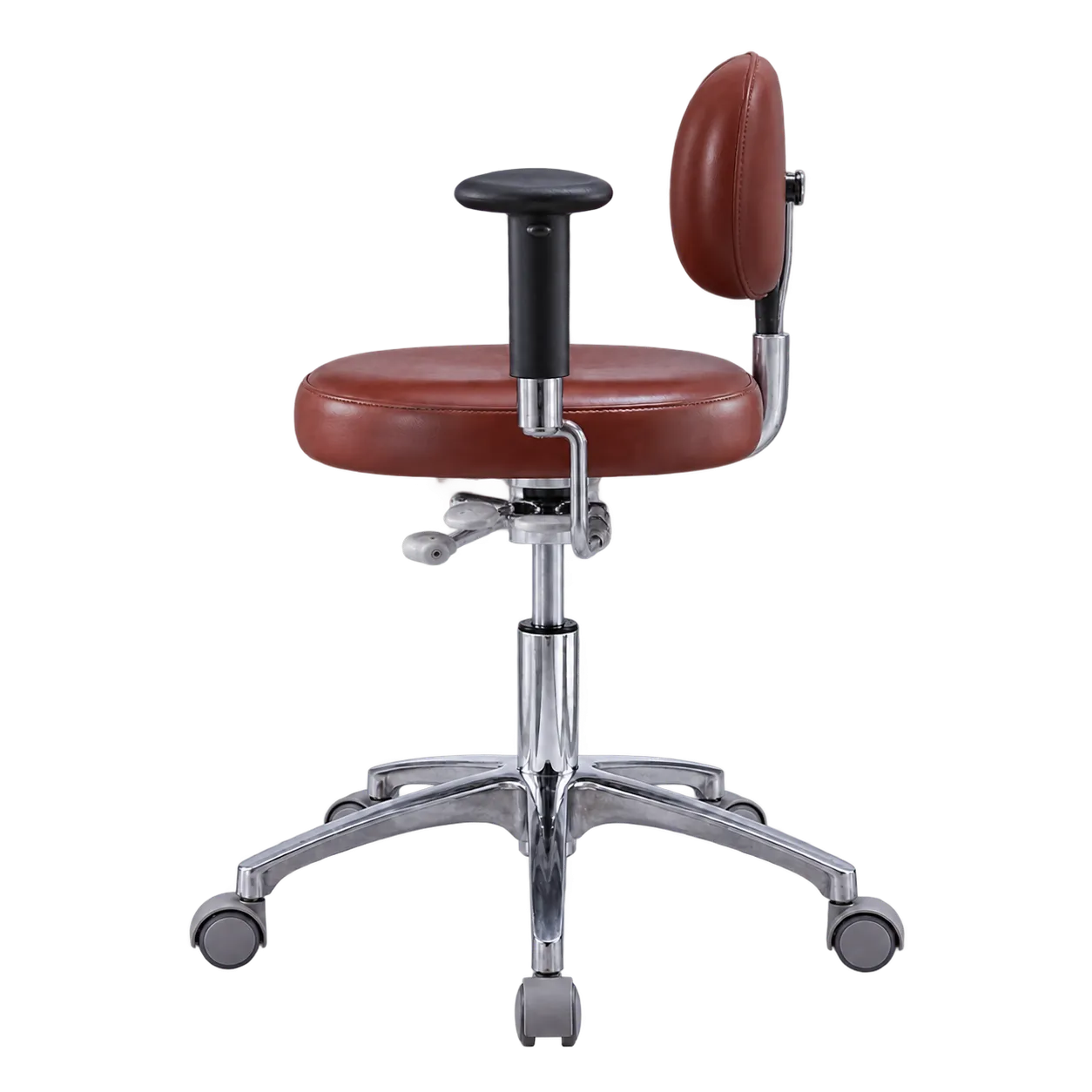
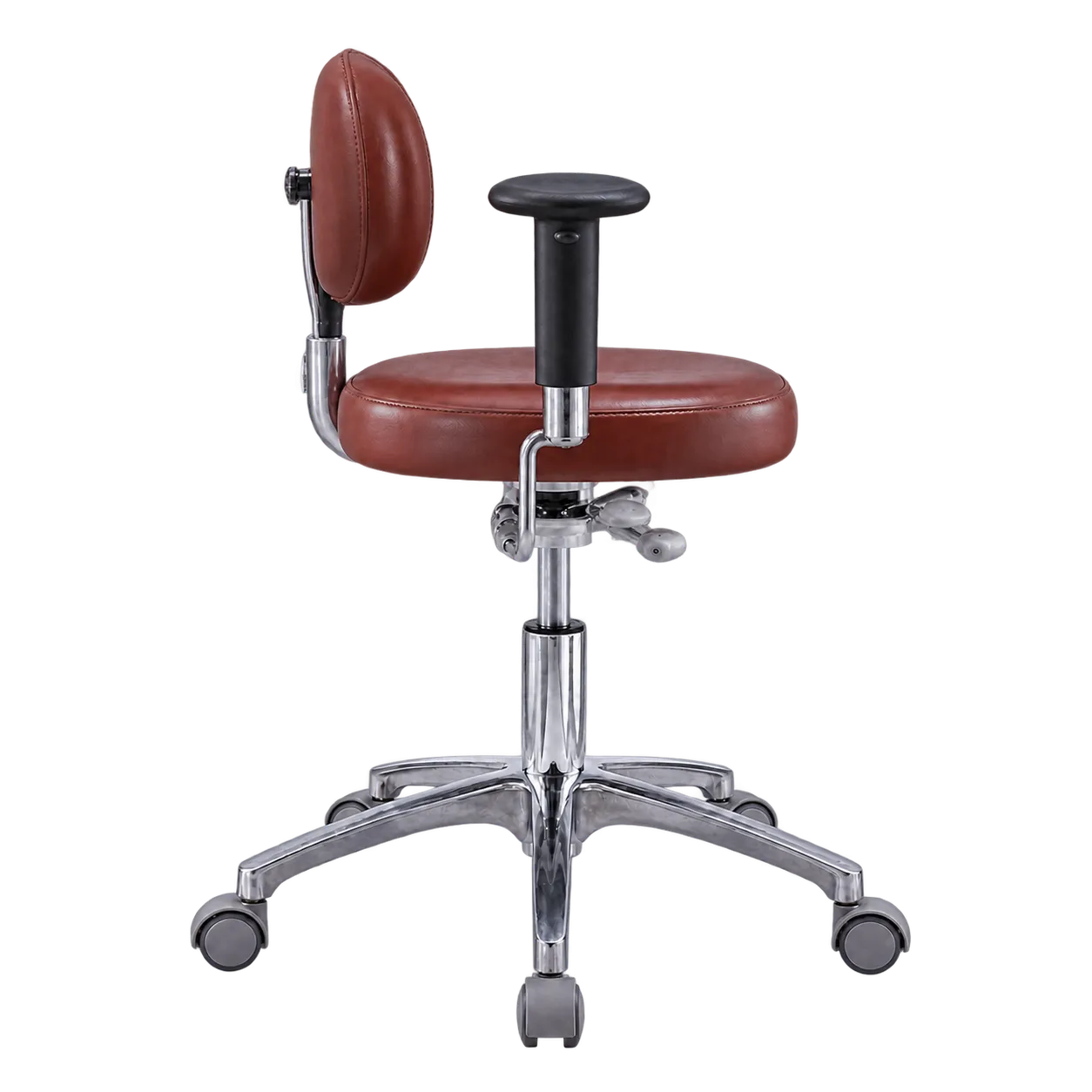
Two-handed instrument work is the clearest fit. A clinician holding a condensing lens in one hand and a light or joystick in the other has both arms working at height, and a single support leaves one of them holding itself up.
Alternating hands through an examination suits a matched pair, since neither side becomes the unsupported one.
Long lists compound the benefit, as the fatigue from an unsupported arm accumulates across appointments rather than showing in one.
Shared rooms gain from the sliding hoop, provided the arms lock, since each clinician can set the width and position they prefer in seconds.
Fine work at close range suits arms brought in tight, while a broad working arc suits them set wide, and the same stool does both.
Clinicians who stand between every patient should weigh the access, since two arms enclose the sitter more than one.
Staff who lean back between patients are better served by a model with a backrest, as none is fitted here.
Raised working heights would benefit from a foot ring, which this stool does not have, so the feet need to reach the floor at the working height.