
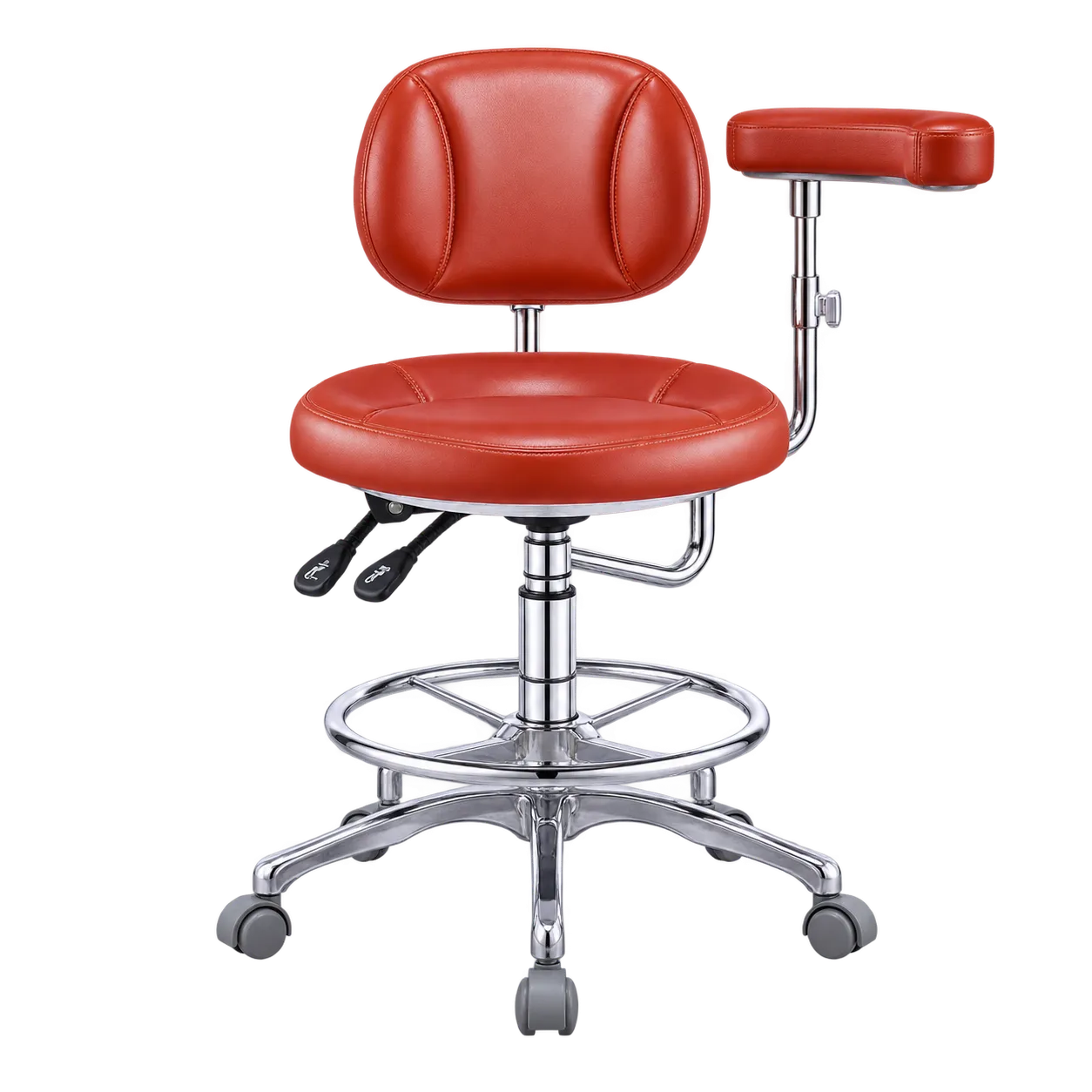
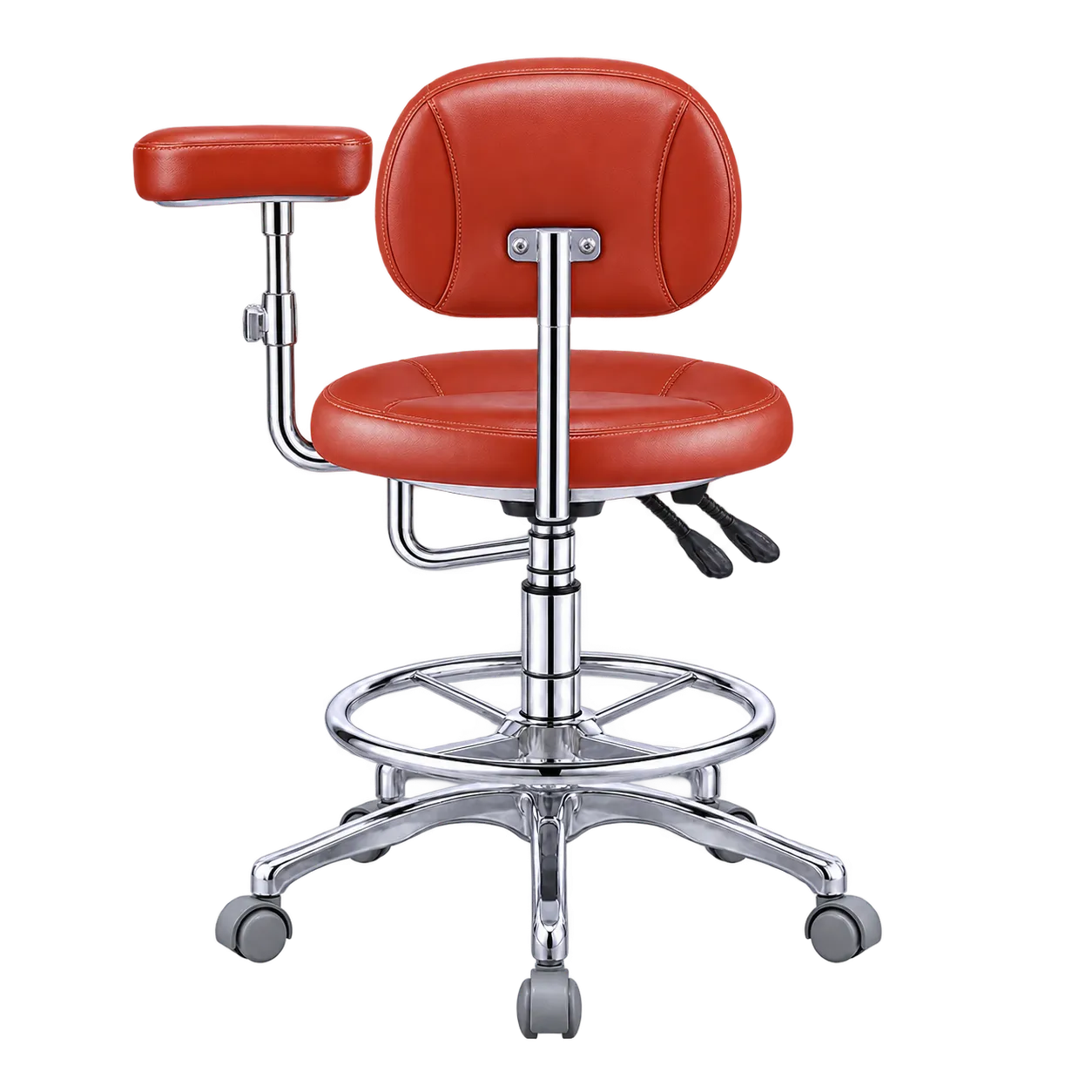
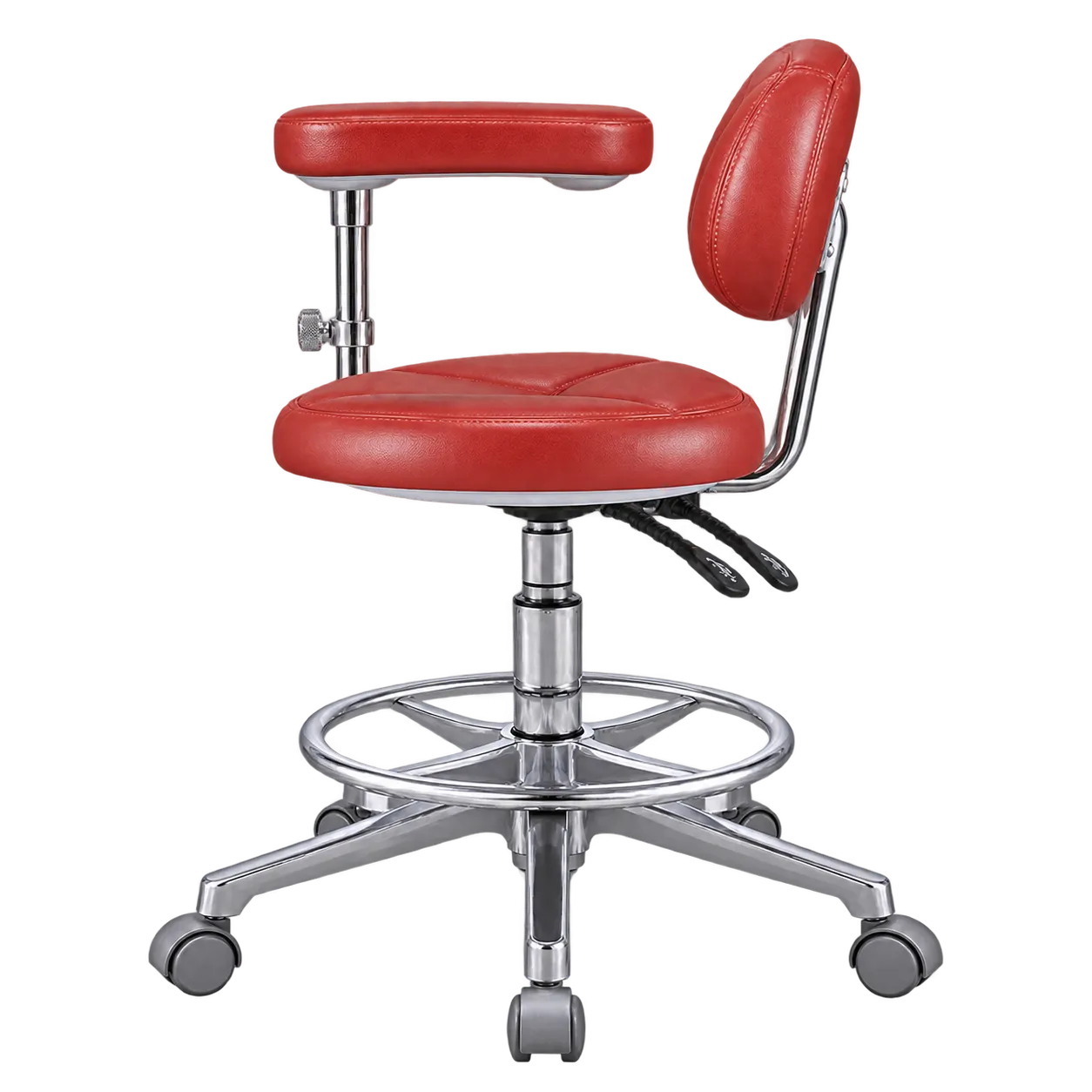
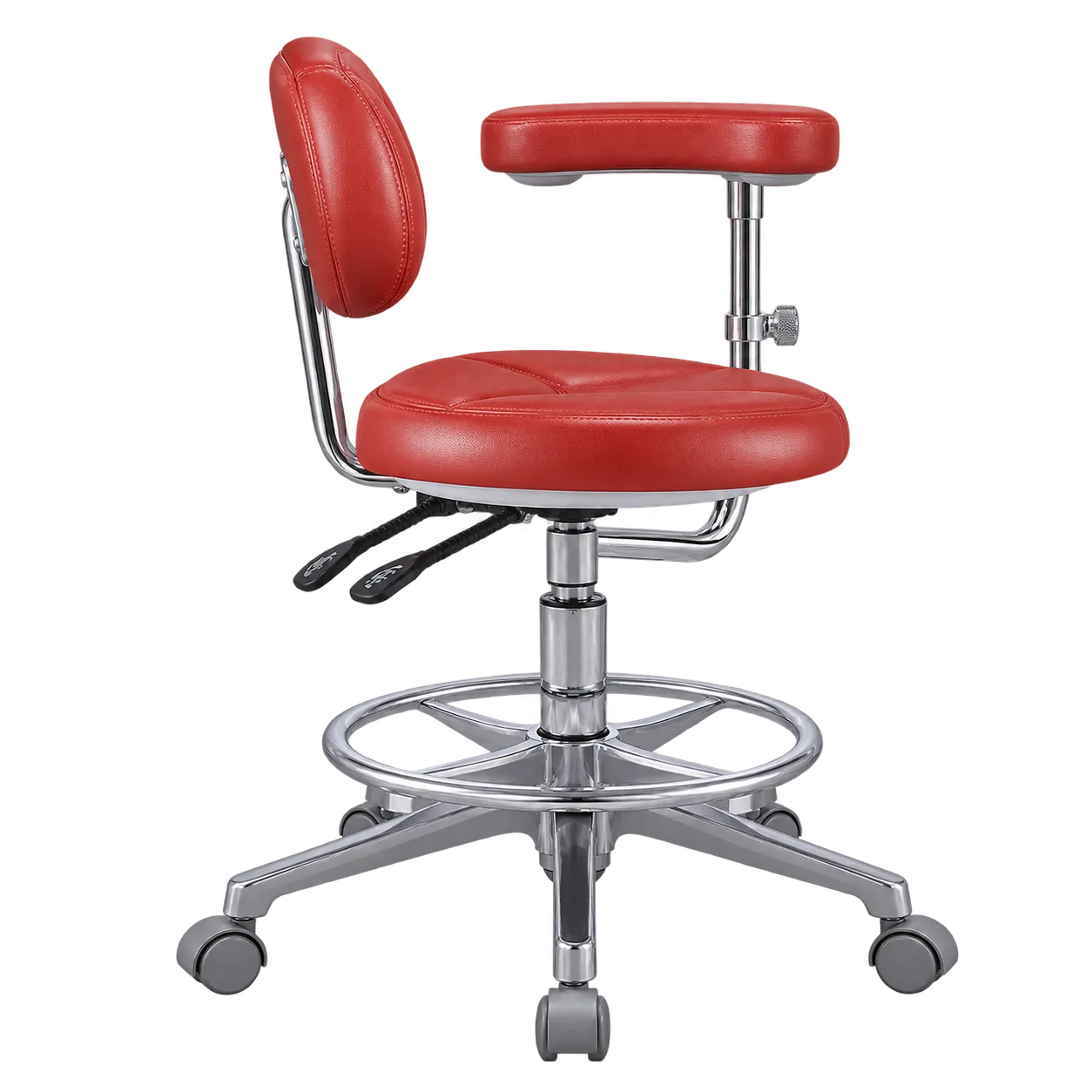
Fine instrument work is the clearest fit. Fundus examination with a condensing lens, gonioscopy and applanation tonometry all require a hand held at a fixed point for minutes at a time, and a supported elbow steadies that hand directly.
Slit lamp positions benefit, since the joystick hand otherwise rests on the table edge at whatever height the furniture happens to offer rather than one set for the clinician.
Long lists compound the value. A single unsupported reach is unremarkable; repeated across a full clinic, the fatigue shows in the steadiness of the hand.
Photography and imaging suit an elbow rest, as small involuntary movement affects image quality directly.
Raised working heights suit the foot ring, since bracing the feet makes leaning onto the prop steadier.
Clinicians who want minimal intrusion may prefer this to a full body-support bar, since a short hooked prop stays further out of the way when not in use.
Sustained whole-torso leaning is better served by a longer body-support bar, which carries more than one elbow can.
Shared rooms need handedness and adjustment settled first, since a prop fixed at one height and on one side suits some clinicians and not others.