
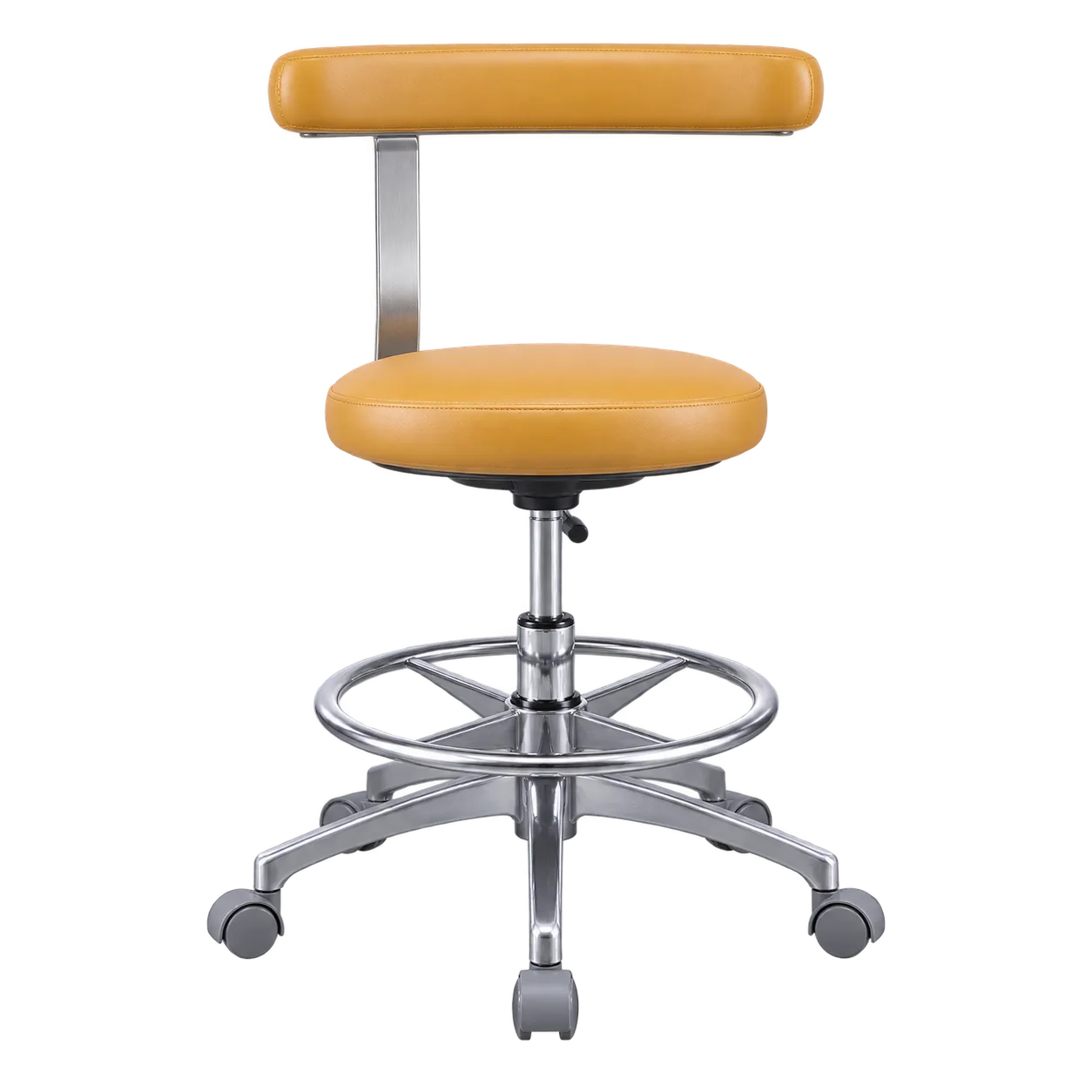
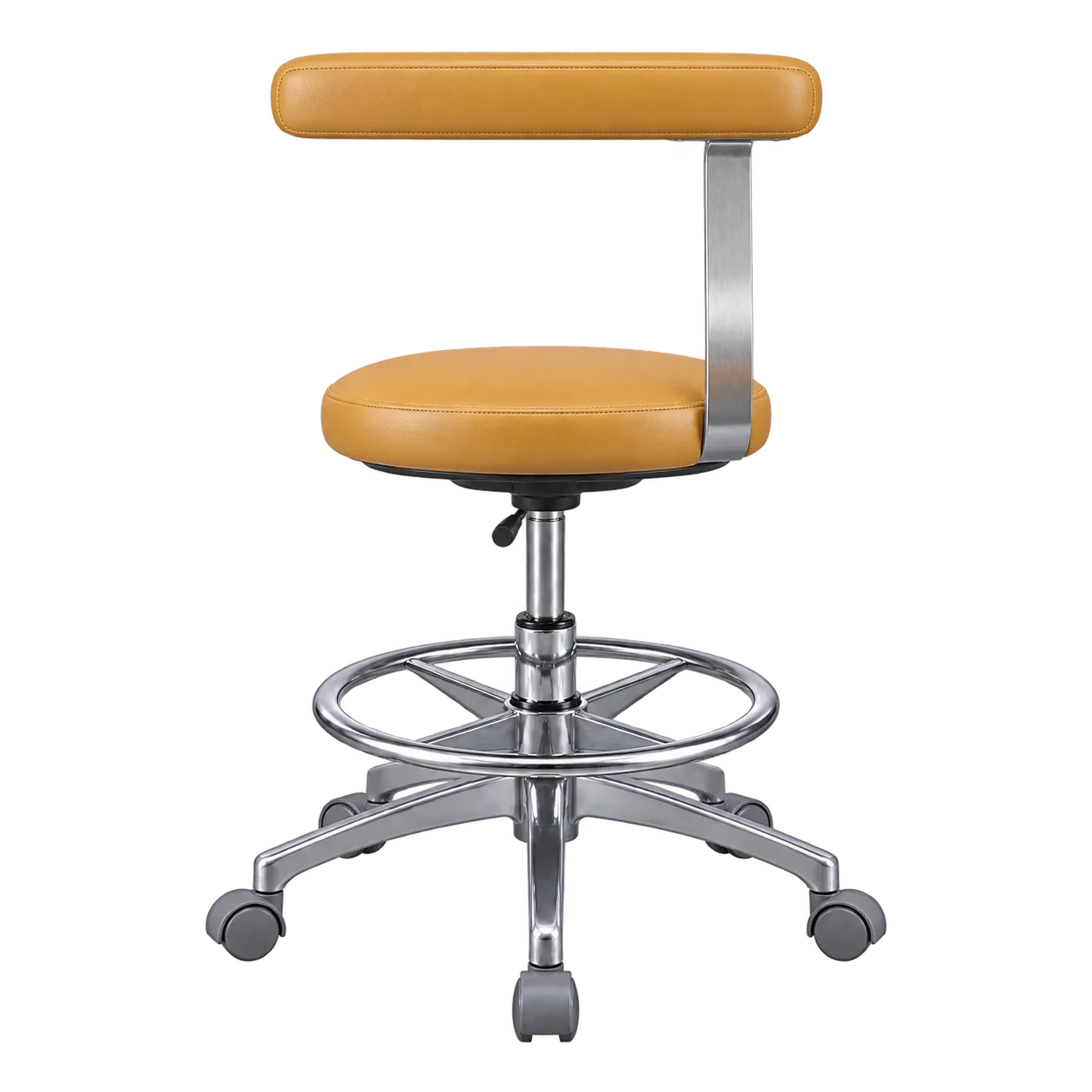
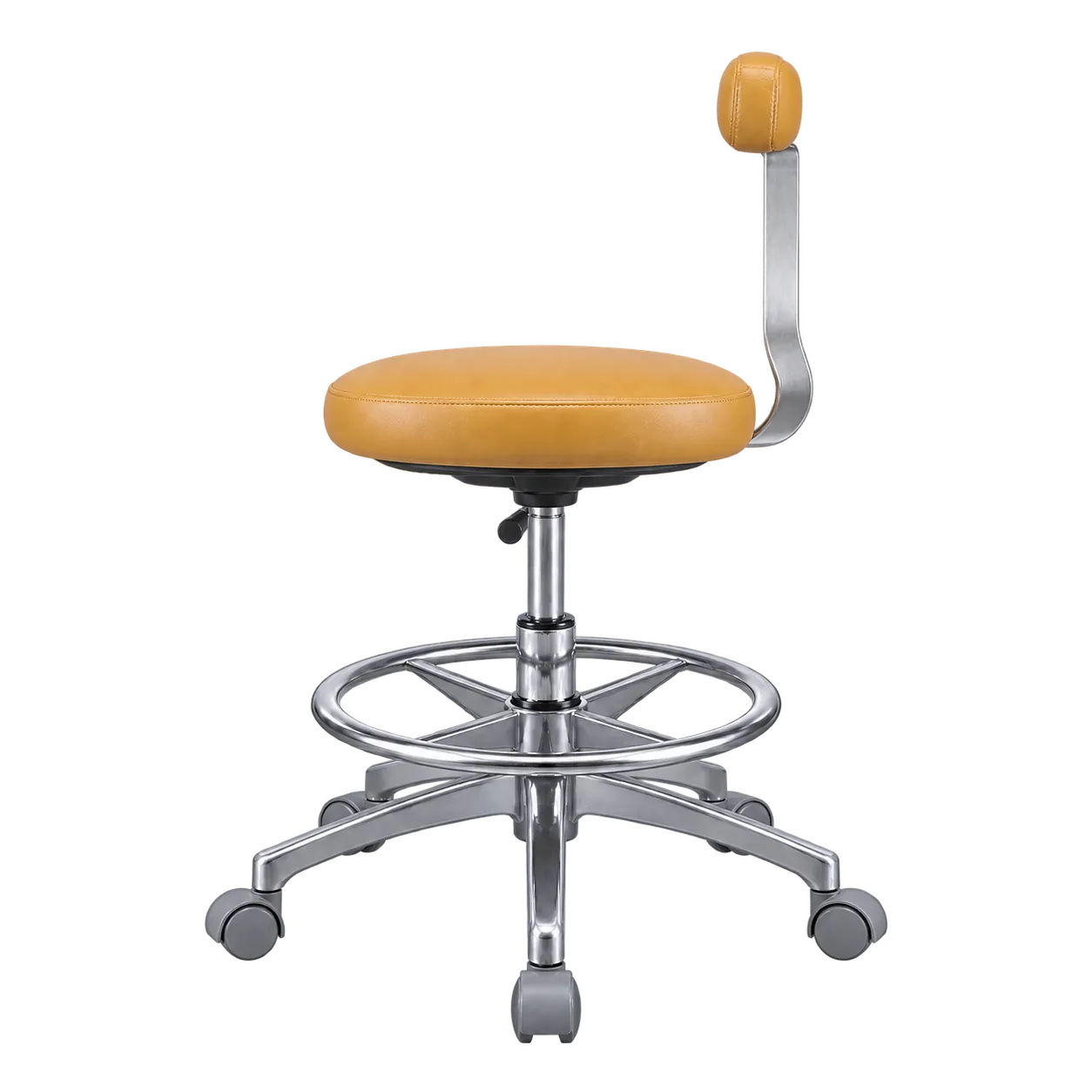
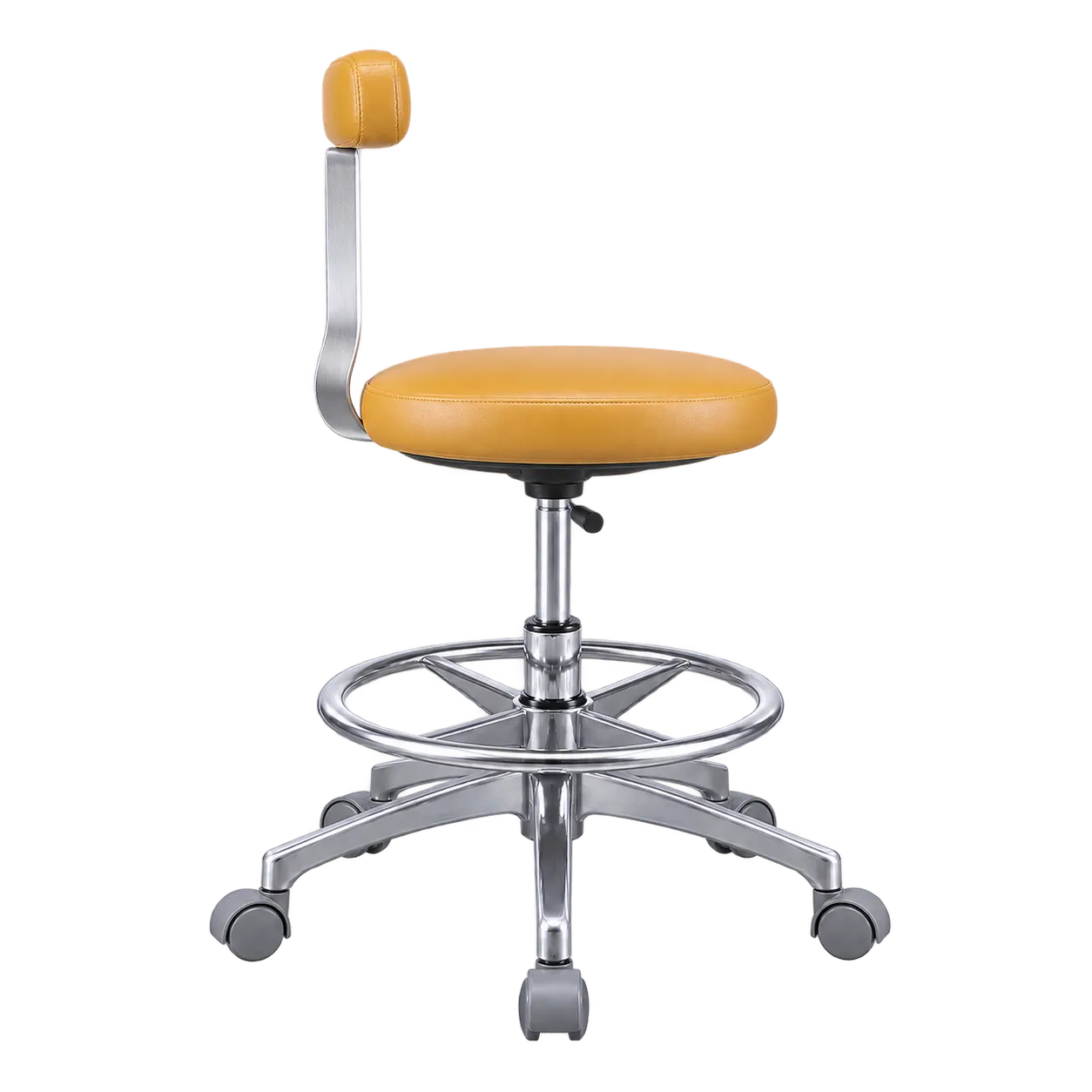
Sustained instrument holding is the clearest use. Fundus examination with a condensing lens, gonioscopy and applanation tonometry all require a hand held steady at a fixed height for minutes at a time, and an unsupported arm tires at the shoulder long before the examination ends.
Slit lamp work benefits, since the joystick hand often rests on the table edge by default. A dedicated arm on the stool provides a resting point at a height set for the clinician rather than for the table.
Long lists compound the benefit. A single unsupported reach is unremarkable; forty of them across a day is where staff discomfort begins.
Raised working heights suit the foot ring, which is fitted because the stool is meant to be used high enough that the feet would otherwise hang.
Practices addressing upper limb discomfort have something concrete here, since shoulder and forearm complaints are common in work involving sustained static holding.
Handedness needs establishing first. The arm falls on one side, so a left-handed clinician and a right-handed colleague may not be served by the same stool unless the back rotates.
Close patient approach is preserved better than with two armrests, though the arm still occupies one side and should be positioned away from the patient.
Sideways exit past the arm is less easy than from an open stool, which suits clinicians who stay seated through a session.