
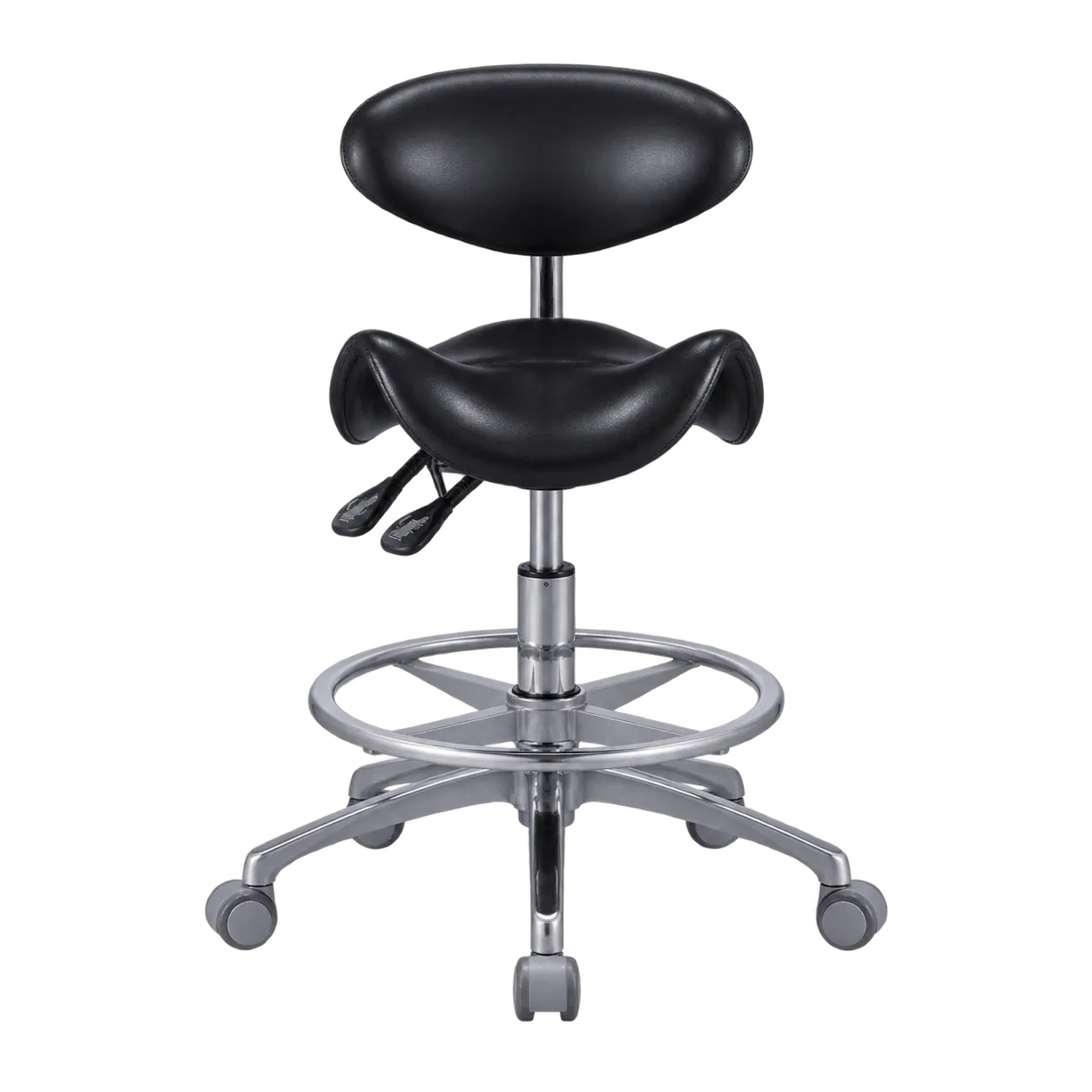
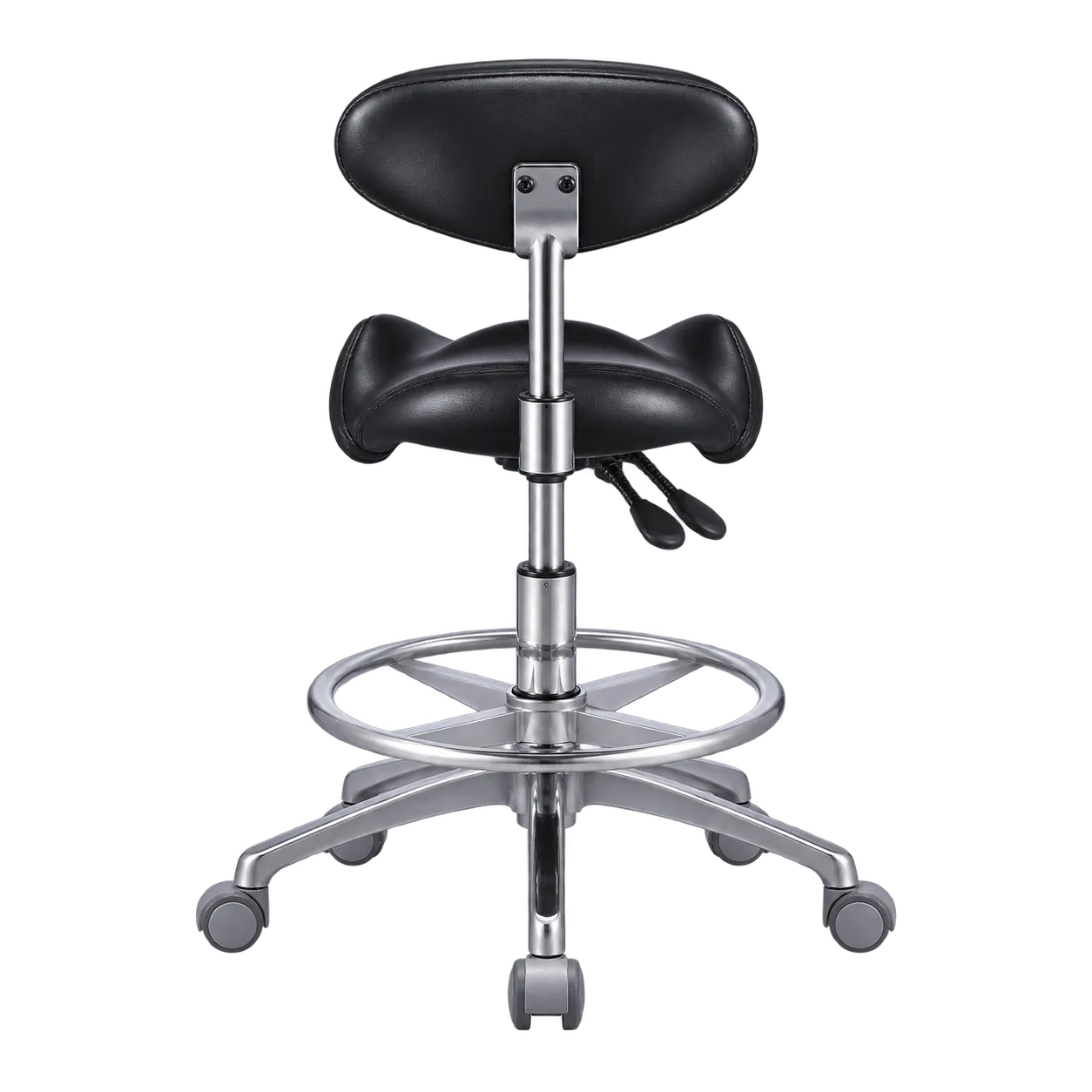
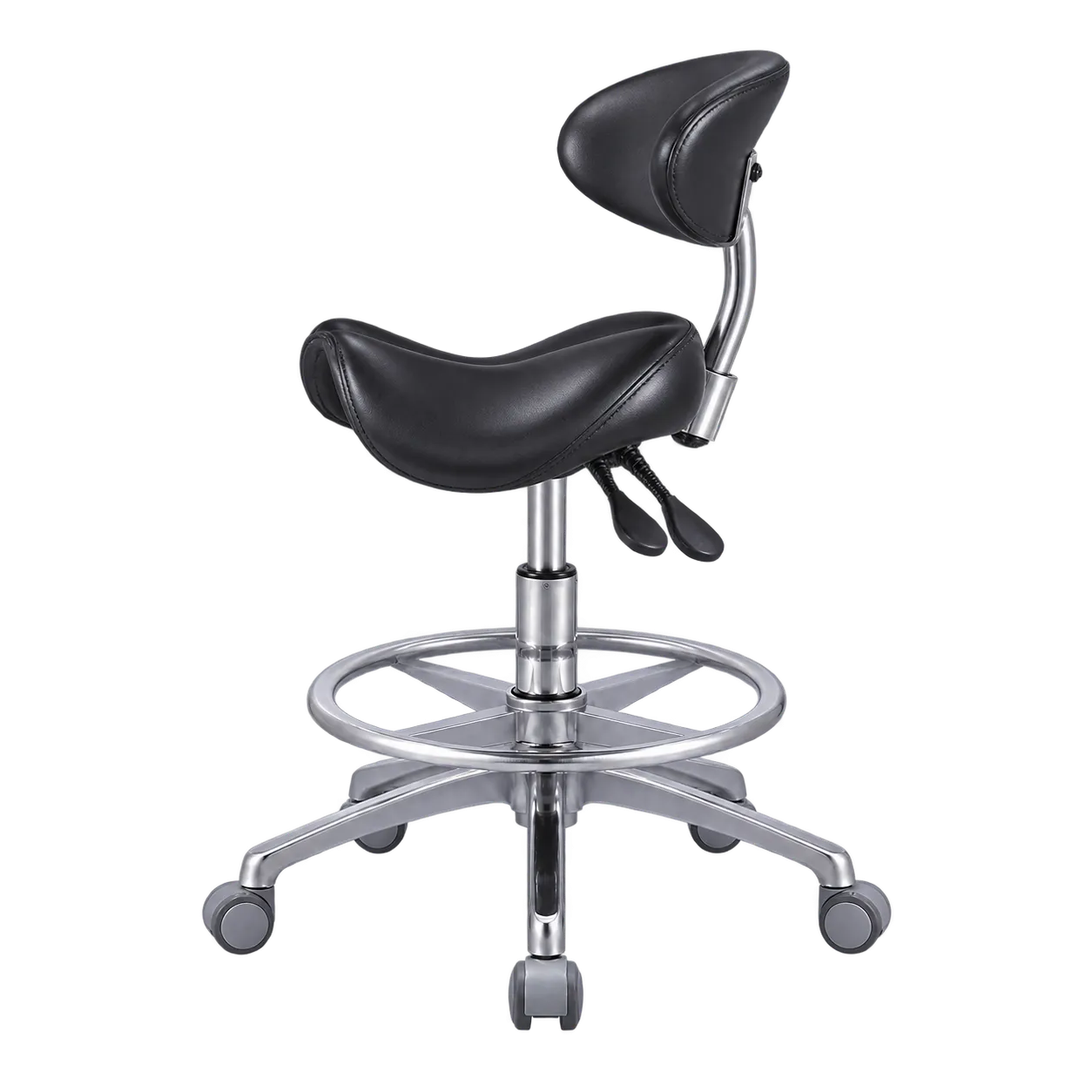
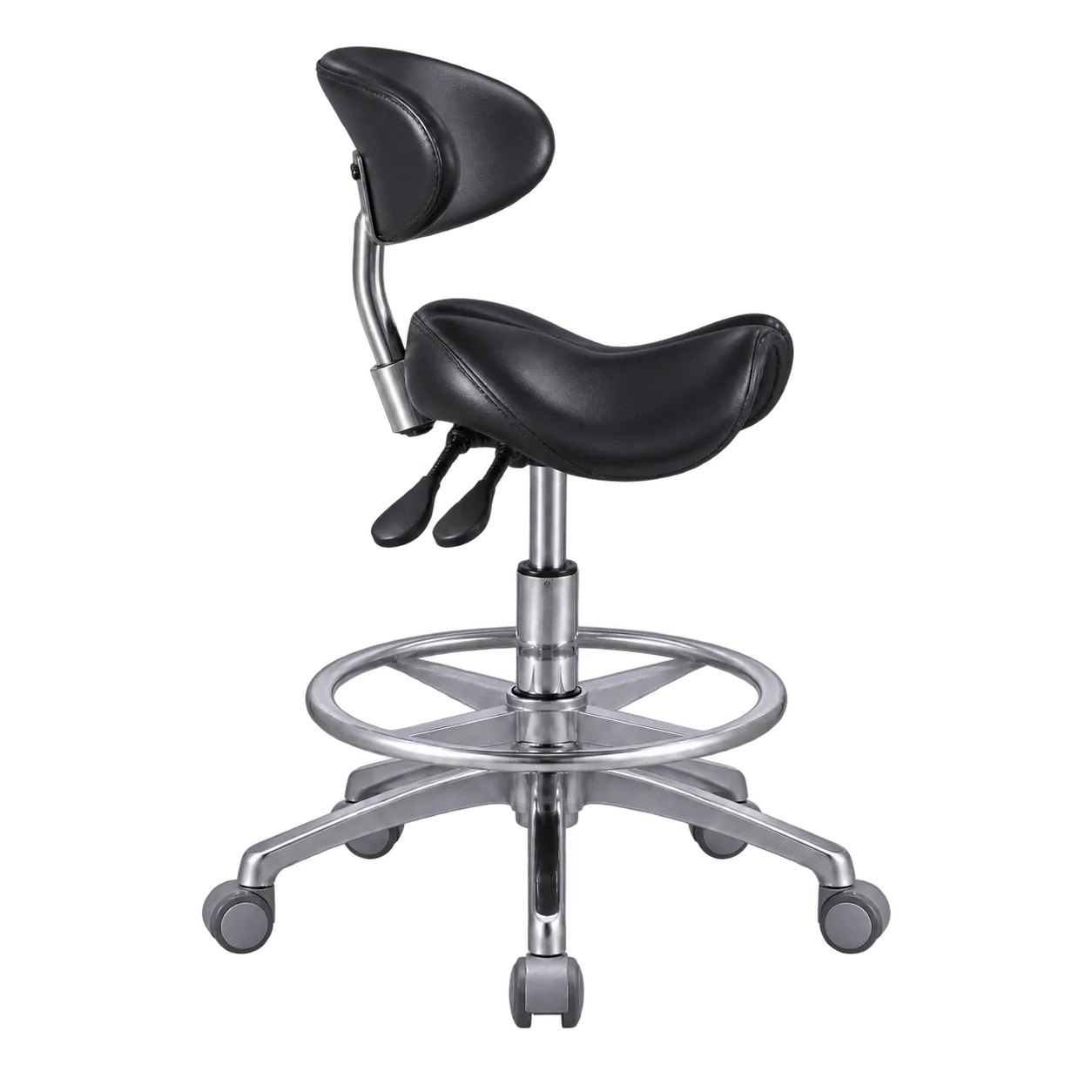
Forward-leaning instrument work is the clearest fit. Slit lamp examination, contact lens fitting and close inspection all pull the clinician towards the patient, and a saddle lets that happen by rotating the pelvis rather than rounding the lower back.
Long clinic lists suit the posture. The benefit of an open hip angle accumulates across hours rather than minutes, so the stool earns its place in rooms used all day rather than occasionally.
Practices addressing staff back discomfort have a concrete option here. Musculoskeletal complaints remain among the most common causes of work-related ill health in the UK, and seated posture is one of the few factors a practice can change directly.
Clinicians who move between standing and sitting benefit, since a saddle is sat high enough that rising and returning takes less effort than from a low conventional stool.
Dentistry-adjacent settings and shared premises may already have saddle seating in use, and staff familiar with it will adapt immediately.
Teams should agree on the trial first. Saddle seating divides opinion, needs an acclimatisation period, and suits some clothing better than others, so ordering one before several is sensible.
Conventional desk work is less well served, since a saddle is sat higher than a standard desk usually suits and the small backrest offers little for sustained upright screen work.
Raised instrument heights suit it well, which is consistent with the foot ring being fitted as standard.