
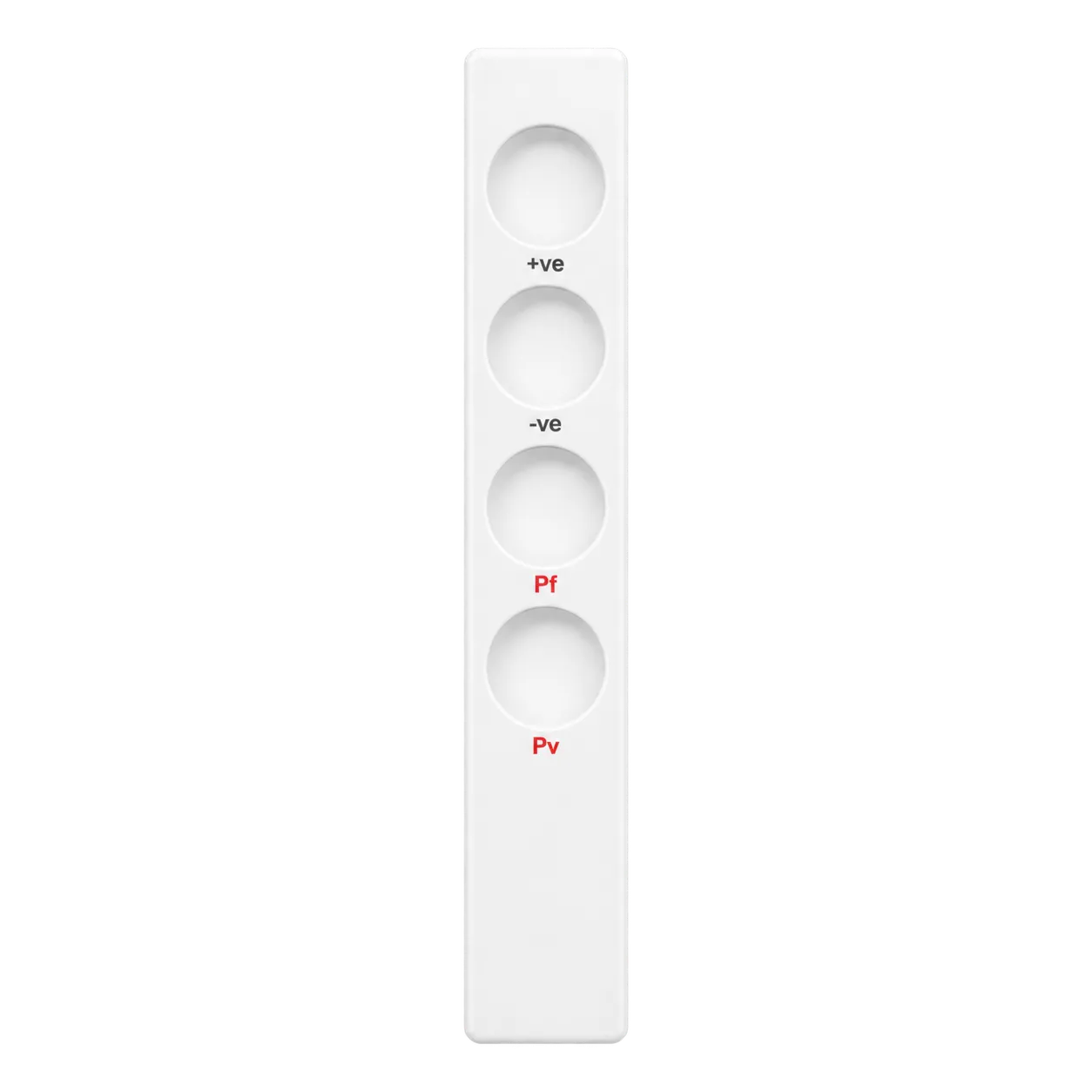
Optometry practices use a low-power bar at the end of retinoscopy to confirm the neutral point before moving to subjective refraction. A quick plus and minus check tells the practitioner whether the objective result can be trusted as a starting point, which saves time in the subjective routine that follows.
Paediatric and special-needs clinics rely heavily on retinoscopy, often under cycloplegia, because subjective responses may be limited or absent. For those patients the objective result may become the prescription, so confirming neutral within a quarter dioptre matters more than usual.
Hospital eye services and orthoptic clinics use the same confirmation step when refracting children with strabismus or amblyopia, where an accurate result underpins treatment decisions.
Training clinics for optometry and ophthalmology students use the bar to teach how the reflex changes either side of neutral. Students can see against-motion appear with a quarter dioptre of plus and with-motion with a quarter of minus, which builds confidence in judging the end-point.
Practitioners who also use ±0.25 D and ±0.50 D lenses for plus and minus checks at the end of a subjective refraction may find the bar convenient for that, though the datasheet names retinoscopy only.
The bar suits a buyer expecting a complete neutralisation tool less well, since four low powers cannot neutralise most eyes alone, and it needs a lens set or higher-power rack alongside. Institutional buyers commonly ask for evidence of conformity. The conformity documentation those procurement routes require is issued by the manufacturer and provided by the seller.