

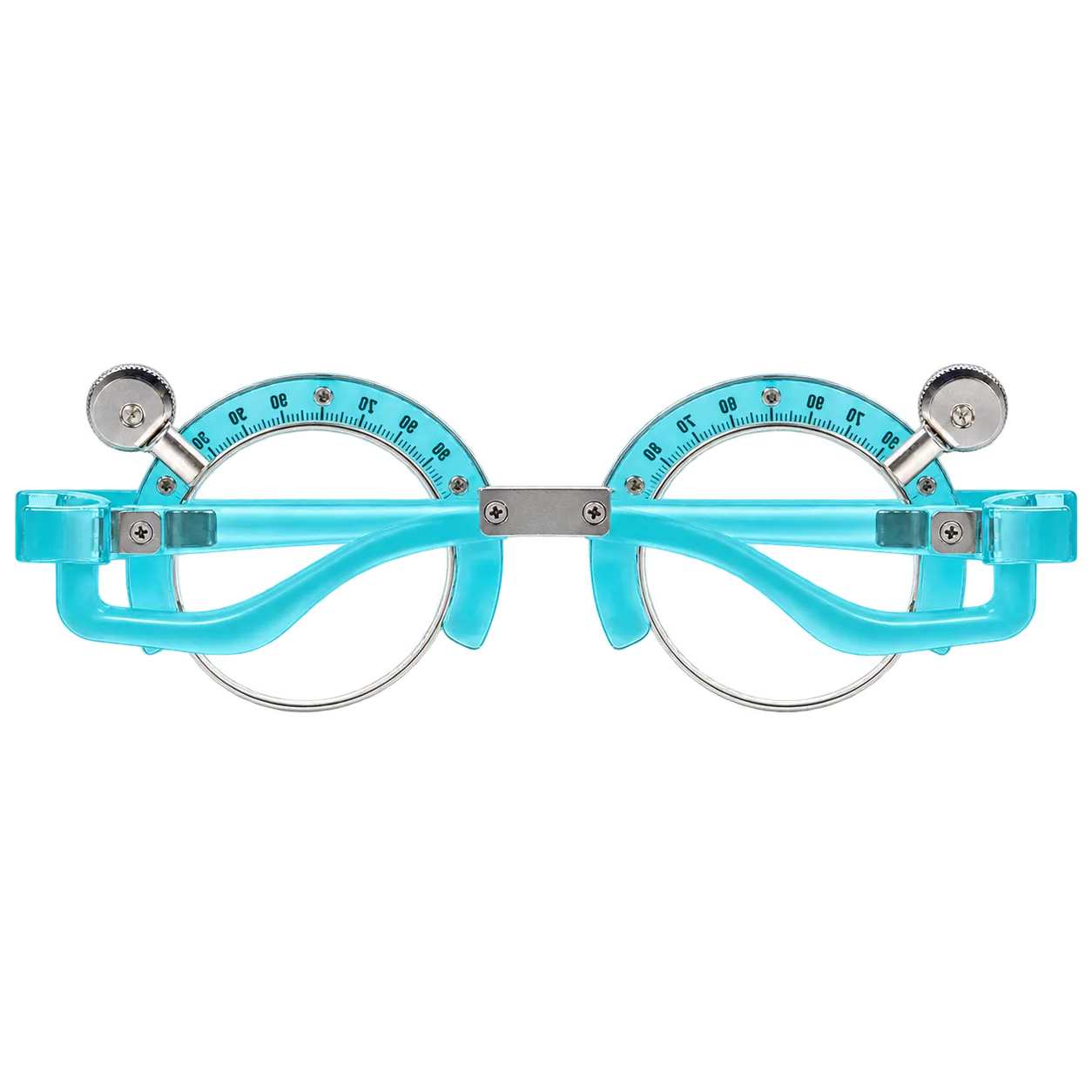
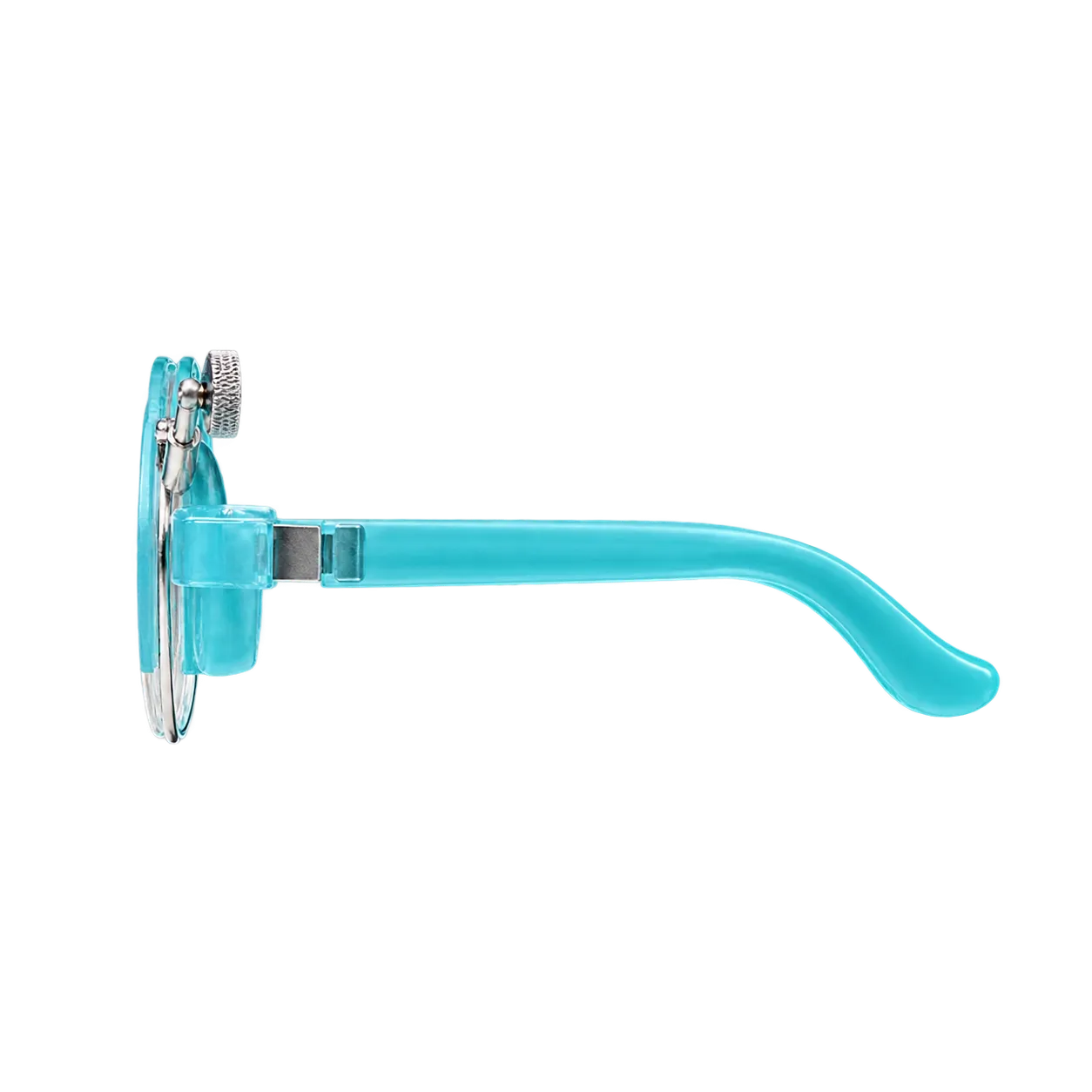
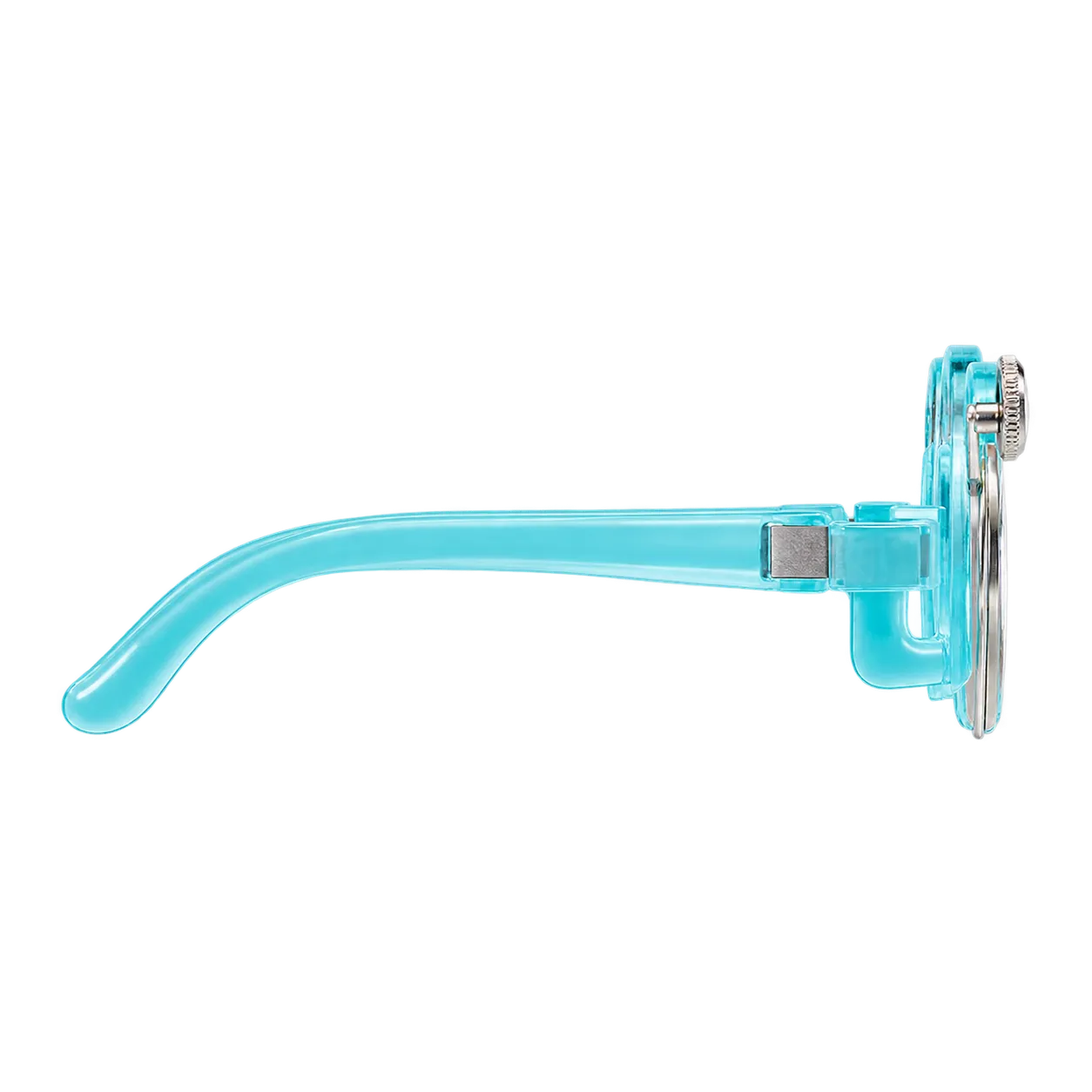
Optical practices and dispensing areas are the natural setting. A presbyope who has worn single-vision lenses, or who has only ever used ready-made readers, often has no idea what a progressive lens looks like from behind. Placing a test lens with the right addition in front of each eye, and letting them look at a distance chart, a screen at arm's length and a page in the hand, gives them a first-hand sense of the corridor and the peripheral blur before the order is placed.
Consultations where the choice is open use the set to compare options in the patient's own experience. Someone who spends long hours at a computer may find the intermediate zone narrow for that work and choose a different solution, and a patient who drives a great deal can check how the distance zone feels when the head moves.
Practices following up a non-tolerant wearer can use a test lens to separate a design problem from a prescription problem. Published data on non-tolerance show prescription causes to be the most frequent, followed by dispensing causes, so a trial alongside a check of the addition helps direct the next step.
Training for dispensing opticians and optical assistants benefits from a physical example of progressive optics, including how the corridor narrows and how fitting height affects what the wearer sees.
Hospital eye services and low vision clinics may use the set to show patients the option, though the addition range stops at +3.00 D.
The set is less suited to demonstrating a named commercial design, or to patients outside the 58 to 66 mm PD options. Institutional buyers commonly ask for evidence of conformity. The conformity documentation those procurement routes require is issued by the manufacturer and provided by the seller.