
Assessing Tympanic Membrane Mobility
Sealing the canal and introducing air lets the examiner observe how the membrane responds to pressure change, which inspection alone cannot show. What any response means clinically, and what follows from it, rests entirely with the examining clinician. Pressure response carries its own information. Sealing the canal is what permits it. Membrane response is observable only with air. Interpretation stays with the clinician. Pressure change reveals what looking cannot. Sealed canals make the test possible.
Paediatric Ear Examination
A 2.5 millimetre speculum reaches infant and young paediatric canals that adult sizes cannot, and the three sizes supplied cover a practice seeing patients across all ages without further purchases being needed. Adult specula cannot reach infant canals. Three sizes avoid further purchases. Practices seeing all ages need that range. Nothing further requires sourcing. Infant canals demand the narrowest speculum. Adult sizes simply cannot enter them.
General Practice and ENT Clinics
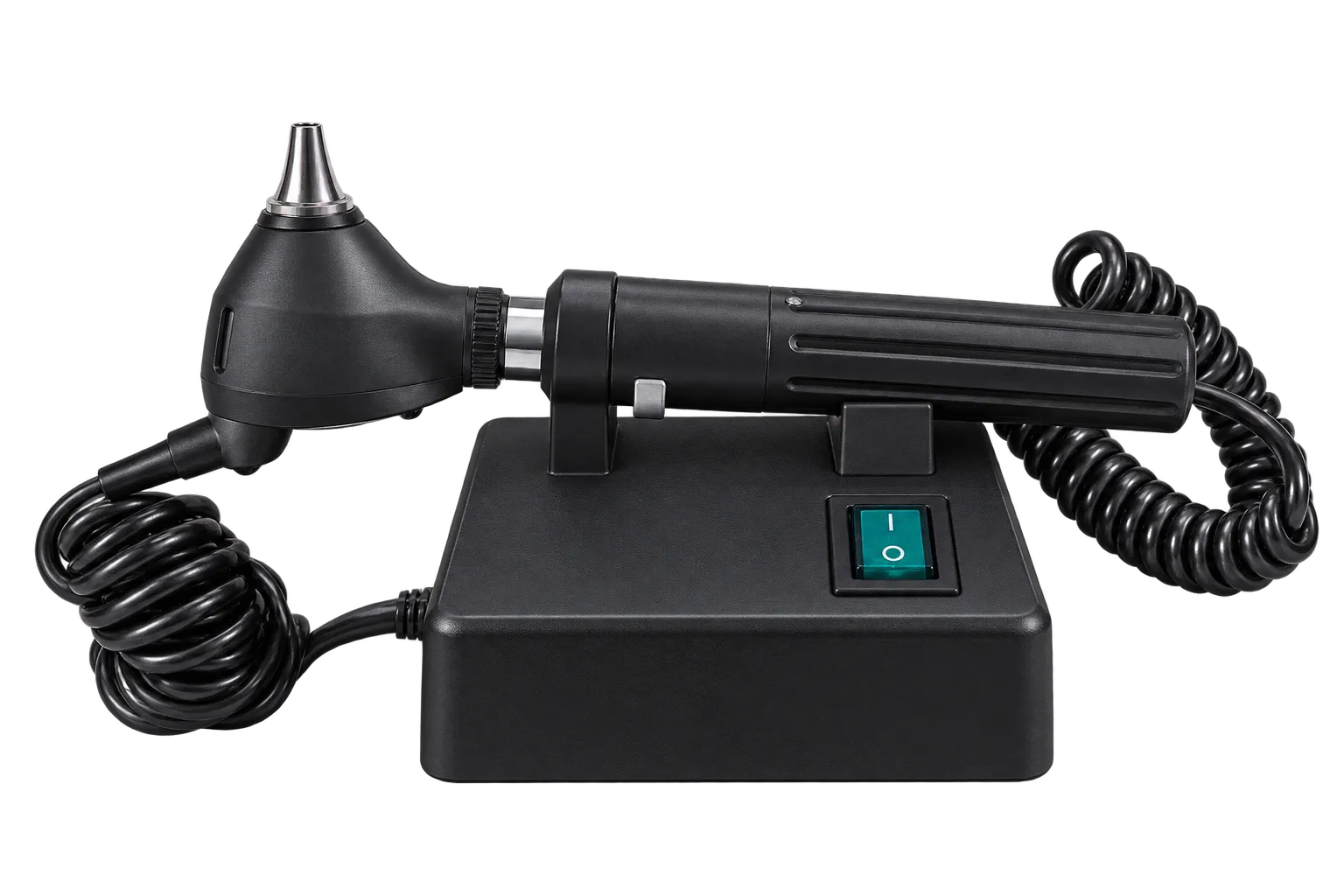
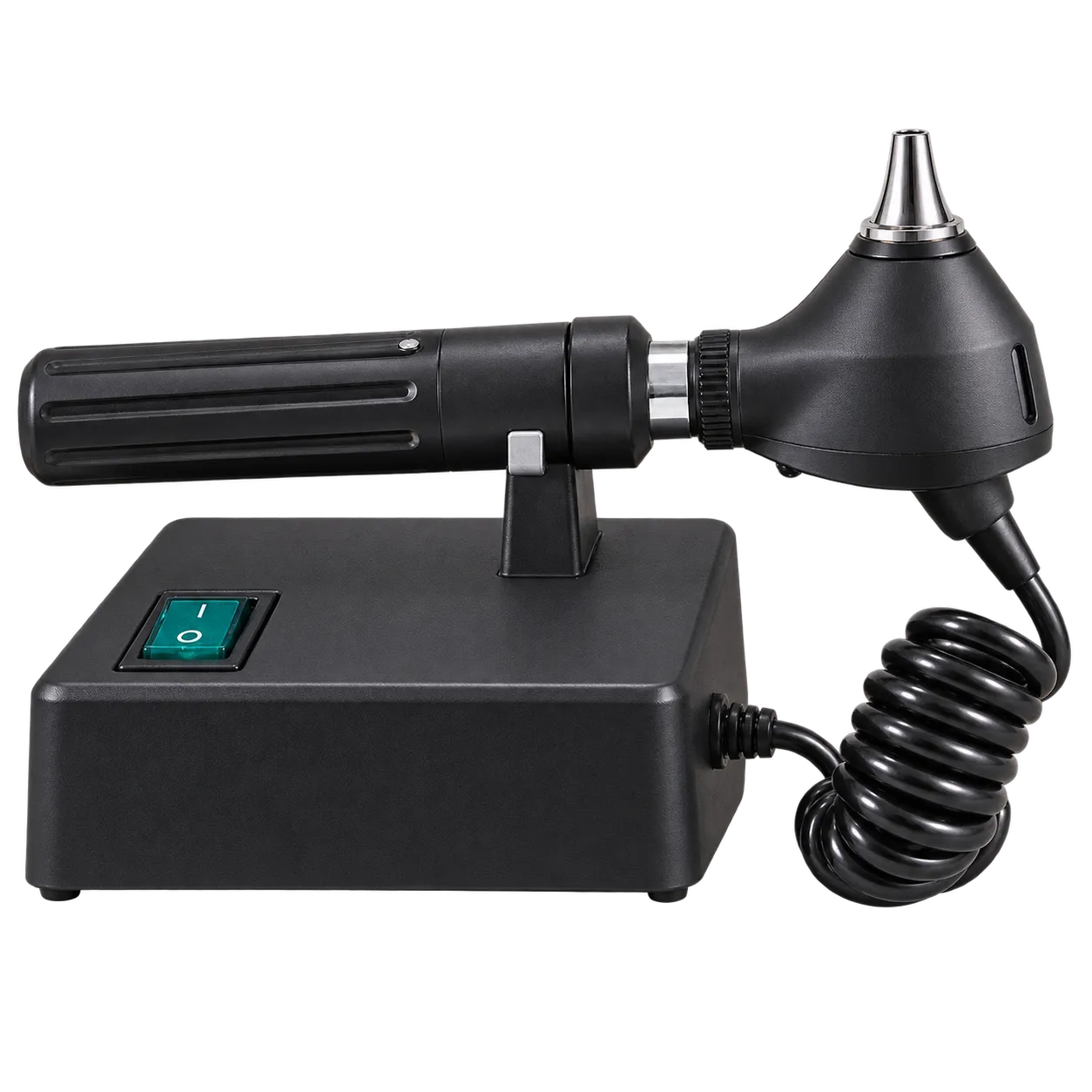
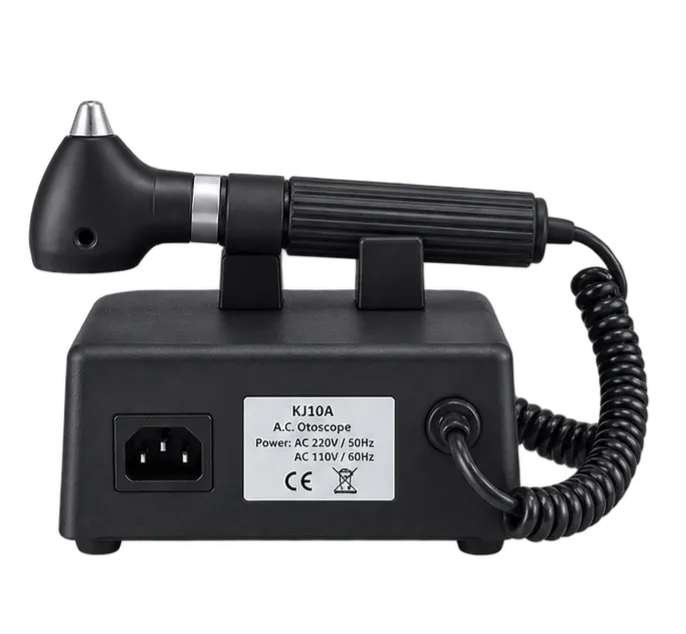
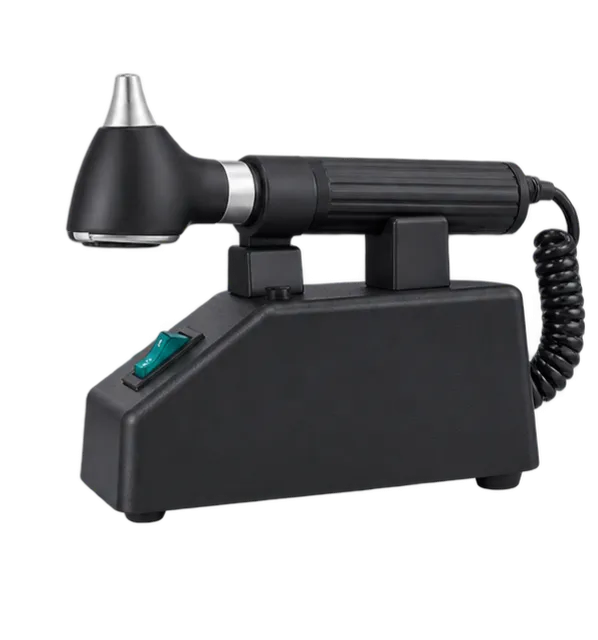
Ear examination is routine across general practice, paediatrics and ENT alike, and a mains instrument suits a consulting room where a socket is permanently available. Portability was not the design intention here. A socket must be permanently available nearby. Ear examination is routine everywhere. General practice and ENT both use it routinely. Portability was not intended here. Consulting rooms present no difficulty here. Sockets are permanently available there.
Services Reviewing Decontamination
Specula contact the patient at every examination, so they fall within a department's decontamination policy. Whether they are single use or reusable is not documented and should be established before the instrument enters service. Decontamination policy governs patient contact. Single use status remains unstated. Establishing status precedes service entry. Contact happens at every examination. Cleaning method should be established early. Policy covers every contact item.