
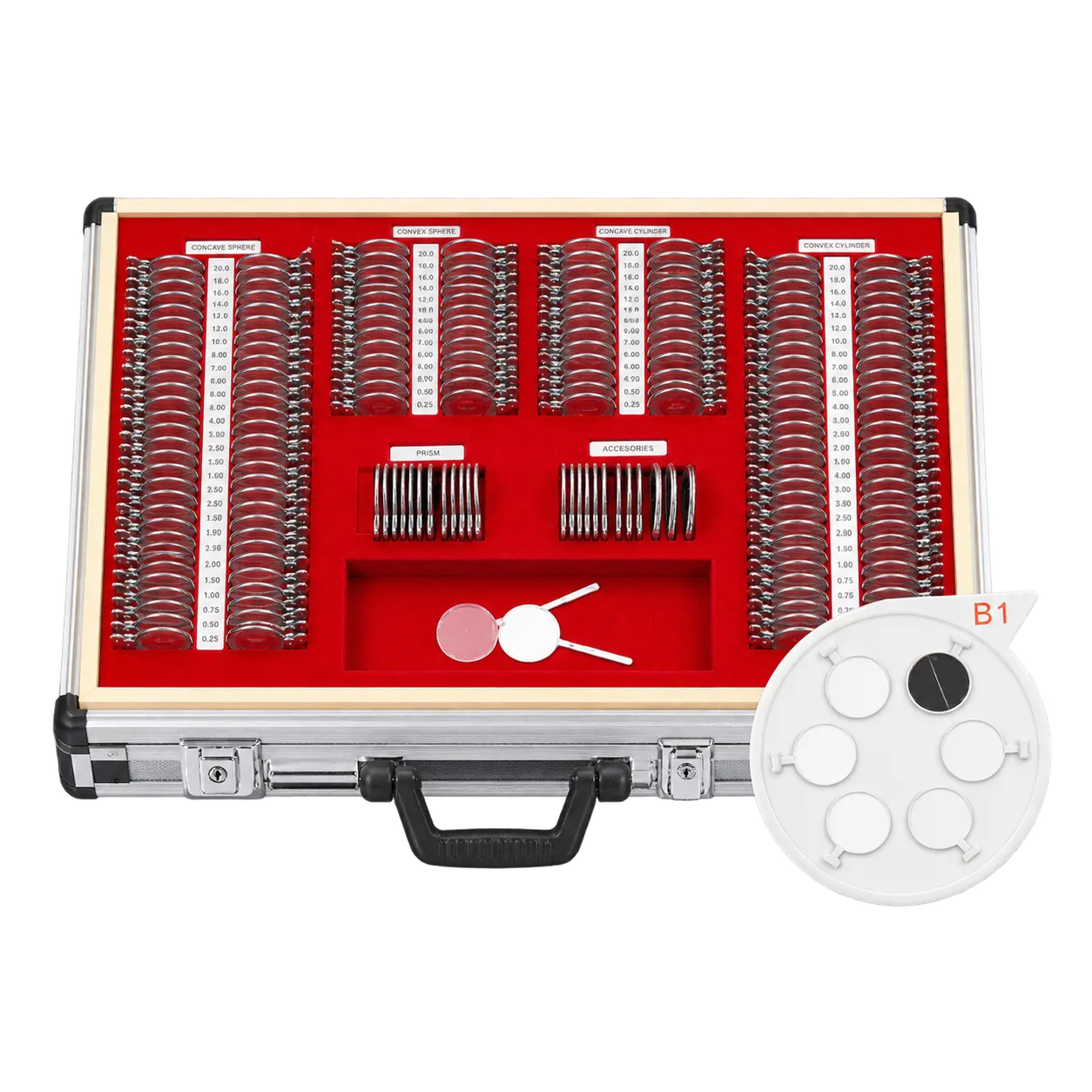
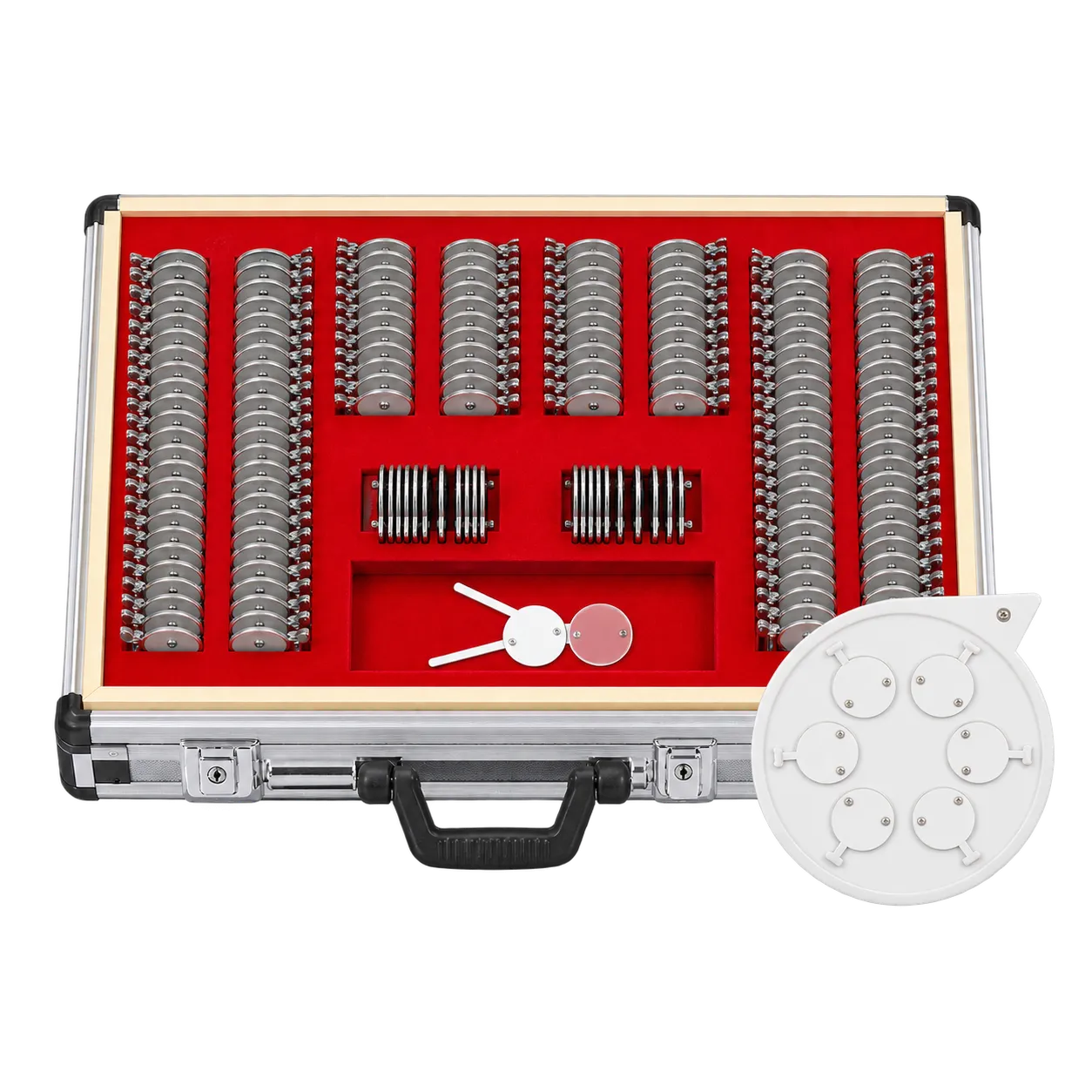
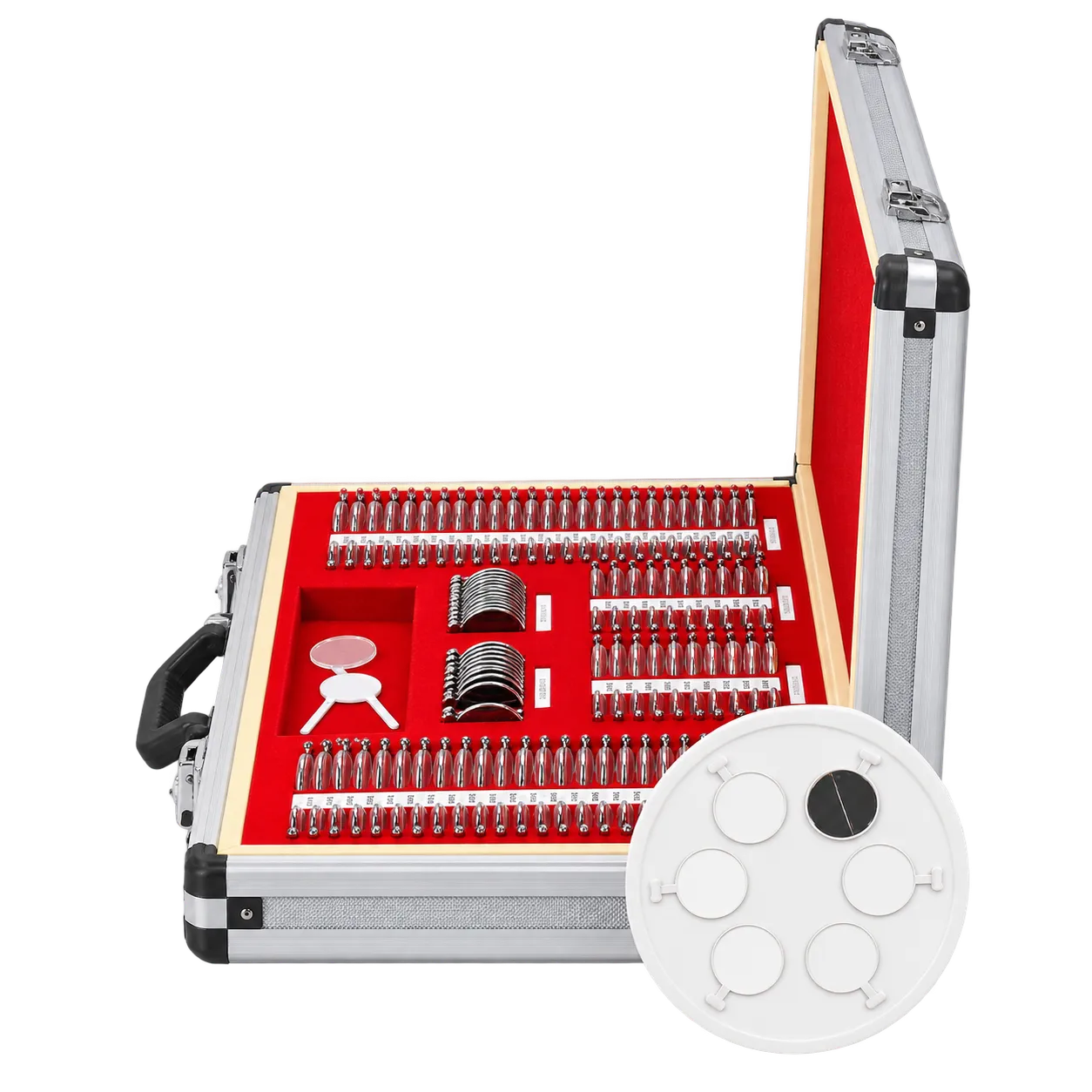
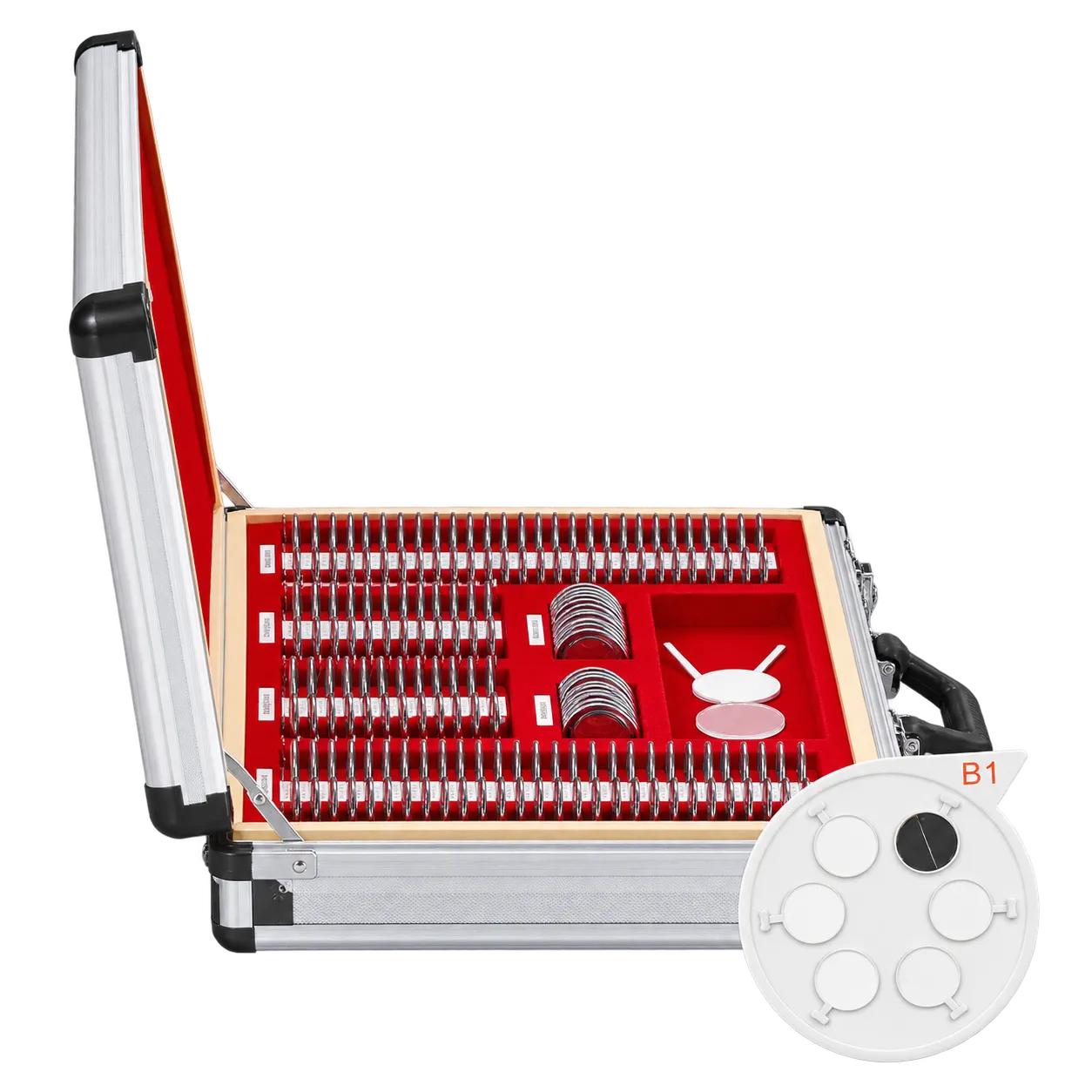
Community optometry practices with patients who notice small changes are the clearest fit. Presbyopes with demanding near work, patients with a history of dissatisfaction with a prescription, and patients who read the chart confidently to its end can often say whether they prefer a result 0.12 D either side of a quarter step. The paired 0.12 D spheres make binocular balancing in those small steps possible, and the full 36.5 mm aperture keeps the view natural while they decide.
Near addition and reading assessments use the fine end of the sphere range. A trial of plus power in eighth-dioptre changes lets the practitioner find the lowest addition that gives comfortable reading at the patient's working distance.
Hospital eye services and orthoptic clinics use the red and white Maddox rods for heterophoria measurement and double Maddox rod assessment of torsion, with the prisms from 0.50 to 10.00 for measurement and prism trials. Swapping the rods between eyes on a repeat measurement helps identify a colour artefact.
Low vision clinics can draw on the full aperture, which lets patients who view eccentrically use an off-centre part of the lens during trial frame refraction.
Teaching clinics can use the 0.12 D lenses to show students the limits of patient discrimination, a useful counterweight to over-refining.
The set suits a clinic seeing many patients with cylinders between 3.00 and 4.00 D less well, and buyers needing published dimensions will need them from the seller. Institutional buyers commonly ask for evidence of conformity. The conformity documentation those procurement routes require is issued by the manufacturer and provided by the seller.