
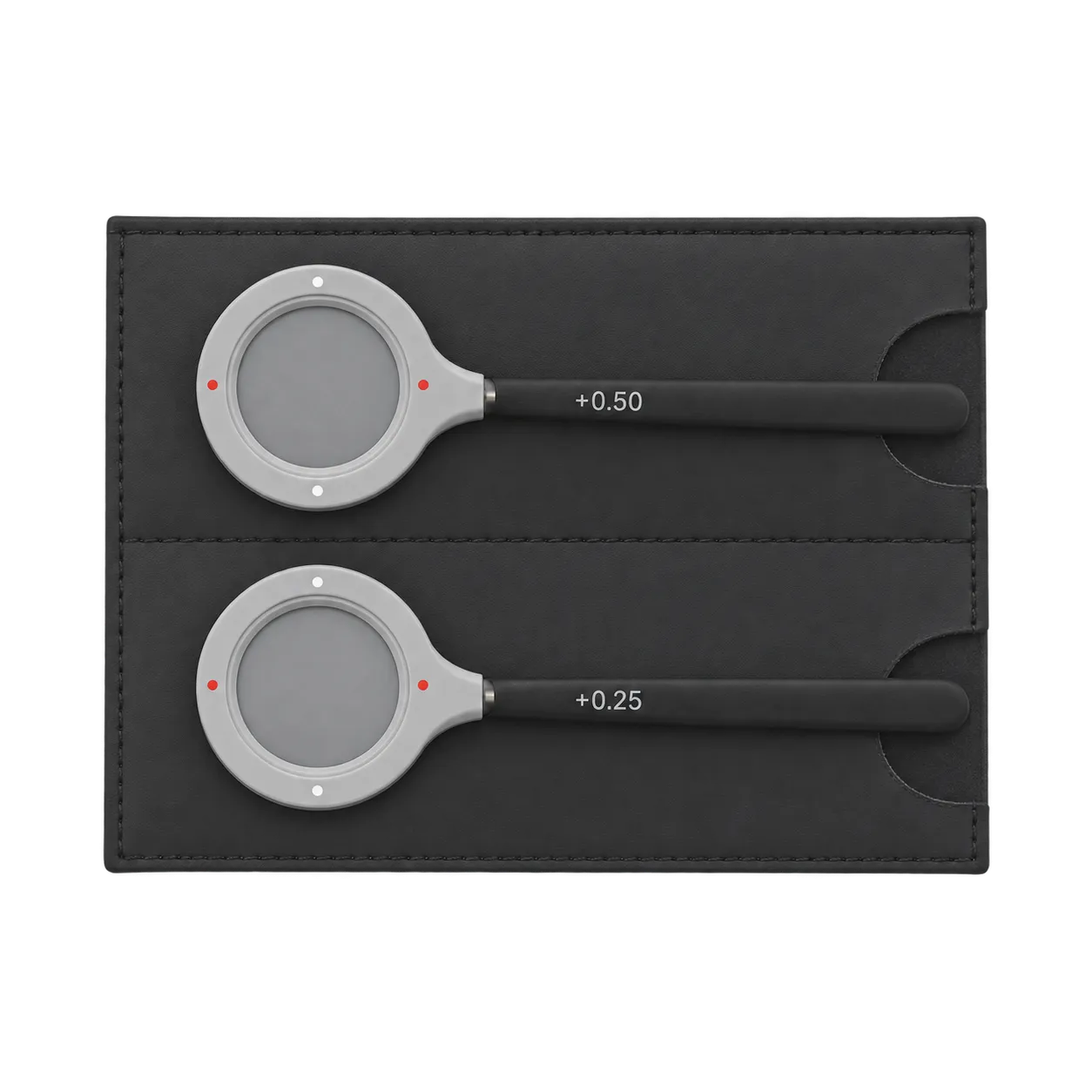
Trial frame subjective refraction is the core use. After an objective starting point, the crossed cylinder refines the axis and then the power of any astigmatic correction, with the patient comparing two views each time. Printed values on the handles help the clinician confirm the lens in hand before each check.
Busy clinics with several clinicians sharing one set benefit from clear identification. A lens that states its value helps prevent swaps between sessions or rooms.
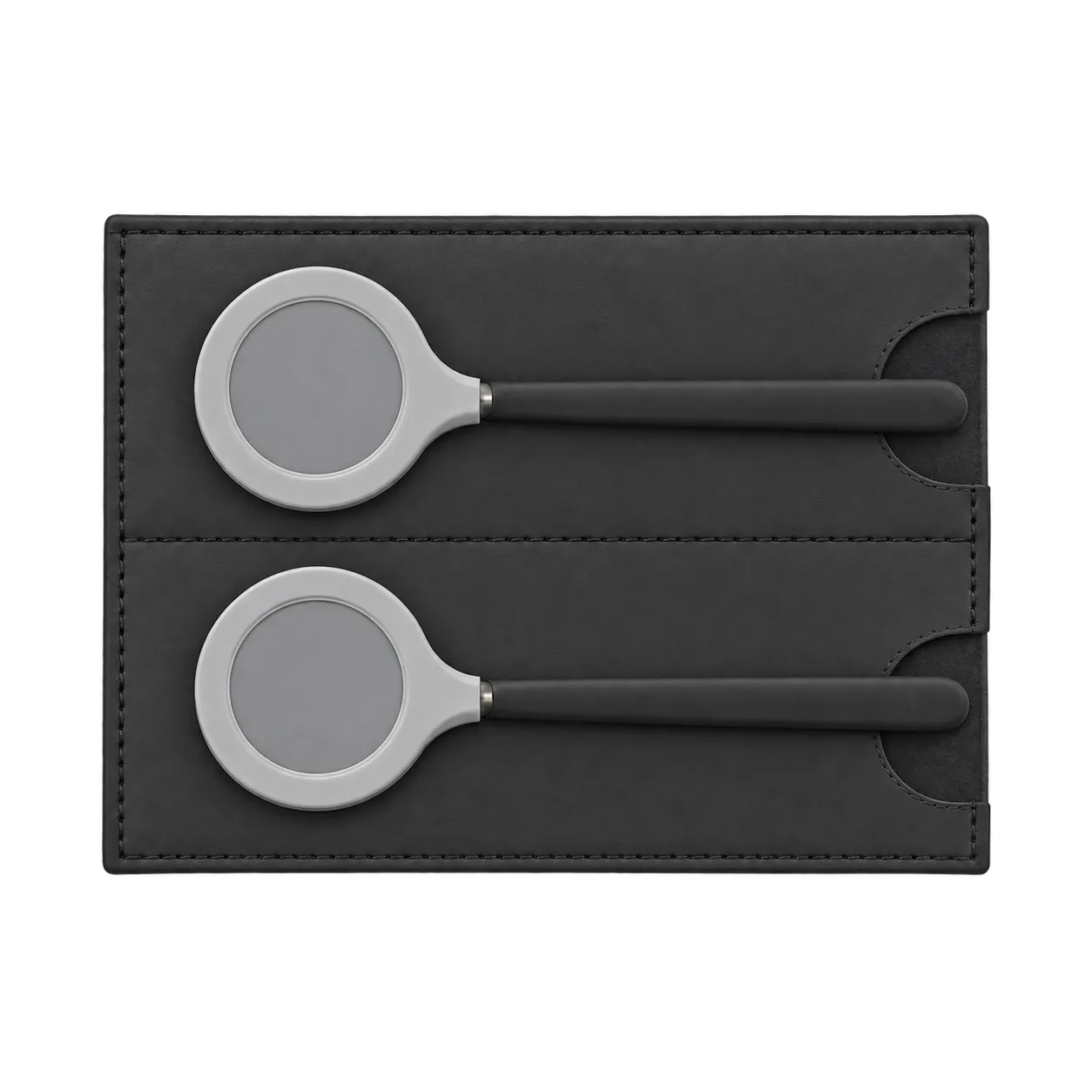
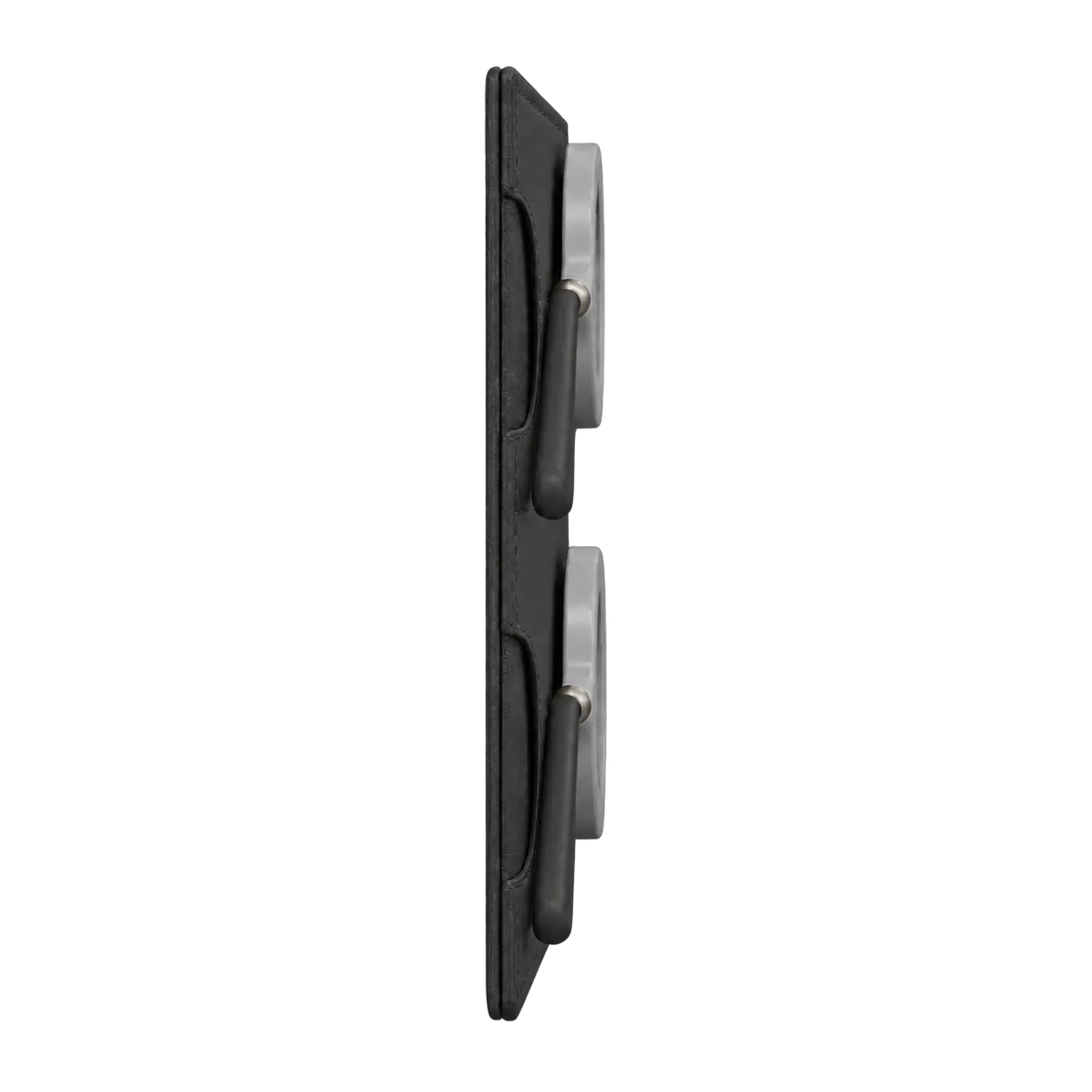
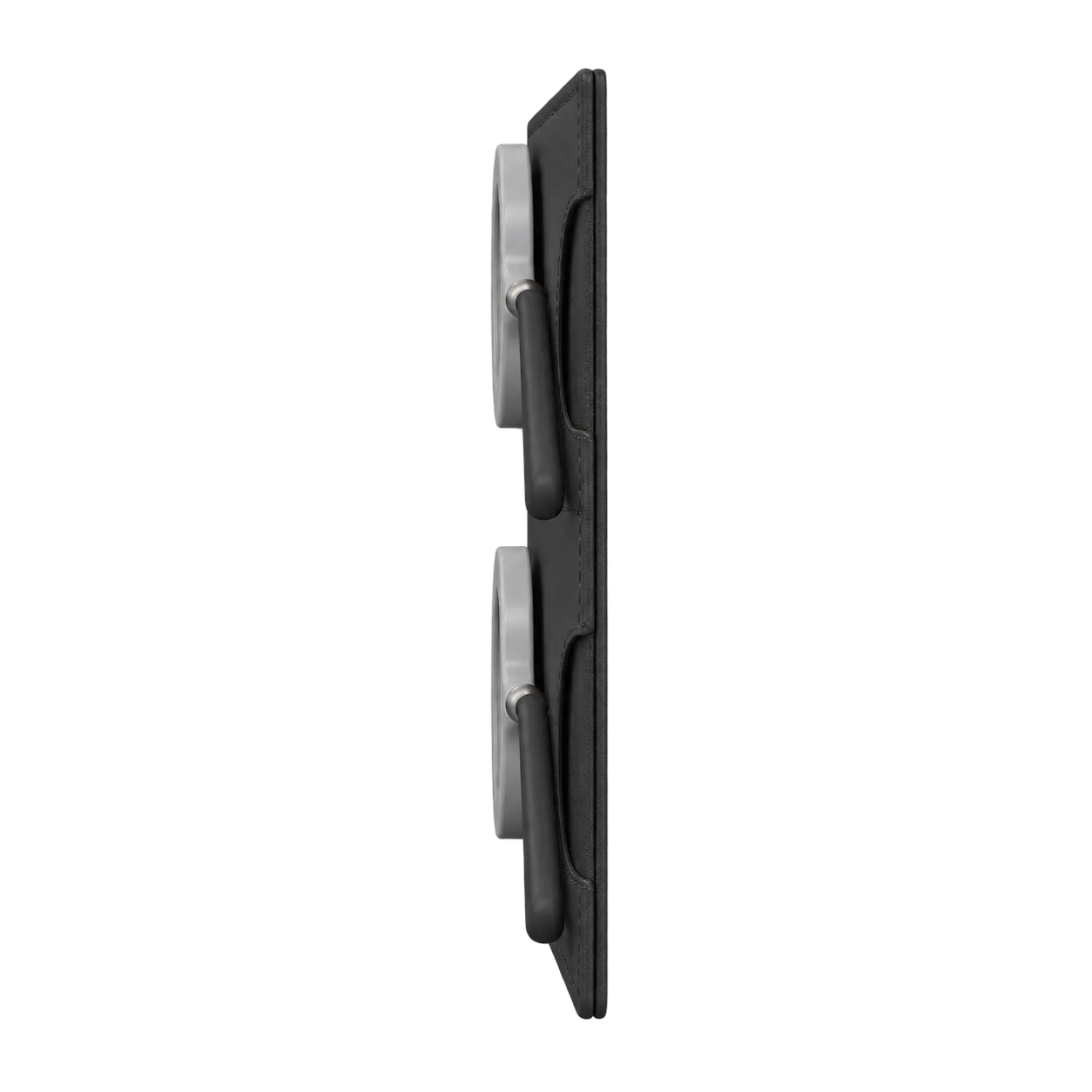
Domiciliary optometry relies on the trial frame, since a phoropter cannot be taken into a home or care home. The leather case keeps both lenses together between visits, and the printed handles make the right lens easy to find in poor lighting.
Low vision assessments often use the ±0.50 D lens, since patients with reduced acuity need a larger blur difference to judge.
Paediatric refraction in a trial frame allows the child's face to stay visible, and a handheld crossed cylinder lets the clinician refine astigmatism quickly.
Hospital eye services refract in trial frames after cataract surgery and for irregular or high astigmatism, often with several clinicians sharing equipment across a clinic list.
Teaching clinics can use the printed handles and marked housings to show students how each lens is identified and oriented, including the dot convention, before they learn the axis and power checks.
The JCC-2 is less suited to clinics that refract only at a phoropter. Any declaration of conformity is issued by the manufacturer and provided by the seller.