
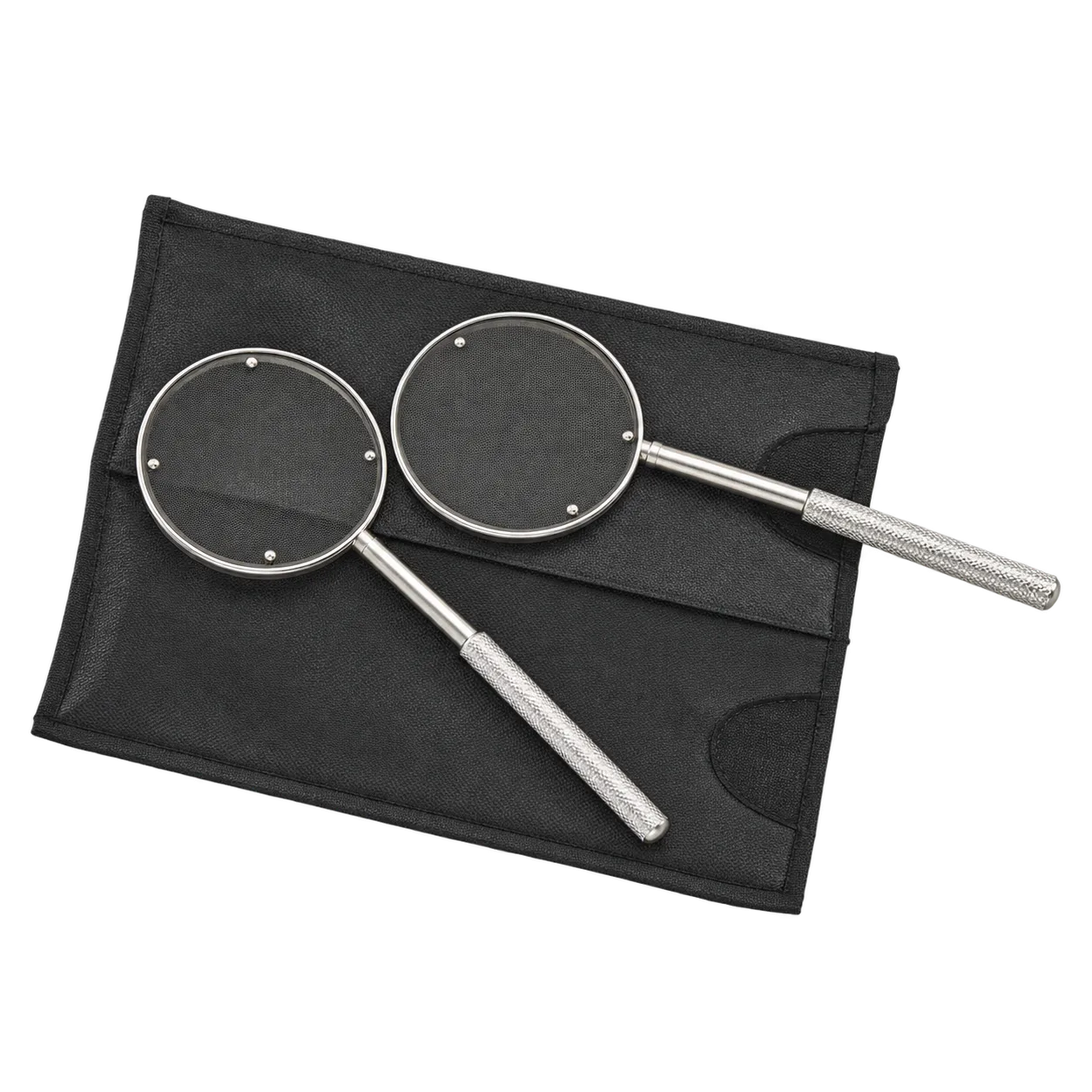
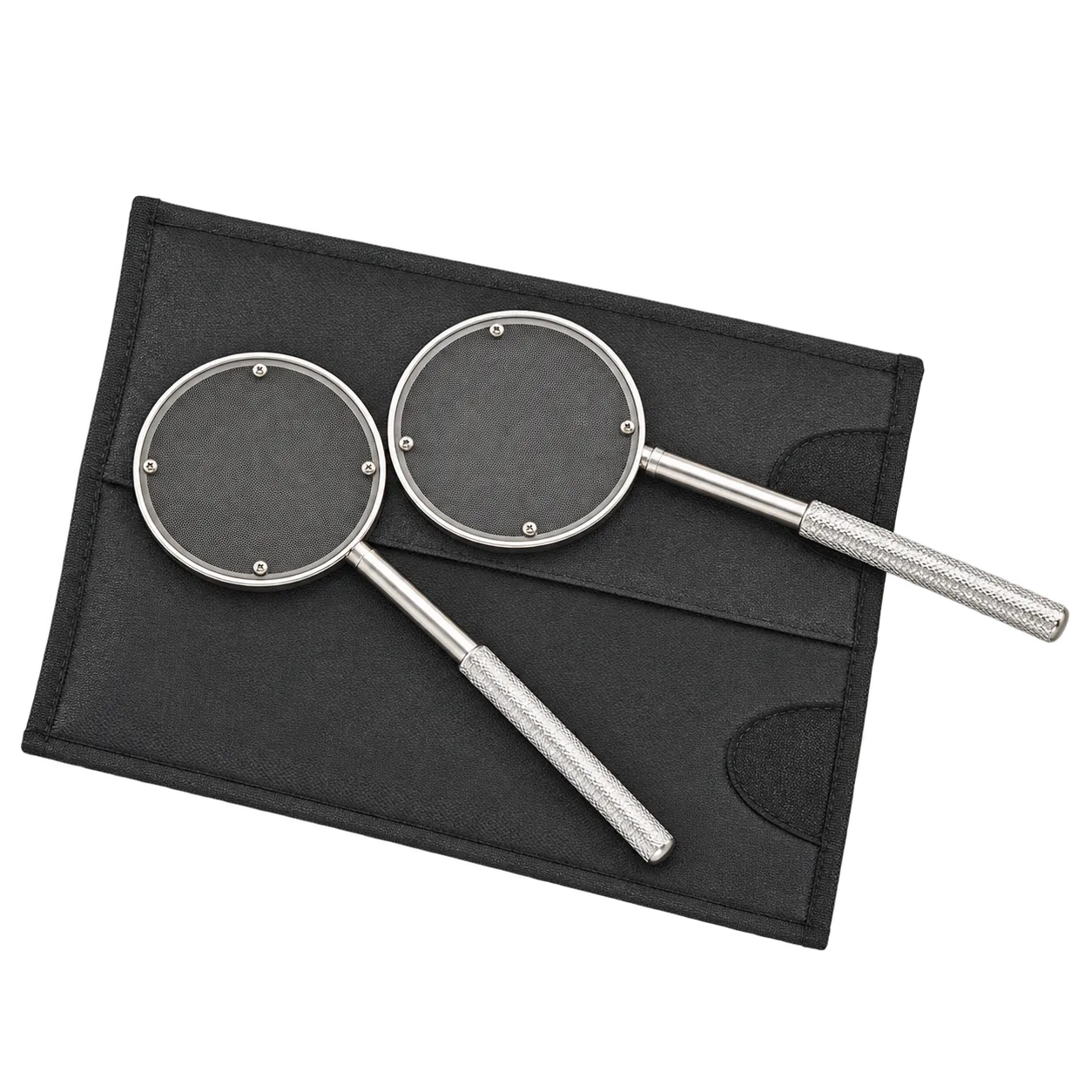
Subjective refraction with a trial frame is the core use. After retinoscopy or autorefraction gives a starting correction, the crossed cylinder refines the axis first and then the power of any astigmatic element, with the patient comparing two views each time.
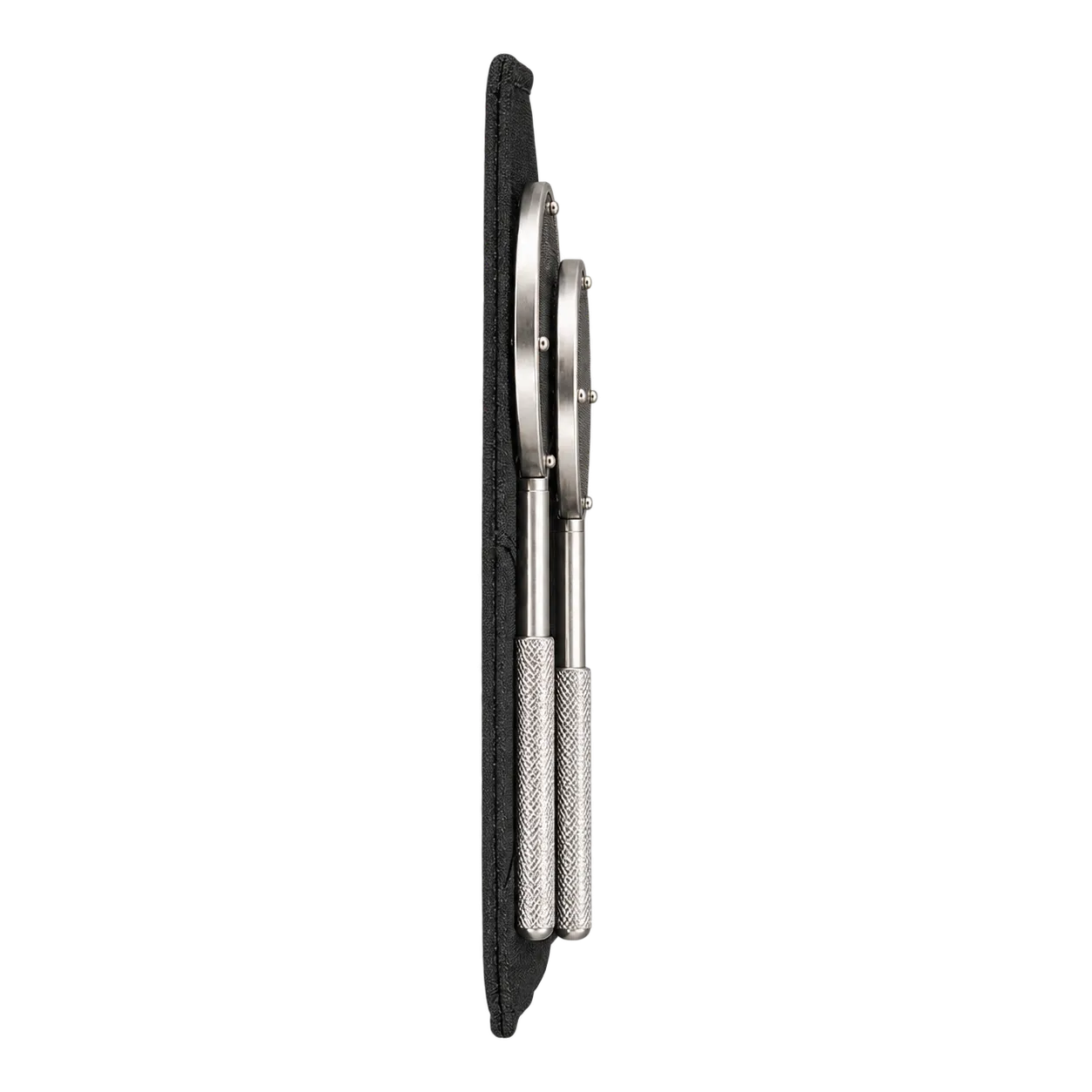
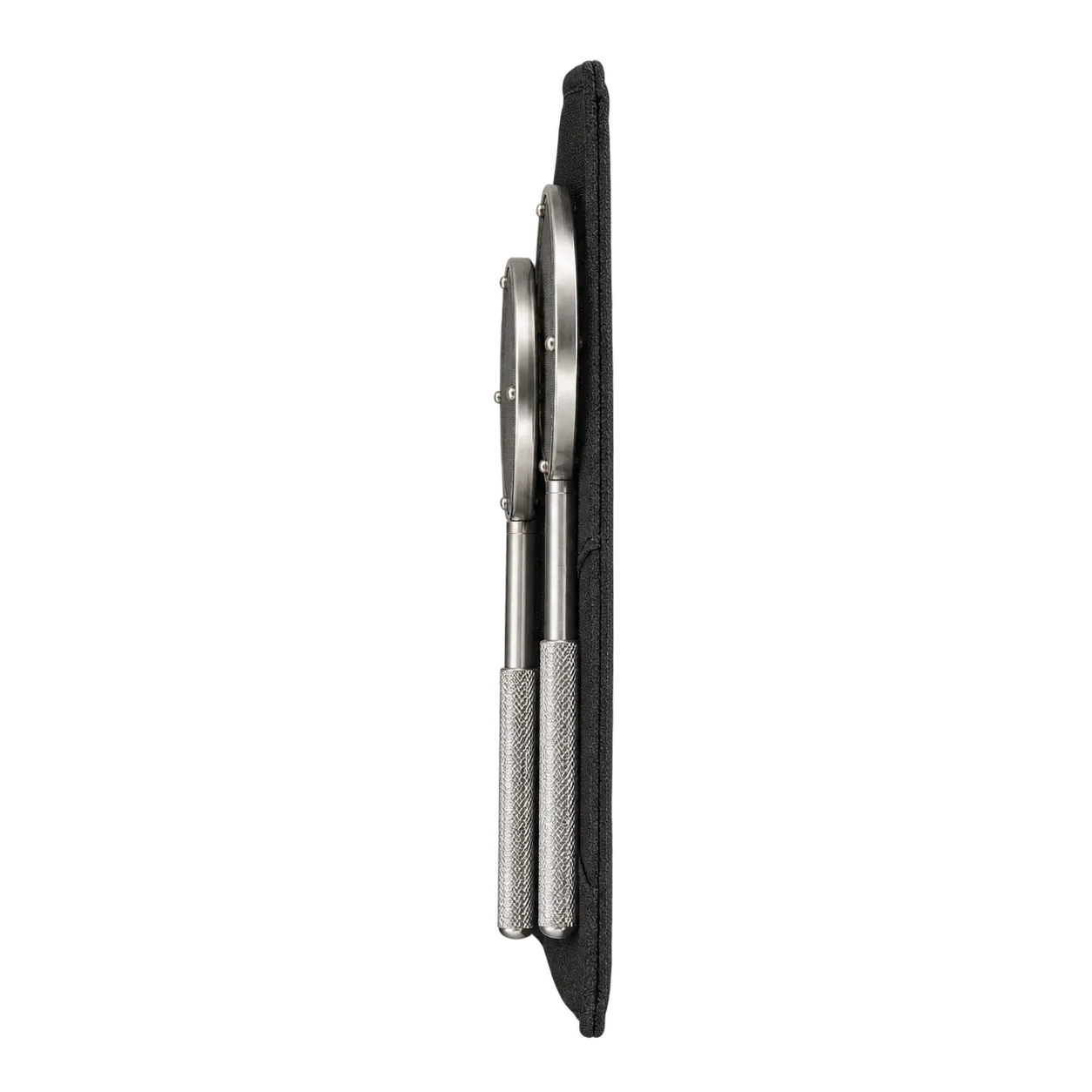
Domiciliary optometry relies on trial frames because a phoropter cannot be taken into a patient's home or care home. A handheld pair in a leather case travels easily and gives the same refinement method at the bedside or in a chair.
Low vision clinics and patients with reduced acuity benefit from the ±0.50 D lens, since the larger blur difference is easier to judge when fine detail cannot be seen.
Paediatric refraction often uses a trial frame, which children tolerate well. A handheld crossed cylinder lets the clinician refine astigmatism without a phoropter in front of the child's face.
Hospital eye services use trial frame refraction after cataract surgery and in patients with irregular or high astigmatism, where trial frame refinement is common.
Teaching clinics use handheld crossed cylinders to teach the axis and power checks step by step, so students understand what a phoropter's built-in lens is doing.
Checking a phoropter result in a trial frame before prescribing can also use the JCC-1, confirming axis and power in a natural viewing position.
The JCC-1 is less suited to clinics that refract only at the phoropter, where a built-in crossed cylinder is already fitted. Any declaration of conformity is issued by the manufacturer and provided by the seller.