
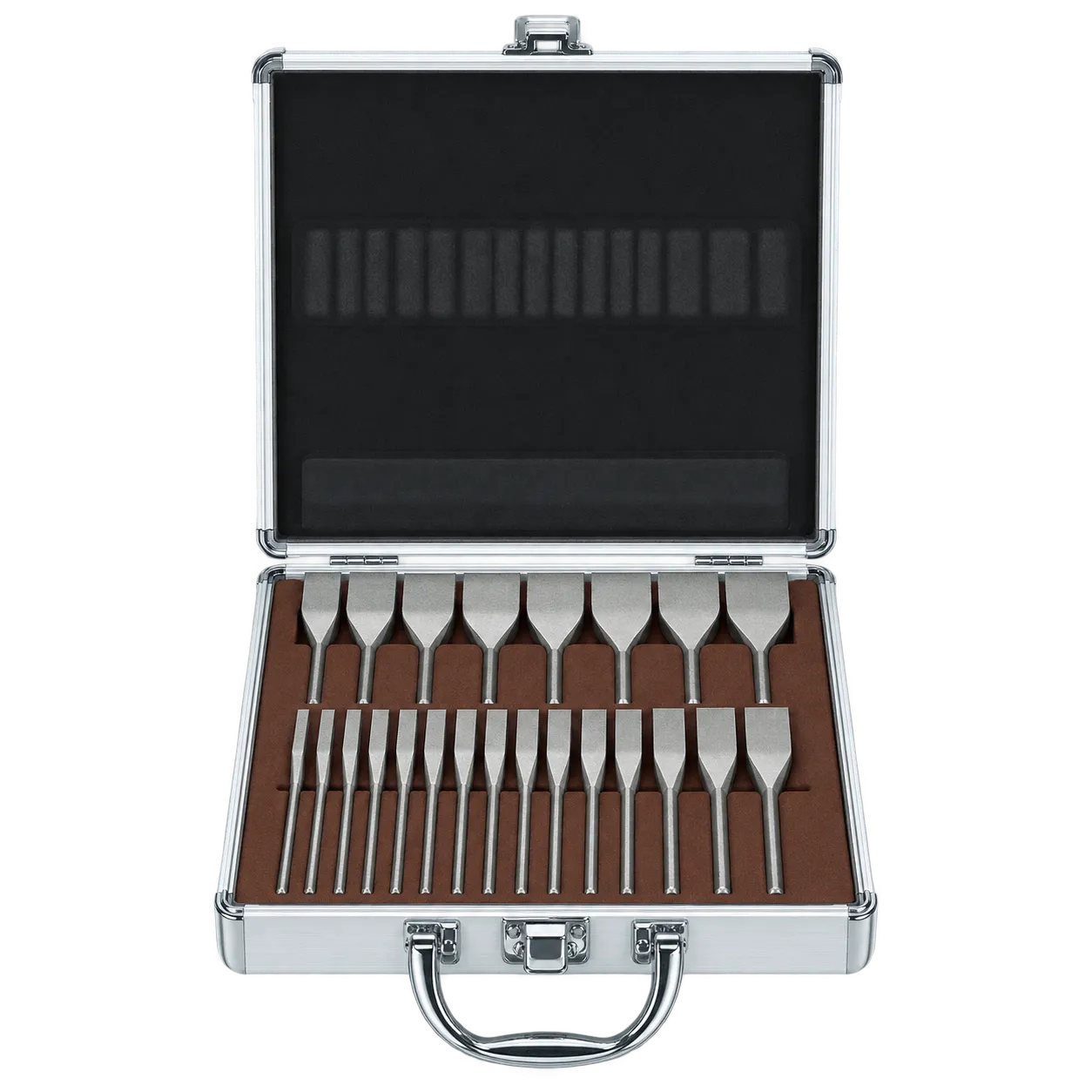
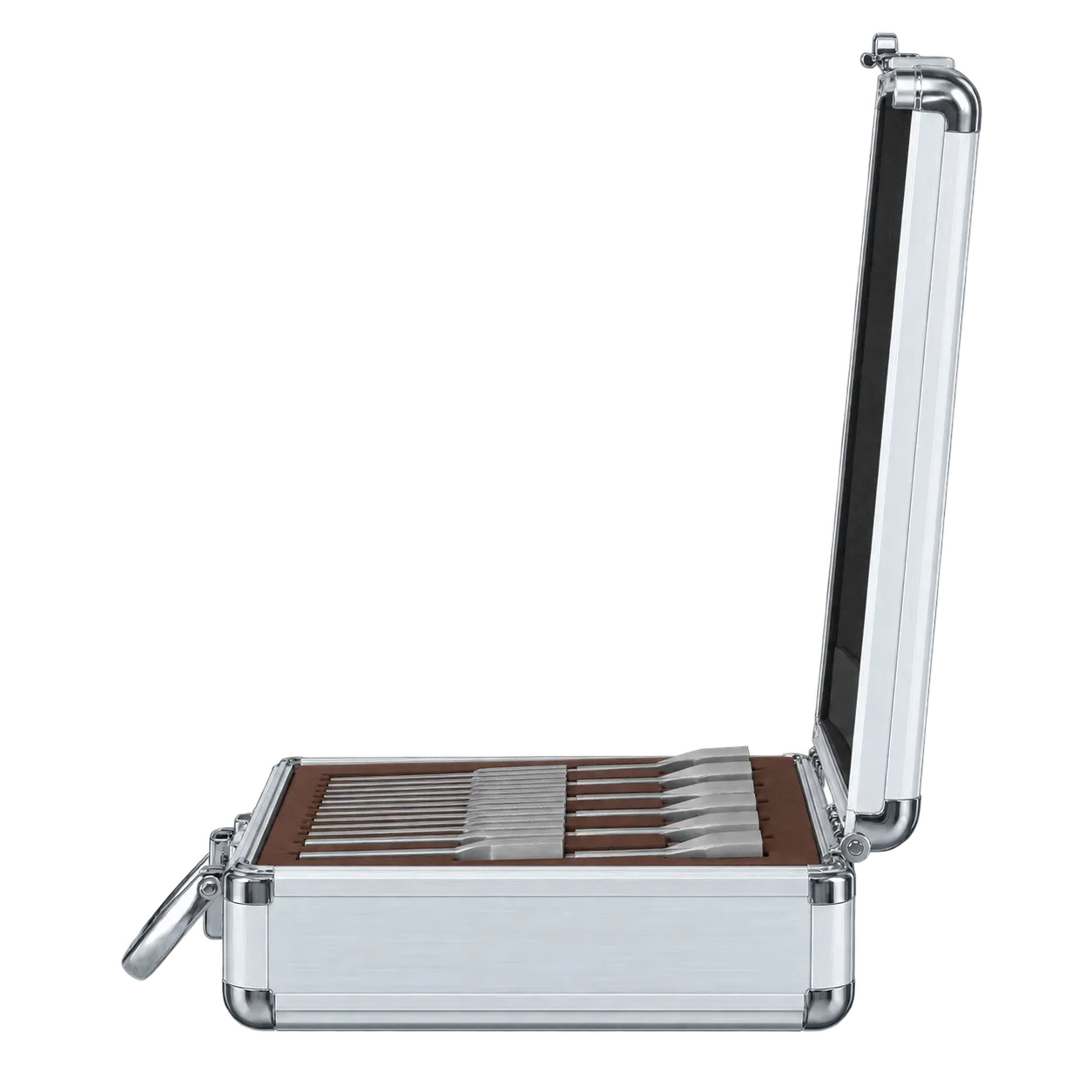
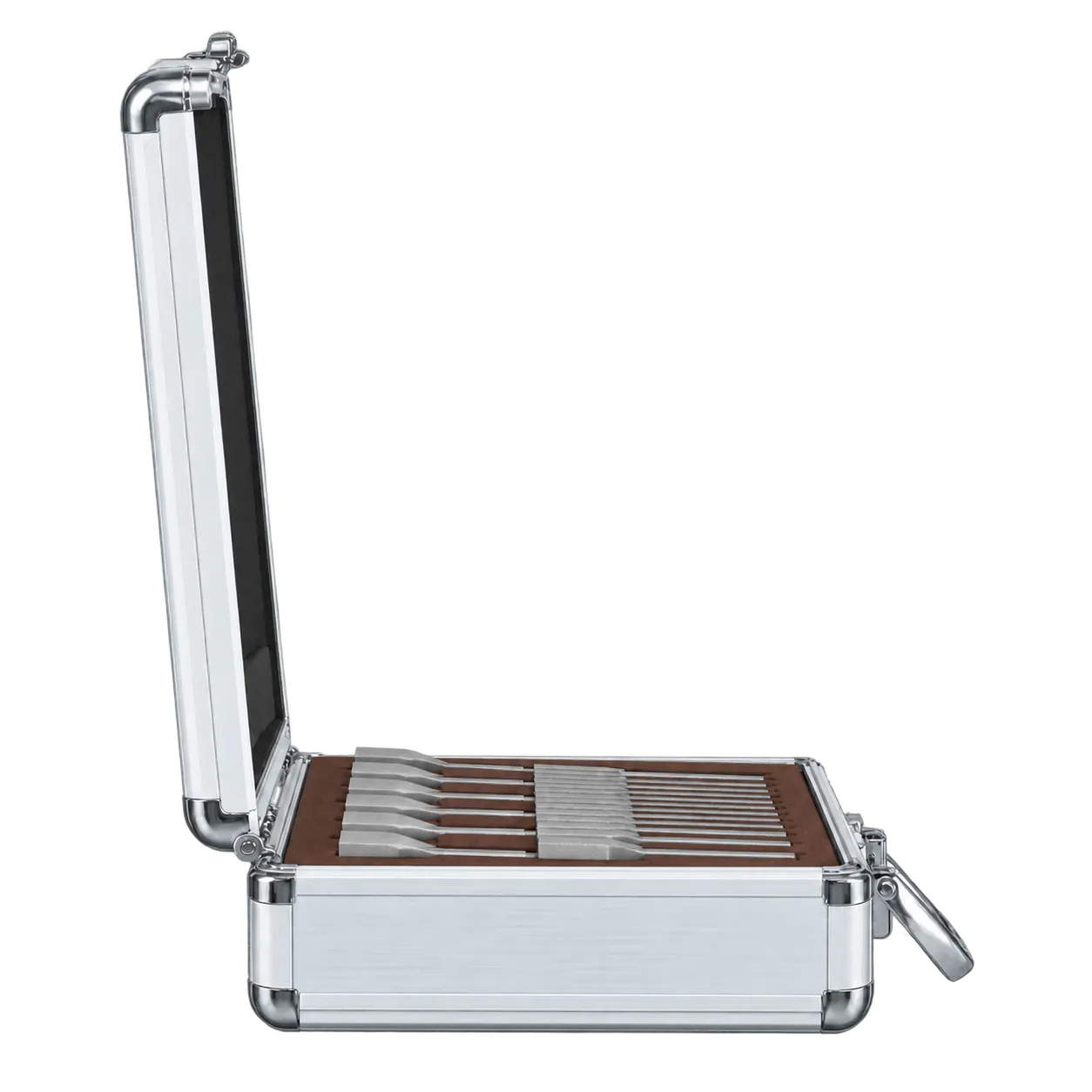
Orthoptic departments measure strabismus with the prism cover test many times a day. A prism on a handle can be lifted, oriented and exchanged quickly while the other hand works the occluder, and the faces stay free of fingerprints that blur the fixation target.
Paediatric clinics benefit from the handle when measuring young children, because the examiner's fingers stay back from the child's face and a prism can be swapped in a moment when fixation wanders. Large infantile esotropias and sensory exotropias are covered by single prisms up to 50 Δ.
Strabismus surgery planning depends on the largest reliable angle at distance and near. One prism held in its confirmed calibration position avoids the errors of stacking, and a stick helps the examiner keep that position steady.
Neuro-ophthalmology services measuring acquired diplopia can use the low values, ½ to 10 Δ in single steps, for small vertical deviations and prism trials, with the red filter helping patients identify each image.
Busy clinics with shared equipment gain from prisms that can be cleaned without handling the optical faces, supporting a simple wipe-down routine between patients.
Optometry practices with a binocular vision interest can use the handled low powers for fusional reserves and prism trials.
The set is less suited to clinics that prefer a single prism bar, and to buyers who need documented calibration or stick fixing without first confirming them. Institutional buyers commonly ask for evidence of conformity. The conformity documentation those procurement routes require is issued by the manufacturer and provided by the seller.