
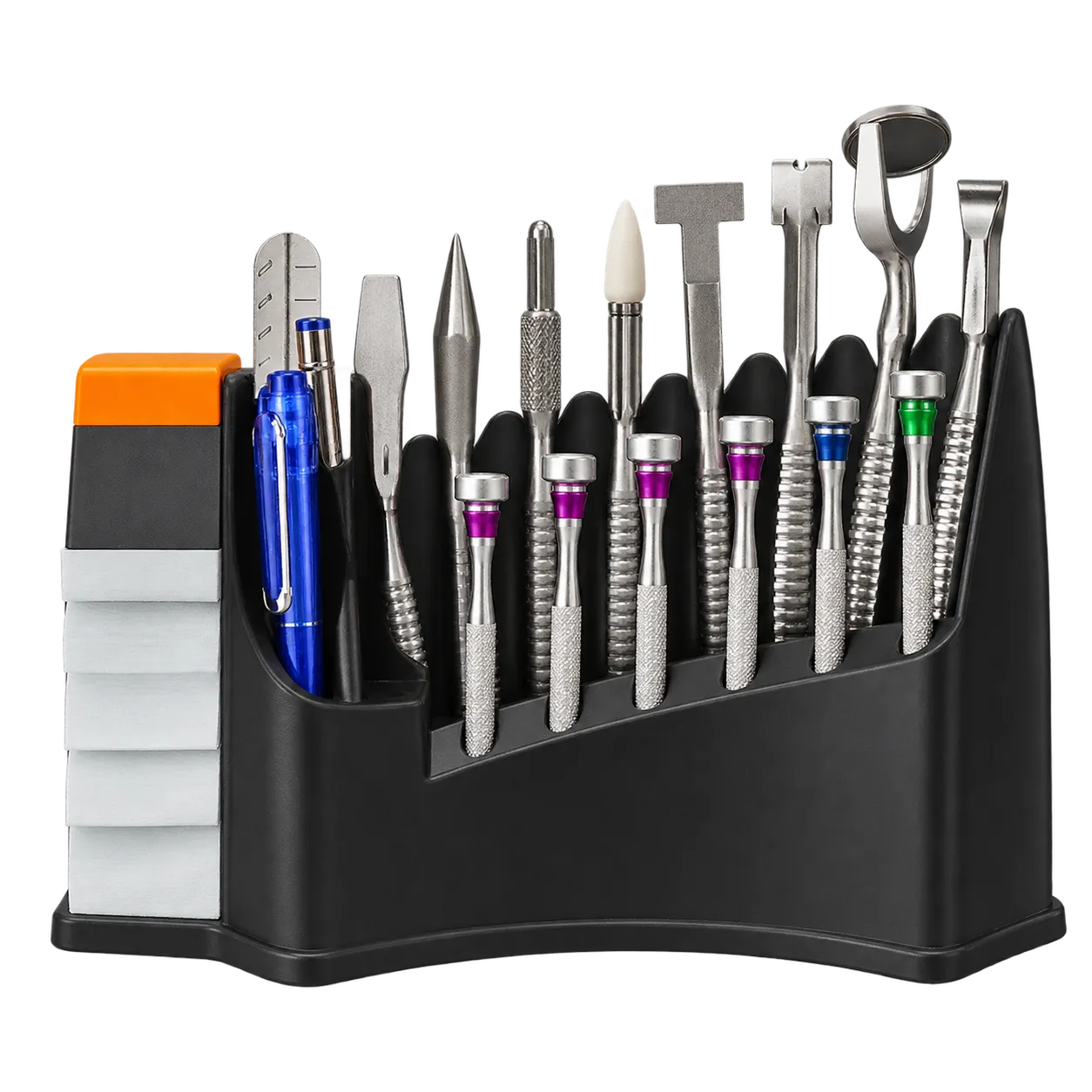
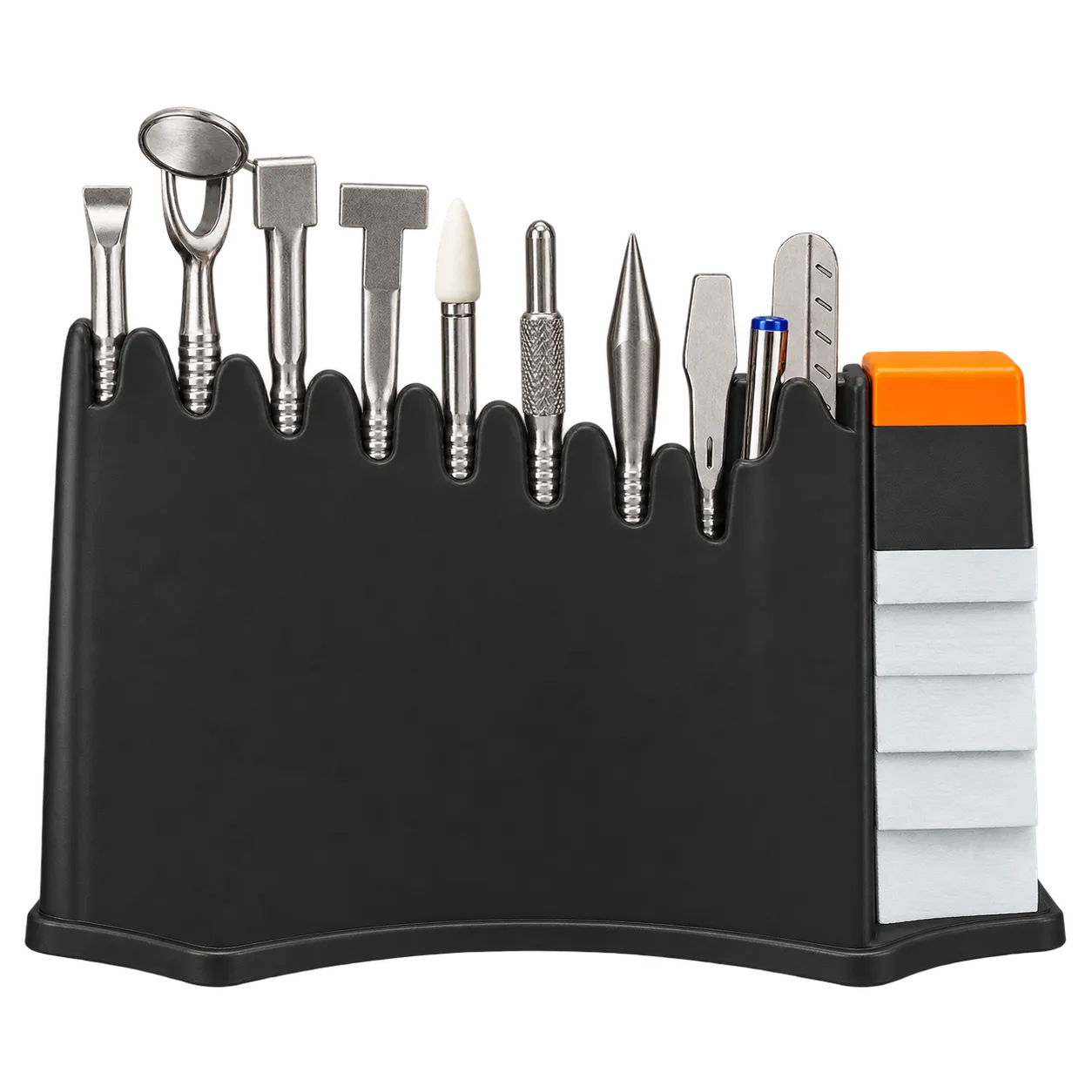
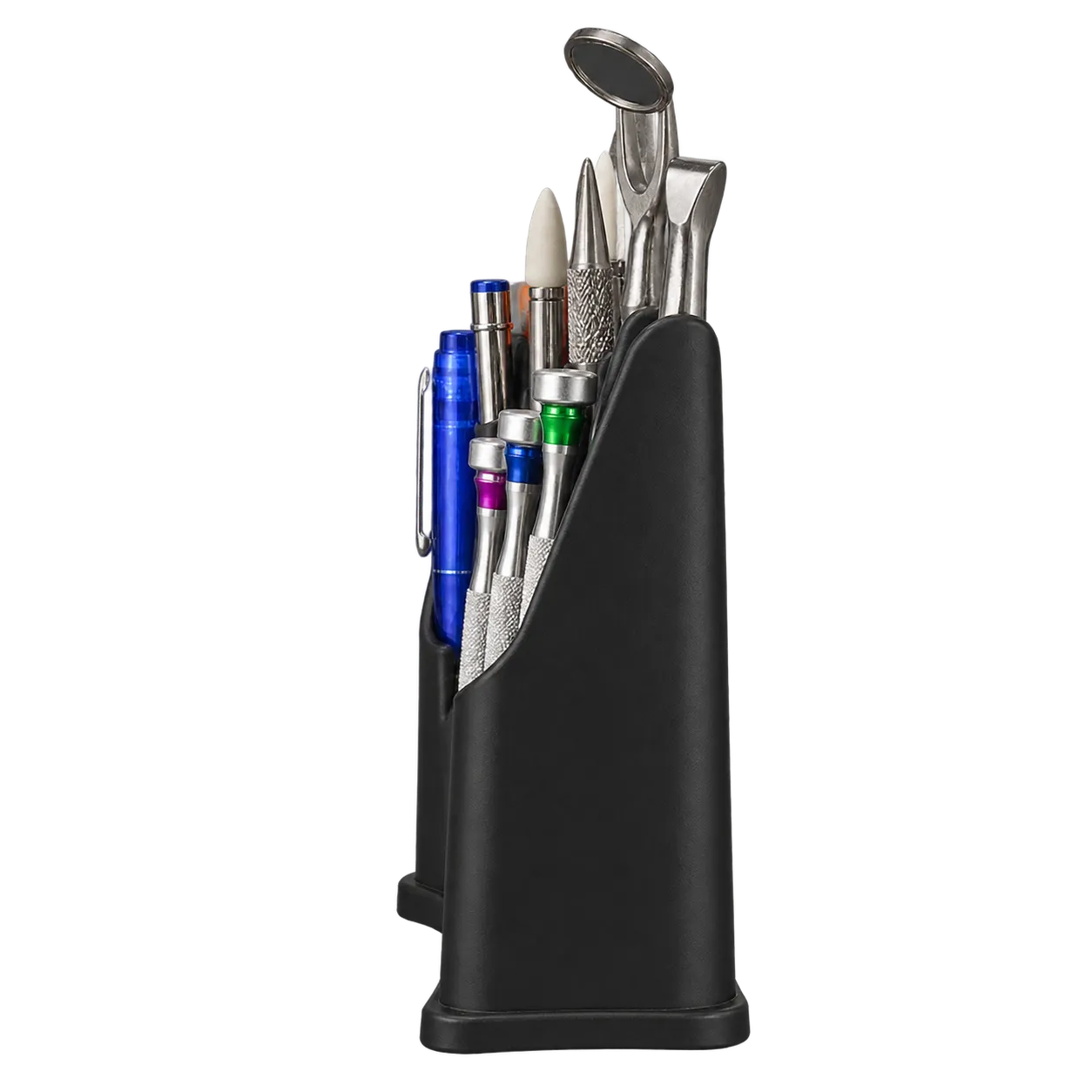
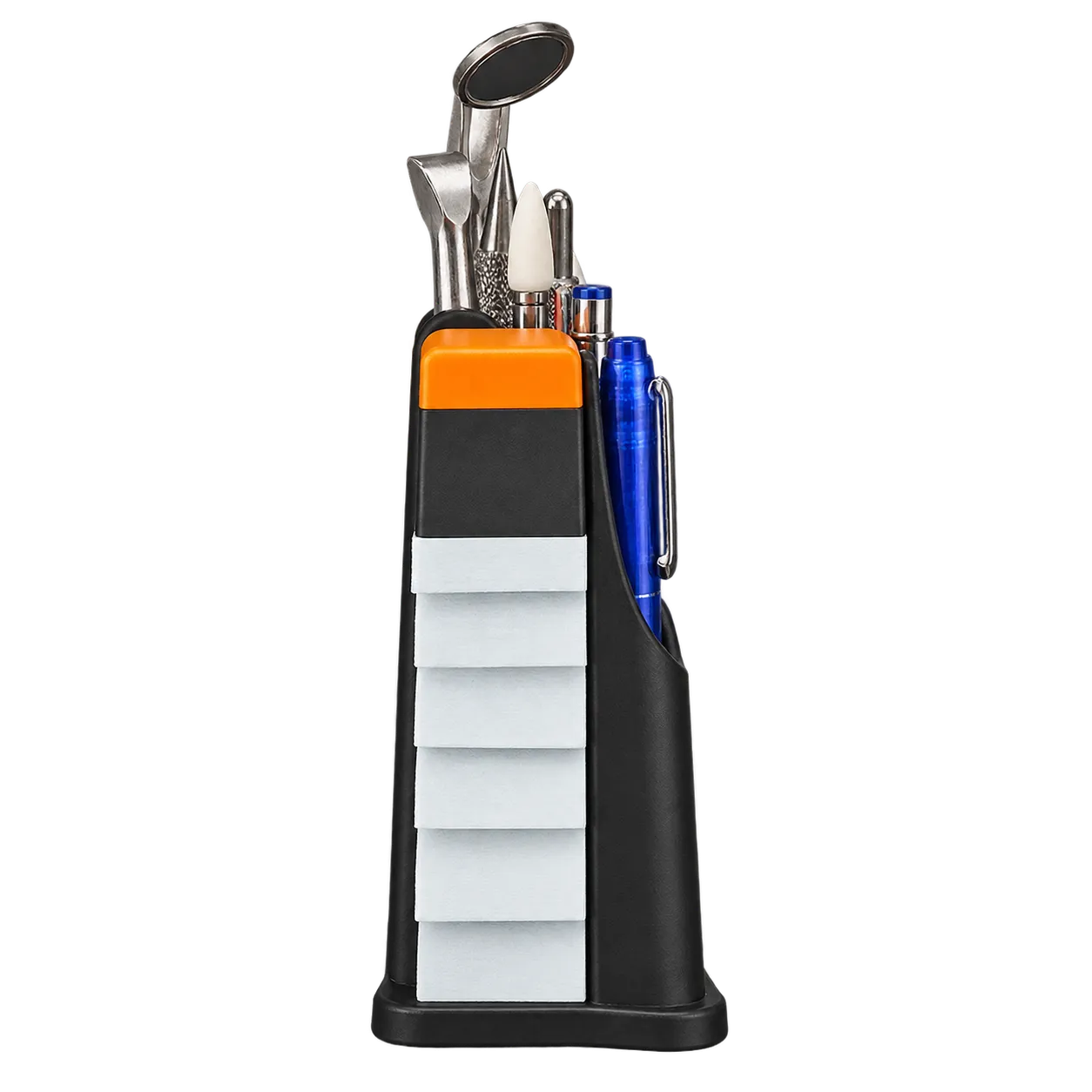
Workshops that handle a steady flow of adjustments and repairs are the clearest fit. With every tool in a fixed slot, a technician can move from frame work with pliers to screw and nut work with drivers, then return each tool to the same place before the next job.
Dispensing desks with limited space can use a long, narrow rack along the back edge of the desk, where the tools stand upright within reach of the dispenser and in view of the customer.
Collection appointments often end with final adjustments. Pliers for fitting and drivers for tightening screws sit in one row, so both are ready when the frame is put on for the last check.
Practices with several staff sharing tools benefit from fixed slots. A filled row at the end of the day shows that every tool is back, and an empty slot shows what needs finding.
Training programmes can use the row as a teaching order, taking a new optical assistant through each tool from one end to the other once the seller has named each plier.
Groups with several branches can place the same rack at each site, so staff find each tool in the same slot wherever they work.
The set is less suited to buyers who need each plier named before ordering, or who need socket sizes beyond those listed. Buyers needing documentation should request it, because any declaration of conformity or test report is issued by the manufacturer and provided by the seller.