

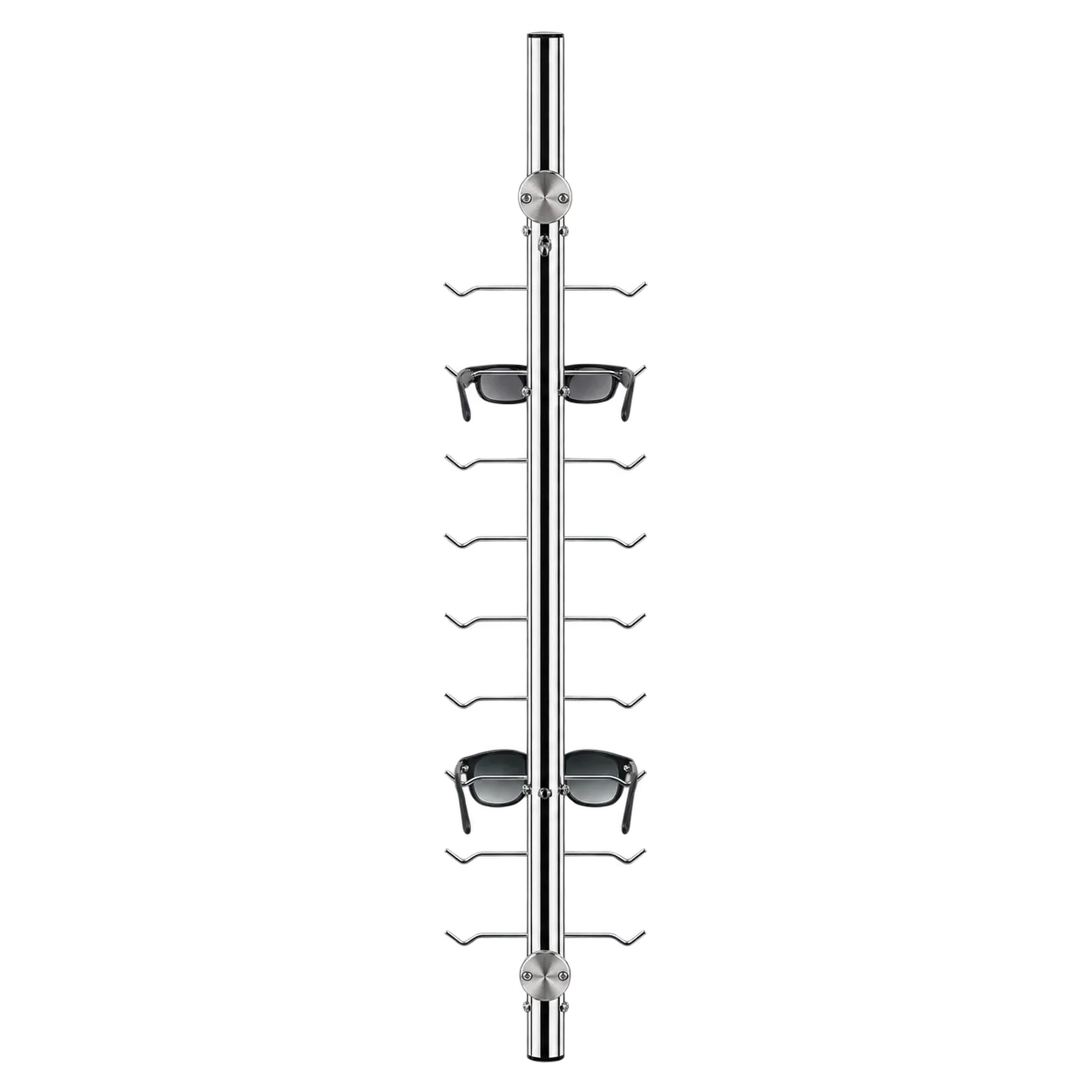
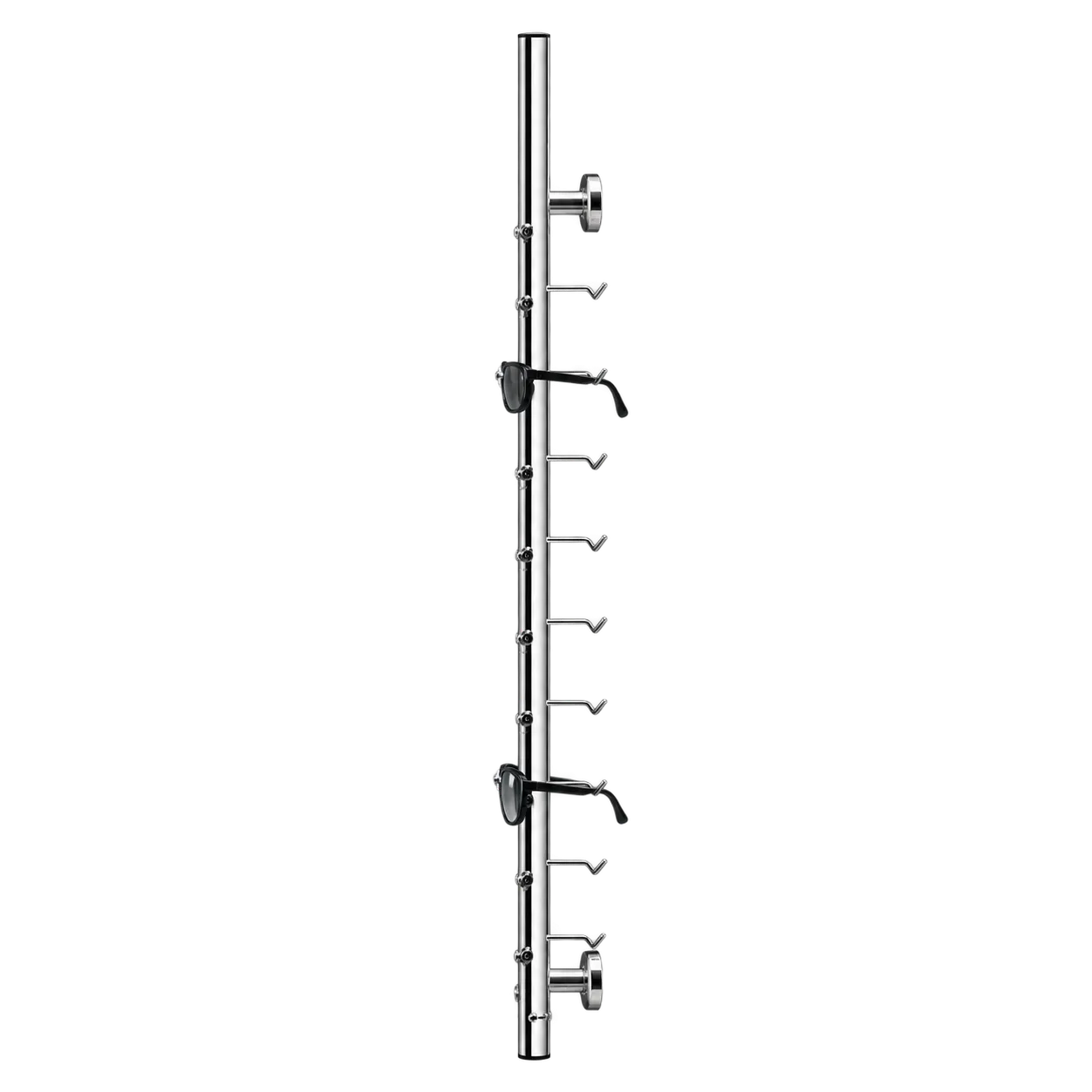

The AA-14 serves the dispensing side of eye care, where frames are chosen, tried and fitted: independent opticians, multiple-practice groups, sunglass specialists and eyewear concessions in department stores. Its place is the wall where staff work with customers face to face. A dispensing optician can stand at the rod, open the guard, hand down two or three frames for comparison, then measure and advise without leaving the customer. The lock keeps the rest of the column in place while attention is on one person.
The case for locking eyewear rests on what is lost without it, and on what locking costs in custom. The British Retail Consortium's survey published in March 2025 counted about 20 million thefts from UK retailers in a year, at a cost of £2.2bn. Optical goods attract organised theft as well. Loss Prevention Magazine reported a Canadian ring that took at least US$64,000 of confirmed goods from optical retailers between 2003 and 2005, including premium sunglasses. Friction is the counterweight. Numerator's 2024 survey of more than 5,000 US shoppers found 27% would switch store or give up when goods were locked, though 62% said they usually wait for help. A locked rod suits floors where help arrives quickly.
Wall layout decides how well the routine flows. The Equality Act 2010 expects service providers to make reasonable adjustments, and BS 8300-2 gives reach guidance for wheelchair users, which argues for some stock at seated height. Large groups usually buy shop fittings through a central specification or tender. The conformity documentation those procurement routes require is issued by the manufacturer and shared by the enquiry team.