
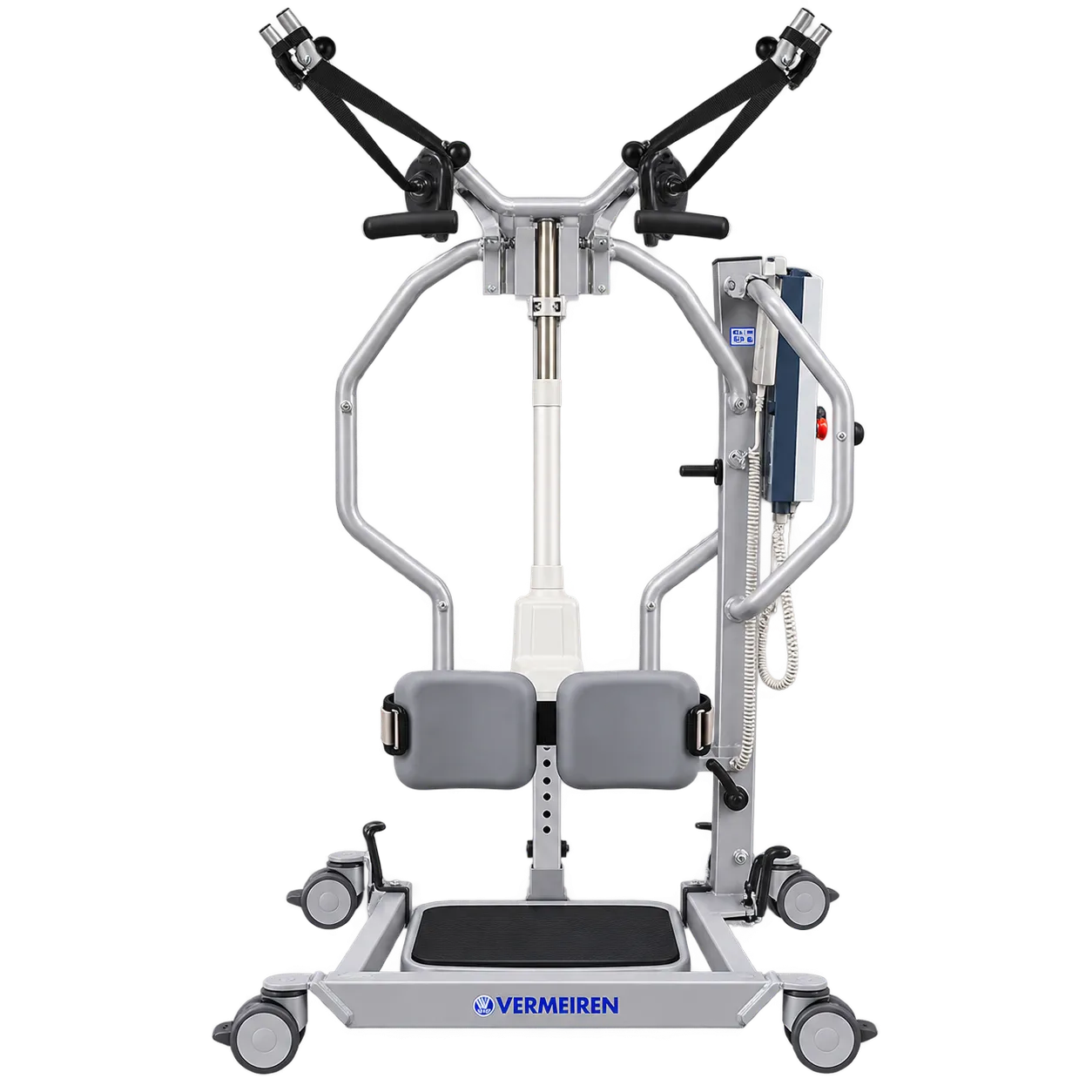
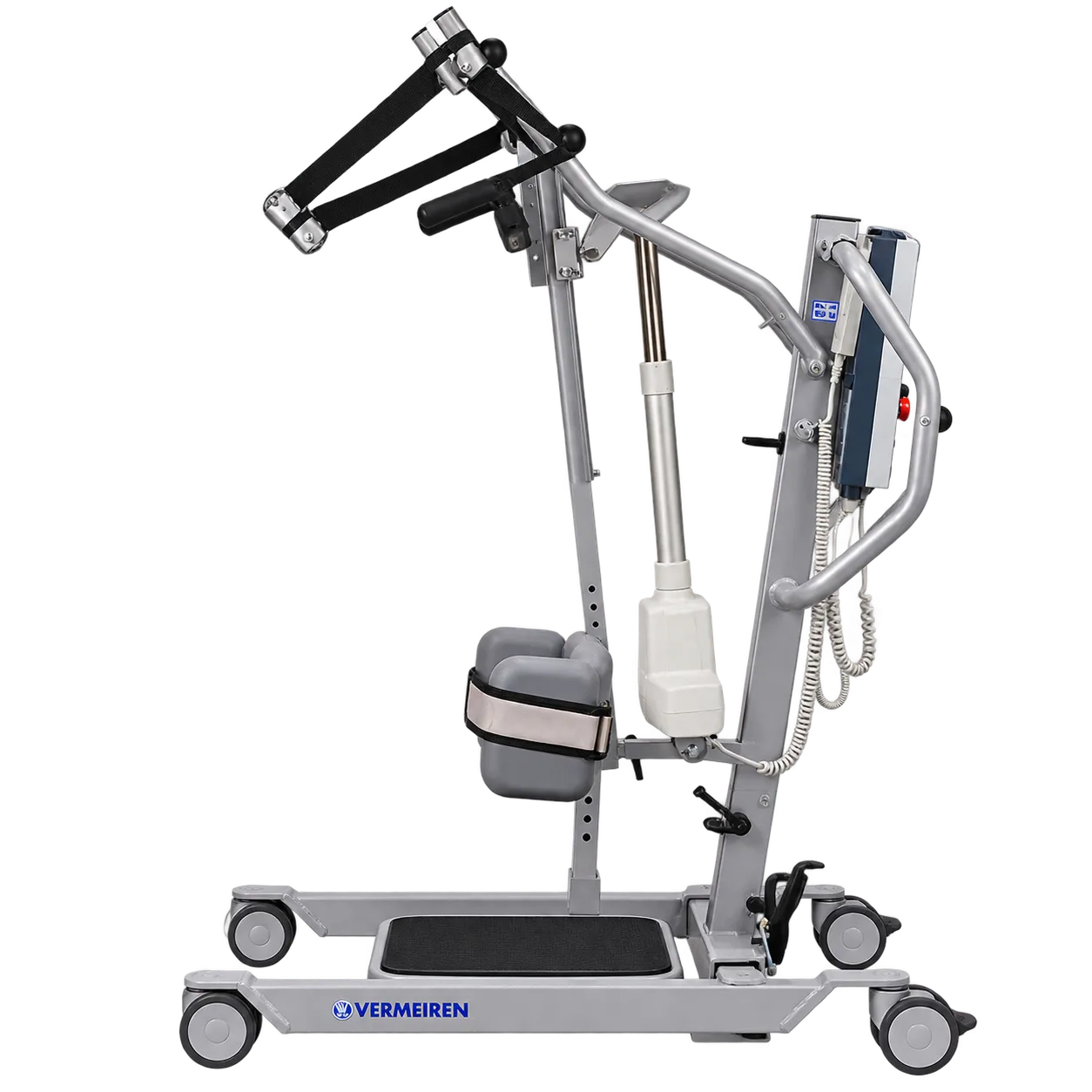
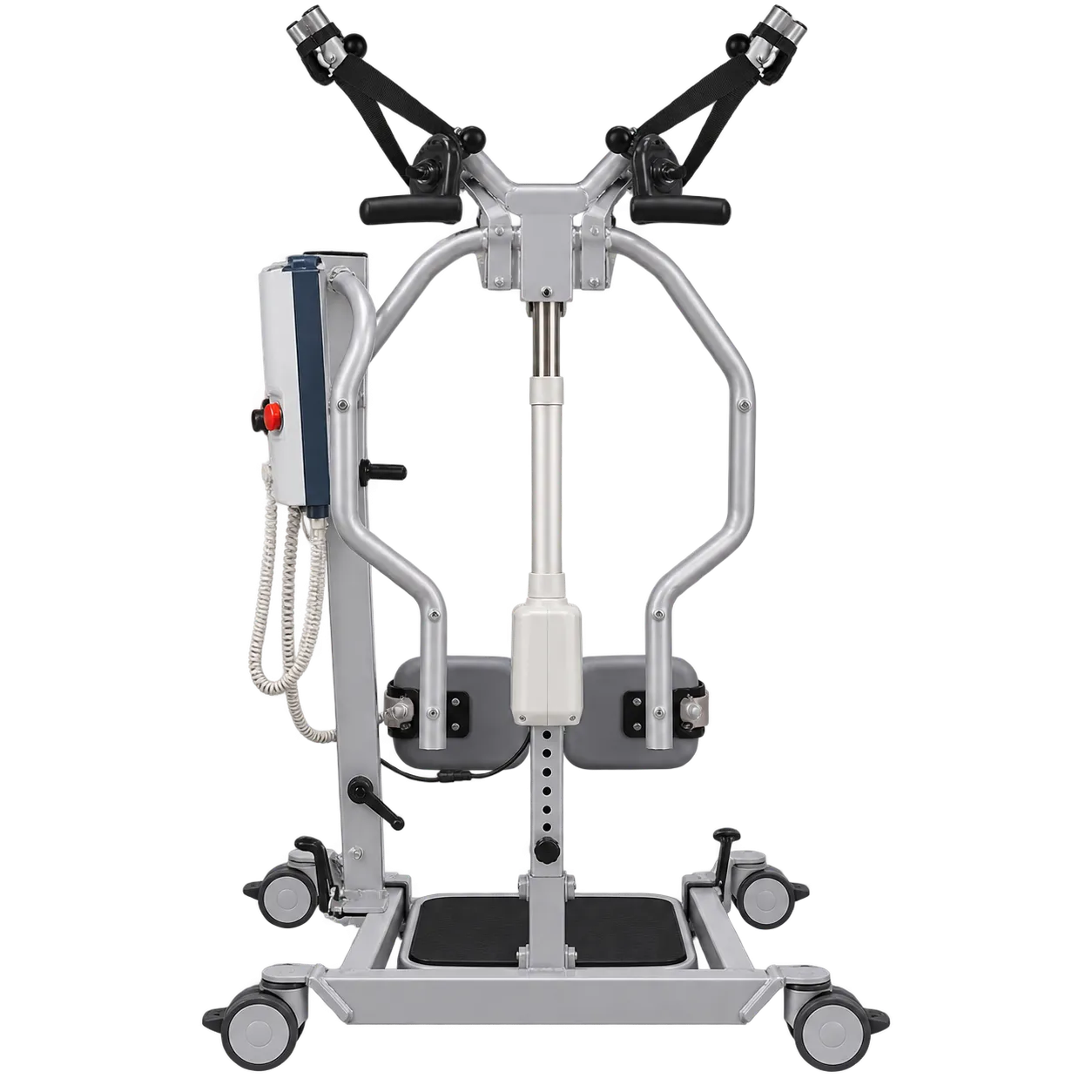
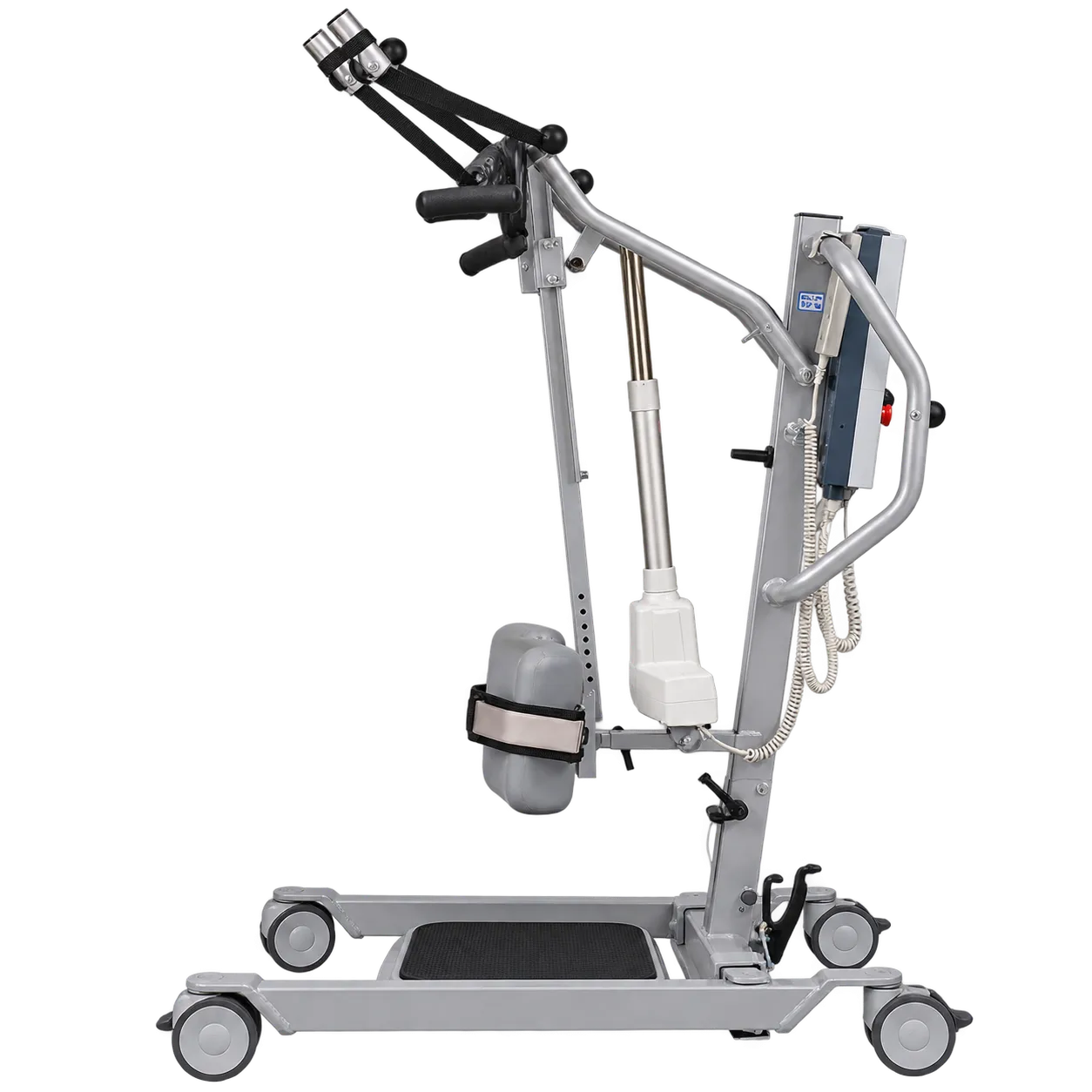
Care homes, nursing homes, hospital wards, rehabilitation units, and home care services use the Albatros II for seated transfers that bring the person up to standing. Typical moves run from a wheelchair to a care bed, from a bed to a bathroom, or back again, with trained staff operating the hoist and an attendant present throughout. Vermeiren lists older people and people living with paralysis, limb loss or limb deficiency, stiff or damaged joints, circulatory problems or physical wasting as its users.
Each transfer starts with the person secured at four points. Foot trays hold the feet on the footplate, while the leg pad meets the lower legs at a height and depth chosen for their build, its strap keeping them in contact. A hip belt steadies the hips and lower back. The chest support, set at 1045 or 1200 mm, takes the upper body with two straps, and the vest hooks to the arm before the person grips the handles and the arm begins to rise.
For staff, the safeguards sit within reach of the transfer. The emergency stop on the control box halts every movement, and manual emergency lowering brings the person down if power is lost. Braked rear castors hold the base still when it is parked, and the battery indicator sounds with about two lifts left, leaving time to recharge before the next round.
Across a shift, the hoist suits repeated transfers for different people, because each support is reset by handle, lever, pin or strap. Vermeiren rates it for indoor and outdoor use, and when it moves between sites, the column tilts forward to 500 mm high.