

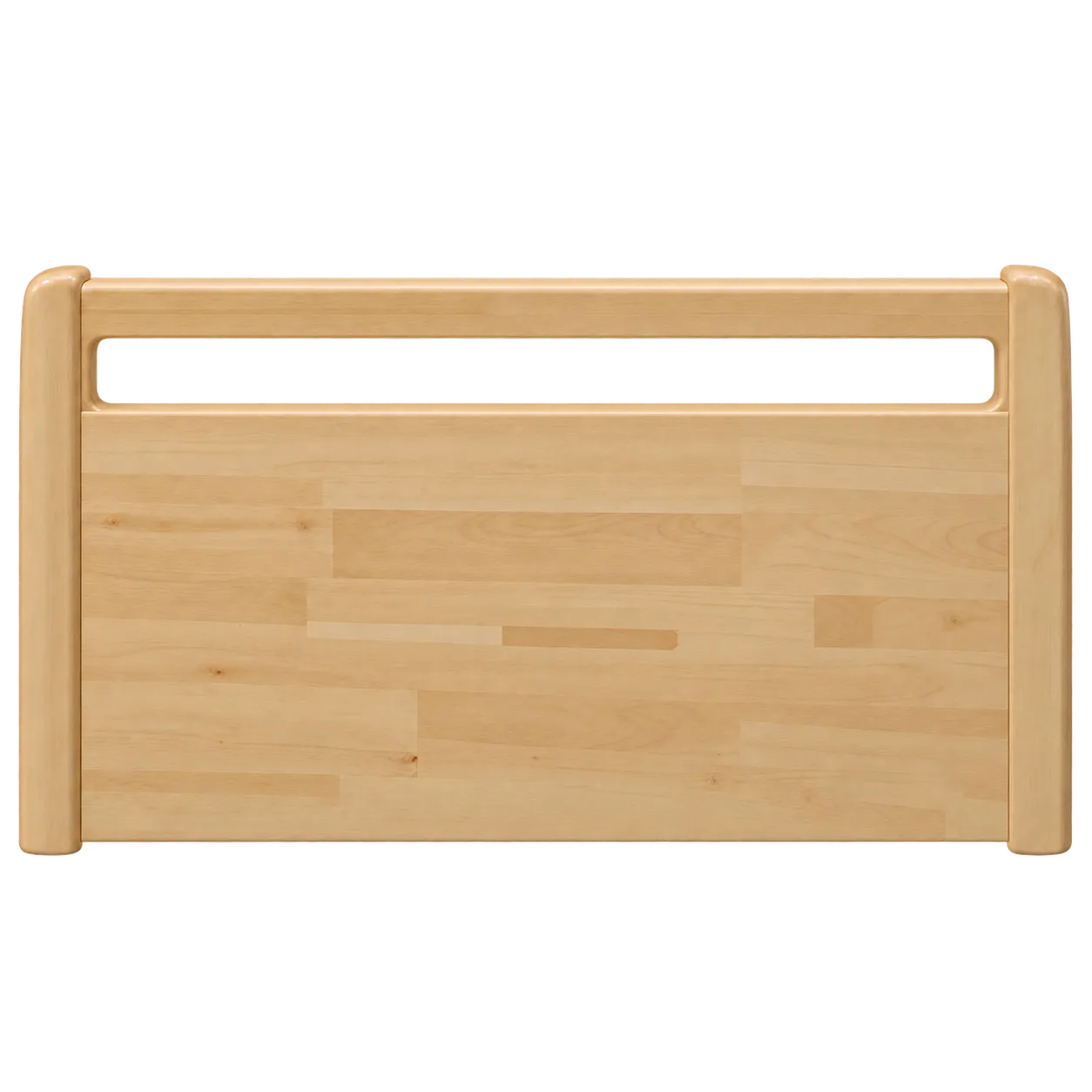


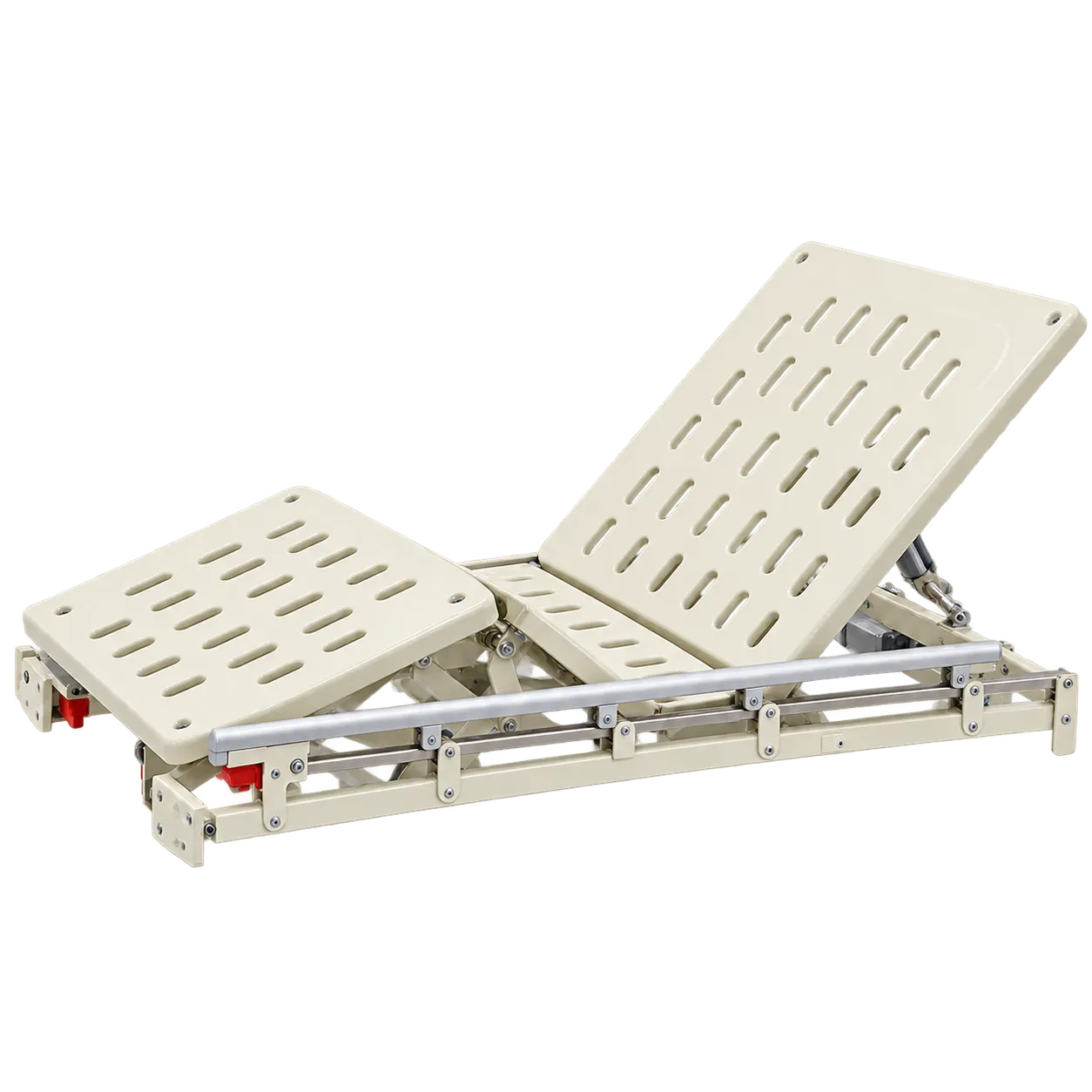


The WRA IV J suits people who can stand with or without help and need a bed that supports both getting up and being cared for. Older adults at home, care home residents, people in rehabilitation working on mobility and hospice patients who still get up all fit. Its case is mechanism and effect. One height range, used deliberately, makes standing easier for the patient and care easier for the carer.
The low end is about the patient. Rising from sitting is easier when the feet are flat and the knees bent near a right angle, much as from a chair. At 460 mm many adults can reach that position. The systematic review by Fray, Hignett and Gyi in 2022 found that ultra-low beds can stop people standing without a grab rail once the height drops below about 80% of lower leg length. They concluded that bed height has to be managed alongside rails and furniture, and this bed's lowest setting sits on the standing side of that line.
The high end is about the carer. In 2022, Alperovitch-Najenson and colleagues found that participants doing passive manual tasks chose bed heights above 715 mm with less exertion, and recommended adjusting the bed to each carer's knuckle or wrist height. At 760 mm the WRA IV J reaches into that zone, and HSE guidance under the Manual Handling Operations Regulations 1992 links electric beds to lower handling risk. The routine matters as much as the range. Lower the bed before standing, raise it for care, and lower it again afterwards. Patients at high risk of falls need further measures, because 460 mm is not a floor-line height.
Every route to purchase, from NHS procurement routes to community equipment services and buyers abroad, needs the device class and a declaration of conformity. The conformity documentation those procurement routes require is issued by the manufacturer and shared by the enquiry team.