

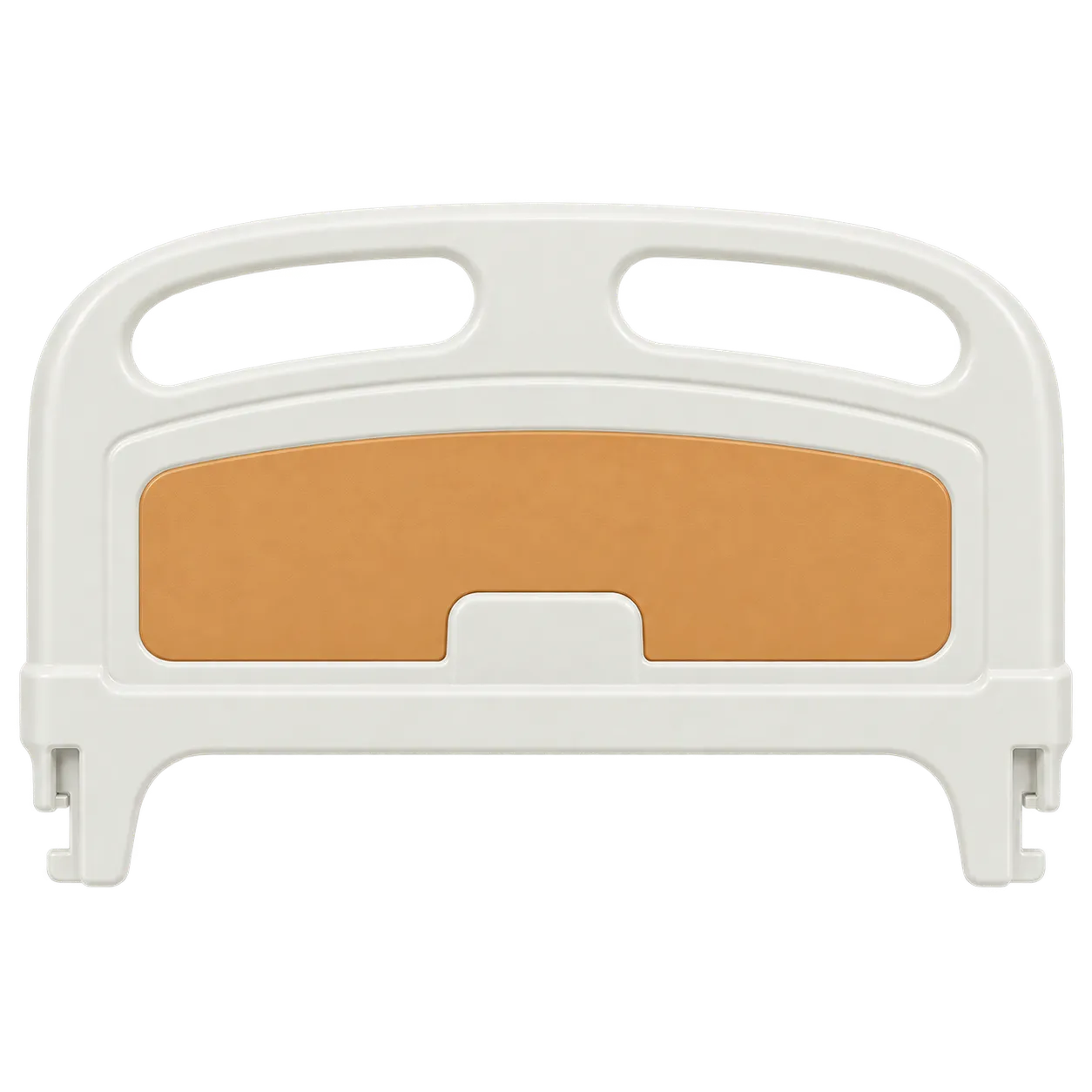
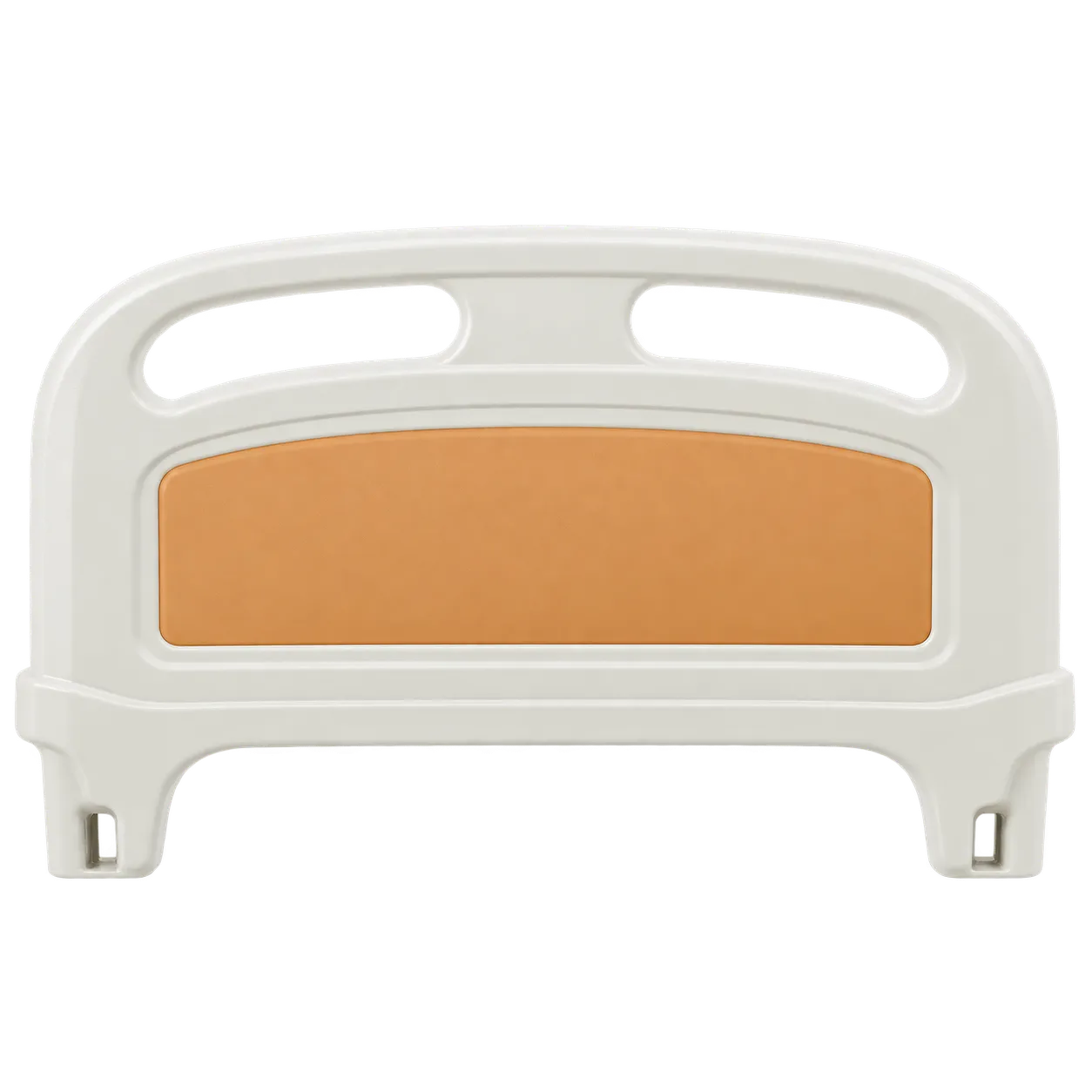
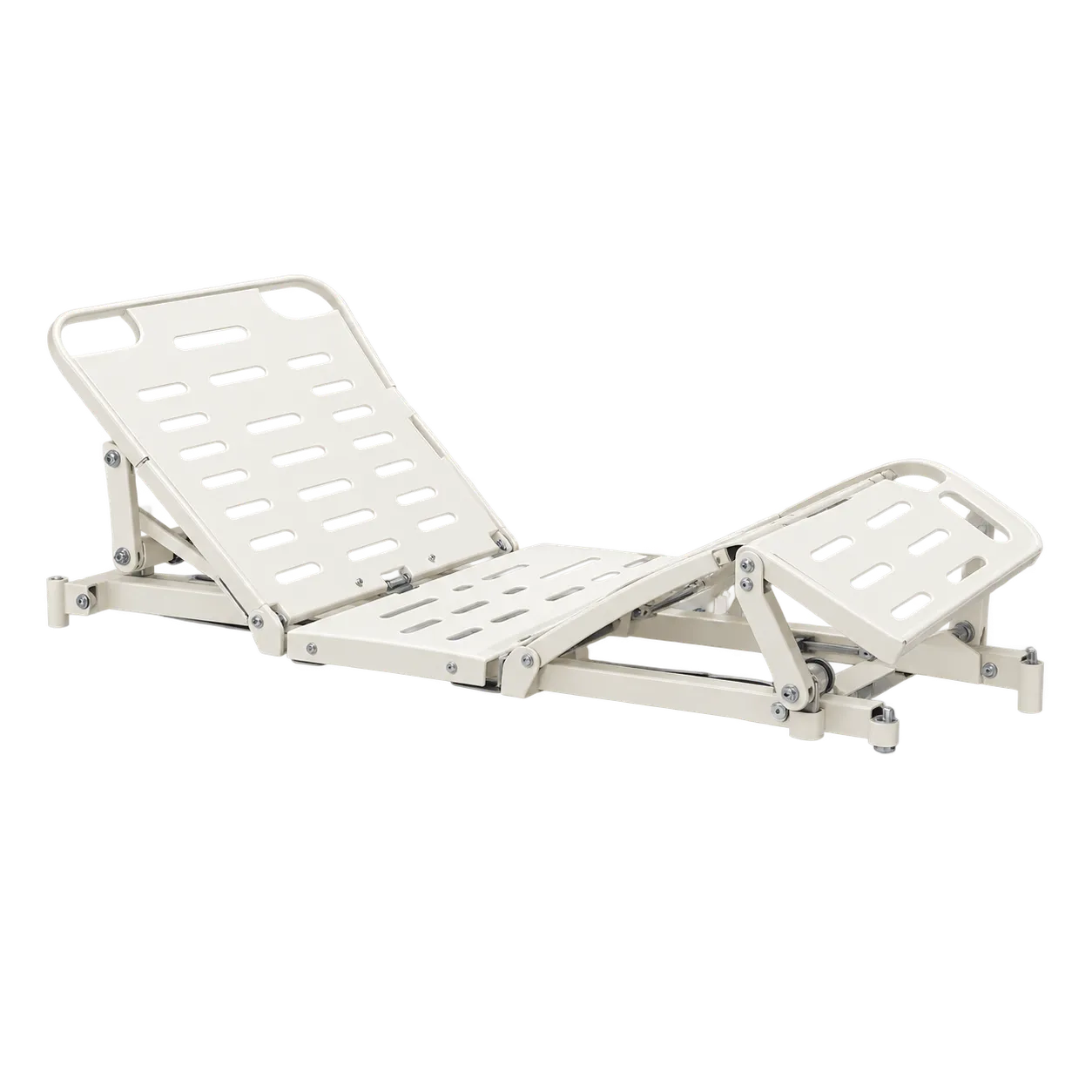
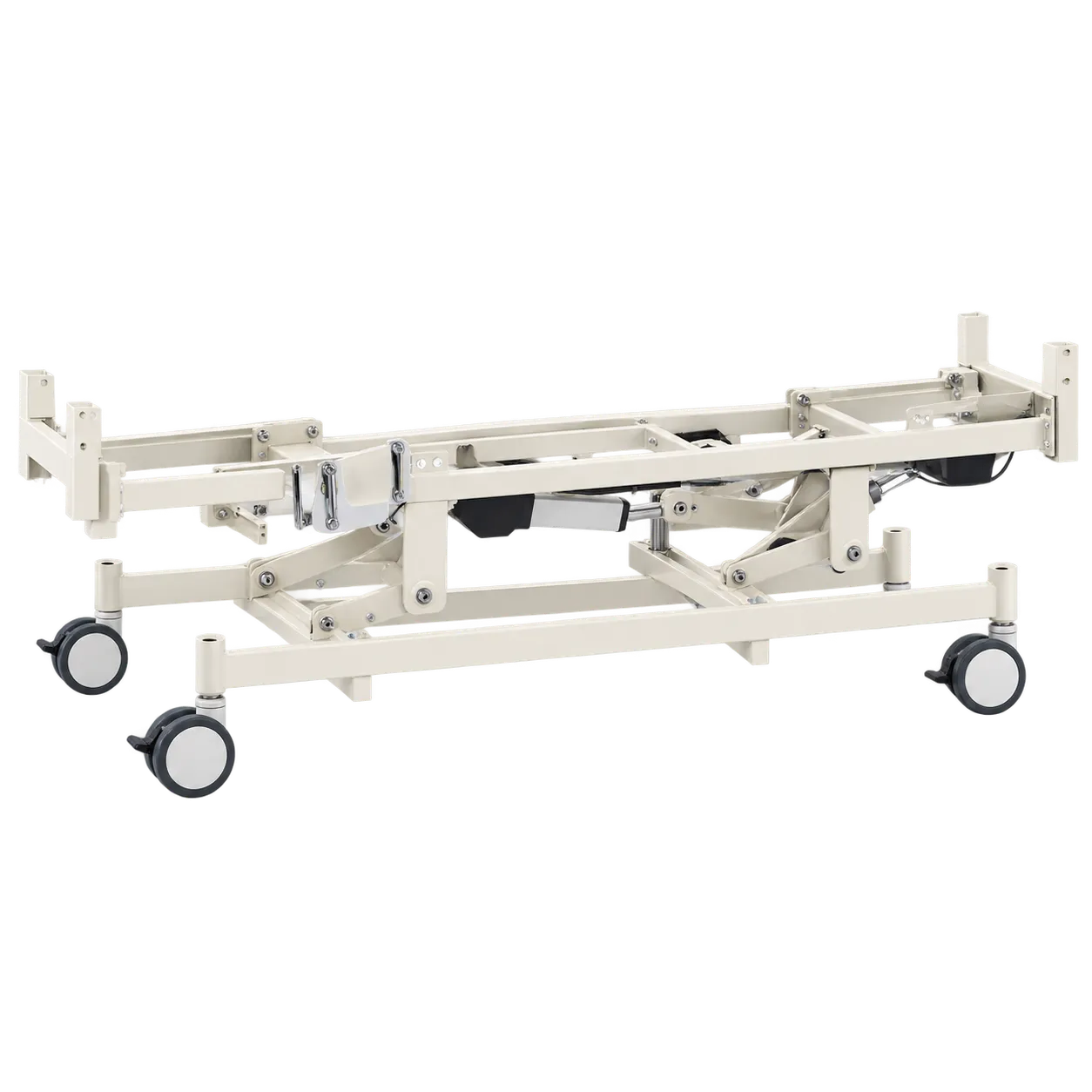
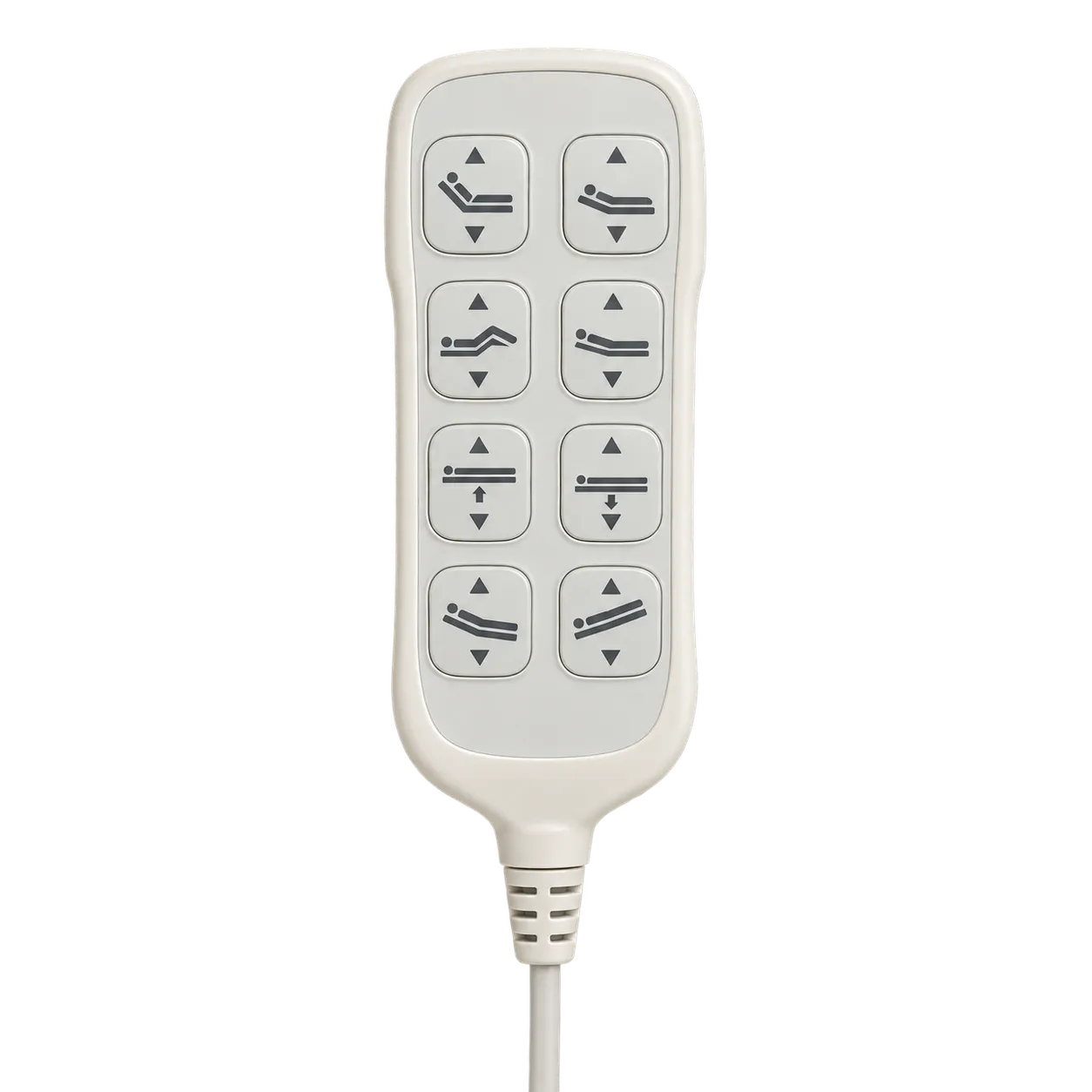
Homecare, residential care and general wards are where a three-function electric bed of this kind is most often used. From one handset, a person can be sat up with the knees supported, and the platform taken down to 430 mm for getting out or up to 780 mm for care.
The space beneath the bed is the part people forget. A crossed scissor linkage folds as the platform lowers, and the frame comes down towards the floor, so whatever is underneath, from a carer's foot to a pet, a child or a stool, can be caught. In a home, where family carers, visitors and animals share the room, that risk is higher than on a ward. The answer is a routine: look under, clear the floor, lower while watching the floor as well as the patient, and stop at once if anything appears. Commodes and footstools are best kept to one side, not beneath the frame.
Controls matter as much as the routine. A handset left within reach of a small child or a confused person can lower the bed unseen, so lockout, or keeping the handset out of reach, is part of the plan. Whether movement stops the instant the button is released is not published and should be confirmed.
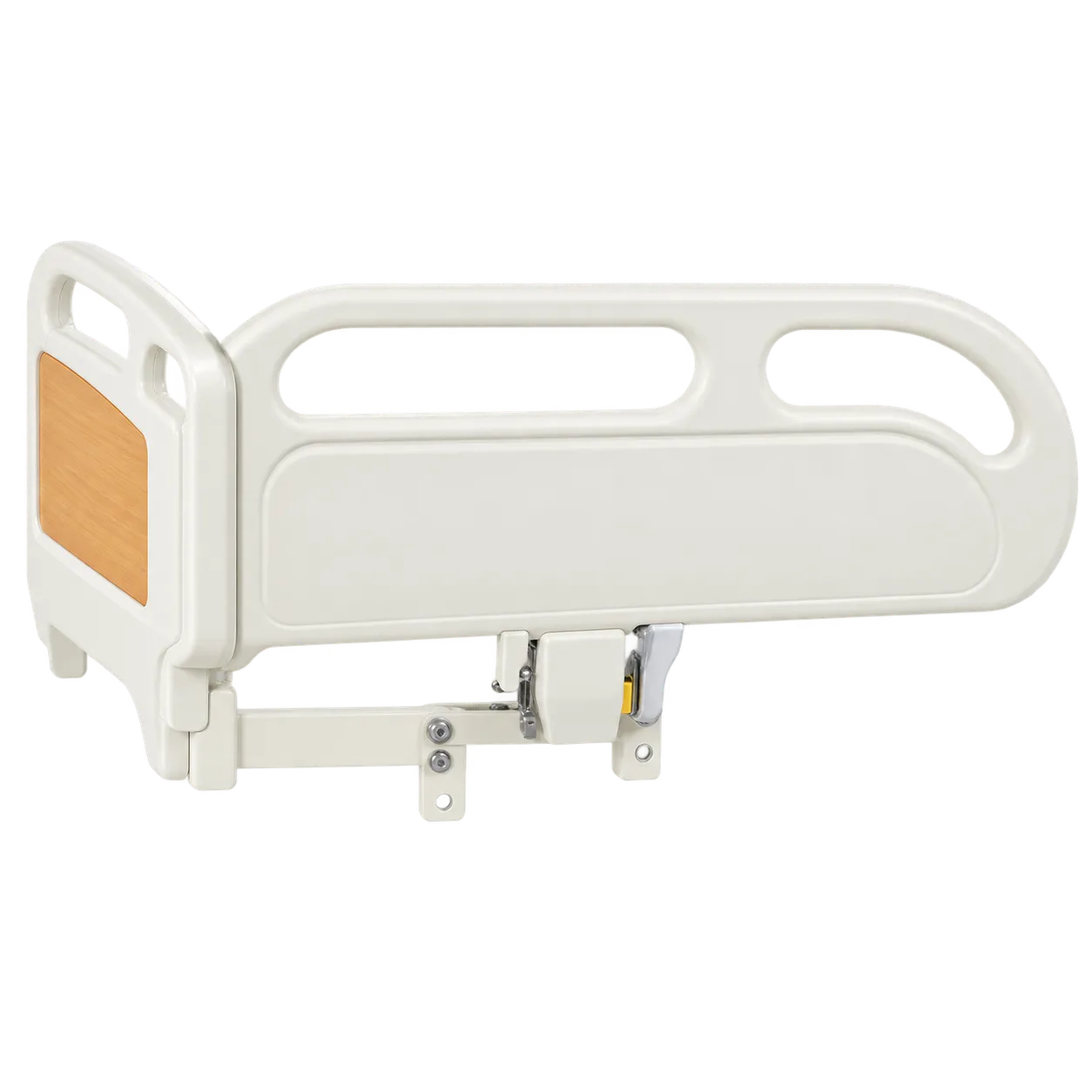
With the mattress on, the moulded rails should be measured against MHRA guidance, and the regulator's 2023 safety alert expects rail use to be decided person by person. It is built for adults of standard size, not for bariatric patients or children. Buyers' procurement checks will cover the legal manufacturer, the standard edition, how the controls behave and the rail tests. The conformity documentation those procurement routes require is issued by the manufacturer and provided by the seller.