
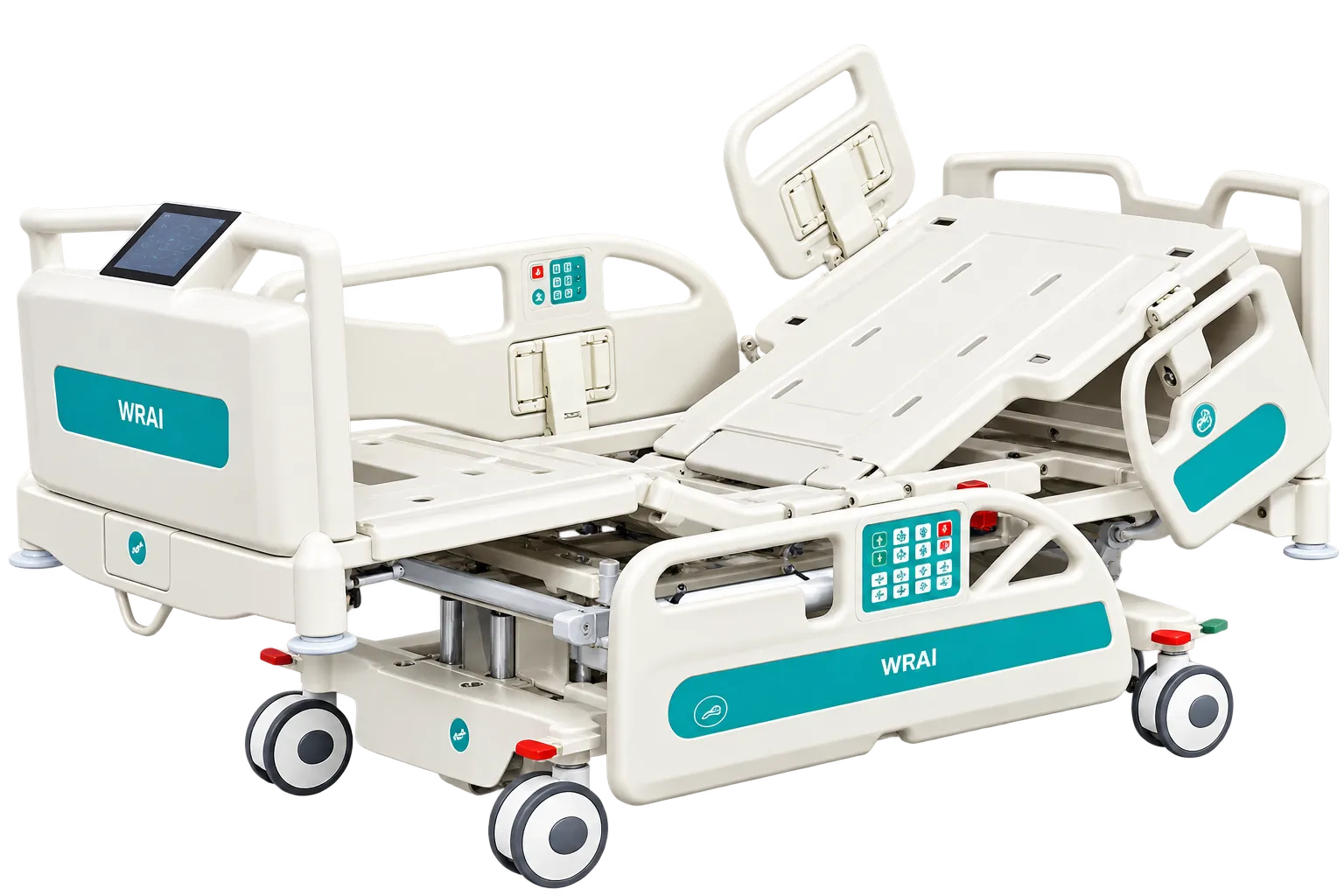
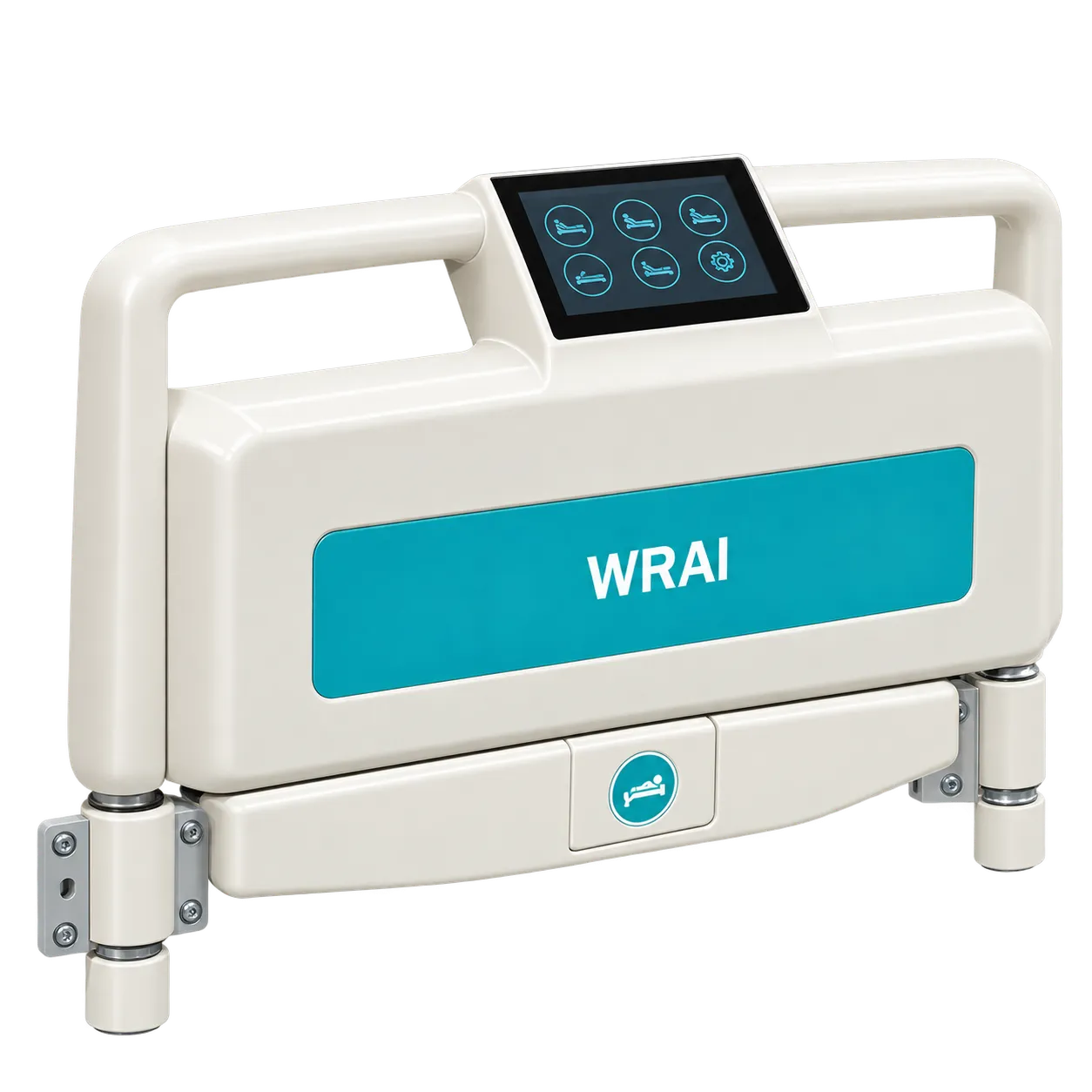
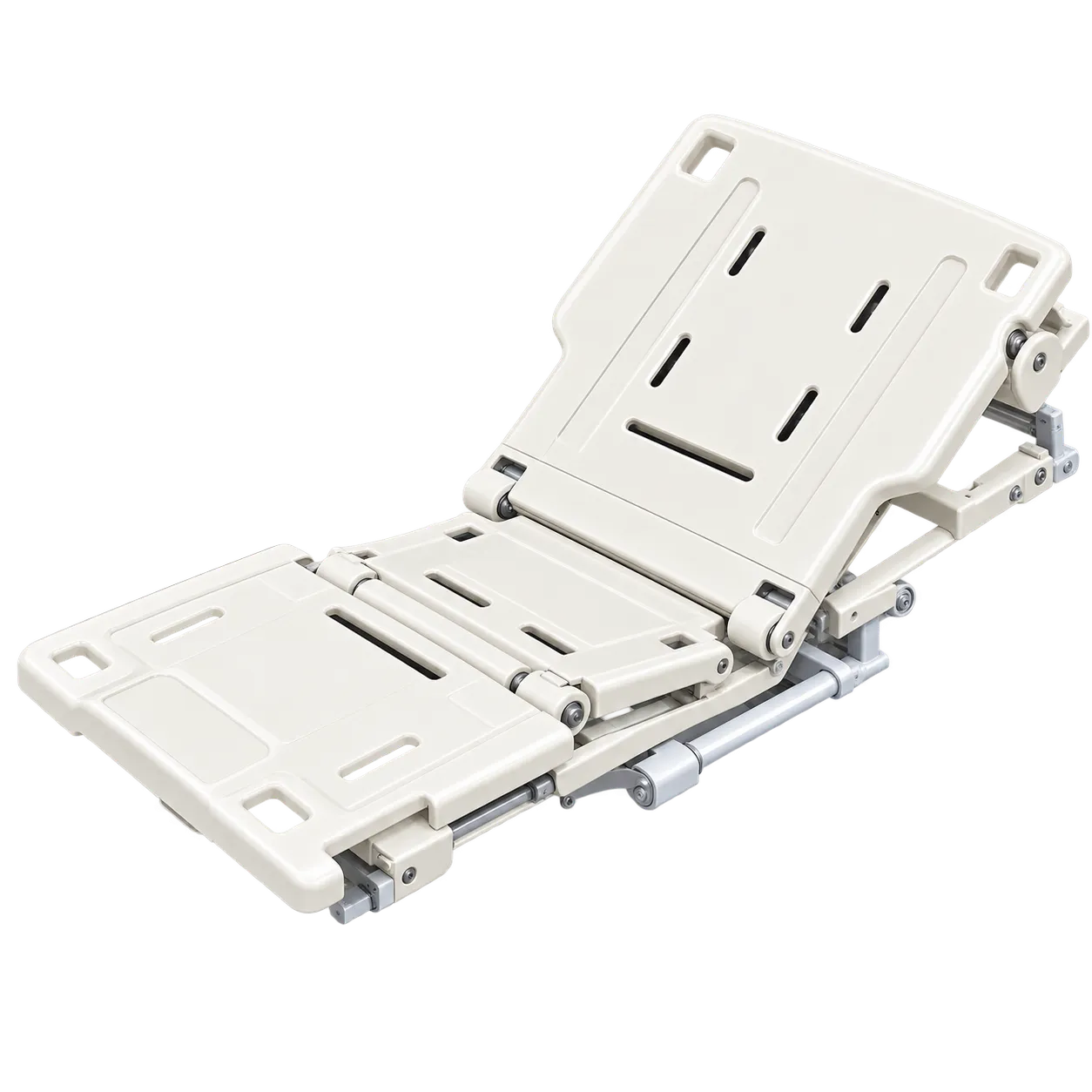
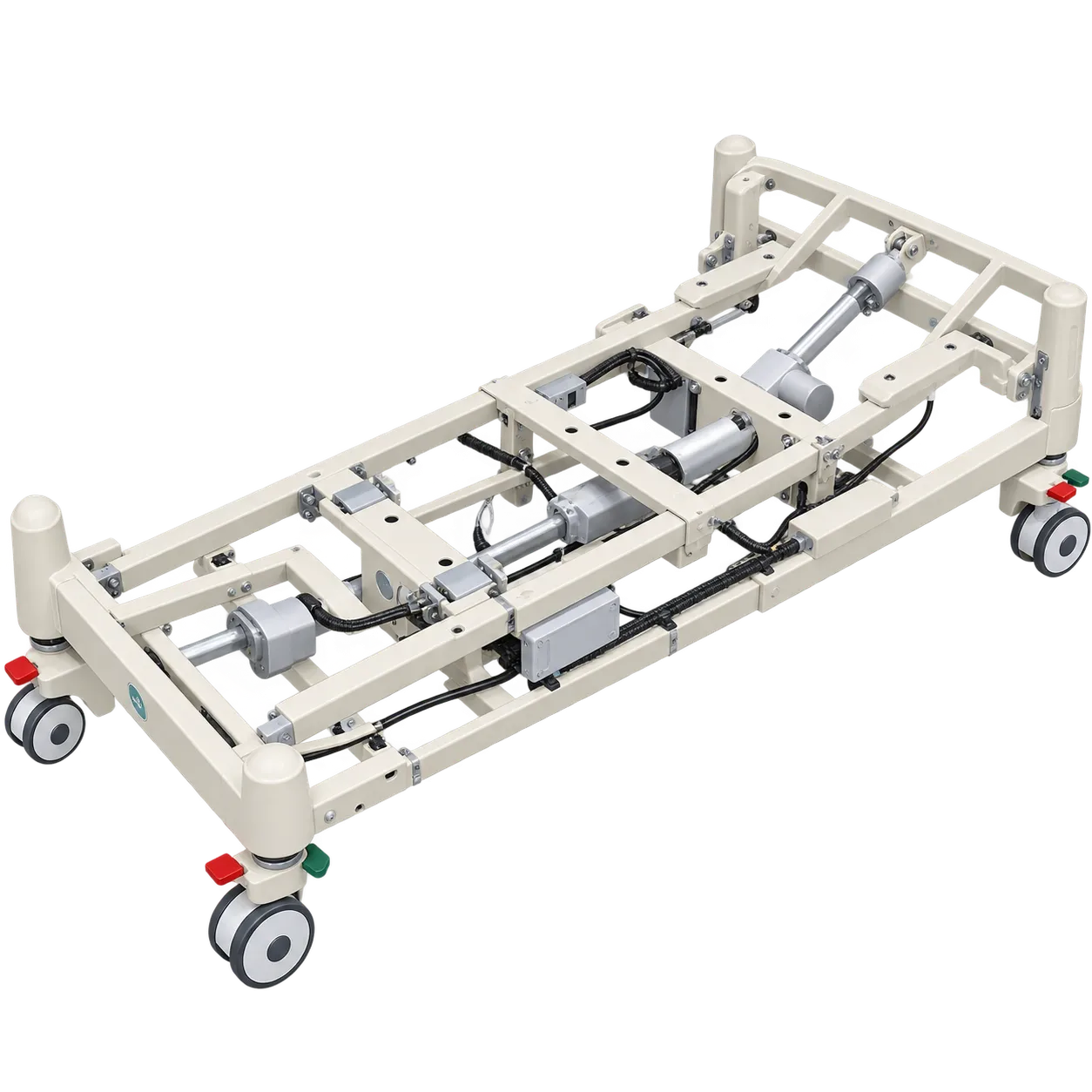
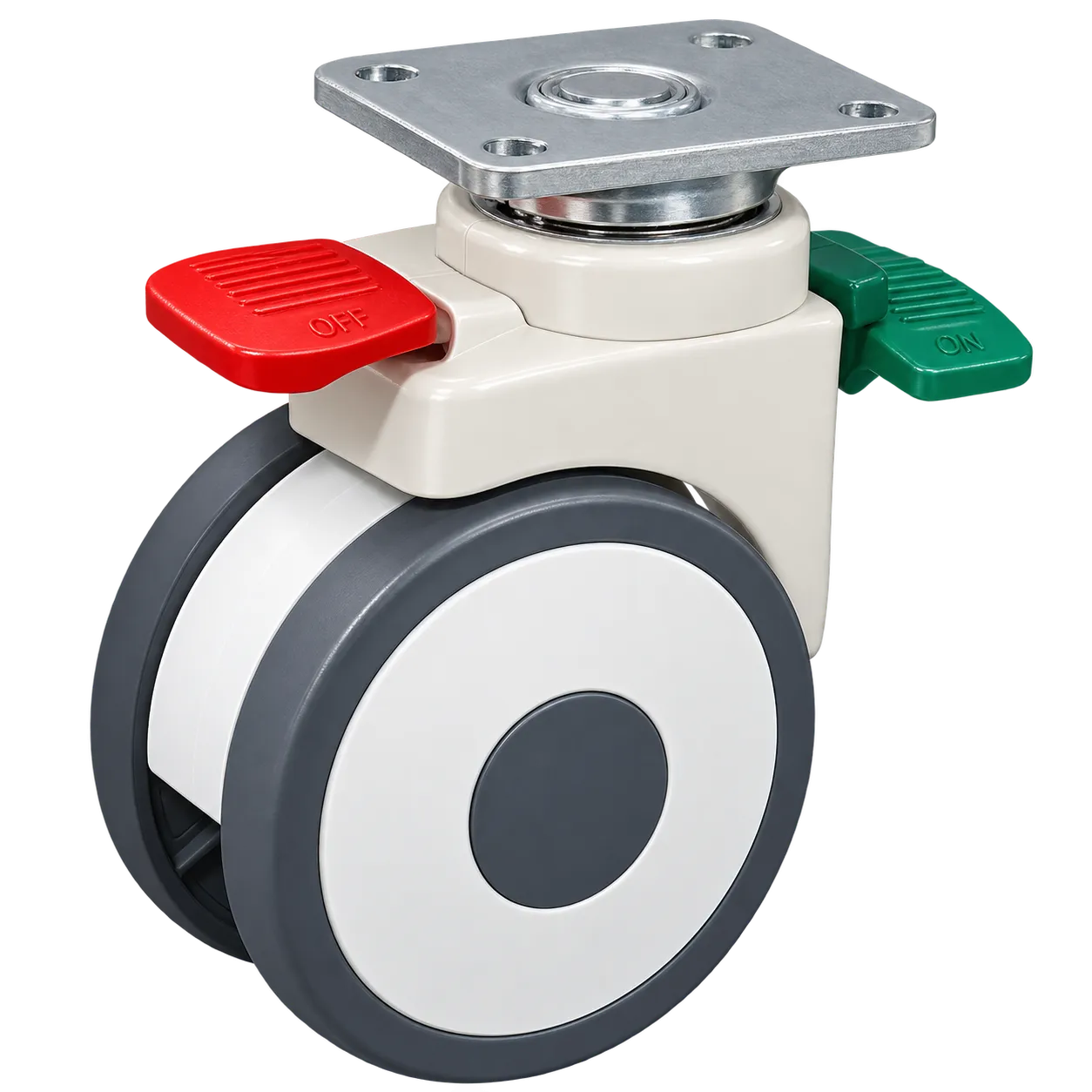
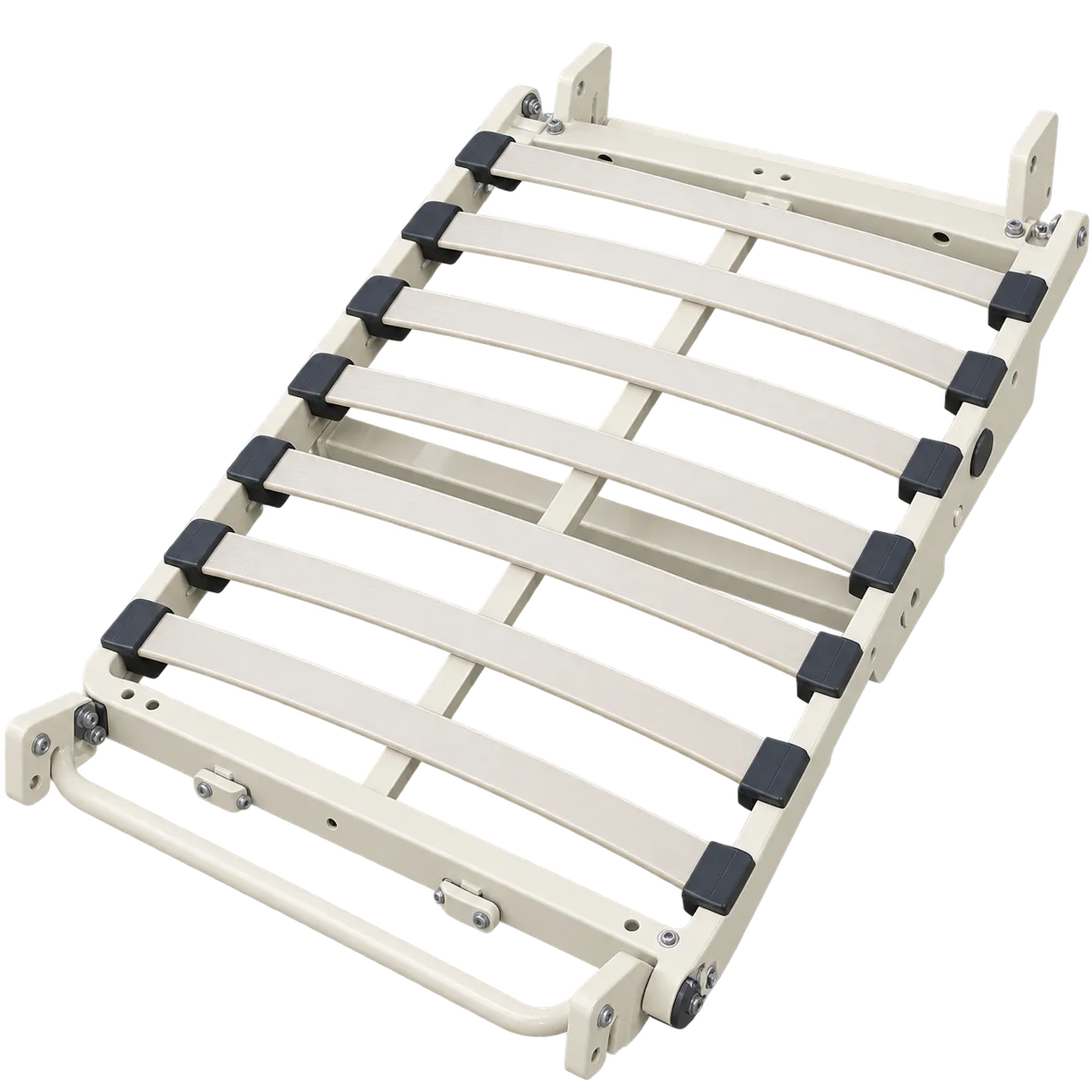
Intensive care, coronary care and acute medical units are the settings the named positions describe. Respiratory therapy positioning, a cardiac chair that brings a patient upright without a transfer, lateral tilt for repositioning and personal care, Trendelenburg for circulatory support and an electric CPR position together describe a bed built for patients under close monitoring, where posture is part of treatment and the bed is used by many staff across a week.
The 950 mm top height suits units where procedures happen at the bedside. Line insertion, wound care, examination and assisted physiotherapy all go better at a working height that keeps staff upright, and the examination position gives a consistent posture for them. Coronary care and cardiology wards, where patients are assessed repeatedly and positioned for breathing, are a natural fit.
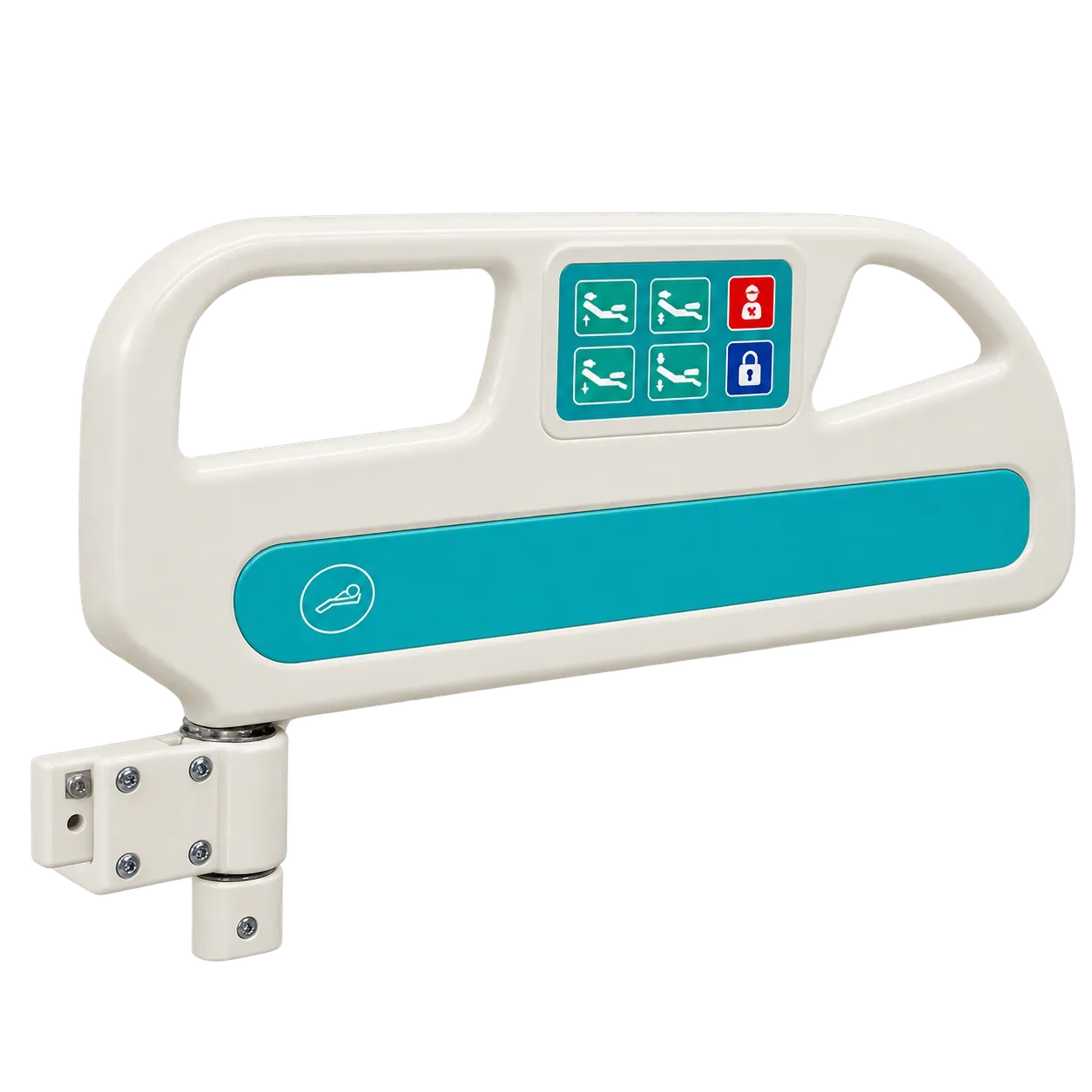
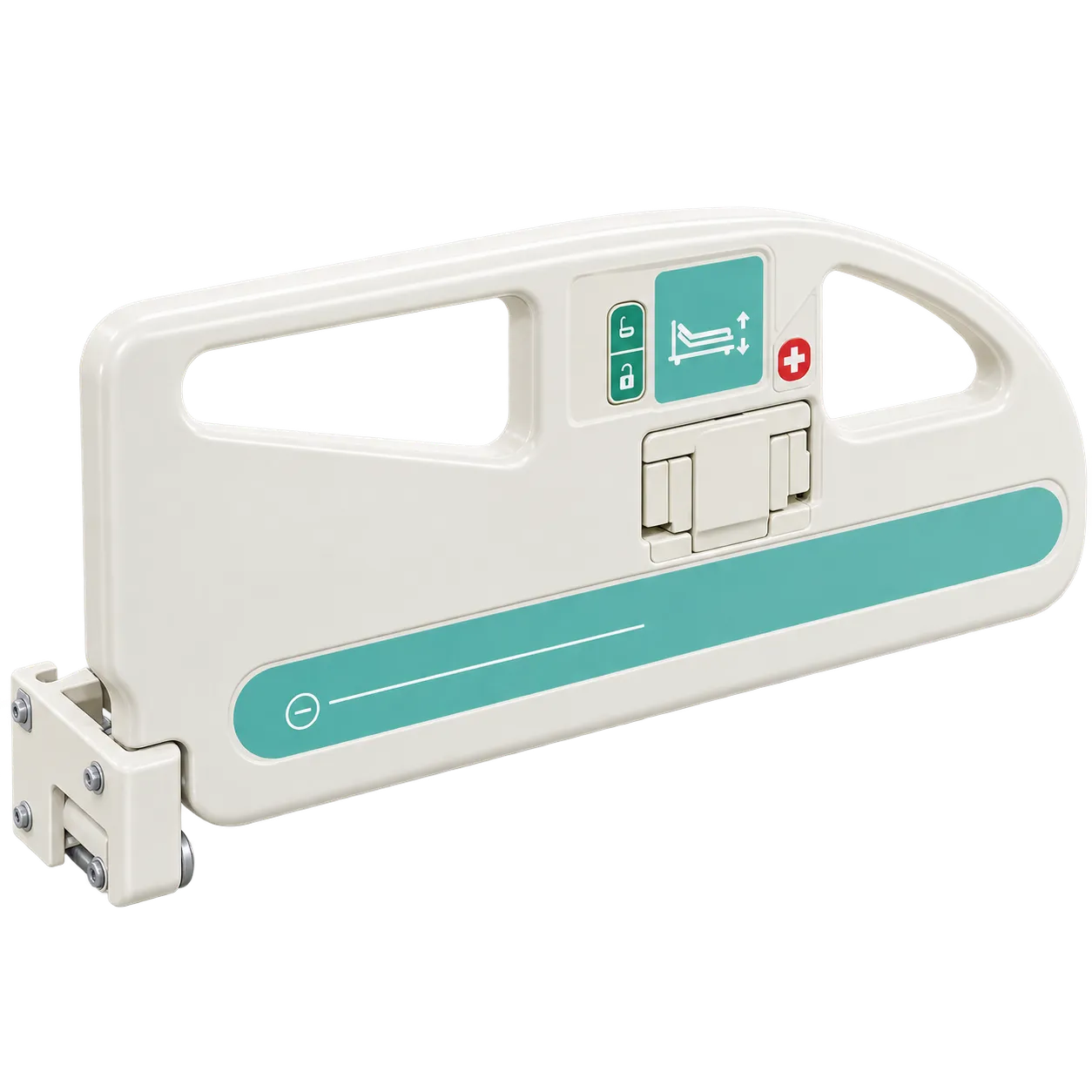
The same figure has a counterpart to consider. A lowest height of 550 mm makes the bed a poor choice where the main clinical concern is falls from bed, and a high sitting position for shorter patients getting out of bed. Units with those patients should confirm the reference point for the height range and, where it does not suit, ask the seller to point to a different specification. The bed should not be assumed suitable for children or adults of small stature, and its rails and lateral tilt bring the MHRA's 2023 National Patient Safety Alert on entrapment and falls into every allocation.
Formal purchasing will turn on documents before it turns on features. Framework routes and private hospital tenders will ask for the legal manufacturer, the UK Responsible Person, the application environment, the standard edition, the safe working load and the rail gap data. The conformity documentation those procurement routes require is issued by the manufacturer and provided by the seller.