
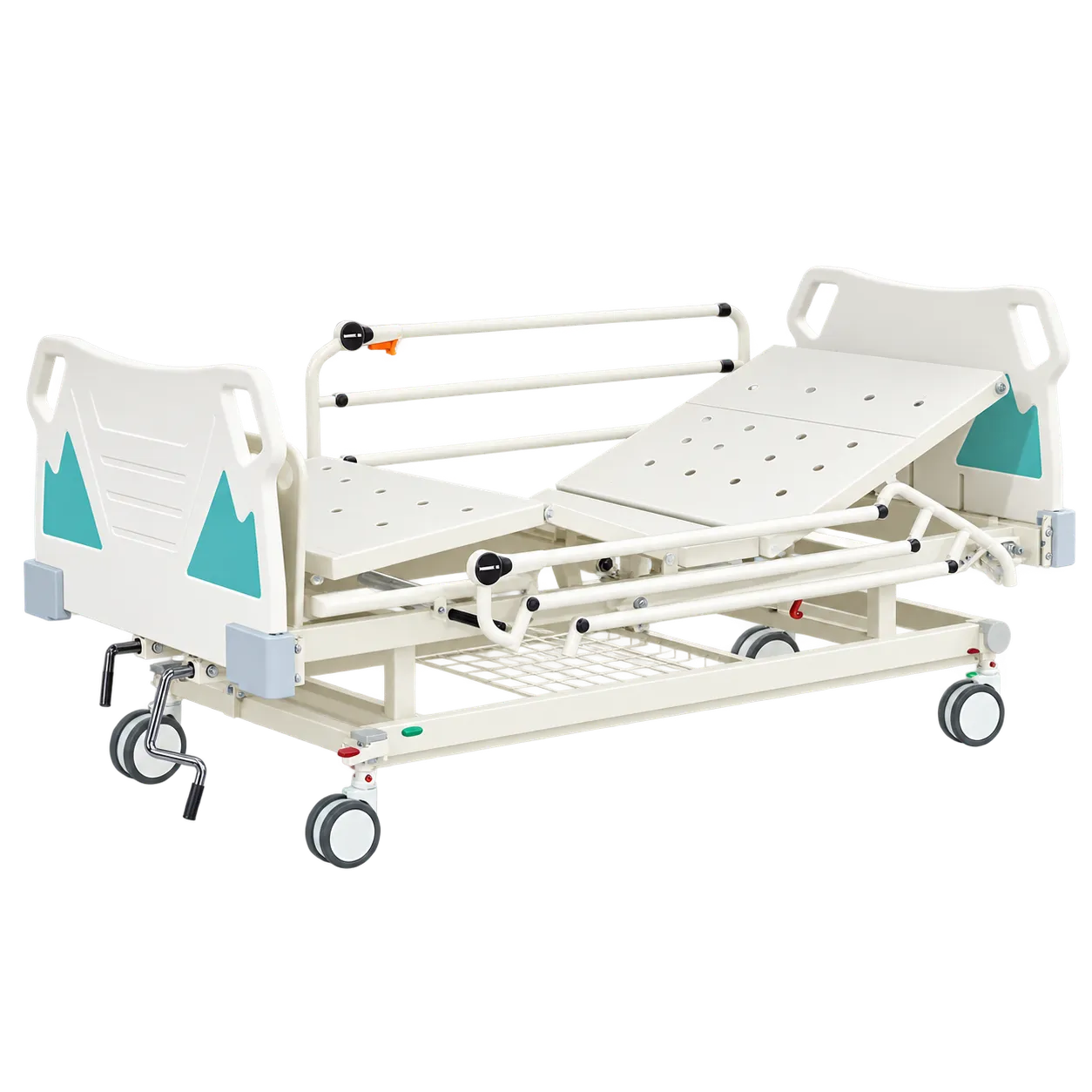
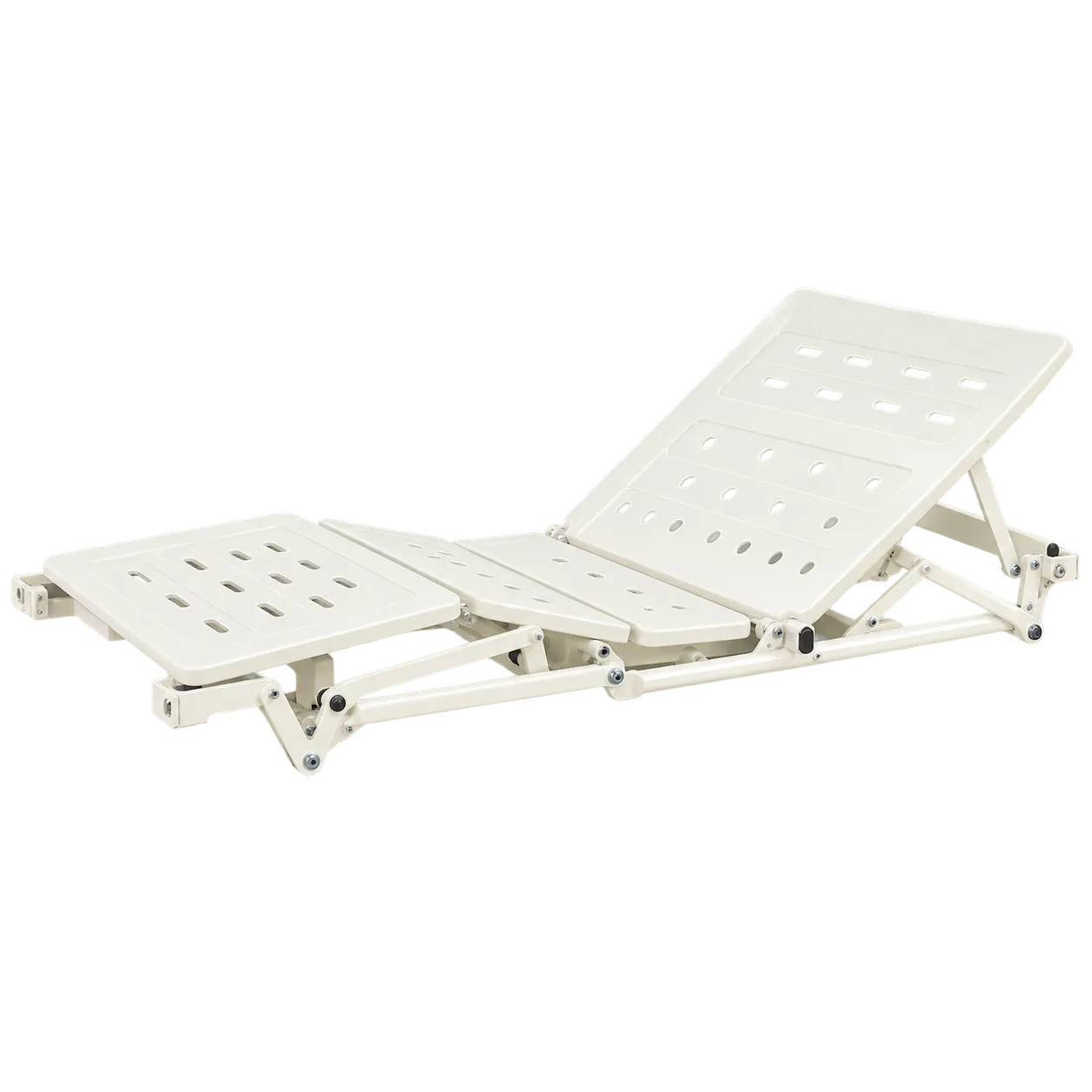

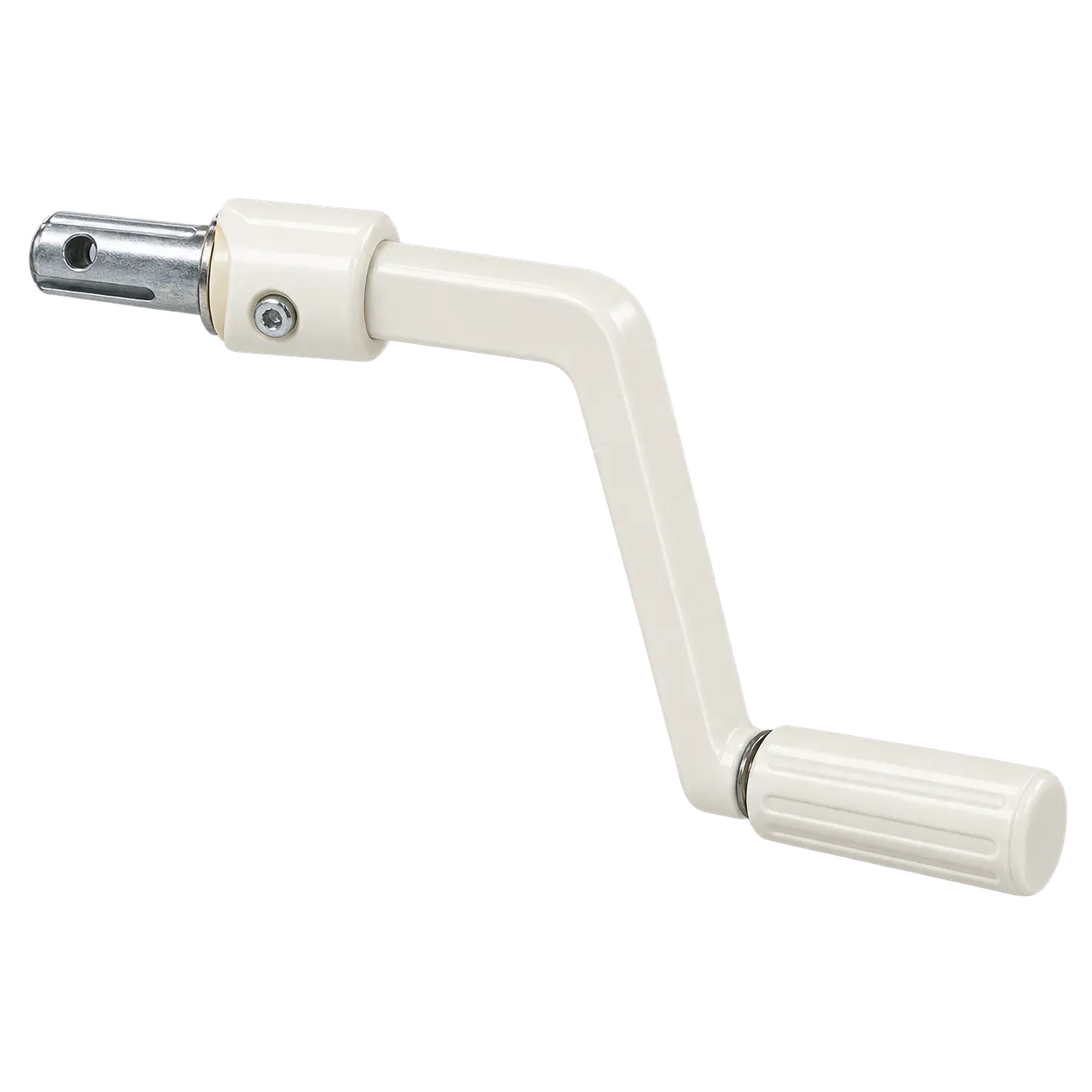
Homecare, small residential rooms and community settings are where a narrow full-fowler manual bed fits. Backrest and leg section wound by hand cover sitting up for meals, visitors and breathing with the knees supported, the 970 mm frame suits smaller rooms, and the cranks work without power.
The foot end needs managing. Two crank handles project from it, and in a small room or a busy ward they sit in the route staff, visitors and patients use. Stowing them after every adjustment, if they fold, keeps the walkway clear; if they do not fold, positioning the bed so the foot end is out of the main route, and making sure the handles are visible at night, reduces the chance of a knock or a trip. The Workplace Regulations 1992 require traffic routes to be kept free of obstructions so far as reasonably practicable, so the handles belong in the risk assessment.
The basket beneath the platform is useful for linen and small belongings, but it needs the same discipline. Kept light and emptied regularly, it adds storage without clutter; filled, it collects dust, gets in the way of hoist legs and tempts patients to reach down from bed.
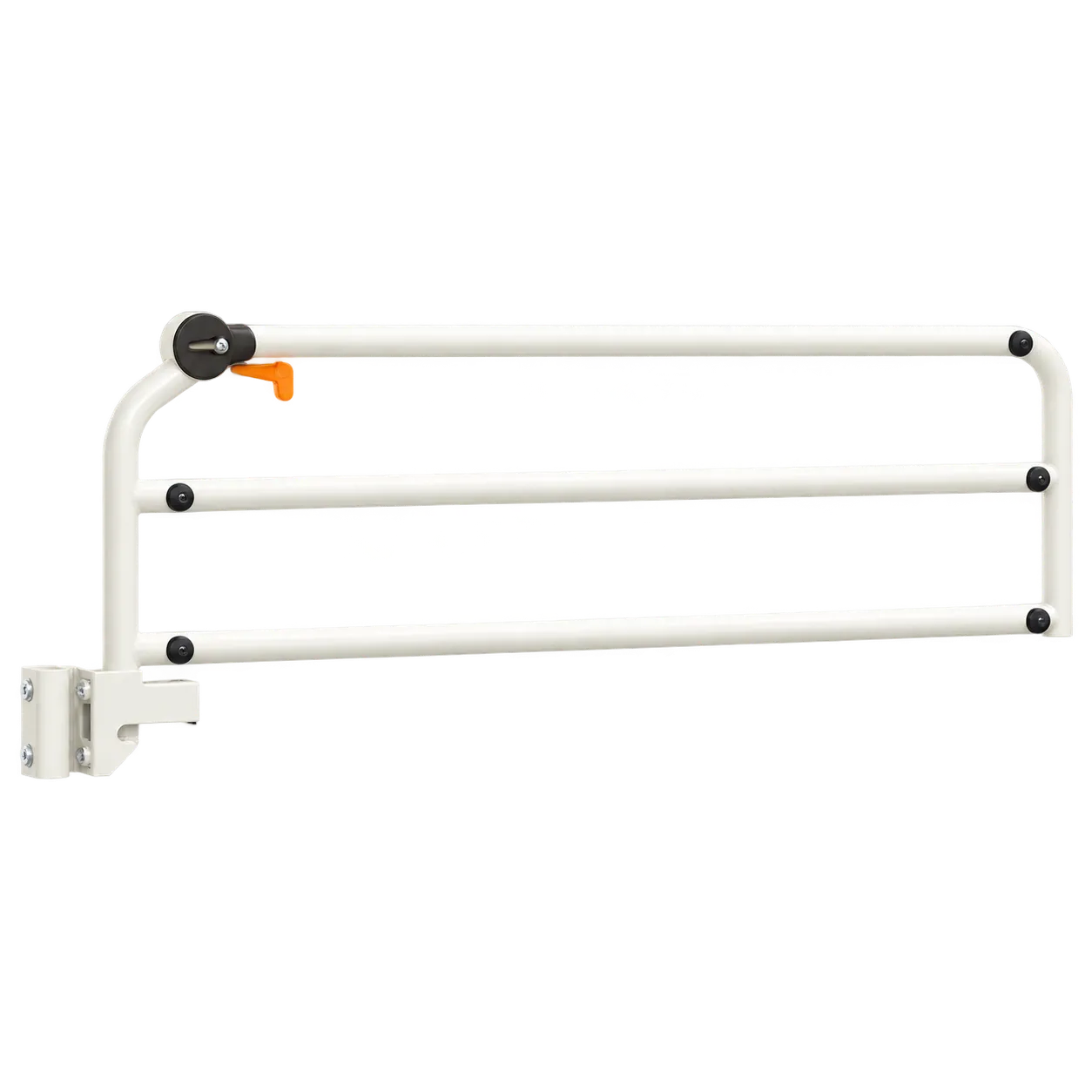
The fixed 500 mm height means care tasks happen at one working height, so manual handling needs assessing, and it may be high for shorter people getting out of bed. The tubular bar rails must be checked against MHRA guidance with the mattress fitted, as the MHRA's 2023 National Patient Safety Alert asks. The bed is not bariatric and not a specification for children. Procurement will ask for the legal manufacturer, the standard used, the safe working load and rail test data. The conformity documentation those procurement routes require is issued by the manufacturer and provided by the seller.