

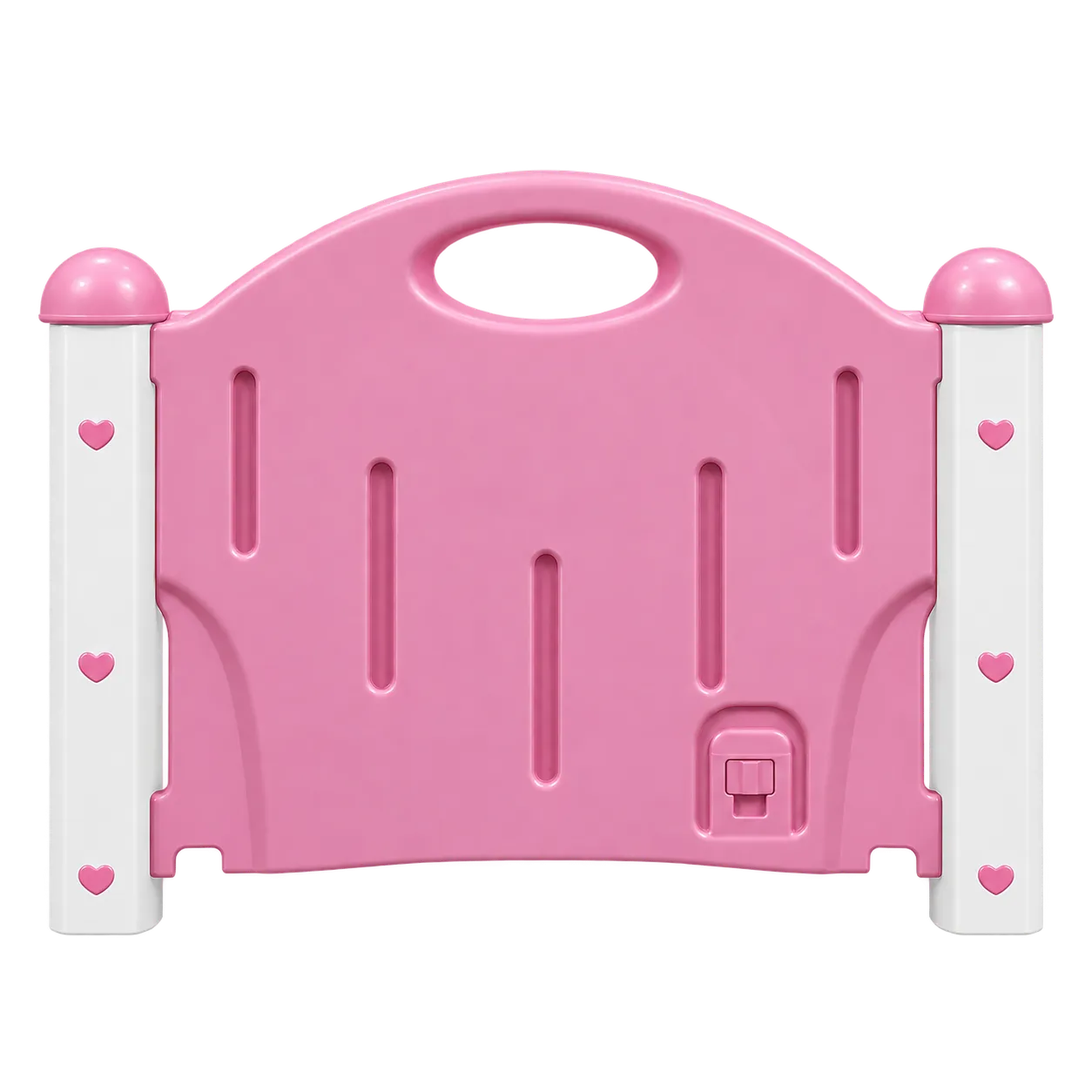
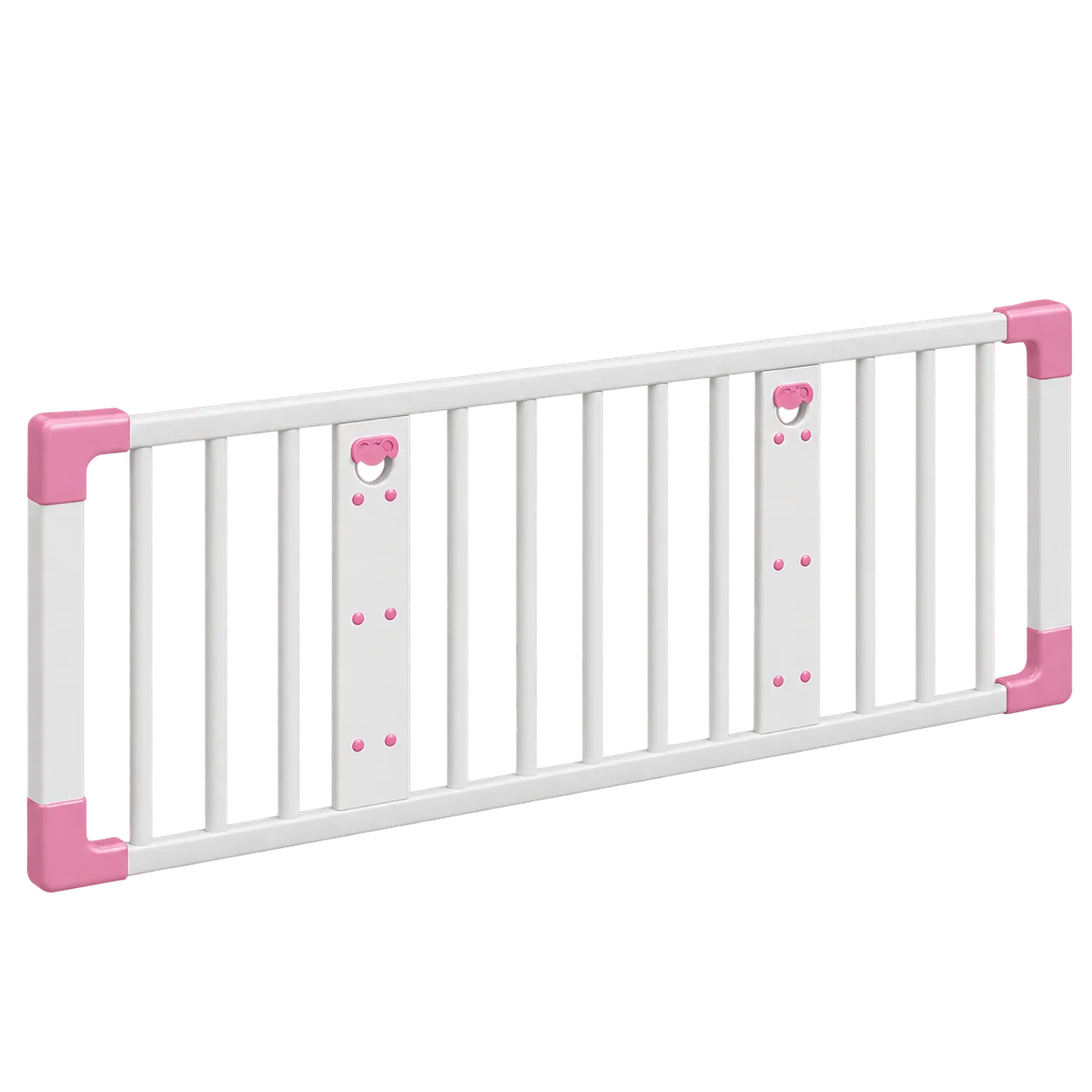
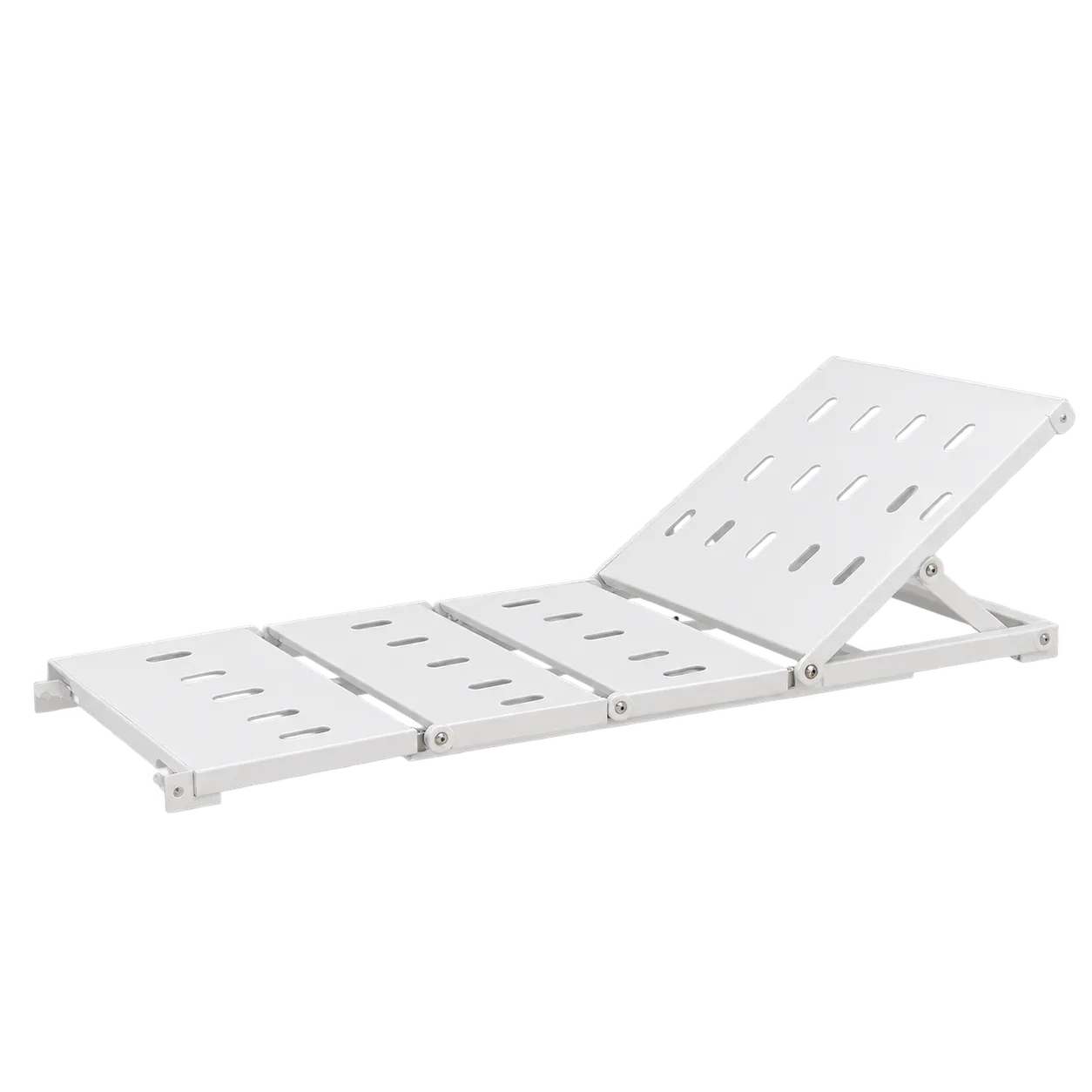
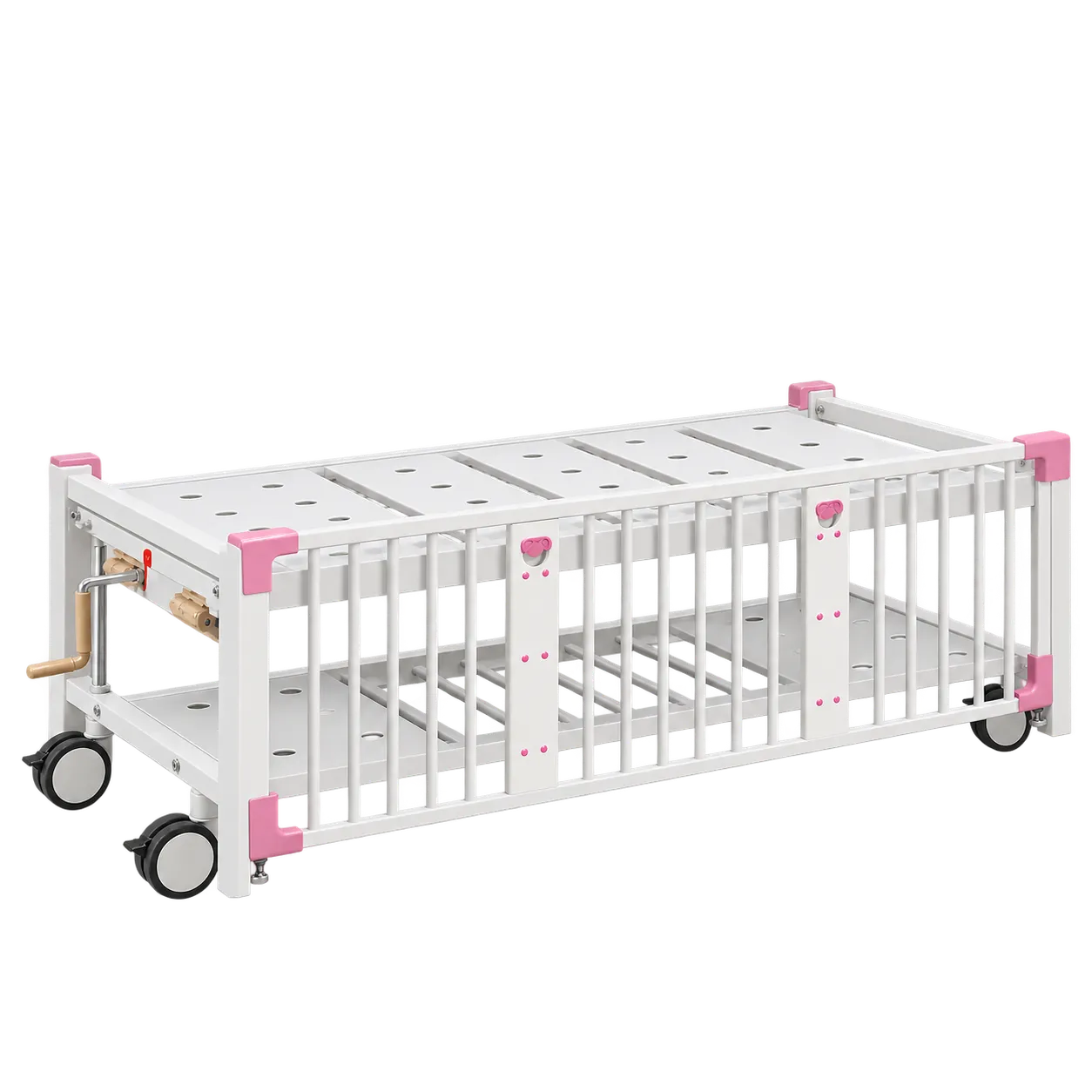
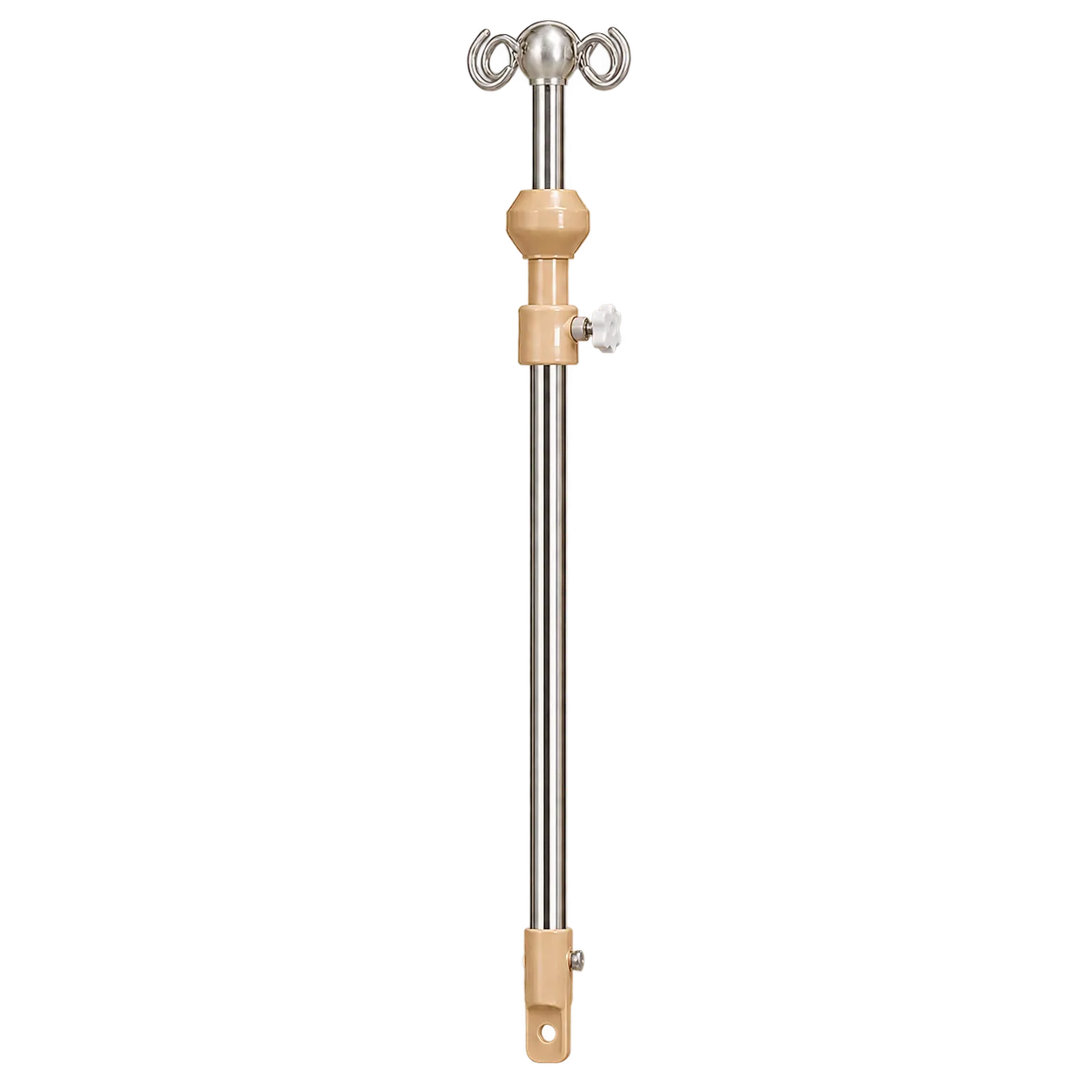
The R-1 suits general children’s wards, day-case and observation units, community hospitals and clinics where children are stable and need a contained place to rest. Its case is safety and risk transfer. Barred sides move the main hazard from falling out of bed to being caught in it, and a manual mechanism removes electrical hazards while leaving mechanical ones.
Raised sides contain a child on a platform fixed at 575 mm, and the open bars let parents and nurses see in. The cost is entrapment risk. BS EN 50637:2017 sets enclosed gaps at under 60 mm, and NatPSA/2023/010/MHRA expects children’s beds to meet the standard unless a reason is documented. Measure bar spacing and the gaps at the mattress and end boards for the child and mattress in use. Catches need the same attention, because a lowered or unlocked side is a fall. Parents often lower a side themselves, so showing them the catch is part of admission.
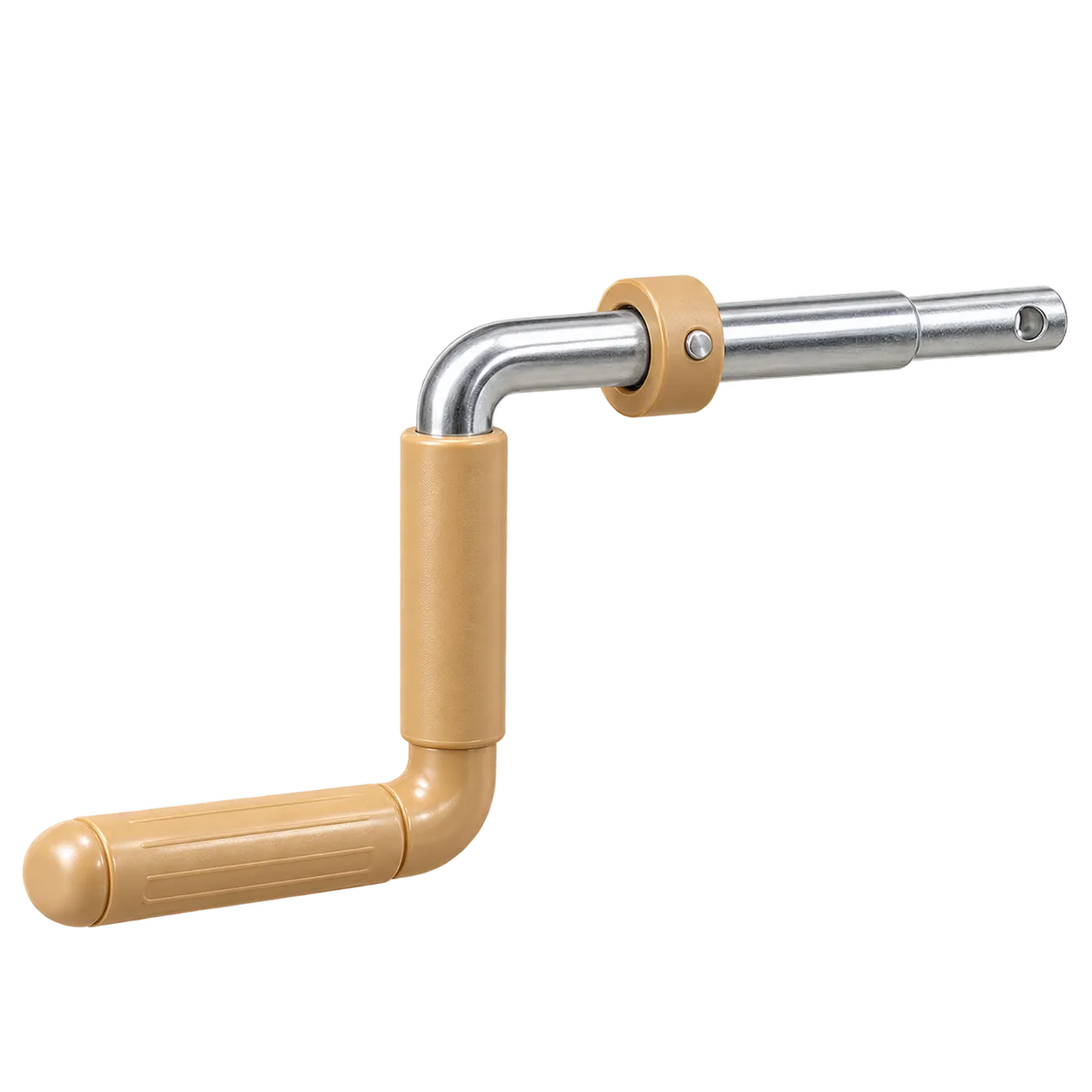
With two hand cranks, there is no handset, cable or motor for a child to reach and no electrical testing to plan. The mechanical points remain: crank handles should be stowed after use, castor brakes applied and catches checked at each handover, with PUWER 1998 covering staff use. The fixed height leaves nurses working at one level, which belongs in the moving and handling assessment. There is no tilt or CPR function, so children who may deteriorate need a different bed.
NHS procurement routes and overseas public buyers will want the device class, BS EN 50637 evidence and a declaration of conformity. The manufacturer issues the conformity documentation those procurement routes require, and the enquiry team shares it.