
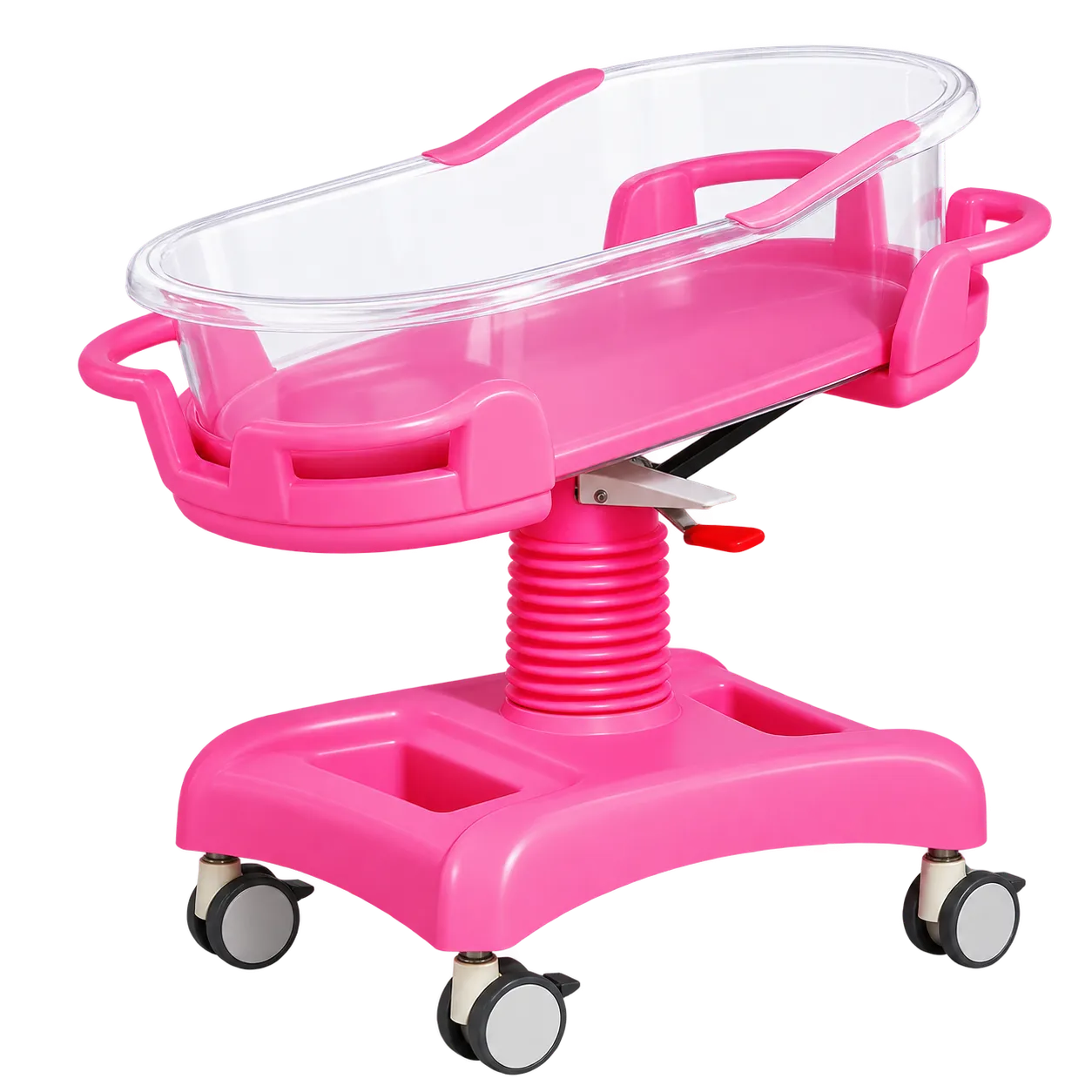
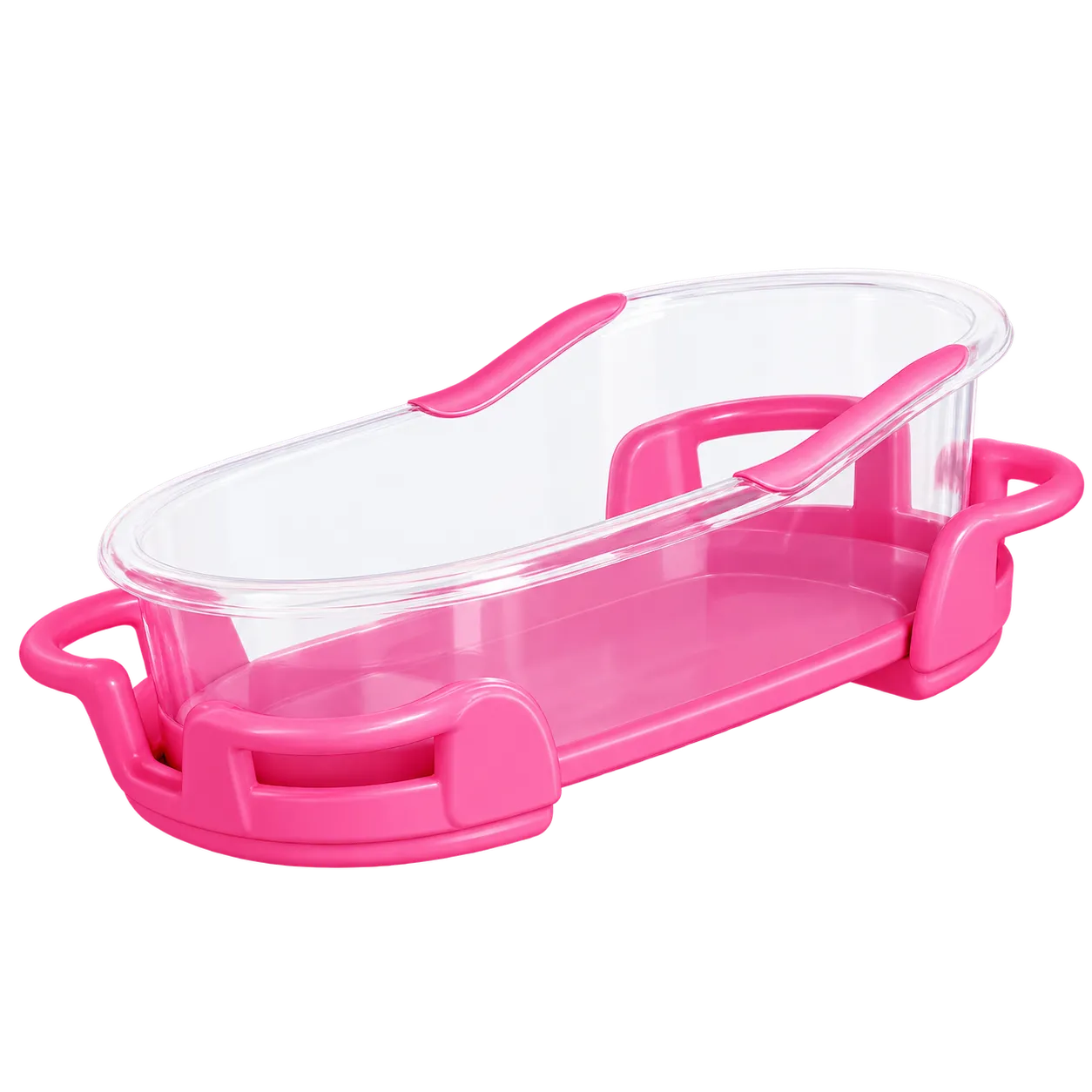
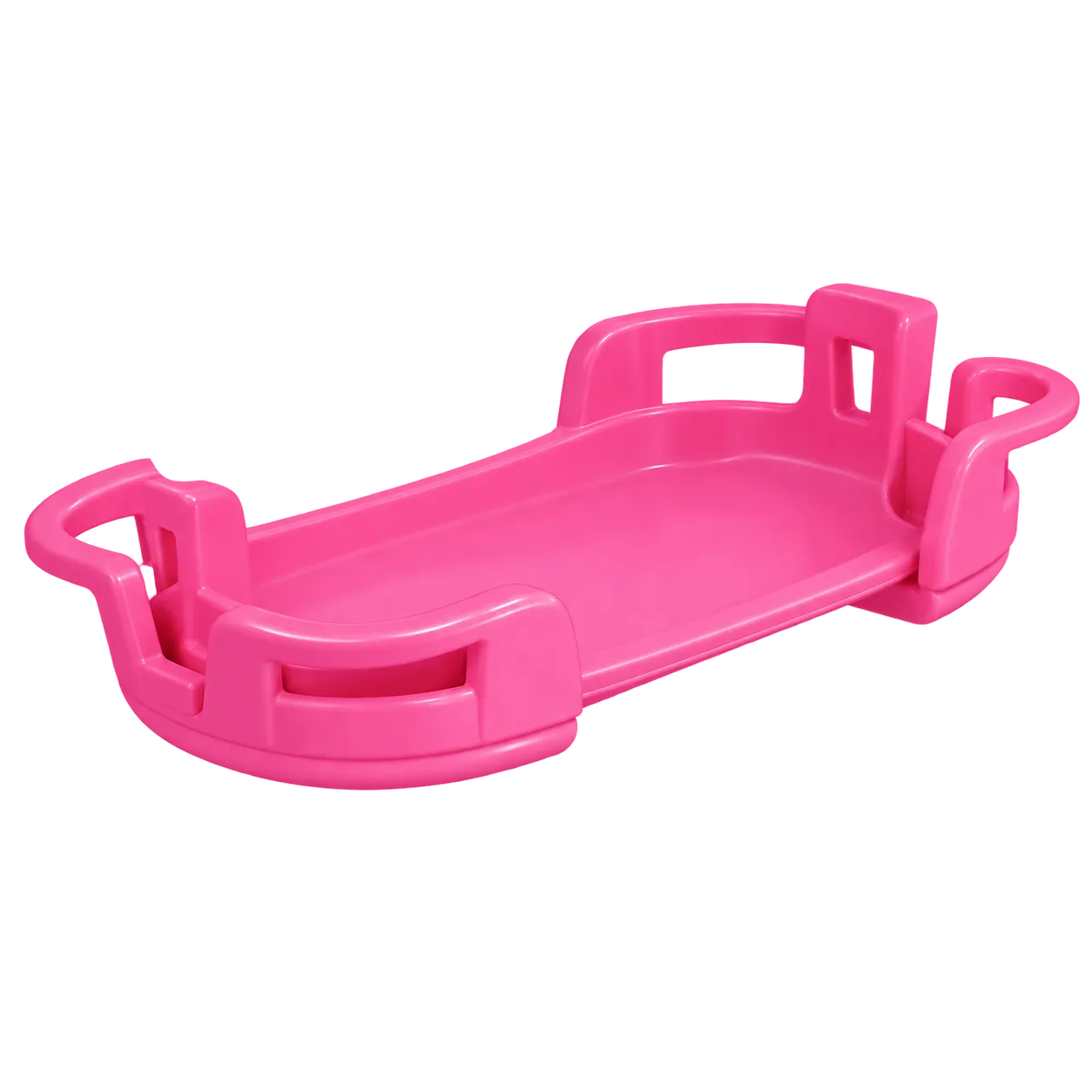
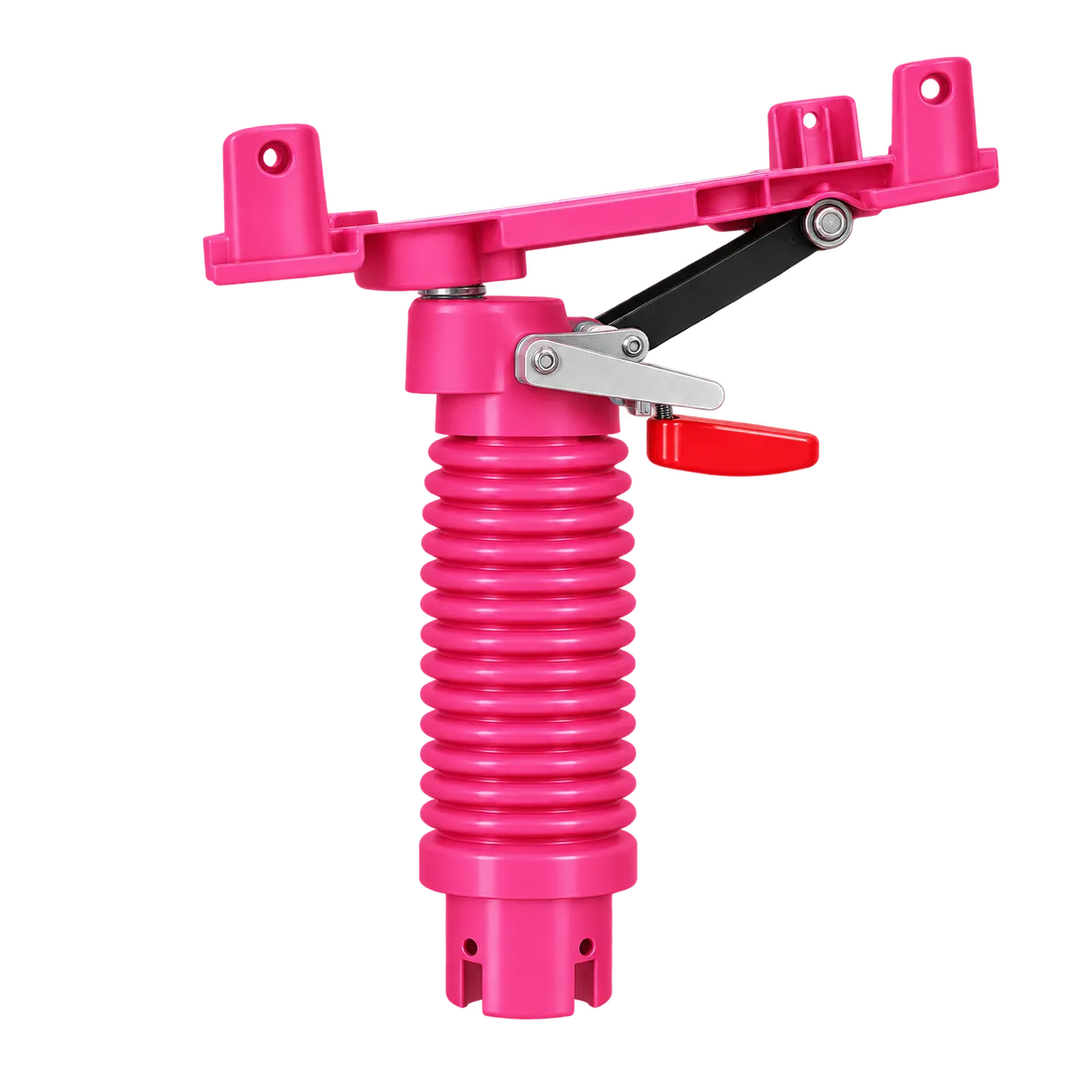
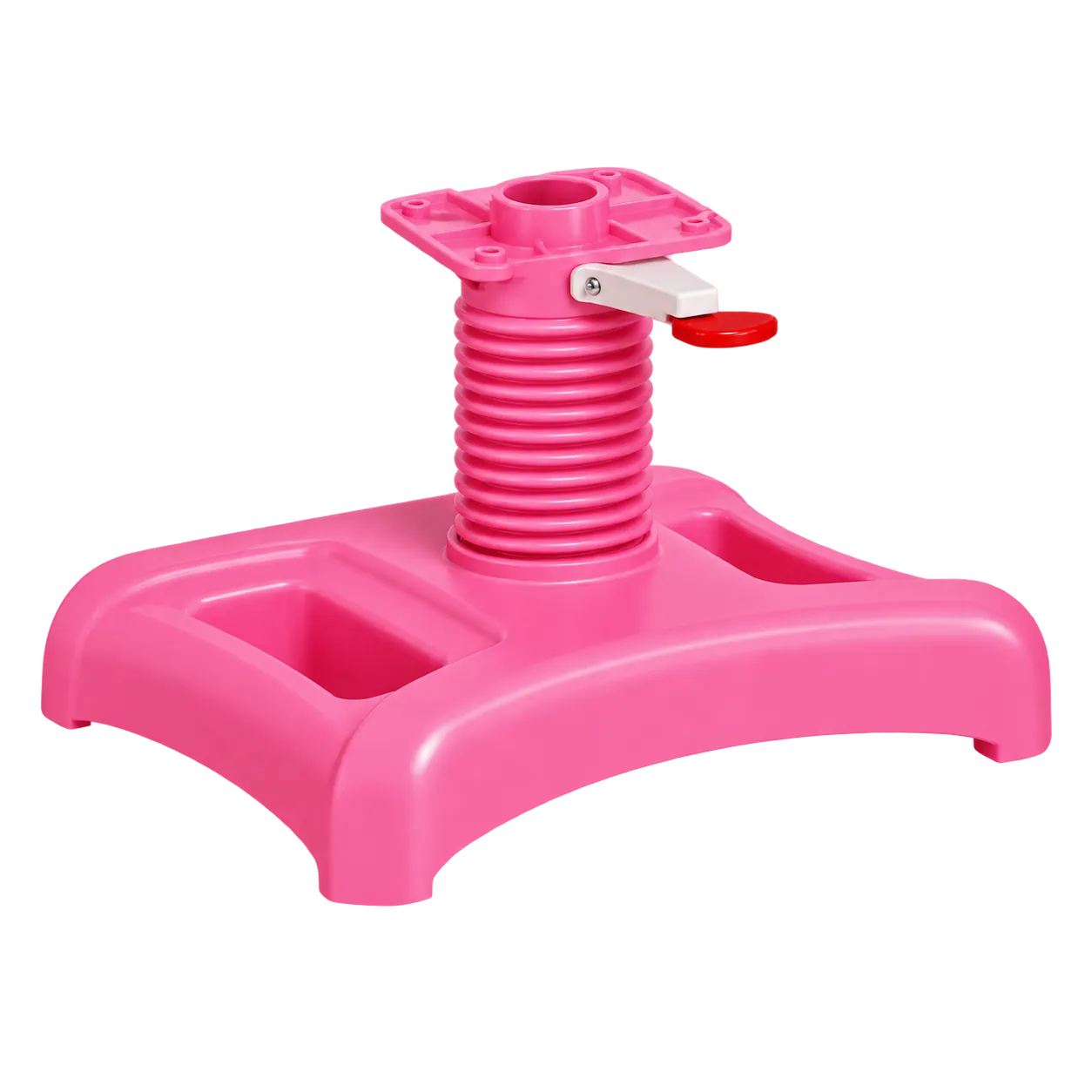

The D-4 suits postnatal wards, caesarean recovery areas, labour and delivery suites and transitional care, for healthy babies who stay beside their mothers. Its case is population fit. A height-adjustable cot serves the adults around the baby, and those adults differ in what they can reach.
The first group is mothers with limited movement. After a caesarean or a difficult birth, standing, twisting and leaning over a fixed cot are painful, and a mother may have to call for help each time the baby cries. Setting the bassinet level with the mattress lets a mother see and lift her baby from where she lies, which supports rooming-in and responsive feeding. The second group is staff. Midwives of different heights can set the bassinet for examinations and changes, in line with the Manual Handling Operations Regulations 1992. Partners and visiting family form a third group, and the same adjustment lets them stand or sit beside the cot in comfort.
The fit depends on safe habits. Lock the castors before changing the height or tilt, and keep the cot close to the bed so the base doesn't foul the bed frame. Tilt is for clinical positioning only, because NHS safer sleep advice says babies should sleep flat on their backs. A mother who is drowsy or medicated needs support when lifting her baby, whatever the cot height. The D-4 has no warming or monitoring, so babies needing special care belong elsewhere.
Maternity service managers, NHS procurement routes and public buyers overseas will ask for the device status, the standards applied and a declaration of conformity. The conformity documentation those procurement routes require is issued by the manufacturer and shared by the enquiry team.